Archive | Spirituality RSS feed for this section

We Are the Treasure of Alchemy

31 Aug

Rodger R Ricketts, Psy.D.

08/11/2026

Each of us is an alchemist (someone who transforms life for the better) within the intricate web of life’s connections and interactions. Although, as the ancients did, we do not need secret formulas or to stand over ancient forges attempting to turn lead into gold. Instead, every day with our intentions and connections, we engage in something extraordinary: the true catalysts for change-transformations.

We transform ideas into actions, experiences into wisdom, adversity into strength, and possibilities into realities. We change, and through our choices, we change the world around us. In this sense, alchemy offers an effective metaphor for understanding not only the universe but also for personal transformation and psychological liberation.

To transmute means to change something in form, appearance, nature, or condition—to transform it into something different. This process surrounds us; nothing in the universe remains completely still or unchanged. Stars are born and die. Water becomes vapor, clouds become rain, seeds become plants, bodies age, civilizations rise and fall, and human beings continually change through experience.

Change is not an interruption of life.

Change is life.

One of our greatest opportunities as human beings is realizing that we do not have to remain passive observers of transformation; instead, we can become conscious participants in it.

A Universe in Transformation

The universe itself tells a story of transformation.

Stars function as enormous cosmic forges. Within them, elements are created that eventually become parts of planets, oceans, mountains, plants, animals, and humans. When massive stars reach the end of their existence, they scatter these elements across space, providing the material from which new celestial bodies eventually form.

Our planet tells a similar story. The early Earth bore little resemblance to the world we inhabit today. Over immense spans of time, geological, chemical, and biological processes transformed its surface and atmosphere. Eventually, conditions emerged that allowed increasingly complex forms of life to develop.

Transformation, therefore, is not something that occurs occasionally but constantly. It is interwoven into existence. Life is energy. Energy cannot be created or destroyed. It simply changes form.

Water provides an easy example. It can appear as liquid water, ice, vapor, clouds, rain, or snow. Its state changes dramatically, yet something remains constant throughout these transformations. What we observe is not disappearance but transformation.

We observe similar cycles everywhere: growth and decay, creation and destruction, birth and death, beginnings and endings.

Writer and speaker, Alan Watts, observed that without birth, death, and the continual transformation of life’s forms, the world would become static and devoid of rhythm. This insight encourages us to perceive change differently. Rather than viewing change solely as loss or disruption, we can recognize it as an essential part of the dynamic movement that sustains life.

The Ancient Alchemy

For centuries, alchemy expressed humanity’s fascination with transformation.

Different cultures developed their own traditions surrounding what Western history eventually termed alchemy. Behind the experiments, symbols, and mysteries lay an enduring question:

Can one thing become something else?

The ancient alchemists sought ways to transform matter, most famously pursuing the dream of turning base metals into gold.

Yet the enduring power of alchemy lies in a different interpretation.

What if the most important substance we are capable of transforming is ourselves?

The Alchemy Within Us

Besides the fact that the human body is always in a state of transformation: Millions of cells die and new ones form every second, replacing old tissues, healing wounds and remodeling bones. Also, our lives are filled with never ending opportunities provided by the transformations of existence.

A painful experience can cultivate compassion.

Failure can lead to knowledge.

Fear fosters courage.

Confusion can lead to understanding.

Anger can be transformed into determination.

Grief can deepen our appreciation for life.

An idea can become an invention, a business, a work of art, a relationship, or a campaign.

None of these transformations occur automatically. Pain does not always lead to compassion, nor does difficulty inherently create strength. The true alchemy of inner transformation lies in what we do to what happens to us.

As Marcus Aurelius in his work Meditations wrote: “The universe is transformation; our life is what our thoughts make it.”

This distinction is important.

We cannot control every circumstance that enters our lives, but we can choose our thoughts and actions, therefore; how those circumstances affect us.

The journey of self-awareness, self-discovery, and self-development is a profound form of personal transformation. Each time we learn something that changes our understanding; question a belief that no longer seems valid; develop a new skill; forgive someone; love someone; make a different choice; or view ourselves with a broader perspective, we actively participate in our own transformation of leading a life filled with purpose and fulfillment.

We are continually reshaping our identity and our understanding of the world.

The person reading these words is not exactly the same individual who existed ten years ago—or even one year ago. Experiences have been absorbed, relationships have influenced us, reflections form opinions, decisions have led to consequences, and knowledge has transformed our perception.

Life has been constantly shaping us. Nevertheless, once we begin to work consciously on developing ourselves, that is when we become alchemists.

What if the most important substance we can transform is ourselves?

In that case, the base elements include our fear, resentment, ignorance, limitations, pain, or unconscious patterns.

The change element becomes an experience.

And “gold” becomes wisdom.

Viewed in this way, alchemy is not solely an ancient practical metallurgy; it becomes an allegory for the conscious human journey.

We enter experiences as one person and emerge from them different.

At some point, other possibilities emerge.

Where Attention Goes

As the Buddha said; “Do not dwell in the past, do not dream of the future, concentrate the mind on the present moment.”

There is another expression: “Energy flows where attention goes.”

Whether understood spiritually or simply as a principle of attention and behavior, this message is valuable. What we repeatedly focus on influences what we notice, what we reinforce, how we interpret events, and ultimately how we respond to life.

If our attention remains constantly focused on resentment, fear, conflict, and everything that might go wrong, these experiences will begin to dominate our inner world.

However, attention can be redirected.

We can mindfully observe a thought without becoming that thought itself.

We can experience anger without allowing it to dictate our next actions.

We can feel fear and still reasonably move forward.

We may encounter disappointment and ask what it has come to teach us.

This is not about pretending that painful emotions do not exist. True transformation is not denial. The alchemist does not pretend that the base element of lead is already gold.

The material must first be acknowledged for what it is before it can be transformed.

Our sadness, fear, disappointment, anger, and uncertainty are integral parts of the human experience. The goal is to not always eliminate these emotions but to ask:

What could this become?

That question alone has the power to transform our relationships.

The Forge of Transformation

Transformation often feels uncomfortable.

Grapes are crushed before they become wine. Olives are pressed to extract their oil. Seeds begin their growth beneath the darkness of the soil. Diamonds have long symbolized beauty emerging from immense pressure.

These images endure because they reflect something we recognize within ourselves.

There are seasons when life can feel overwhelming.

There can be seasons of darkness.

There are moments when what once seemed stable, collapses, and we cannot yet see what will take its place.

The temptation during these periods is to believe that life has gone terribly wrong.

But darkness does not always mean that nothing is happening.

Disruption marks the beginning of possibility of positive transformation.

“Even in the darkness, something new is preparing to rise.”—Joseph Long

This does not mean that suffering should be romanticized or that every painful experience is inherently necessary. Instead, it means that when hardship does occur, we still have the ability to choose what we carry forward from it.

We can ask whether the experience will create rigidity in us or deepen our understanding and flexibility.

Whether disappointment leads to bitterness or to insight.

Whether failure becomes an ending or a source of insight.

Whether fear becomes a prison or an invitation for courage, depends on how we respond to it.

This is the human alchemy laboratory.

Changing Our Inner and Outer Worlds

Personal transformation cannot occur solely within the mind; it requires additional experience.

Our internal and external worlds continuously influence one another.

The people around us, the conversations we engage in, the books we read, the media we consume, our workplaces, relationships, homes, habits, and daily environments all shape the conditions in which we think and act.

If we want to transform ourselves, we need to become more aware of what we consistently allow into our lives.

What makes us more resilient?

What diminishes us?

What encourages growth?

What continuously draws us back to an earlier, less favorable, version of ourselves?

What habits promise peace, clarity, and purpose?

Which ones continually create chaos?

Alchemy requires intention.

Through thoughtful reflection, attending, learning, and—most importantly—action, we can begin to create the conditions that support the person we aspire to become.

We may not be able to instantly transform every sadness into happiness or every conflict into harmony as human transformation is more complex than that. However, we can introduce something new into existing patterns.

Patience can play an important role in an argument.

Understanding can sometimes lead to disagreement.

Compassion can influence judgment.

Curiosity can turn into fear.

One changed response can alter an interaction.

Repeated changes in responses can affect a relationship.

Changed relationships have the power to transform families, workplaces, and communities.

The transformation that begins within us rarely ends there.

We Are Conductors of Change

Human beings possess an extraordinary capacity not only to adapt to the world but also to intentionally transform it.

We transform imagination into reality.

An observation leads to a hypothesis, and a hypothesis can lead to a discovery.

A thought becomes a blueprint, and a blueprint becomes a building.

An emotion transforms into a song.

An experience becomes a story.

A problem becomes an invention when it inspires a solution.

An injustice ignites a movement.

Human innovation is a modern expression of transformation.

However, our ability to transform the world raises an important question:

What are we transforming it into?

Power without wisdom is not alchemy at its highest level.

Our technological capabilities now allow us to transform landscapes, ecosystems, communication, medicine, industry, and even fundamental aspects of life itself on a scale that previous generations could scarcely have imagined. With this power comes great responsibility.

As guardians of the planet and architects of the future, we must make choices that are increasingly conscious, ethical, and well-informed.

Transformation itself is neutral.

What matters are the choices and directions we choose to take.

The same human creativity that solves problems can also generate new ones. The same technology that connects people can also divide them. The same ambition that drives extraordinary achievements can consume everything in its path.

Therefore, the highest form of human alchemy requires more than merely the ability to transform objects.

It requires wisdom to discern what should be changed, what should be preserved, and what kind of future our transformations will create.

The Treasure

This brings us to the true gold of alchemy.

Perhaps gold was never meant to represent wealth exclusively.

Perhaps gold also symbolizes a state of being.

The original academical dream of transforming something ordinary into something precious takes on far greater significance when applied to consciousness.

Our true treasure includes the serenity that arises when we have learned not to hastily react to every disturbance.

It may be the inner security that develops when we understand how life truly is.

It may be the wisdom gained from mistakes we once wished we could erase.

It may be compassion born from our awareness of suffering.

It may be courage born from fear.

It may be the quiet strength that comes from knowing circumstances can change without destroying the essence of who we are.

Gold is a transformation carried out with awareness.

We spend much of our lives searching our treasure outside ourselves for something that would ultimately make us ‘complete’: success, recognition, possessions, relationships, accomplishments, or certainty.

Yet the ancient image of the alchemist suggests another possibility.

The treasure, or true wholeness emerges from the inner process itself.

Every experience becomes valuable material.

Every challenge enters the forge.

Every realization refines us.

Every conscious choice shapes our transformations.

We Are the Alchemists

Transformation occurs across all scales of existence—from the transformation of matter and the birth and death of stars, to the changing Earth and the evolving human body/mind.

We are the products of an immense history of transformation.

But we are something more.

We are not merely the products of transmutation; we are also its means.

We possess creativity, foresight, consciousness, and the ability to make choices. We can observe ourselves changing and actively participate in shaping the direction of that change.

This is one of the greatest powers we possess; to find a joy in creative living.

We cannot prevent the universe from changing.

We cannot keep people, circumstances, bodies, relationships, cultures, or even ourselves permanently fixed in their current states.

The question is not whether transformation will occur, it can and does.

The question is whether we will participate in it consciously.

Will we choose to let calm awareness transform our worry into clear and wise action?

Will we let hardship become a source of strength?

Will we let our knowledge transform into comprehension?

Will we let our creativity lead to meaningful contribution?

Will our personal transformations improve our life and the lives of others?

Will humanity use its extraordinary ability to transform the planet in ways that allow future generations to thrive?

Alchemy reminds us that transformation is both a choice and a responsibility.

We are the elements.

We are the forge.

We are the alchemists.

When we approach change with clear awareness, courage, meta (kindness of self and others), and intention, the outcome of these processes will be more valuable than anything the ancient alchemists ever imagined.

We are the treasure.
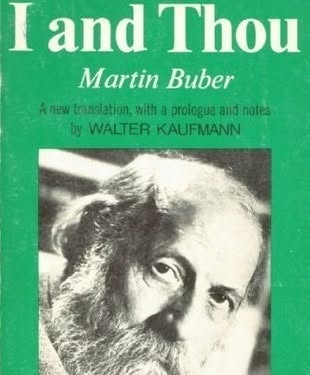
Martin Buber’s book, I and Thou

25 Jun

Until we go beyond the superficiality of basic sense perception and investigate and see the complex tapestry of existence, we stay in the it realm as Martin Buber explained in his book, I and Thou. Once we see the strands of our life within the unique fabric of existence with the magnificent, interconnected unity and complexity of life and living things, we are finally able to empathize with the essence of All and enter a thou relationship. Then our relationship with the world, with all living beings, changes fundamentally to seeing the empathetic symbiosis of ourselves with all other living life forms. It is at that point that existential care, affinity, compassion and friendliness appear and are expressed in our interactions and relationships with all the others. 

Rodger R Ricketts

The Garden of Eden- In This Life

3 Jun

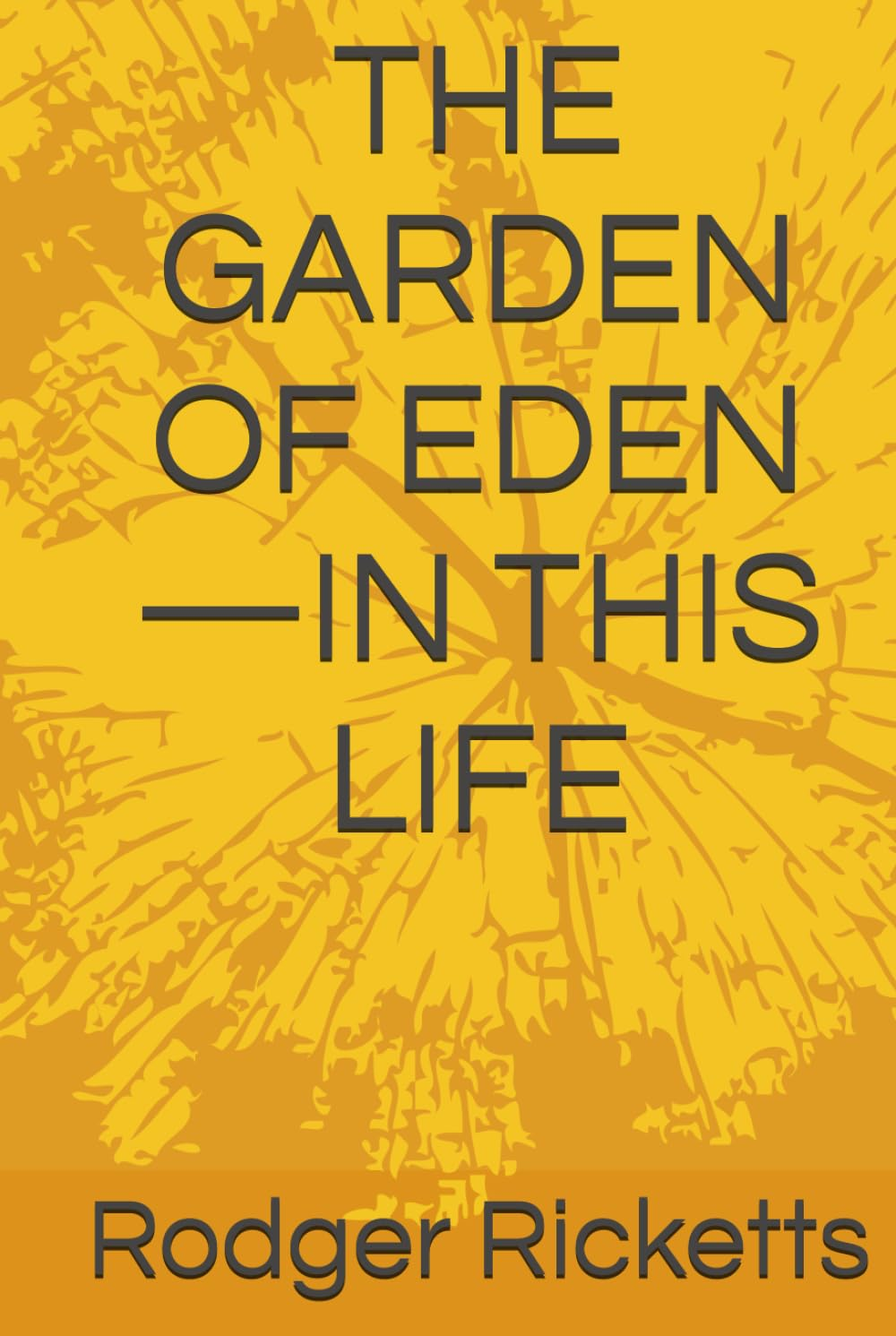
In The Garden of Eden in This Life, (2025) Dr. Rodger R. Ricketts—a clinical psychologist, mindfulness teacher, and lifelong student of the Buddha’s teachings—unveils a profound perspective linking ancient wisdom, modern psychology, and the apophatic (negative) spiritual tradition. Drawing from over forty years of study and practice, he explores how non-dualistic teachings from Buddhism, science, and multiple faith traditions reveal the limits of language, the illusions of separation, and the path back to an integrated state of being.You will journey through concepts like Sunyata (emptiness), the via negativa, and the psychology of transcendence—discovering how humanity’s separation from nature and spirit can be healed through direct experience, compassionate living, and expanded awareness. Open these pages and begin your journey back to the Garden… in this life.

Social Consequences of the Dualist/Non-Dualist perspective.

17 May


Chapter Fifteen.Of the Book, God is No-thing. The Apophatic Assertion. Copyright Rodger Ricketts Psy.D.,2020. All rights reserved. Protected by international copyright conventions. No part of this chapter may be reproduced in any manner whatsoever, or stored in a retrieval system or transmitted, without express permission of the Author-publisher, except in case of brief quotations with due acknowledgement. Published through CreateSpace Independent Publishing Platform.

Social Consequences of the Dualist/Non-Dualist perspective.

Usually, the social, relationship and environmental consequences of the dualist, rationalist vs non-dualist, transcendental perspective have not been explored in depth. In fact, there is little exploration regarding the direct social consequences of the adoption of either perspective after a focus on language, cognitive modeling, spirituality, and Awakening. Therefore, I want to use the excellent detailed analysis of the modern Jewish philosopher and educator, Martin Buber to show that whichever of the two perspectives (Non-Dualist/Dualist) one uses, there are significant relational consequences. Here is a good place to remind the reader that the Dualist and non-dualist perspectives are not exclusive from one another.

Martin Buber’s (I and Thou) and (I and It)

Martin Buber is best known for his 1923 book, Ich und Du (I and Thou), which distinguishes between “I-Thou”, in which the du or thou, is intended to convey the most intimate and loving relation possible. Thou means the you in a subject-to-subject relationship, while “I-It” is a relationship of subject-to-object modes of existence. ‘I’ is not a solitary concept that stands alone unconnected; ‘I’ is always in relation to ‘It’ or ‘Thou.’ This relation indicates the two basic ways in which we relate to the world. In the I-It relationship, the subjects are independent, isolated, and separate from a world which consists of things. According to Buber, most human beings solely adopt the I-It dualistic perspective over the I-Thou. The ‘I-It’ relation is dominated by categories of dualism, like ‘friend’ and ‘enemy’, and focuses on universal definitions, while in the I- Thou relationship, human beings are aware of each other through a unity of Being.

When that happens, we understand and empathically feel that everything is inter-being, interconnected and all living Beings are a Family of the Universe or divine. The realm of pure experience is not an ontological category, but the ordinary world of phenomena experienced directly, with no intervening conceptualization.

For as the Buddha also taught and is now clear through scientific investigation, humans and the environment are deeply enmeshed and co-dependent on each other. This is one world and every action by all living and non-living forces interact with and alter the previous reality- some more than others. Therefore, once we are inspired and apply the truths that the Buddha and Buber and others discovered and now are explicated in more modern terminology and description, there is a real possibility for a heaven on earth without the distraction of seeking supernatural intervention. The heaven on Earth can briefly be described as a world of sentient beings thriving through wisdom and empathy and compassion.

Alienation

The I-It is a relationship of separateness, detachment and ultimately alienation created by the dualistic subject/object dichotomy. Identifications appear by comparing and setting themselves apart from others. So long as you “have” yourself as an object, your experience of self and others is as of a thing among things. Once a subject, in the subject/object dyad, is analyzed as an object, the subject becomes an object or an It. When both objects and people are analyzed (subject-object relation) and judged by their capacities, they become means to an end. The I is experienced as isolated from the It, resulting in “alienation”.

To view the world as an “objective reality” separated from my consciousness and universal Being is a form of alienation. The state or experience of being alienated includes isolation, estrangement, separation, and severance. Alienation is the state of being as an outsider or the feeling of being isolated, as from others or the original being. This experience is expressed poetically by Simon and Garfunkel; ‘I am a rock, I am an island, I’ve built walls, A fortress deep and mighty, that none may penetrate.’ Alienation is the process whereby people become foreign to Being of which they exist in. This is the dominant alienation in modern society. As Derrida wrote, “Face-to- face relationships, communities of direct caretaking, control, and ownership of one’s own labor power, all these are giving way more and more to relations mediated by cell phone, digicam, digital communications replacing the immediacy of speech.” He describes well the virtual world of I-It.

The principle of alienation is found in all the great religions namely, the idea that people in the past have known the non-dualistic Absolute and lived in serenity and harmony. But with the development and rise of the ‘I’ analytical linguistic world, there was a rupture which left people feeling like strangers to each other and in the world. Also, there has often been the vision that at some time in the future this alienation will be overcome, and humanity will again live in harmony with itself and Nature.

The I–It is the mode of experience in which we engage the world as a detached object. It is based upon the axioms of logical empiricism/positivism: objectivity, determinism, abstractive contemplation, and a utilitarian approach to the other. This is the method of the rational investigation of truths and principles of science and philosophy, through which we come to understand things abstractly and intellectually, eventually for our egocentric use. Buber claimed that modern Western culture believes that this dualistic mode is the fundamental way for human beings to participate with the world. Therefore, other perspectives, which are vital to our authentic and awakened spiritual existence, are dismissed and even vilified.

While I-It is relevant to everyday living, the obstacle is its overwhelming predominance in modern technocratic society, with its basis on the principles of logical empiricism/positivism: objectivity, determinism, abstractive contemplation. The It is a mechanistic model of the universe as a machine, and the rational and empirical is operational in all areas of study with the grand vision of Humans gaining mastery over everything. In the end however, it creates a state or experience of being alienated.

SOCIAL RELATIONSHPS

In social relationships the alienated I-It individual is primarily egotistic and selfish and finds it problematic to empathize and put oneself in another’s place. They find it wearisome to be accessible and receptive because they are eremitic and solitarily orientated. They fear experiencing disappointments and disapprove of acquiescing. Yet, every success cannot satisfy their craving for indisputable success. They rigidly think in or act in an egotistical manner of accepting only what pleases them and tenaciously maintain their likes and dislikes. Their personality stagnates by not maturing and from not expressing their own creative capacities. Therefore, encapsulated, they never come to know the opportunity and satisfaction of interconnections and empathy with the world. Rigidity of the ego ‘shell’ is one of the afflictions of the solitary ‘I’, and integration with the inner refuge of peace, serenity and nothingness is absent. The self therefore remains preoccupied with maintaining, by means of the organization of rigid structures or schemas, its secure position in the historical world. Through their filtering ‘glasses’, a person believes they perceive the world ‘the way it really is’, rationally and logically. If a success is created, the egotistical person attributes it only to their own efforts, which only strengthens and heightens the wall separating them from the realization of their interconnectedness with all. The imagined self, preoccupied in establishing and classifying facts, constantly acts to satisfy its worldly cravings. With these fixed points of view, the world is clearly divided into a dualism of self-world/otherworld, subject/object, etc. While a person needs to be skillful to manage the world well, the predominance of the self-centered perspective, with its claims of supremacy, distorts not only a person’s personal and social status but any possible spiritual connection with existence, in which there is an apperception of oneness and inter-being to be realized with experience, insight and practice.

The egotistic life constantly seeks to thrill itself in the available ways of the sensual materialistic life. The intensity of their cravings varies, but the feedback loop is continuous and based on the subject/object duality. This exaggerated ignorance based on dualism creates foolishness and unhappiness. At root of why many people seek relief in many ways is a clear example of spiritual sickness, and hence suffering, i.e., alienation from life. Egocentric ignorance creates suffering of self and others.

Modern Society

Buber believed that with modern technological society increasingly supporting the I-It dogma, the loving relationship between individuals and nature, between other sentient beings, understanding their identity and the divine in an apophatic sense has become increasing more obscure and incomprehensible. He wanted to revive the link between the individual with the deepest levels of existence. To do that, he considered it necessary to unveil the impediments that hamper a person’s capacity to see and understand the No- thingness. As a result of the modern trend, it continues to become more difficult to develop an appreciation of an immanent, universal being. The problem is rooted in the supposition of the primacy of the dualistic subject-object relation. Buber believed that there had been a dramatic shift from relation to separation, creating a growing crisis of existence in ‘modern’ society. He believed that the relationship between individuals and people and creation continues to become increasingly that of I-It.

ECOLOGY and the I -THOU Relationship

The book, I and Thou is recognized as providing an enlightened perspective on the study of identity and social relations. However, on a deeper level, it was based on his awakening to humanity’s place in the Universe with relation to the Divine and Life. Buber, as all Apophatic teachers, explains humanity’s interdependence and intrinsic reciprocal aspects embedded within all relationships. Buber’s conception of the world is one that is interconnected, dependently co-originated and holistically integrated. He challenges the Cataphatic conventional theological perspective that separates humanity and existence or the divine.

As we have seen, a key premise of Buber and other apotheotic teachers is that there are two basic ways we can understand ourselves in relation to others. First, using Buber’s word of I-It, an individual has a view of an “other,” be it object or person, as a different and quantifiable entity. Whether the subject in question is an inanimate or a living being, the perception has an implied objectification. It is also this that allows the mind to make convenient generalizations. These are necessary operations of our daily existence. Without it, our ability to perform routine functions would not be possible.


The alternative is Buber’s I-Thou or mystical perspective. From this perspective, one acknowledges the transcendence of the fundamental distinguishment between oneself and an “other” and it is replaced by a relational reality. One’s life as a person standing in relation and intricacy to existence, is acknowledged. Buber demonstrates the two ways of thinking: “I consider a tree. I can look on it as a picture: stiff column in a shock of light, or splash of green shot with the delicate blue and silver of the background. I can perceive it as movement: flowing veins on clinging, pressing pith, suck of the roots, breathing of the leaves, ceaseless commerce with earth and air—and the obscure growth itself. I can classify it in a species and study it as a type in its structure and mode of life. I can subdue its actual presence and form so sternly that I recognize it only as an expression of law… I can dissipate it and perpetuate it in number, in pure numerical relation. In all this the tree remains my object, occupies space and time, and has its nature and constitution. It can, however, also come about, if I have both will and grace, that in considering the tree I become bound up in relation to it. The tree is now no longer It… It is not necessary for me to give up any of the ways in which I consider the tree… Rather it is everything, picture and movement, species and type, law, and number, indivisibly united in the event.”

Buber shows that he can choose to see the tree as a measurable and discrete It, or relate to the tree as a Thou, thus acknowledging their boundless ability to affect one another. His awareness of their interconnected and shared immanent relationship confers this possibility. From within this, we can understand how each affects one another.

Another Apophatic teacher, The Buddha, gives primary importance to the spiritual framework of relational interdependence through the principle of dependent origination. This view of the universe and the human beings undergird an imperative for people who realize the interdependent nature of their existence and the interconnection among all things. They develop a strong sense of responsibility for their own behaviors, as well as appreciation and empathy for others. It is from this realization of the true interbeing nature of existence that non harming, compassionate, altruistic action arises. The reciprocation of one’s being with another is the birthplace of care and compassion. 

Within the I-It there is separation and alienation while in I-Thou we find relation, edification, and transcendence. Thus, our ability to love and show affection stems from our capacity to awaken. It is this facet of dependent origination that our treatment of the environment is dependent upon how we view ourselves within it. To willfully assume a relation of care, one’s views must be attuned. The Buddha attributes all our resulting harming behaviors and the suffering hence caused, to the human ignorance (avijja), that is, we cannot see the world as it is and see our self as such within that existence. We are ignorant to the cosmic reality that everything in the world is inter-related, interdependent. By not adopting the Buddha’s worldview, we think we are separate from others as an isolated and independent entity. This ignorance is what Buddhism identifies as the very root cause of violence, conflict, alienation, environmental destruction, and war, which prevents human beings to live a thriving and peaceful life.

If we accept the notion of humanity’s reciprocal relationship with the earth and that our relationship is shaped by our vision, then our attitudes towards the environment are made manifest in our treatment of it. As Buber’s account points out so well, a tree can be seen as a simple, inanimate object, bound by nature’s laws, or as a captivating and mysterious being whose experience of life is wholly unknown to our minds. Then we can ask, is a forest solely a resource for the meeting of our needs or is it a habitat in which to live?


We are at the point now to consider the term biocentrism or life-centered (biocentric) approach to nature that encompasses all environmental ethics which “extend the status of moral object from human beings to all living things in nature”. Biocentric ethics, like I-Thou and dependent origination, calls for a rethinking of the relationship between humans, nature and existence. It views that nature does not exist simply to be used or consumed by humans, but that humans are simply one species amongst many, and that because we are part of an ecosystem, any actions which negatively affect the living systems of which we are a part adversely affect us as well, whether or not we maintain a biocentric worldview. Biocentrists, viewing life from can be considered an I-Thou perspective, observe that all species have inherent value, and that humans are not “superior” to other species in a moral or ethical sense.

The four main pillars of a biocentric outlook are:

  1. Humans and all other species are members of Earth’s community.
  2. All species are part of a system of interdependence.
  3. All living organisms pursue their own “good” in their own ways.
  4. Human beings are not inherently superior to other living things.

Albert Schweitzer was another 20th-century thinker who understood that life itself is the decisive factor in determining moral value. Working in very remote areas, Schweitzer experienced a diversity, complexity, and multiplicity of plant and animal life-forms rarely seen within industrialized societies. Schweitzer used the phrase “reverence for life” to convey what he took to be the most appropriate attitude toward all living beings. Life itself, in all its mystery and wonderment, commands respect, reverence, and awe.

To quote Schweitzer, “Ethics are complete, profound, and alive only when addressed to all living beings. Only then we are in spiritual connection with the world … Profound love demands a deep conception and out of this develops reverence for the mystery of life. It brings us close to all beings. To the poorest and smallest, as well as all others. We reject the idea that man is ‘master of other creatures,’ ‘lord’ above all others. We bow to reality. We recognize that all existence is a mystery, like our own existence. The poor fly which we would like to kill with our hand has come into existence like ourselves. It knows anxiety, it knows hope for happiness, it knows the fear of not existing anymore. Has any man so far been able to create a fly? That is why our neighbor is not only man: my neighbor is a creature like myself, subject to the same joys, the same fears, and the idea of reverence for life gives us something more profound and mightier than the idea of humanism. It includes all living beings” (Quoted in The Schweitzer Album, edited by Erica Anderson, 1965, p. 174).

Biocentrism may best be viewed as an attitude with which to approach life and not a codified dogma. By approaching each living being with reverence and humility makes human life more meaningful. Also, biocentric morality and ethics develops virtues and behaviors with which humans interact with empathy and affinity with other living beings.

The Buddha also tells us that the key to a compassionate ethic of Life is once we see the dependent origination in existence, the infinite interconnectedness of all life. We understand that our desire to thrive is the same for all other sentient beings, thereby, recognizing that all beings tremble at violence, that all wish to live and do not want to die. It is this affinity with all who share the gift of life that one naturally empathizes and put themself in the place of all sentient beings. Recognizing this, one will be friendly, kind with others and enhance their ability to thrive.

Most importantly from an ecological Biocentric point of view one comprehends how the biosphere is also totally interconnected and supporting of all life forms. Contrary to the narcissistic assumption that humanity’s interests supersede that of other creatures, it denies human superiority and claims that all living things have inherent value. Biocentrism proposes that the highest moral standing is life itself. All living beings, simply by being alive, have moral standing and deserve moral and ethical consideration. Inherent in this reciprocal dynamic of interrelatedness, there is an awareness and ethic on humanity’s Right relation with itself and the natural world.

Or as Lama Anagarika Govinda expressed it: ‘He who wants to follow the Path of the Buddha must give up all thoughts of ‘I’ and ‘mine’. But this giving up does not make us poorer; it actually makes us richer, because what we renounce and destroy are the walls that keep us imprisoned; and what we gain is that supreme freedom, which is not to be understood simply as a merging into the whole or a feeling of identity with others, but as the experience of an infinite relationship, according to which every individual is essentially connected with all that exists, thus embracing all living beings in his own mind, taking part in their deepest experience, and sharing their sorrow and joy.’

Because of our ignorance of not Awakening to the non-dual nature of existence, humans are unable to properly view the world which has distorted our discernment of its inherent value. For much of humanity, instead of harmonizing our mindsets and hence lifestyles with an equitable and just nature, we create suffering through egotistical gratification of greed, anger and alienation.

Also, as Buber explains, “to step into pure relation is not to disregard everything but to see everything in the ‘Thou’, not to renounce the world but to establish it on its true basis.” Thus, we lift the veil of ignorance and the illusion of separateness and alienation and, instead, we come to see the world as it truly is.

A similar view was proposed by A. Einstein also…“A human being is a part of the whole, called by us the Universe, a part limited in time and space. He experiences himself, his thoughts and feelings as something separated from the rest- a kind of optical delusion of his consciousness. This delusion is a kind of prison for us, restricting us to our personal desires and to affection for a few persons nearest to us. Our task must be to free ourselves from this prison by widening our circles of compassion to embrace all living creatures and the whole of nature in its beauty. Nobody is able to achieve this completely, but the striving for such achievement is in itself a part of the liberation and of a foundation for inner security.” — Albert Einstein, N.Y. Post, November 28, 1972.


Bouma-Prediger, Steven. 2001. For the Beauty of the Earth. Grand Rapids, Michigan: Baker Academic.

Buber, Martin. 1970. I and Thou. Trans. Walter Kaufmann. New York: Charles Scribner’s Sons.
Kohanski, Alexander. 1982. Martin Buber’s Philosophy on Interhuman Relation. Rutherford, Madison, Teaneck: Fairleigh Dickinson University Press & London and Toronto: Associated University Press.
Wikipedia biocentrism ethics


Union Is in the Heart

8 May

Follow the advice of your heart, because no one will be more faithful to
you than him.
—Book of Sirach, 37.13

I think that the positive forces that will create our future will not be the
forces and the laws of matter, but those of conscious cooperation,
comprehension, and love for others that all beings in existence must sooner
or later manifest because these values are the essence of our deepest nature.

I also think that the most effective way to achieve union is through a
process of collective and cooperative creation of a just, empathic, and
loving society through right and courageous actions informed by the heart
and by the intuitive and rational mind. Then our experience and knowing
will grow in our hearts and they will guide our individual actions through
an ever-higher level of consciousness. Unfortunately, today there is the real
danger of letting ourselves be seduced by the spreading culture of digital
ontology and digital consumerism that replaces true and profound
relationships with virtual and superficial ones, thus halting, if not reversing,
our spiritual development.

Social networks designed to bombard people with suggestive messages,
often personalized to reinforce personal biases or based on false
information or on presumed conspiratorial theories, generate groups that
can become alienated from reality in self-isolating worlds. Nikola Tesla said
that “progress must serve to improve the human race; if not, it is only a
perversion.”
Technology must be used to help us discover our true nature, not to
further imprison us in meaningless virtual worlds designed to enrich the
richest. We have come to the point where we can truly unite as humans no
matter where we were born, or stay divided in warring factions with ever
increasing destructive technology on our side.
Only when we truly comprehend that we are responsible for our
experiences and that the choice is ours alone, can we begin to truly know
ourselves and the world.

To know ourselves more and more, we need a new empathic science
that can convert scientific knowledge into deep lived knowing and from it
generate new scientific knowledge. Similarly, we need a new rational
spirituality that can convert lived knowing into new scientific knowledge
and from it generate new lived knowing. These two disciplines can then
intertwine in endless and mutual crescendo.
This is the essence of the Creative Principle of One. Within this vision,
empathic science and rational spirituality, integrating and interweaving, will
evermore increase our loving, joyful, and fulfilling union with the Whole.

Federico Faggin: Irreducible – consciousness, Life, Computers, and Human Nature 1988 Essentia Publisher

Pure and Serene Mind (Part 2): The Path of Chi Restoration Through Qigong & Tai Chi

22 Apr

Written by Rodger R Ricketts

In the previous blog post, I explored how modern life gradually separates us from our original Chi through excessive mental activity, immersion in artificial systems, and disconnection from natural sensation. As symbolic thinking and external pressures dominate our awareness, the mind stretches beyond its natural limits, losing sensitivity to life energy. This disconnection weakens the true self and leads to imbalance, fragility, and inner suffering. Yet within each person remains the potential to restore purity, stillness, and authentic Chi by returning to original awareness, reconnecting with natural sensation, and aligning with timeless Daoist principles. Now, I examine how the ancient practices of Qigong and Tai Chi guide this restoration through stillness, movement, and the gradual purification of mind and life energy.

The cultivation and flow of energy through Qigong breathing techniques and Tai Chi movements reveal a path that is both clear and accessible. As individuals begin to recognize the false self that has often governed much of their existence, they should prepare for unexpected insights. Many people find themselves encumbered by multiple false identities. Rather than becoming discouraged, it is advisable to adopt a strategy of gradual progress—advancing step by step with unwavering faith—steadily uncovering one’s original life energy. This process unfolds layer by layer, requiring persistence and resilience. If one has been taught to believe that miracles occur externally, such a belief stems from a misconception rooted in a desire for effortless gain. It is imperative to cease heeding this false self and reject this erroneous notion immediately. Although the journey toward reclaiming one’s life energy may be challenging, it is ultimately profoundly rewarding.

If one maintains a pure heart and genuine sincerity in their efforts, it is possible to utilize the tools and guidance provided by a master to achieve the goal of discovering one’s true self. The experience of Chi can be regained through consistent practice. Several methods exist to restore the sensation of Chi, including motionless meditation, moving meditation, and receiving Chi energy from a master. According to the sacred teachings of an ancient lineage, a master capable of radiating life energy resembles a powerful iron magnet. Ideally, these practices should be undertaken concurrently. The primary purpose of these meditations is to create calmness and exclude the distractions of the artificial world, thereby enabling concentration and reconnection with internal sensations through stillness, typically in a seated posture, although some practices involve standing.

Despite the diversity in names and styles among various meditation techniques, all are designed to help practitioners eventually perceive their own energy. While many contemporary meditation systems emphasize sensing life energy, only one system currently extends beyond this initial stage by teaching how to direct the flow of Chi. This system contains essential knowledge that aids in purifying and strengthening true energy. It is the original Qigong meditation, deeply rooted in the principles of the Tao. Unlike other forms, the essence of Qigong meditation lies in cultivating the sensation of Chi within a clear mind. Qigong instructs practitioners to intensify this sensation and circulate it throughout the entire body, resulting in Chi that is fully present in every moment.

Through flowing movements, total Chi can be refined to become exceptionally pure and strong. This practice also forms the foundation of what is now known as Tai Chi. Tai Chi remains the only moving meditation practiced today that supports the development of Chi beyond the initial healing stages. Authentic Tai Chi enhances both the quantity and quality of life energy in a manner consistent with ancient Qigong meditation. Numerous styles of Tai Chi exist worldwide. For those whose lifestyle permits and who are resolute in their desire to attain true freedom from the artificial world, halt the depletion of life energy, and reclaim their true selves, it is possible to engage in all three stages of practice simultaneously, as was done in ancient times.

Among all training processes, the most critical step is learning to maintain the cleanliness and purity of one’s life energy. Purifying life energy is the ultimate goal, while maintaining its cleanliness is the means to that end. To keep life energy clean, one must keep the mind clean. If the mind remains unpolluted, unsullied, and undisturbed, it can purify life energy. The mind functions as a filter and must remain in its original, uncontaminated state, free from external influences. It must be brought to its most concentrated state: calm and comfortable, neither forced nor resistant, simply embodying one’s original self. The pursuit of this clean state of mind should not be forced, as the desire to attain it itself contaminates the mind. Ancient temple records recount stories of monks who failed to purify their minds due to excessive effort.

When the mind is free from contamination, distortion, and confusion, it naturally facilitates the purification of life energy. An apt analogy is to consider life energy as water and the mind as its filter. The mind must remain in its original, unaltered state—characterized by freedom, deep concentration, calmness, and comfort, without striving or resistance. Engaging in practices such as two-gong breathing and slow meditation with sincerity and honesty gradually calms and purifies the mind. With a purified mind, one can direct life energy to flow throughout the entire body, and over time, this energy will attain a purity comparable to that of a newborn. This represents a valuable aspiration: to harmonize one’s life energy with the original cosmic energy, known as the Dao.

Upon sensing and communicating with this pure life energy, one may progress further by reconnecting with its source through harmonious contact. This process entails transcending the layers of impurity and negative energy that obscure the original life energy, as well as the pollution of the artificial mind. In a polluted state, life energy cannot resonate at the same frequency as the Dao. It is not that the Dao refuses to communicate or assist; rather, communication is impeded while life energy remains contaminated and vibrates at a low frequency. Many individuals pray to external entities using words; however, such prayers often yield inconsistent outcomes because the original almighty force neither perceives nor communicates through low-level, artificially constructed symbols such as language. Instead, it communicates with those who turn inward and pray through the sensation of their pure life energy.

There exists no higher pursuit or more cherished goal than rediscovering and reclaiming one’s pure life energy. The most effective and singular method to cultivate life energy is through moving meditation that promotes the flow of Chi. Chi grows only when it flows, encompassing increases in strength, range, size, and volume. A greater volume of Chi better supports both body and mind. When the mind attains purity and Chi strengthens, it can be refined into higher forms of energy known as Jing Jing, which can be projected and transmitted beyond the body. Presently, no other meditation practice offers a comparable method to facilitate the flow of life energy as does the original Tai Chi flow meditation. Tai Chi simultaneously strengthens the mind and cultivates life energy, or Chi, and can be practiced anywhere and at any time. Practitioners are advised to wear comfortable clothing and flat, flexible shoes, breathe smoothly, quietly, and naturally, and may synchronize movements with breath without forcibly holding it. The mouth should remain closed with lips and teeth gently together, the tongue resting lightly against the roof of the mouth, and the head held upright as if suspended by a cord from above. Movements should be performed in a relaxed, comfortable manner with minimal muscular tension. With modest effort, the movements can be learned effectively.

At first glance, Tai Chi may appear to consist of slow, graceful movements designed primarily to improve physical balance and flexibility. However, beyond these physical benefits, Tai Chi represents a deeply meditative practice aimed at fostering clarity and inner stillness. The most profound aspects of significant Chi involve an empty mind and the clear release of mental tension. In Tai Chi, stillness does not imply the cessation of physical movement; rather, it entails cultivating a calm and focused mind. The practice promotes the release of distracting thoughts, worries, and mental chatter, thereby enabling full attention to be directed toward the present moment and the fluidity of one’s movements.

This state of stillness is known as Wuji, which translates as “emptiness” or “non-being” and represents the state of primordial, undifferentiated reality before the emergence of Yin and Yang. In Tai Chi, all movements and energy flow from Wuji. It is a state of pure potential wherein the mind is clear, the body relaxed, and awareness anchored in the present moment. By embracing stillness, Tai Chi practitioners access a powerful state of mental clarity that facilitates movement and fosters integration between body and mind.

Across these two blog posts, I traced the arc from loss to restoration: how modern existence subtly exhausts Chi and obscures true nature, and how ancient Taoist practice gently guides the return. Part One revealed how artificial systems, excessive thinking, and sensory overload separate us from original life energy, weakening intuition and inner peace. Part Two illuminated the path of return through sincerity, stillness, and movement, restoring Chi through meditation, Qigong, and Tai Chi. By purifying the mind, circulating life energy, and aligning with the Dao, one gradually reawakens the innate wholeness present in infancy—a pure and serene mind capable of sensing life energy naturally and resting effortlessly in truth. This journey requires patience and devotion, yet it ultimately leads to freedom, clarity, and harmony with the living universe.

Mitákuye Oyás’iŋ:We are connected to each other in multiple and vital ways

17 Apr

The Lakota phrase Mitákuye Oyás’iŋ describes Reality by addressing it as “All My Relations.” All humans, all animals, all plants, all the waters, the soil, the stones, the mountains, the grasslands, the winds, the clouds and storms, the sun and moon, stars and planets are our relations and are relations to one another. We are connected to each other in multiple and vital ways. When one is in pain, all are harmed. When there is justice for one, there is more justice for all.

It is time for the dominant culture to finally learn that its people cannot harm those it deems lesser than themselves simply because it wants to and can. This is, simply, wrong. It violates the fundamental nature of reality. Actions that violate the fundamental nature of reality build tension into the system that eventually causes a loss of balance and a rebound of consequence to those who broke natural law. This is true whether the ones being unjustly persecuted and abused are human beings whose color or religious beliefs are not those of the dominant culture, or parts of the natural world that those of the dominant culture judge as insentient or even not-living. In all these cases, the dominant culture judges these “others” as unacceptable or lesser than themselves, and therefore undeserving of respect and reciprocity.

Being “woke” is not simply a matter of learning what words to speak. Truly right words can only come from a heart that is open to the living world’s grief, that is willing to be broken by the pain of this grief. Such a heart experiences the pain that all the rest of creation has suffered for generations upon generations, and in doing this it helps to share and bear that burden. Only then, once the true heart has shattered from this pain, can Real Knowledge flow into it. It enters through the spaces between the shattered fragments. This is the pathway to true healing, for that heart and the heart of creation itself.

===Notes about the translation and meaning of Mitákuye Oyás’iŋ:

Although “All Our Relations” is the most common translation of Mitákuye Oyás’iŋ  — even Vine Deloria, Jr. defines it as such in his books — the phrase actually bears within it rich layers of additional meaning that cannot be easily translated into English. It’s important to point this out because words and ideas, stories and rituals, are bound together into a single reality that must be respected, not misappropriate. In the video, the late Sicungu Lakota Elder Albert White Hat, a friend who was on Tapestry’s board for many years, explains this matter of language and concept being inextricably interwoven.

The Native relationship to nature is revealed in Native hunting and food-growing practices. It is believed that the animals we hunt, whom we view as our relatives, offer themselves to us as an act of Metta. In return, the hunter must do something for the animal, for instance a deer dance or buffalo dance, to thank the animal and pray for regeneration of the animal’s family. When it comes to the food that we grow, we have dances and seasonal fertility rituals, which are ceremonies that bring us into direct relationship with the spirit of plants and Earth consciousness.

I see the whole Native way as realizing our relationship with everything and ourselves as an integral part of all things, which in turn causes us to treat the Earth and other forms of life with respect, as part of our family. Western civilization is finally recognizing that relationship. Suddenly people are saying that the Earth is alive and talking about Gaia and holistic worldviews and systems theory. Native people are basically saying, “Yes, welcome home.”

The Indian elders say, “We must remember also the four-footed, those who swim and those who fly, those who crawl and those who move very slowly like the stone people, and all the green and growing things.” Within this sacred circle we are one. What we do affects everyone, everything. These great teachings remind us of our responsibility to care for all life. In our pursuit of progress and comfort we have separated ourselves from our place in this great circle. Earth traditions bring us back into harmony and balance within the circle.The Lakota end all prayers with “O Mitakuye Oyasin,” meaning “I do this for all my relations (or all sentient beings).”  Dualism happens when egocentricity develops, creating a split with nature, each other and all life. When I was departing for a yearlong retreat in the Tibetan Buddhist tradition, I told the medicine woman Bertha Grove, “I’ll be alone for a long time.” She replied, “You’re not going to be alone. When you go outside and look around, you won’t feel alone at all. You’ll be completely accompanied by the trees, the plants, the birds and the animals.” For many years, I had learned about nonduality and the teachings of integration, but Grove’s way of saying it was like a direct transmission.

Animism flows from the belief that everything is part of an interconnected web of life. It is deeply embedded in many indigenous worldviews and as well as nondual meditation traditions from Tibet, India, China and Egypt. Both animism and nonduality share some profound philosophical and experiential similarities.

While not explicitly labeled as apophatic, many indigenous religions share core principles with apophatic theology, particularly in their emphasis on the mystery of the divine, the limitations of human language, and the importance of direct experience. The apophatic lens can offer a valuable framework for understanding and appreciating the diverse spiritual expressions found in indigenous cultures.  The concept of the “Unknown God” in ancient Egyptian religion, and the debate among scholars about whether it was monotheistic, henotheistic, or polytheistic, can be seen as related to apophatic ideas, as it acknowledges a divine reality beyond human comprehension.  How it Relates to Indigenous Religions:

While apophatic theology is primarily associated with specific theological traditions like Christian mysticism and negative theology within Hinduism and Islam, its core principles resonate with some aspects of indigenous religions. 

  • Emphasis on Mystery:
  • Many indigenous traditions emphasize the sacredness and mystery of the natural world and the divine, often employing symbolic language and ritual practices that point to something beyond literal explanation.
  • Reverence for Nature:
  • Indigenous religions often have a deep connection with the natural world, viewing it as imbued with spiritual power and interconnectedness, which can be seen as an expression of the divine in a way that transcends human concepts.
  • Oral Traditions:

Many indigenous traditions rely on oral traditions and stories, which often utilize metaphors and symbolism to convey spiritual truths, rather than relying on propositional statements.

  • Focus on Experience:

Indigenous spiritual practices often prioritize direct experience and personal connection with the spiritual realm, rather than relying solely on abstract theological doctrines.

Both challenge the rigid subject-object dualism and reductionist materialism that dominate modern thought and instead present an interconnected, holistic and kinship-based worldview and an embodied experience of existence.

I believe our ecological crisis of climate change and biodiversity collapse is ultimately a crisis of consciousness. Our disconnection from nature fuels both ecological collapse and a mental health epidemic. Reclaiming the felt sense of interconnectedness found in animism and nonduality is a powerful antidote to our alienation.

I have found that practicing nondual awareness and spending more time outdoors exploring with mindful awareness practices can dramatically reduce self-reflective overthinking, help to get to the root of today’s existential anxiety epidemic and heal our alienation from nature. Through nondual awareness practices, we can start to feel a deeply rooted sense of aliveness and kinship with all other living beings. In animistic cosmology, we are not separate from nature and we exist within a kinship worldview where we feel fundamentally at home in this world. In animism, there is no strict division between self and nature; rather, existence is participatory. The forest is not just a backdrop for people but a dynamic, intelligent presence.

Posted in Tapestry on June 12, 2020 by Dawn

We are divine

17 Apr

“We are divine, and we must live not by the
survival of the fittest, but in a way that supports everyone and everything on
this planet” Bruce H. Lipton

The time has come to use our powerful technologies for the good of all,
rather than for the delusional good of the self-proclaimed fittest. The idea of
separation, which finds its expression in the reductionism of classical
physics, must be replaced by the experience of union and inclusion already
evident in the holism of life. “There is not a single isolated fragment in all
of nature, each fragment is part of a harmonious and complete unity” (John
Muir). Only by recognizing this crucial interdependence can humanity go
beyond the repetition of the same dysfunctional patterns that have caused so
much unnecessary suffering to our species and to the ecosystem.
Many sages throughout history have suggested that we are beings of
light that will not die with the death of the body, because we are here to
learn and grow. I think we are here to learn to collectively create new
worlds in which to operate at a much higher level of cooperation, creativity,
and fulfillment than we now can at this early stage of our spiritual
evolution. The possibility of experiencing our true nature is already
supported by the enlightened personal experiences of millions of people
around the globe, and by countless “anecdotal” facts and events that science
hesitates to investigate. If we open ourselves to this potential that is
dormant in us and ask our greater self to show the way, we may soon be
able to experience an unsuspected unity in our lives, the early signs of
humanity’s awakening to its true power and purpose
.

Only when we truly comprehend that we are responsible for our
experiences and that the choice is ours alone, can we begin to truly know
ourselves and the world.
To know ourselves more and more, we need a new empathic science
that can convert scientific knowledge into deep lived knowing and from it
generate new scientific knowledge. Similarly, we need a new rational
spirituality that can convert lived knowing into new scientific knowledge
and from it generate new lived knowing. These two disciplines can then
intertwine in endless and mutual crescendo.
This is the essence of the Creative Principle of One. Within this vision,
empathic science and rational spirituality, integrating and interweaving, will
evermore increase our loving, joyful, and fulfilling union with the Whole.

I think that the positive forces that will create our future will not be the
forces and the laws of matter, but those of conscious cooperation,
comprehension, and love for others that all beings in existence must sooner
or later manifest because these values are the essence of our deepest nature.
I also think that the most effective way to achieve union is through a
process of collective and cooperative creation of a just, empathic, and
loving society through right and courageous actions informed by the heart
and by the intuitive and rational mind. Then our experience and knowing
will grow in our hearts and they will guide our individual actions through
an ever-higher level of consciousness.

copyright: Federico Faggin 2023 Irreducible: Consciousness, Life, Computers and Human Nature

The Unity of All -Non-Dualistic Apophatic Higher States of Consciousness

13 Apr

Non-Dualistic ApophaticHigher States of Consciousness

While Apophatic theology was often in the past regarded as heretical, blasphemy, and unorthodox, we have seen in the previous chapters that now the sciences including physics, cosmology, psychology, biology, ecology, linguistics, as well as meditation, all provide a secure platform for the non-dualistic Apophatic convictions and practice. Apophatic teachings and analysis clearly provide an alternative to the dominant Dualistic Cataphatic dogma. This acceptance and application of the non-dualist perspective is not just an academic survey but a way of living that has crucial truths that benefit the individual, interpersonal, biological, psychological, sociological, spiritual, societal, and ecological levels.

This book is meant to indicate the possibility and rationale that is encompassed in the title of Apophatic. To further explore in-depth the Buddha’s teaching of the Path to Awakening, the reader is referred to my previous books: The Buddha’s Teachings; Seeing Without Illusion, The Buddha’s Radical Psychology: Explorations and The Buddha’s Gift: A Life of Wellbeing and Wisdom.

Now we have the testimony of numerous modern articulate thinkers whose ability to describe their awakening perspectives leads a strong support to past spiritual leaders who, even in the threat of death, spoke their truths out of compassion for others. Remembering the insights of his personal mystical experience, Martin Buber, in his book, The Heart of Mysticism, described his higher states of consciousness: “Now from my own unforgettable experience I know well that there is a state in which the bonds of the personal nature of life seem to have fallen away from us and we experience an undivided unity.”

With this experience of Awakening, Buber understood the world without the alienating and separating dualistic subject/object dichotomy. Like the Buddha, out of compassion for humanity, Buber taught us how to experience and act in a non-alienated way. While Buber always emphasized that he understood relating to the world in an I-It manner, a ‘functional’ relationship between subject and object, is necessary, his primary concern was when a person was unable to respond from I-Thou, thus creating alienation and suffering. The relation between the person and Nothingness is a universal relationship that is found as the foundation for I-Thou, as authentic beings, without objectification. From an apophatic perspective, it is from the background of the I-Thou relation that I-It arises in the foreground.

Virtuous and Kind Behaviors

For this apophatic potential relational world to be realized, virtuous and kind behaviors are encouraged. This promotes sensitivity to the inner and outer world, more serenity, more authenticity, empathy and wisdom with less alienation, rumination, conflict, hatred, and bias.

The ‘I-Thou’ relation participates in the dynamic and living process of Being. That relationship simply Is. Through this relation, we interact with the world in its whole Being. It is not a means to an egocentric objective or goal of use and order but an authentic relationship involving respect and care for the whole being of each subject and existence.

Basic to the Apophatic relation, Lovingkindness or benevolence is a subject-to-subject relationship. Love cannot be an ego-based relation of subject to object but rather a relationship in which all members are subjects and share the immanent unity of Being. According to Buber, the I-Thou relationship is “the existential and ontological reality in which the self comes into being and through which it fulfills and authenticates itself.” This relation is characterized by mutuality and openness, directness, and being in the present.

I-Thou an expression of Inter-being relations

Using Buber’s ‘I-Thou’ as an apophatic example, communication is the fundamental expression of the uniqueness of relation within inter-being. These relational patterns of rapport and affinity are usually found when beings relate with lovingkindness, friendship, openness, and care. I meet you as you are, and you meet me as who I am. In this relationship, I am with you openly in my heart and mind. Living through relationships with this authenticity brings deep satisfaction, happiness and richness in life and opens a greater sense of the original relation with the Being. One easily expresses empathy and compassion, knowing that all are interconnected in unity. Such a perspective makes a different world, a world without violence. As Jesus said, ‘Thou shalt love thy neighbor as thyself.’ The Buddha said as well, “All beings tremble before violence. All fear death. All love life. See yourself in others. Then whom can you hurt? What harm can you do?”

As all Apophatic sages teach, by being ‘empty’ in the moment, here and now, we experience the wonder of existence. As we have seen in other chapters, the ultimate, even the very idea of the ultimate, cannot be known by discursive thinking. In the now, we live our life as it is. Also, through the practice of silent meditation, we focus on our life awareness. With this awareness, we experience our interconnectedness with all things and empathy and compassion for all sentient beings.

Knowing shatters illusions

Knowing begins with the release of illusions, with dis-illusion. Knowing means to penetrate through the fog, to arrive at reality; knowing means to ‘see’ the reality without illusion. Knowing is that the ‘ownership’ of truth is not possible. The Awakened relationship cannot be explained; it simply is. Through this ‘empty’ relation, we interact with the world in this whole Being. It is not a means to some object or goal but an authentic relationship involving respect for the whole being of each subject. Buber considers ‘I-Thou’ communication the fundamental expression of the uniqueness of relation within inter-being. These relational patterns of rapport and affinity are usually found when beings relate with lovingkindness, friendship, openness, and care.

In the I-Thou encounter, we relate to each other as authentic beings, without inquisition, prejudice, enmity, or predisposition. I meet you as you are, and you meet me as who I am. In this relationship, I am with you openly in my heart and mind. However, there are many people who never fully understand this deeper level of relation. This is tragic because living through relationships based on the non-dualistic perspective brings happiness, deep satisfaction and richness in life and opens a greater sense of the original relation with the Absolute.

When an I-Thou encounter occurs, I am meeting the other as thou with openness, directness, and presence by means of real mutual action, meaning and confirmation. As Buber wrote, “This person is other, essentially other than myself… I confirm it; I wish his otherness to exist, because I wish his particular being to exist.” We are interconnected, “not just with people, but animals too, and stones, clouds, trees” (Aitken 1984, p. 10). We are an integral part of everything.

Nothing exists by itself; nothing has a separate existence, an inherent separate self. As human beings we are Being, one with All. The truth is pure interbeing, beyond dualistic thinking of the alienated mind. Thus, one becomes aware of the impermanence and the Emptiness of the ‘IT’ world. Serenity comes with the acceptance of impermanence and interrelatedness. The insights of such Sages as the Buddha, the Hebrew prophets, Jesus, and Master Eckhart show that knowing begins with the awareness of the deceptiveness of our common-sense perceptions and cognitive constructions; our formulations of physical reality do not correspond to what is ‘really real.’ Therefore, most people are half-awake, half dreaming, and are unaware that most of what they hold to be true and self-evident is an ‘magician-like’ illusion produced by the influence of the dualistic alienated world in which they live.

Knowing, then, begins with the transformation of illusions, selfishness, and alienation. Knowing means to penetrate through the fog, to arrive at reality and to ‘see’ the reality without illusion. Knowing is not to own the truth, as possession is not possible, but to Be the truth. The Being mode of knowing allows us, as psychologist Erich Fromm (1992, pp.117-120) also observed, to go beyond ourselves, outside the ego. The Path’s result is kindness to oneself and another, to transcend the barriers that separate us from one another, and living life with recognition of interdependence and impermanence. When communicating at this level, we move beyond biased social roles, identifications, and objectification.

In I-Thou dialogues, we trust and can disclose deep, private aspects of ourselves that enable us to engage in deep and authentic relationships. The rigid, dualistic and egotistically dominated mind remains enmeshed in ignorance, greed, and anger that feeds on itself and, therefore, does not let go and rise above the suffering quagmire in which it remains. This ego rigidity needs an empathetic and compassionate approach to assist it in letting go and coming to know how it is possible to live in a world without the pain and distrust and suffering created through this dualistically based ignorance. And, in fact, the path can be clear and successfully traveled without much difficulty.

What is difficult is allowing oneself to give up the encased hatred, the anger, the greed, the biases of egoism and of selfishness. In the book, Lost Horizon, there is this passage: ‘Look at the world today. Is there anything more pitiful? What madness there is! What blindness! A scurrying mass of bewildered humanity crashing headlong against each other. The time must come when brutality and the lust for power will perish by their own sword. When that day comes, the world must begin to look for a new life.’

The new life away from that is and always has been pointed to by the apophatic teachers in the past and now. The whole movement is toward the development of maturity of perspective and, therefore, action with wisdom about the way we understand and think about existence. Therefore, incorrect ideas and beliefs must be renounced, which will change our human character and end further suffering.

For as the Buddha and other apophatic teachers have consistently taught, what is now clear through scientific investigation, that living beings, the environment and even the universe are deeply enmeshed and co-dependent on each other. This is one world and every action by all living and non-living forces interact with and alter the previous reality- some more than others. Therefore, once we become experienced, inspired, and apply the truths that the Buddha and others have discovered, and now are explicated in more modern terminology and description, there is a real possibility for a Heaven on Earth without the distraction of seeking supernatural intervention.

Heaven on Earth can briefly be described in a biocentric way as a world of humans acting through wisdom and empathy and compassion, The Buddha, one of the greatest Apophatic teachers, said in his last words to the monks, “It may be that after I am gone that some of you will think, ‘now we have no teacher.’ But that is not how you should see it. Let the Dharma and the discipline that I have taught you be your teacher. All individual things pass away. Strive on, untiringly.”

Now, as we have explored in this book the similar meditation instructions and doctrinal perspectives taught by the many Apophatic spiritual teachers, over time and different cultures, we know we can attain Awakening and know Emptiness and give up our suffering and the harmful consequences of dualistic alienation, for a life of wellbeing and happiness. Let us all assert the Apophatic Way and accomplish knowing the ‘unknowable’ – No-thing

Chapter 16 The Unity of All. Of the Book, God is No-thing. The Apophatic Assertion The
Salvation for Humankind – revised -. Copyright Rodger Ricketts Psy.D.,2022. All rights
reserved.

Black Elk Speaks…Indigenous Spirituality

8 Apr

Quotes of Black Elk who was a prominent Lakota Sioux visionary and healer, that taught about the connection with the sacredness and oneness of life, and the deep, loving, heart-opening spiritual knowledgethat we carry in our hearts, that is crucial for the coming together of all people as one family.

1.The first peace, which is the most important, is that which comes within the souls of people when they realize their relationship, their oneness with the universe and all its powers, and when they realize that at the center of the universe dwells the Wakan-Taka Great Spirit, and that this center is really everywhere, it is within each of us. This is the real peace, and the others are but reflections of this. The second peace is that which is made between two individuals, and the third is that which is made between two nations. But above all you should understand that there can never be peace between nations until there is known that true peace, which, as I have often said, is within the souls of men.

2. At the center of the universe dwells the Great Spirit. And that center is really everywhere. It is within each of us.

3. Peace will come to the hearts of men when they realize their oneness with the universe, It is everywhere.

4. Any man who is attached to things of this world is one who lives in ignorance and is being consumed by the snakes of his own passions.

5. As you walk upon the sacred earth, treat each step as a prayer.

6. What is Life? It is the flash of a firefly in the night. It is the breath of a buffalo in the wintertime. It is the little shadow which runs across the grass and loses itself in the sunset.

7. All things are our relatives; what we do to everything, we do to ourselves. All is really One.

8. The Great Spirit is everywhere; he hears whatever is in our minds and our hearts, and it is not necessary to speak to Him in a loud voice.

Black Elk Speaks: Being the Life Story of a Holy Man of the Oglala Sioux by John G. Neihardt