
Tags: Academia.Edu, Happiness, Knowledge, meditation, psychology, reality, Science, Spirituality, Sunyata
I arranged lyrics about the Buddha’s teachings to John Lennon’s famous song Imagine.
An Introduction to my book. I have published seven books on Amazon.

The Buddha’s Compassion
‘Go forth, bhikkhus, for the good of the many, for the happiness of the many, out of compassion for the world, for the good, benefit, and happiness of men.’
Vimånavatthu I, 20
‘Of all the teachings, the ultimate is emptiness, of which compassion is the very essence. It is like a very powerful medicine, a panacea that can cure every disease in the world. And just like that very powerful medicine, realization of the truth of emptiness, the nature of reality, is the remedy for all the different negative emotions.’
Atiśa Dipankara Shrijnana (980–1054 CE)
Compassion
Compassion (karunā) is as important an aspectof the Path as Wisdom. The Buddha often spokeof compassion – understanding that there issuffering and doing what will best help to alleviatethat suffering – as the most beneficial and moralof all behaviors. Knowing that there is dukkha isthe strongest incentive for living a life of compassionatebehavior toward ourselves as well as toward others. Compassion for ourselves and compassion for others are not mutually exclusive.Progress on the Path to Enlightenment resultsin our developing progressively purified mentaldispositions and behaviors.The Buddha taught that developing wisdom andcompassion is essential if one is to find enlightenment.Moreover, like two wings that work togetherin flight, each of these qualities supports the other. Wisdom distinguishes beneficial from non-beneficial, while compassion moves us to action.
The Buddha was the first thinker in known history to teach the doctrine of human equality and social freedom amongst all humans. Society should be open to all, regardless of caste, color, or class. No caste, class, or race privileges existed among his lay followers or in the Order of the Sangha that he founded. Instead, social classes and castes are nothing but functional divisions of society, man-made, subject to change and resulting from social and historical factors. Any social doctrine based on the alleged superiority of a caste, class, or race, and advocating to keep it dominant using force, will lead to the perpetuation of social tensions and conflict, and never bring about harmony and equality. The Buddha’s doctrine of equality means each person should be treated equally with dignity and given an equal chance to develop their inherent potentials of economic, moral and spiritual progress, and of human perfection. Also, the Buddha was the first who attempted to abolish slavery, which included the traffic in, and the sale of, females for commercial purposes. In fact, this is a prohibited trade for his followers.
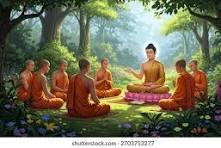
One. I am grateful for this new day. Every morning is a gift. But we often forget that caught up in our routines and worries. The Buddha once said, “Let us rise up and be thankful. For if we didn’t learn a lot today, at least we learned a little.” When you wake up, before you check your phone or think about your to-do list, simply say to yourself, “I am grateful for this new day.” Feel that gratitude in your heart for your breath, for your body, for the chance to begin again. Gratitude is the foundation. It opens your mind and softens your heart. Try this. Before getting out of bed, take three slow,deep breaths and silently repeat this affirmation. Start your day grounded in appreciation.
Two, I let go of yesterday. What happened yesterday is over. The arguments, the mistakes, the stress. They belong to the past. But many of us wake up still carrying yesterday’s weight. And that burden drains our energy. In Buddhist wisdom, attachment to the past is one of the roots of suffering. So each morning, remind yourself, I let go of yesterday. Let go of the regrets, the anger, the sadness.Imagine them dissolving with each exhale. Give yourself the freedom to begin fresh today. Because every morningis a small rebirth, a chance to choose peace over pain.
Three, I am calm and in control of my mind. The world will test you today with stress, with challenges, with distractions. But remember this, I am calm and in control of my mind. The Buddha taught, “Rule your mind or it will rule you.” Your mind can be your greatest friend or your greatest enemy, and the choice is yours. So before the chaos begins, anchor yourself in this affirmation. Feel the calmness within you. Know that no matter what happens outside, you have the power to choose peace inside. Try sitting in stillness for even one minute after waking up. Just breathing and reminding yourself of your inner strength.
Four, I will respond withkindness. Today, kindness is not just what you do. It’s how you carry yourself, how you speak, even how you think. When you start your day with the intention of kindness, you transform your world and the world around you. Say to yourself, “I will respond with kindness today.” Whether it’s with family, co-workers, strangers, or even yourself. The Buddha said, “Hatred does not cease by hatred, but only by love.” This is the eternal rule. By choosing kindness, you break the cycle of negativity and plant seeds of peace.Before you leave home, visualize at least one kind act you will do today, no matter how small. This simple intention can change the energy of your entire day.
Five. Everything is temporary. So I will enjoy this moment. Life is always changing. The good times, the hard times, nothing stays forever. In Buddhism, this is called ana or impermanence. So each morning remind yourself everything is temporary so I will enjoy this moment. If today is busy it will pass. If today is peaceful that too will pass. But right now this breath this sunrise this chance to be alive it is yours. Cherish it. As the old saying goes nothing is forever except change. So instead of resisting embrace this flow of life. Be present. Be grateful.
Bhikkhu K. Nanananda
“May all beings be safe from inner and outer dangers.”
“May all beings be healthy and strong.”
“May all beings be happy and peaceful.”
“May all beings live with ease.”
One who is enlightened must use conceptual thought and language to teach others about the way to Awakening as the Buddha did. In teaching the Four Noble Truths, language is necessary to converse rationally with others and to make important decisions, as the Buddha did regarding the Buddhist
sangha and giving advice to kings and leaders, but the Truth cannot be known rationally.
Or as story about the nun Wu Jincang said to Hui-neng (638-713 CE), the Sixth Patriarch of the Chan School (better known as the Zen Buddhist School), “I have studied the Mahaparinirvana sutra for many years, yet there are many areas I do not quite understand. Please enlighten me.” His reply puzzled her greatly. “I am illiterate,” he answered; “please read out the characters to me and perhaps I will be able to explain the meaning.” When she said to him, “You cannot even recognize the characters. How are you able then to understand the meaning?” he responded that the truth had nothing to do with words. “The truth and the words are unrelated. The truth can be compared to the bright moon in the sky, and words can be compared to a finger. I can use my finger to point out the moon, but my finger is not the moon, and you don’t need my finger to see the moon, do you?”
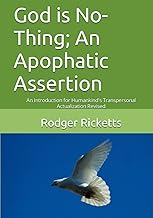
Publisher’s review of this book
“God is No-Thing; An Apophatic Assertion” by Rodger R Ricketts is an outstanding work on apophaticism and how it relates to various religions or philosophies around the world and across time. At the heart of the discussion is the apophatic nature of “God,” Buddhism as a philosophy, and the clear benefits of an apophatic approach in life, both for the individual and for society. The author backs up his claims and observations about the apophatic way with references to scientific research as well as quotes from celebrated mystic and religious people from across time and from different backgrounds. In addition to providing a large body of proof for the validity and benefits of an apophatic way of knowing God, this book also provides a helpful guide to meditation itself and how to go about it.
I highly recommend this book to anyone interested in Buddhism, meditation, apophatic philosophy, and working for the betterment of themselves and humanity
Published 2023
The Doctrine of Karma or Kamma is not a mystical force and does not entail fatalism. Instead, it is a natural phenomenon, like gravity. Our thoughts create consequences inside our mind which we then act on. The doctrine refers to our intentional mental actions- our volitions. What we are now is determined by our thoughts and actions in the past and what we do next, in the future, is determined by our thoughts and actions in the present. Therefore, our kamma has the potential to continuously change depending on the development of our thoughts and actions.
The Buddha was very clear in teaching the Noble Eightfold Path that we can transform the quality of our mind and action for the better and ultimately achieve Enlightenment. So, Karma does not mean that we have a fixed destiny across lifetimes that we must passively accept or that bad or good things happen only because of our past actions.
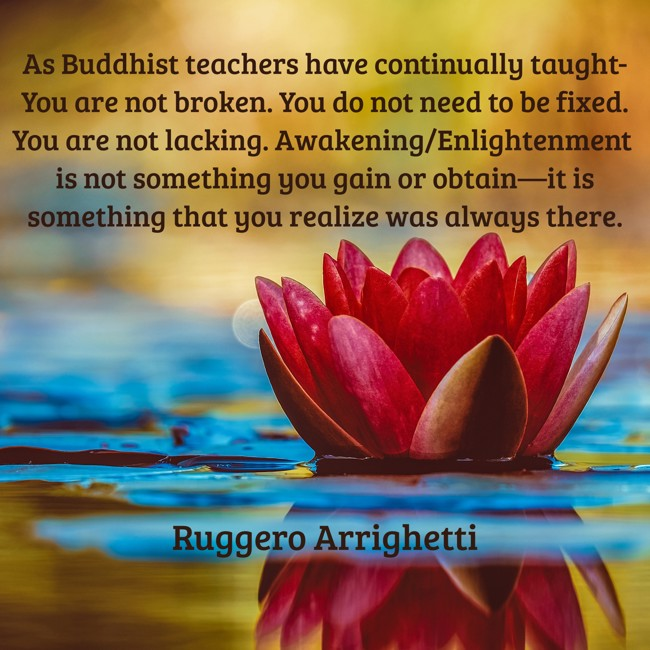
 We are all Interconnected even with the Universe