
Tags: Academia.Edu, Happiness, Knowledge, meditation, psychology, reality, Science, Spirituality, Sunyata
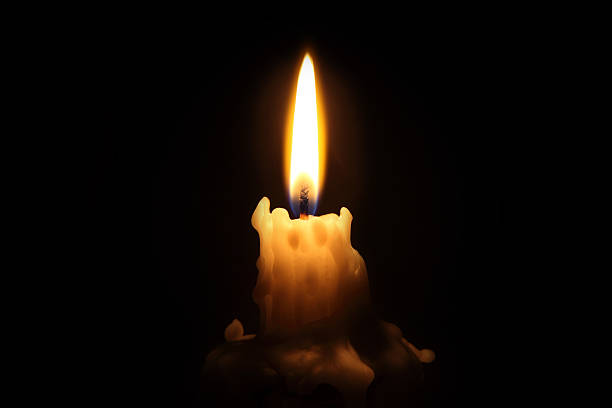
Anatta: Nothing lives on its own, all are interdependent. We are alive not only due to our parents, air, food, water, but the entire ecosystem we live in. Dependent Origination recognizes that everything, including the psychophysical compound that we call individual, exists only in relation to other beings and things and undergoes constant changes responding and reacting to them. There is a plural causality of all things whereby each thing arises in relation to all others, and can therefore be said to be conditioned by all others. There are vast numbers of influences that affect us constantly- some help us thrive, others not. We cannot remain the same for two moments. We are like a flame. Whatever is subject to origination is also subject to cessation. Every form has the rycle of existence- to begin, age, to become disordered, and eventually cease to exist. That which carries on after death is our life elements and trends. There is nothing that can be called a permanent “I”. The identities of ‘I’, “me” and “mine” are illusions that we construct with our minds.
Here are some examples of Tesla’s viewpoint. In a speech, Nicola Tesla said, ‘The sources of energy capable of transforming humanity have long been near us in nature itself, in human emotions, in the sound of music, in the breath of the earth.’ He said that mankind had searched for power outside itself for too long forgetting that it is found within. ‘I believe that the energy that feeds the universe is not just a physical resource. It is something greater. We call it ether. Some call it the divine spark or the essence, they are all the same. All living things are nourished by this force. It is hidden in the depths of the planet, in the structures of light, in the harmony of sounds and in thoughts.’ He claimed that one day this energy would become the foundation of new technologies capable of feeding the hungry, healing the sick, and eliminating the need for destructive sources of energy.
Tesla noted with sorrow that in his time, society was not ready to accept such ideas. There were too much politics, greed and fear of the unknown in the world.In his view no religion can claim to be the absolute truth. He asserted that all of them are reflections of the same human desire to understand the source of life and one’s purpose. Religions and philosophies are attempts to explain the infinite with finite words. They may be useful, but they have no significance on the scale of the universe. ‘God, as I understand him, is an infinite force. It is the energy from which everything originated. But it does not judge. It does not punish. It simply exists.’ said Tesla.
During an interview that Tesla granted to a journalist in the year 1930, he said:’We are just waves in time and space, changing continuously, and the illusion of individuality is produced through the concatenation of the rapidly succeeding phases of existence’; ‘My brain is only a receiver, in the Universe there is a core from which we obtain knowledge, strength and inspiration. I have not penetrated in the secrets of this core, but I know that it exists’; ‘We are all one. Only egos, beliefs, and fears separate us’; He added ’None of those who ever lived have truly died because energy is eternal and life is a form of energy. The body departs but the essence itself, the vibration itself does not disappear.’
These ideas, of course, resonate with spiritual teachings, but Tesla emphasized he arrived at them not through faith but through science. And at the same time, he did not deny the divine. God is light, it is the primary energy from which everything began. This light has no form. It requires no worship. It simply exists. It is in everything, in us, in the air, in the stars. People assign human traits to God to make it easier to understand. But the true power of God lies in his impersonality and infinity.
Then the interview returned to the topic of death. Tesla said he was not afraid of it because death is not the end but a return. He compared it to how a wave returns to the ocean. You will not die because you were never born. You have always existed in one form or another. We are only temporarily in these bodies, in this world. When everything ends we will simply move to another state. Everything is energy and it never disappears.
Rochelle Forrester Copyright © 2015 Rochelle Forrester
All Rights Reserved
A more formally logical way of presenting the above argument,with”a world”being defined
as that which can be perceived by a conscious being through its senses, is as follows:
1)There is no way in which we can know the world,other thant hrough our senses.Theonly
reality we can know is phenomena.
2) Our senses give us only some information about the world.
3)The things we can perceive can beconsidered to be in our world, the things we cannot
perceive can be considered to be in other or different worlds.
Therefore
4) As there are many things we cannot perceive there are many worlds other than our own.
5)There is no reason to consider that any world is more real,more true or more valid than any
other world.
6)If there is no reason to believe anyone world is truer or more real than any other,theyc an
only be treated as equally true or real.
Therefore
7) Any one world is as valid and real and true as any other.
8) There is a wide variety of senses and each sense has thresholds which limit perception.
Therefore
9) There must be a wide variety of worlds.
10) As the senses of different people and species overlap some of the worlds overlap.
11)As any being may hav esenses which are quite unlike those of anyother being manyof
these worlds will not over lap.Such beings will live in totally separate worlds from those o fother
beings.
12)There seems to be no reason to believe there is a finite limit on the range of potential
sense organs.
Therefore
13) There is no finite limit on the number of potential worlds that may exist.
Reality appears to consist of a vast number,possibly an infinite number,of sensory worlds.
Each person has their own individual world.This is the world they perceive which is always different
from the world perceived by others.Variations exist from person to person due to each person
occupying different points in time and space and due to the qualityof the individual person’s sense
organs.Each species has its own world due to the tendency fo rmembers of each species to have the
same sense organs which will tend to function in a similar way within each member of the species.
There seems to be no good reason for favoring any one of these sensory worlds over any other of
them. It seems impossible to claim that the human view of the world has any special claim to validity
when an alteration of our senses will give us different sense perceptions.How can you say what you
perceive is,when the samething can be perceived with different sense organs and it can be something
quite different? If the human view was to be preferred, it would be no more than a case of a human
centric view of the world that is not capable of any real justification.
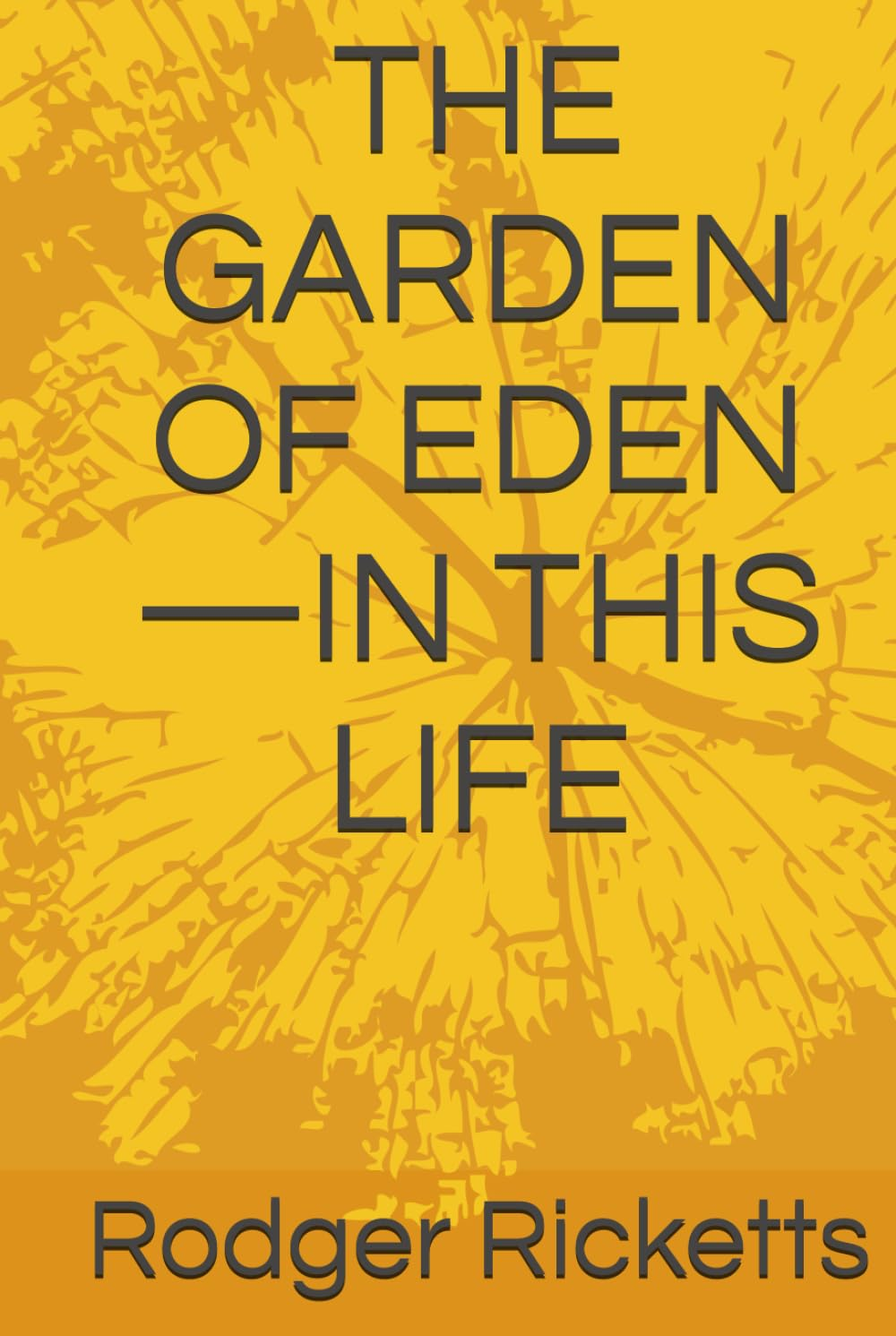
In The Garden of Eden in This Life, (2025) Dr. Rodger R. Ricketts—a clinical psychologist, mindfulness teacher, and lifelong student of the Buddha’s teachings—unveils a profound perspective linking ancient wisdom, modern psychology, and the apophatic (negative) spiritual tradition. Drawing from over forty years of study and practice, he explores how non-dualistic teachings from Buddhism, science, and multiple faith traditions reveal the limits of language, the illusions of separation, and the path back to an integrated state of being.You will journey through concepts like Sunyata (emptiness), the via negativa, and the psychology of transcendence—discovering how humanity’s separation from nature and spirit can be healed through direct experience, compassionate living, and expanded awareness. Open these pages and begin your journey back to the Garden… in this life.
Biodance – the endless exchange of the elements of living things with the earth itself – proceeds silently, giving us no hint that it is happening. It is a dervish dance, animated and purposeful and disciplined; and it is a dance in which every living organism participates. These observations simply defy any definition of a static and fixed body. Even our genes, our claim to biologic individuality, constantly dissolve and are renewed. We are in a persistent equilibrium with the earth. Yet the boundary of our body has to be extended even farther than the earth itself. We know that certain elements in our body, such as the phosphorus in our bones, were formed at an earlier stage in the evolution of our galaxy. Like many elements in the earth’s crust, it was cycled through the lifetime of several stars before appearing terrestrially, eventually finding its way into our body. A strictly bounded body does not exist. The concept of a physical I that is fixed in space and that endures in time is at odds with our knowledge that living structures are richly connected with the world around them. Our roots go deep; we are anchored in the stars.’
“Each body structure has its own rate of reformation: the lining of the stomach renews itself in a week; the skin is entirely replaced in a month; the liver is regenerated in six weeks. Some tissue is relatively resistant to the constant turnover, such as the supporting tissue called collagen and the iron in the blood’s hemoglobin molecules. But even though these rates of replacement differ, after five years one can presume that the entire body is renewed even to the very last atom.”
Dr. Larry Dossey
Follow the advice of your heart, because no one will be more faithful to
you than him.
—Book of Sirach, 37.13
I think that the positive forces that will create our future will not be the
forces and the laws of matter, but those of conscious cooperation,
comprehension, and love for others that all beings in existence must sooner
or later manifest because these values are the essence of our deepest nature.
I also think that the most effective way to achieve union is through a
process of collective and cooperative creation of a just, empathic, and
loving society through right and courageous actions informed by the heart
and by the intuitive and rational mind. Then our experience and knowing
will grow in our hearts and they will guide our individual actions through
an ever-higher level of consciousness. Unfortunately, today there is the real
danger of letting ourselves be seduced by the spreading culture of digital
ontology and digital consumerism that replaces true and profound
relationships with virtual and superficial ones, thus halting, if not reversing,
our spiritual development.
Social networks designed to bombard people with suggestive messages,
often personalized to reinforce personal biases or based on false
information or on presumed conspiratorial theories, generate groups that
can become alienated from reality in self-isolating worlds. Nikola Tesla said
that “progress must serve to improve the human race; if not, it is only a
perversion.”
Technology must be used to help us discover our true nature, not to
further imprison us in meaningless virtual worlds designed to enrich the
richest. We have come to the point where we can truly unite as humans no
matter where we were born, or stay divided in warring factions with ever
increasing destructive technology on our side.
Only when we truly comprehend that we are responsible for our
experiences and that the choice is ours alone, can we begin to truly know
ourselves and the world.
To know ourselves more and more, we need a new empathic science
that can convert scientific knowledge into deep lived knowing and from it
generate new scientific knowledge. Similarly, we need a new rational
spirituality that can convert lived knowing into new scientific knowledge
and from it generate new lived knowing. These two disciplines can then
intertwine in endless and mutual crescendo.
This is the essence of the Creative Principle of One. Within this vision,
empathic science and rational spirituality, integrating and interweaving, will
evermore increase our loving, joyful, and fulfilling union with the Whole.
Federico Faggin: Irreducible – consciousness, Life, Computers, and Human Nature 1988 Essentia Publisher
“We are divine, and we must live not by the
survival of the fittest, but in a way that supports everyone and everything on
this planet” Bruce H. Lipton
The time has come to use our powerful technologies for the good of all,
rather than for the delusional good of the self-proclaimed fittest. The idea of
separation, which finds its expression in the reductionism of classical
physics, must be replaced by the experience of union and inclusion already
evident in the holism of life. “There is not a single isolated fragment in all
of nature, each fragment is part of a harmonious and complete unity” (John
Muir). Only by recognizing this crucial interdependence can humanity go
beyond the repetition of the same dysfunctional patterns that have caused so
much unnecessary suffering to our species and to the ecosystem.
Many sages throughout history have suggested that we are beings of
light that will not die with the death of the body, because we are here to
learn and grow. I think we are here to learn to collectively create new
worlds in which to operate at a much higher level of cooperation, creativity,
and fulfillment than we now can at this early stage of our spiritual
evolution. The possibility of experiencing our true nature is already
supported by the enlightened personal experiences of millions of people
around the globe, and by countless “anecdotal” facts and events that science
hesitates to investigate. If we open ourselves to this potential that is
dormant in us and ask our greater self to show the way, we may soon be
able to experience an unsuspected unity in our lives, the early signs of
humanity’s awakening to its true power and purpose.
Only when we truly comprehend that we are responsible for our
experiences and that the choice is ours alone, can we begin to truly know
ourselves and the world.
To know ourselves more and more, we need a new empathic science
that can convert scientific knowledge into deep lived knowing and from it
generate new scientific knowledge. Similarly, we need a new rational
spirituality that can convert lived knowing into new scientific knowledge
and from it generate new lived knowing. These two disciplines can then
intertwine in endless and mutual crescendo.
This is the essence of the Creative Principle of One. Within this vision,
empathic science and rational spirituality, integrating and interweaving, will
evermore increase our loving, joyful, and fulfilling union with the Whole.
I think that the positive forces that will create our future will not be the
forces and the laws of matter, but those of conscious cooperation,
comprehension, and love for others that all beings in existence must sooner
or later manifest because these values are the essence of our deepest nature.
I also think that the most effective way to achieve union is through a
process of collective and cooperative creation of a just, empathic, and
loving society through right and courageous actions informed by the heart
and by the intuitive and rational mind. Then our experience and knowing
will grow in our hearts and they will guide our individual actions through
an ever-higher level of consciousness.
copyright: Federico Faggin 2023 Irreducible: Consciousness, Life, Computers and Human Nature
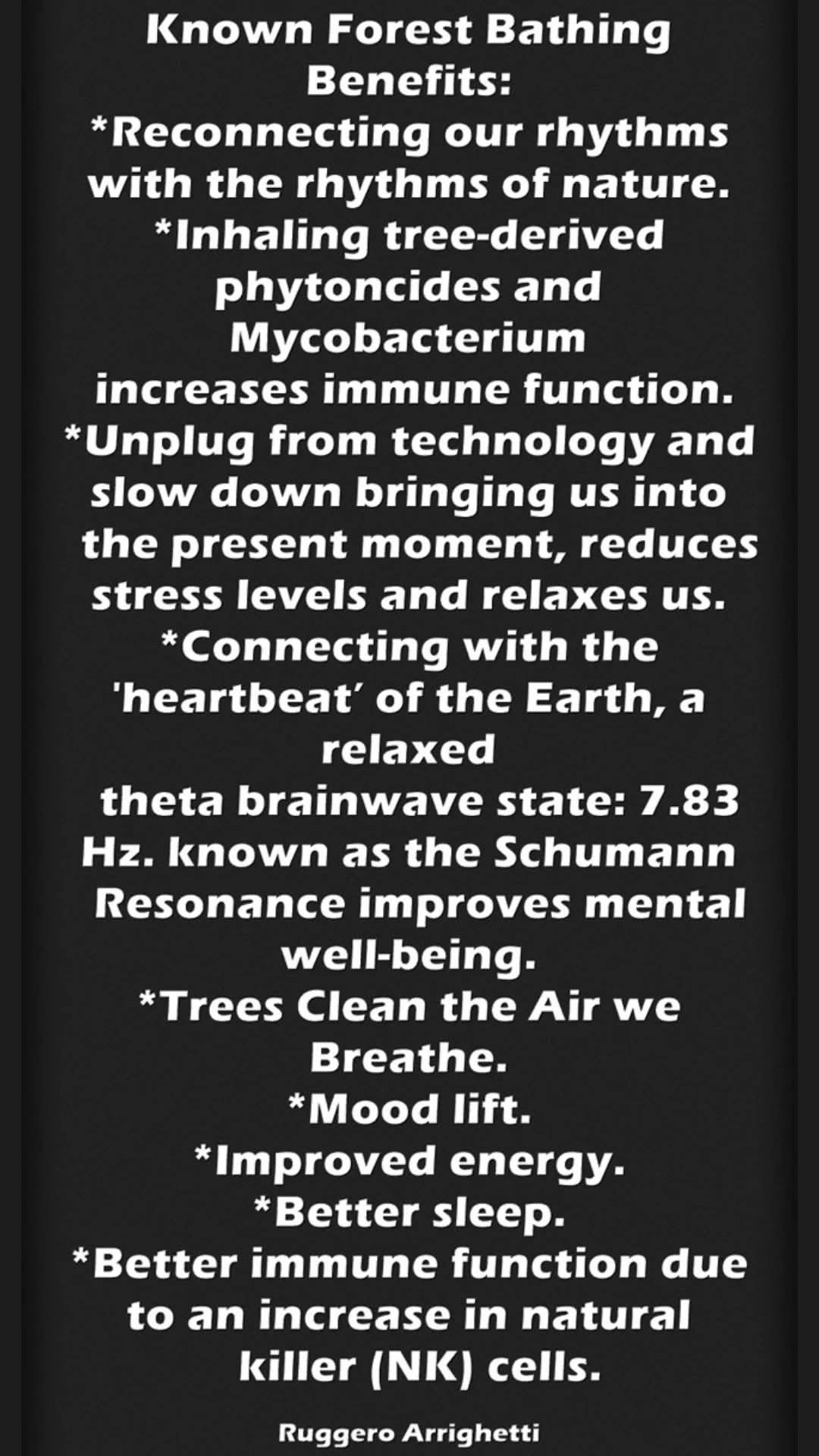
 We are all Interconnected even with the Universe