
Tags: Academia.Edu, Happiness, Knowledge, meditation, psychology, reality, Science, Spirituality, Sunyata
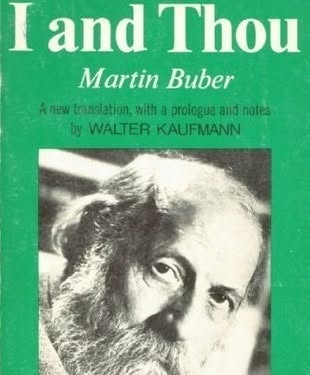
Until we go beyond the superficiality of basic sense perception and investigate and see the complex tapestry of existence, we stay in the it realm as Martin Buber explained in his book, I and Thou. Once we see the strands of our life within the unique fabric of existence with the magnificent, interconnected unity and complexity of life and living things, we are finally able to empathize with the essence of All and enter a thou relationship. Then our relationship with the world, with all living beings, changes fundamentally to seeing the empathetic symbiosis of ourselves with all other living life forms. It is at that point that existential care, affinity, compassion and friendliness appear and are expressed in our interactions and relationships with all the others.
Rodger R Ricketts
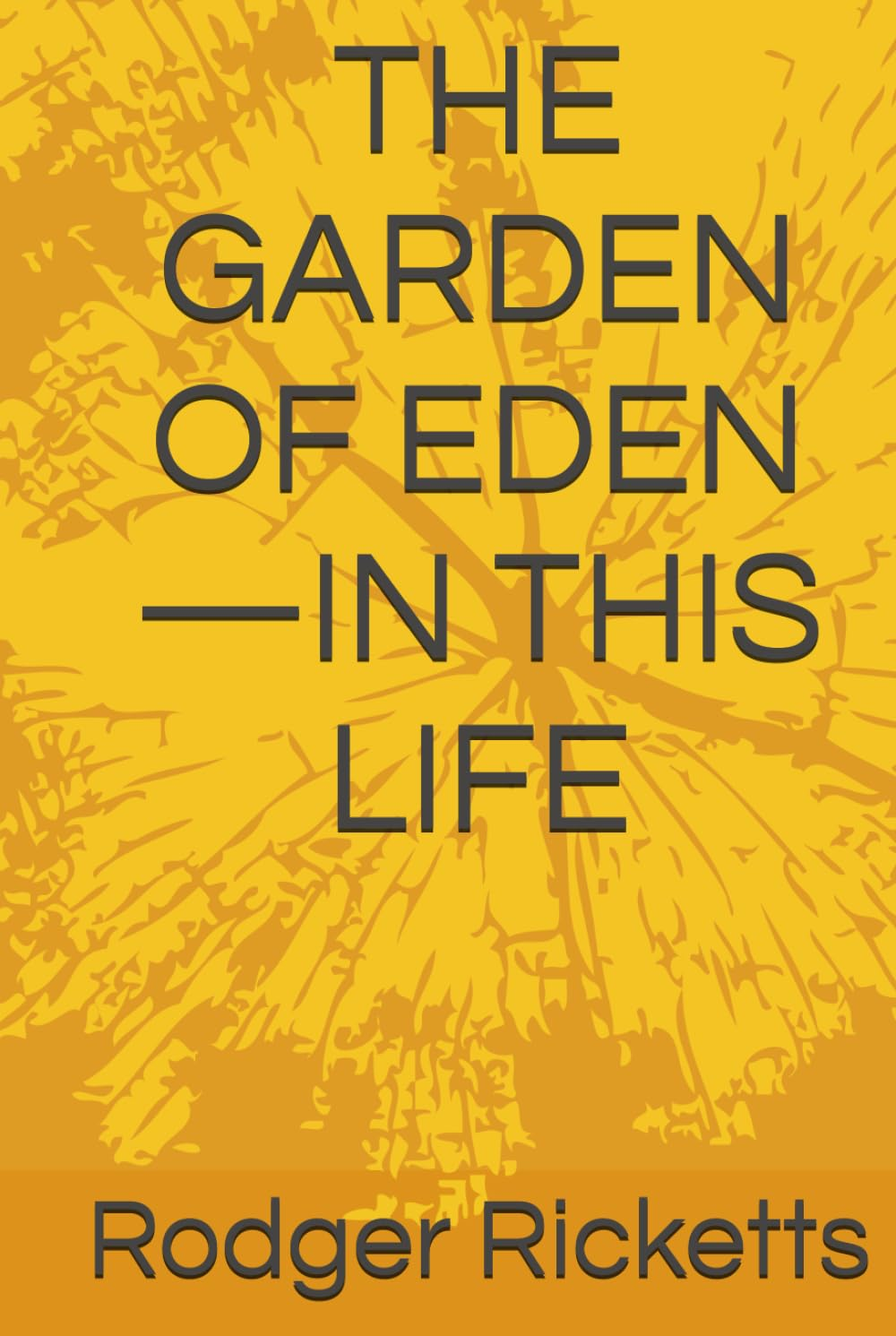
In The Garden of Eden in This Life, (2025) Dr. Rodger R. Ricketts—a clinical psychologist, mindfulness teacher, and lifelong student of the Buddha’s teachings—unveils a profound perspective linking ancient wisdom, modern psychology, and the apophatic (negative) spiritual tradition. Drawing from over forty years of study and practice, he explores how non-dualistic teachings from Buddhism, science, and multiple faith traditions reveal the limits of language, the illusions of separation, and the path back to an integrated state of being.You will journey through concepts like Sunyata (emptiness), the via negativa, and the psychology of transcendence—discovering how humanity’s separation from nature and spirit can be healed through direct experience, compassionate living, and expanded awareness. Open these pages and begin your journey back to the Garden… in this life.
Non-Dualistic ApophaticHigher States of Consciousness
While Apophatic theology was often in the past regarded as heretical, blasphemy, and unorthodox, we have seen in the previous chapters that now the sciences including physics, cosmology, psychology, biology, ecology, linguistics, as well as meditation, all provide a secure platform for the non-dualistic Apophatic convictions and practice. Apophatic teachings and analysis clearly provide an alternative to the dominant Dualistic Cataphatic dogma. This acceptance and application of the non-dualist perspective is not just an academic survey but a way of living that has crucial truths that benefit the individual, interpersonal, biological, psychological, sociological, spiritual, societal, and ecological levels.
This book is meant to indicate the possibility and rationale that is encompassed in the title of Apophatic. To further explore in-depth the Buddha’s teaching of the Path to Awakening, the reader is referred to my previous books: The Buddha’s Teachings; Seeing Without Illusion, The Buddha’s Radical Psychology: Explorations and The Buddha’s Gift: A Life of Wellbeing and Wisdom.
Now we have the testimony of numerous modern articulate thinkers whose ability to describe their awakening perspectives leads a strong support to past spiritual leaders who, even in the threat of death, spoke their truths out of compassion for others. Remembering the insights of his personal mystical experience, Martin Buber, in his book, The Heart of Mysticism, described his higher states of consciousness: “Now from my own unforgettable experience I know well that there is a state in which the bonds of the personal nature of life seem to have fallen away from us and we experience an undivided unity.”
With this experience of Awakening, Buber understood the world without the alienating and separating dualistic subject/object dichotomy. Like the Buddha, out of compassion for humanity, Buber taught us how to experience and act in a non-alienated way. While Buber always emphasized that he understood relating to the world in an I-It manner, a ‘functional’ relationship between subject and object, is necessary, his primary concern was when a person was unable to respond from I-Thou, thus creating alienation and suffering. The relation between the person and Nothingness is a universal relationship that is found as the foundation for I-Thou, as authentic beings, without objectification. From an apophatic perspective, it is from the background of the I-Thou relation that I-It arises in the foreground.
Virtuous and Kind Behaviors
For this apophatic potential relational world to be realized, virtuous and kind behaviors are encouraged. This promotes sensitivity to the inner and outer world, more serenity, more authenticity, empathy and wisdom with less alienation, rumination, conflict, hatred, and bias.
The ‘I-Thou’ relation participates in the dynamic and living process of Being. That relationship simply Is. Through this relation, we interact with the world in its whole Being. It is not a means to an egocentric objective or goal of use and order but an authentic relationship involving respect and care for the whole being of each subject and existence.
Basic to the Apophatic relation, Lovingkindness or benevolence is a subject-to-subject relationship. Love cannot be an ego-based relation of subject to object but rather a relationship in which all members are subjects and share the immanent unity of Being. According to Buber, the I-Thou relationship is “the existential and ontological reality in which the self comes into being and through which it fulfills and authenticates itself.” This relation is characterized by mutuality and openness, directness, and being in the present.
I-Thou an expression of Inter-being relations
Using Buber’s ‘I-Thou’ as an apophatic example, communication is the fundamental expression of the uniqueness of relation within inter-being. These relational patterns of rapport and affinity are usually found when beings relate with lovingkindness, friendship, openness, and care. I meet you as you are, and you meet me as who I am. In this relationship, I am with you openly in my heart and mind. Living through relationships with this authenticity brings deep satisfaction, happiness and richness in life and opens a greater sense of the original relation with the Being. One easily expresses empathy and compassion, knowing that all are interconnected in unity. Such a perspective makes a different world, a world without violence. As Jesus said, ‘Thou shalt love thy neighbor as thyself.’ The Buddha said as well, “All beings tremble before violence. All fear death. All love life. See yourself in others. Then whom can you hurt? What harm can you do?”
As all Apophatic sages teach, by being ‘empty’ in the moment, here and now, we experience the wonder of existence. As we have seen in other chapters, the ultimate, even the very idea of the ultimate, cannot be known by discursive thinking. In the now, we live our life as it is. Also, through the practice of silent meditation, we focus on our life awareness. With this awareness, we experience our interconnectedness with all things and empathy and compassion for all sentient beings.
Knowing shatters illusions
Knowing begins with the release of illusions, with dis-illusion. Knowing means to penetrate through the fog, to arrive at reality; knowing means to ‘see’ the reality without illusion. Knowing is that the ‘ownership’ of truth is not possible. The Awakened relationship cannot be explained; it simply is. Through this ‘empty’ relation, we interact with the world in this whole Being. It is not a means to some object or goal but an authentic relationship involving respect for the whole being of each subject. Buber considers ‘I-Thou’ communication the fundamental expression of the uniqueness of relation within inter-being. These relational patterns of rapport and affinity are usually found when beings relate with lovingkindness, friendship, openness, and care.
In the I-Thou encounter, we relate to each other as authentic beings, without inquisition, prejudice, enmity, or predisposition. I meet you as you are, and you meet me as who I am. In this relationship, I am with you openly in my heart and mind. However, there are many people who never fully understand this deeper level of relation. This is tragic because living through relationships based on the non-dualistic perspective brings happiness, deep satisfaction and richness in life and opens a greater sense of the original relation with the Absolute.
When an I-Thou encounter occurs, I am meeting the other as thou with openness, directness, and presence by means of real mutual action, meaning and confirmation. As Buber wrote, “This person is other, essentially other than myself… I confirm it; I wish his otherness to exist, because I wish his particular being to exist.” We are interconnected, “not just with people, but animals too, and stones, clouds, trees” (Aitken 1984, p. 10). We are an integral part of everything.
Nothing exists by itself; nothing has a separate existence, an inherent separate self. As human beings we are Being, one with All. The truth is pure interbeing, beyond dualistic thinking of the alienated mind. Thus, one becomes aware of the impermanence and the Emptiness of the ‘IT’ world. Serenity comes with the acceptance of impermanence and interrelatedness. The insights of such Sages as the Buddha, the Hebrew prophets, Jesus, and Master Eckhart show that knowing begins with the awareness of the deceptiveness of our common-sense perceptions and cognitive constructions; our formulations of physical reality do not correspond to what is ‘really real.’ Therefore, most people are half-awake, half dreaming, and are unaware that most of what they hold to be true and self-evident is an ‘magician-like’ illusion produced by the influence of the dualistic alienated world in which they live.
Knowing, then, begins with the transformation of illusions, selfishness, and alienation. Knowing means to penetrate through the fog, to arrive at reality and to ‘see’ the reality without illusion. Knowing is not to own the truth, as possession is not possible, but to Be the truth. The Being mode of knowing allows us, as psychologist Erich Fromm (1992, pp.117-120) also observed, to go beyond ourselves, outside the ego. The Path’s result is kindness to oneself and another, to transcend the barriers that separate us from one another, and living life with recognition of interdependence and impermanence. When communicating at this level, we move beyond biased social roles, identifications, and objectification.
In I-Thou dialogues, we trust and can disclose deep, private aspects of ourselves that enable us to engage in deep and authentic relationships. The rigid, dualistic and egotistically dominated mind remains enmeshed in ignorance, greed, and anger that feeds on itself and, therefore, does not let go and rise above the suffering quagmire in which it remains. This ego rigidity needs an empathetic and compassionate approach to assist it in letting go and coming to know how it is possible to live in a world without the pain and distrust and suffering created through this dualistically based ignorance. And, in fact, the path can be clear and successfully traveled without much difficulty.
What is difficult is allowing oneself to give up the encased hatred, the anger, the greed, the biases of egoism and of selfishness. In the book, Lost Horizon, there is this passage: ‘Look at the world today. Is there anything more pitiful? What madness there is! What blindness! A scurrying mass of bewildered humanity crashing headlong against each other. The time must come when brutality and the lust for power will perish by their own sword. When that day comes, the world must begin to look for a new life.’
The new life away from that is and always has been pointed to by the apophatic teachers in the past and now. The whole movement is toward the development of maturity of perspective and, therefore, action with wisdom about the way we understand and think about existence. Therefore, incorrect ideas and beliefs must be renounced, which will change our human character and end further suffering.
For as the Buddha and other apophatic teachers have consistently taught, what is now clear through scientific investigation, that living beings, the environment and even the universe are deeply enmeshed and co-dependent on each other. This is one world and every action by all living and non-living forces interact with and alter the previous reality- some more than others. Therefore, once we become experienced, inspired, and apply the truths that the Buddha and others have discovered, and now are explicated in more modern terminology and description, there is a real possibility for a Heaven on Earth without the distraction of seeking supernatural intervention.
Heaven on Earth can briefly be described in a biocentric way as a world of humans acting through wisdom and empathy and compassion, The Buddha, one of the greatest Apophatic teachers, said in his last words to the monks, “It may be that after I am gone that some of you will think, ‘now we have no teacher.’ But that is not how you should see it. Let the Dharma and the discipline that I have taught you be your teacher. All individual things pass away. Strive on, untiringly.”
Now, as we have explored in this book the similar meditation instructions and doctrinal perspectives taught by the many Apophatic spiritual teachers, over time and different cultures, we know we can attain Awakening and know Emptiness and give up our suffering and the harmful consequences of dualistic alienation, for a life of wellbeing and happiness. Let us all assert the Apophatic Way and accomplish knowing the ‘unknowable’ – No-thing
Chapter 16 The Unity of All. Of the Book, God is No-thing. The Apophatic Assertion The
Salvation for Humankind – revised -. Copyright Rodger Ricketts Psy.D.,2022. All rights
reserved.
It was not a state of thinking but a state of living and being. It was pure consciousness. What I call a magnificence state of oneness that transcends duality. Getting me in touch with the parts of me that are eternal, infinite, and encompasses the whole. This was awesome; no longer becoming entrenched in beliefs that lock us into a state of duality and puts us in a constant state of judgment. What we endorse is considered good or positive and what we don’t is not, which also puts us in a position of needing to defend our beliefs. When others don’t agree and when we invest too much of our energy in defense, we become reluctant to let go even when ideas no longer serve us. That’s when our beliefs start to own us instead of the other way around. Having pure awareness, on the other hand, just means realizing what exists and what’s possible without judgments. Awareness doesn’t need defending. It expands with growth and can be all-encompassing, bringing us closer to the state of oneness. This is where miracles take place. In contrast, beliefs only allow what we deem credible while keeping us out of everything else.
Non-duality is a state of pure awareness which has a state of complete suspension of all previous held doctrine and dogma. It was when I was willing to let go, I received what I wanted, truly what was mine. Strongly held ideologies actually work against a person. Needing to operate out of concrete beliefs limits my experience because it keeps me within the realm of only what I know and my knowledge is limited and if I restrict myself to only what I am able to conceive, I’m holding back my potential and what I allow into my life. However, if I can accept that my understanding is incomplete and I’m able to become comfortable with uncertainty, this opens me up to the realm of infinite possibilities. After the non-duality, I am able to know and let go. When I suspend my beliefs as well as disbeliefs, I leave myself open to all possibilities. It also means that when I’m able to experience the most internal clarity and synchronicities, my sense is that the very act of needing certainly is a hindrance to experiencing greater levels of awareness. In contrast the process of letting go and releasing all attachment to any belief or outcome is cathartic and healing.
Anita Moorjani– Dying to be Me
One who is enlightened must use conceptual thought and language to teach others about the way to Awakening as the Buddha did. In teaching the Four Noble Truths, language is necessary to converse rationally with others and to make important decisions, as the Buddha did regarding the Buddhist
sangha and giving advice to kings and leaders, but the Truth cannot be known rationally.
Or as story about the nun Wu Jincang said to Hui-neng (638-713 CE), the Sixth Patriarch of the Chan School (better known as the Zen Buddhist School), “I have studied the Mahaparinirvana sutra for many years, yet there are many areas I do not quite understand. Please enlighten me.” His reply puzzled her greatly. “I am illiterate,” he answered; “please read out the characters to me and perhaps I will be able to explain the meaning.” When she said to him, “You cannot even recognize the characters. How are you able then to understand the meaning?” he responded that the truth had nothing to do with words. “The truth and the words are unrelated. The truth can be compared to the bright moon in the sky, and words can be compared to a finger. I can use my finger to point out the moon, but my finger is not the moon, and you don’t need my finger to see the moon, do you?”
Publisher’s review of this book
“God is No-Thing; An Apophatic Assertion” by Rodger R Ricketts is an outstanding work on apophaticism and how it relates to various religions or philosophies around the world and across time. At the heart of the discussion is the apophatic nature of “God,” Buddhism as a philosophy, and the clear benefits of an apophatic approach in life, both for the individual and for society. The author backs up his claims and observations about the apophatic way with references to scientific research as well as quotes from celebrated mystic and religious people from across time and from different backgrounds. In addition to providing a large body of proof for the validity and benefits of an apophatic way of knowing God, this book also provides a helpful guide to meditation itself and how to go about it.
I highly recommend this book to anyone interested in Buddhism, meditation, apophatic philosophy, and working for the betterment of themselves and humanity
Published 2023
“The “feeling of being stared at” is the focus of a subset of distant-mental-interaction studies. This is a particularly interesting belief to investigate because it is related to one of the oldest known superstitions in the Western world, the “evil eye,” and to one of the oldest known blessings in the Eastern world, the darshan, or gaze of an enlightened master. Most ancient peoples feared the evil eye and took measures to deflect the attraction of the eye, often by wearing shiny or attractive amulets around the neck. Today, most fears about the evil eye have subsided, at least among educated peoples. And yet many people still report the “feeling of being stared at” from a distance. Is this visceral feeling what it appears to be—a distant mental influence of the nervous system—or can it be better understood in more prosaic ways? In the laboratory today, the question is studied by separating two people and monitoring the first person’s nervous system (usually electrodermal activity) while the second person stares at the first at random times over a one-way closed-circuit video system. The stared-at person has no idea when the starer is looking at him or her. Figure 9.2. Effect sizes for studies testing the “feeling of being stared at,” where 50 percent is chance expectation. Confidence intervals are 95 percent. Figure 9.2 shows the results for staring studies conducted over eight decades.34 Similar to William Braud’s electrodermal studies but conducted in a context that more closely matched common descriptions of “feeling stared at,” these studies resulted in an overall effect of 63 percent where chance expectation is 50 percent. This is remarkably robust for a phenomenon that—according to conventional scientific models—is not supposed to exist. The combined studies result in odds against chance of 3.8 million to 1. Summary Given the evidence for psi perception and mind-matter interaction effects discussed so far, we could have expected that experiments involving living systems would also be successful. The studies discussed here show that our expectations are confirmed. The implications for distant healing are clear. All the experiments discussed so far have been replicated in the laboratory dozens to hundreds of times. They demonstrate that some of the “psychic” experiences people report probably do involve genuine psi. Now we move outside the laboratory to examine a new type of experiment, one that explores mind-matter interaction effects apparently associated with the collective attention of groups.”
― Dean Radin, The Conscious Universe: The Scientific Truth of Psychic Phenomena
A useful approach to understanding the interrelationship of all things is the framework known as systems theory, sometimes called “general systems theory.” The systems view of life studies the world in terms of patterns and relationships. A system is defined as an integrated whole whose properties cannot be reduced to those of its parts. Psychologist Lawrence LeShan: “Primarily, objects and events are part of a pattern which itself is part of a larger pattern, and so on until all is included in the grand plan and pattern of the universe. Individual objects and events exist, but their individuality is distinctly secondary to their being part of the unity of the pattern.”
Fritjof Capra:
Natural systems are wholes whose specific structures arise from the interactions and interdependence of their parts. Systemic properties are destroyed when a system is dissected, either physically or theoretically, into isolated elements. Although we can discern individual parts in any system, the nature of the whole is always different from the mere sum of its parts. Systems are intrinsically dynamic. Their forms are not rigid structures but are flexible yet stable manifestations of underlying processes . . . Living systems tend to form multi-leveled structures of systems within systems. For example, the human body contains organ systems composed of several organs, each organ being made up of tissues, and each tissue made up of cells. All these are living organisms or living systems which consist of smaller parts and, at the same time, act as parts of larger wholes. Living systems, then, exhibit a stratified order, and there are interconnections and interdependencies between all systems levels, each level interacting and communicating with its total environment. (14)
The natural world offers many examples of the collective action of individual members of a species creating larger, more complex systems embodying a group mind or intelligence.
Patterns of such collective coordination can be seen in highly integrated insect communities: “Extreme examples are the social insects – bees, wasps, ants, termites, and others – that form colonies whose members are so interdependent and in such close contact that the whole system resembles a large multi-creatured organism. Bees and ants are unable to survive in isolation, but in great numbers they act almost like the cells of a complex organism with a collective intelligence and capabilities for adaptation far superior to those of its individual members.”
Examples of systems abound in nature. Every organism – from the smallest bacterium through the wide range of plants and animals to humans – is an integrated whole and thus a living system. Cells are living systems, and so are the various tissues and organs of the body, the human brain being the most complex example. But systems are not confined to individual organisms and their parts. The same aspects of wholeness are exhibited by social systems – such as an anthill, a beehive, or a human family – and by ecosystems that consist of a variety of organisms and inanimate matter in mutual interaction. What is preserved in a wilderness area is not individual trees or organisms but the complex web of relationships between them. (15)
Systems theorists have identified some of the principal laws of nature exhibited by systems:
Through the action of the above, and other related laws, complexity emerges in the universe as evolution creates more and more complex and coherent atomic, molecular, biological and psychosocial structures and systems.
The self-organization of systems is a recurring feature at all levels of the universe: “The recursive system of self-organization, where every layer curves back on itself to monitor another layer, pervades physics and biology. Self-organization is embedded in the fabric of the cosmos, acting like an invisible, offstage choreographer to drive evolution.” In You Are the Universe, Deepak Chopra and Menas Kafatos discuss this important concept:
In a self-organizing system, each new layer of creation must regulate the prior layer. So, the generation of every layer in the universe, from particle to star to galaxy to black hole, cannot be considered random, given that it was created from a pre-existing layer that in turn was regulating the layer that produced it. The same holds true throughout nature, including the workings of the human body. Cells form tissues, which in turn form organs, the organs form systems, and finally, the entire body has been created. Each layer emerges from the same DNA, but they stack up, as it were, until the pinnacle of achievement, the human brain, crowns it all . . . Whether we are speaking of genes and the brain or solar systems and galaxies, self-organization is present. Existence requires balance, which demands feedback. By monitoring itself, a system can correct imbalances automatically. Every new bit of the universe, however minuscule, must create a feedback loop with what gave rise to it. Otherwise it wouldn’t be connected to the whole. (16)
The building blocks of most systems are based on the principle of hierarchy, which determines the levels of organization and the nature and structure of the interconnections. Each living component possesses its own self-organization and a limited degree of autonomy within the larger system. These systems exist in a hierarchy in which higher levels subsume and regulate lower levels. “Every system does its job, being more or less responsible for its own survival and reproduction (within its niche in the whole organism), at the same time being controlled by one or more superordinate regulatory systems.” Many systems, both natural and manmade, are organized in a hierarchical structure:
Nature appears to be structured as levels of organization or complexity. Elementary particles give rise to atoms, atomic structures form molecules, which in turn form macromolecules such as proteins and DNA, which are the basis for living organelles and cells, which congregate and cooperate to form the profusion of living organisms populating the planet. Evolution, as a progressive complexification of matter and psycho-biotic systems, is ostensibly a dynamic process of ever-increasing levels of complexity and organization. In the sense of nested systems within systems, hierarchy is an accurate and appropriate description of nature . . . If we picture nature’s nested systems as circles within circles within circles, where the boundaries of all the circles are permeable, then hierarchy permits the flow of information and energy both up and down, and laterally, between systems at all levels. Hierarchy involves the communication of information and energy through “upward causation,” from lower-level (meaning less complex) systems to higher level (meaning more complex and organized) systems, and “downward causation,” from higher-level systems to their component parts; as well as horizontal causation (laterally between systems on the same level). In this systems view of hierarchy, power resides in the cooperative relationships between the various systems and their parts. (17)
In summary, the systems view of the universe is essentially holistic and integrative; it looks at the world in terms of interrelatedness and interdependency, linking all levels of existence in a unified whole. “Living systems are organized in such a way that they form multi-leveled structures, each level consisting of subsections which are wholes in regard to their parts, and parts with respect to the larger wholes. All entities – from molecules to human beings – can be regarded as wholes in the sense of being integrated structures, and also as parts of larger wholes at higher levels of complexity.”
Rodger R Ricketts
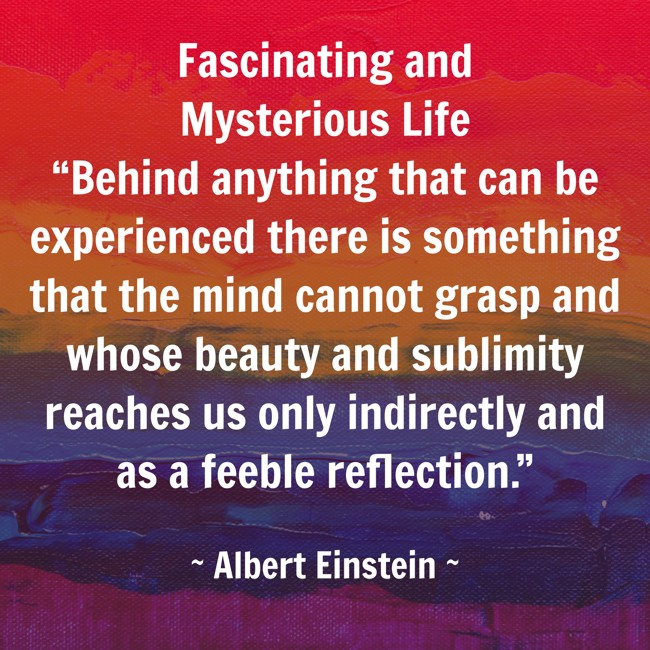
 We are all Interconnected even with the Universe