Tag Archives: health

Pure and Serene Mind (Part 2): The Path of Chi Restoration Through Qigong & Tai Chi

22 Apr

Written by Rodger R Ricketts

In the previous blog post, I explored how modern life gradually separates us from our original Chi through excessive mental activity, immersion in artificial systems, and disconnection from natural sensation. As symbolic thinking and external pressures dominate our awareness, the mind stretches beyond its natural limits, losing sensitivity to life energy. This disconnection weakens the true self and leads to imbalance, fragility, and inner suffering. Yet within each person remains the potential to restore purity, stillness, and authentic Chi by returning to original awareness, reconnecting with natural sensation, and aligning with timeless Daoist principles. Now, I examine how the ancient practices of Qigong and Tai Chi guide this restoration through stillness, movement, and the gradual purification of mind and life energy.

The cultivation and flow of energy through Qigong breathing techniques and Tai Chi movements reveal a path that is both clear and accessible. As individuals begin to recognize the false self that has often governed much of their existence, they should prepare for unexpected insights. Many people find themselves encumbered by multiple false identities. Rather than becoming discouraged, it is advisable to adopt a strategy of gradual progress—advancing step by step with unwavering faith—steadily uncovering one’s original life energy. This process unfolds layer by layer, requiring persistence and resilience. If one has been taught to believe that miracles occur externally, such a belief stems from a misconception rooted in a desire for effortless gain. It is imperative to cease heeding this false self and reject this erroneous notion immediately. Although the journey toward reclaiming one’s life energy may be challenging, it is ultimately profoundly rewarding.

If one maintains a pure heart and genuine sincerity in their efforts, it is possible to utilize the tools and guidance provided by a master to achieve the goal of discovering one’s true self. The experience of Chi can be regained through consistent practice. Several methods exist to restore the sensation of Chi, including motionless meditation, moving meditation, and receiving Chi energy from a master. According to the sacred teachings of an ancient lineage, a master capable of radiating life energy resembles a powerful iron magnet. Ideally, these practices should be undertaken concurrently. The primary purpose of these meditations is to create calmness and exclude the distractions of the artificial world, thereby enabling concentration and reconnection with internal sensations through stillness, typically in a seated posture, although some practices involve standing.

Despite the diversity in names and styles among various meditation techniques, all are designed to help practitioners eventually perceive their own energy. While many contemporary meditation systems emphasize sensing life energy, only one system currently extends beyond this initial stage by teaching how to direct the flow of Chi. This system contains essential knowledge that aids in purifying and strengthening true energy. It is the original Qigong meditation, deeply rooted in the principles of the Tao. Unlike other forms, the essence of Qigong meditation lies in cultivating the sensation of Chi within a clear mind. Qigong instructs practitioners to intensify this sensation and circulate it throughout the entire body, resulting in Chi that is fully present in every moment.

Through flowing movements, total Chi can be refined to become exceptionally pure and strong. This practice also forms the foundation of what is now known as Tai Chi. Tai Chi remains the only moving meditation practiced today that supports the development of Chi beyond the initial healing stages. Authentic Tai Chi enhances both the quantity and quality of life energy in a manner consistent with ancient Qigong meditation. Numerous styles of Tai Chi exist worldwide. For those whose lifestyle permits and who are resolute in their desire to attain true freedom from the artificial world, halt the depletion of life energy, and reclaim their true selves, it is possible to engage in all three stages of practice simultaneously, as was done in ancient times.

Among all training processes, the most critical step is learning to maintain the cleanliness and purity of one’s life energy. Purifying life energy is the ultimate goal, while maintaining its cleanliness is the means to that end. To keep life energy clean, one must keep the mind clean. If the mind remains unpolluted, unsullied, and undisturbed, it can purify life energy. The mind functions as a filter and must remain in its original, uncontaminated state, free from external influences. It must be brought to its most concentrated state: calm and comfortable, neither forced nor resistant, simply embodying one’s original self. The pursuit of this clean state of mind should not be forced, as the desire to attain it itself contaminates the mind. Ancient temple records recount stories of monks who failed to purify their minds due to excessive effort.

When the mind is free from contamination, distortion, and confusion, it naturally facilitates the purification of life energy. An apt analogy is to consider life energy as water and the mind as its filter. The mind must remain in its original, unaltered state—characterized by freedom, deep concentration, calmness, and comfort, without striving or resistance. Engaging in practices such as two-gong breathing and slow meditation with sincerity and honesty gradually calms and purifies the mind. With a purified mind, one can direct life energy to flow throughout the entire body, and over time, this energy will attain a purity comparable to that of a newborn. This represents a valuable aspiration: to harmonize one’s life energy with the original cosmic energy, known as the Dao.

Upon sensing and communicating with this pure life energy, one may progress further by reconnecting with its source through harmonious contact. This process entails transcending the layers of impurity and negative energy that obscure the original life energy, as well as the pollution of the artificial mind. In a polluted state, life energy cannot resonate at the same frequency as the Dao. It is not that the Dao refuses to communicate or assist; rather, communication is impeded while life energy remains contaminated and vibrates at a low frequency. Many individuals pray to external entities using words; however, such prayers often yield inconsistent outcomes because the original almighty force neither perceives nor communicates through low-level, artificially constructed symbols such as language. Instead, it communicates with those who turn inward and pray through the sensation of their pure life energy.

There exists no higher pursuit or more cherished goal than rediscovering and reclaiming one’s pure life energy. The most effective and singular method to cultivate life energy is through moving meditation that promotes the flow of Chi. Chi grows only when it flows, encompassing increases in strength, range, size, and volume. A greater volume of Chi better supports both body and mind. When the mind attains purity and Chi strengthens, it can be refined into higher forms of energy known as Jing Jing, which can be projected and transmitted beyond the body. Presently, no other meditation practice offers a comparable method to facilitate the flow of life energy as does the original Tai Chi flow meditation. Tai Chi simultaneously strengthens the mind and cultivates life energy, or Chi, and can be practiced anywhere and at any time. Practitioners are advised to wear comfortable clothing and flat, flexible shoes, breathe smoothly, quietly, and naturally, and may synchronize movements with breath without forcibly holding it. The mouth should remain closed with lips and teeth gently together, the tongue resting lightly against the roof of the mouth, and the head held upright as if suspended by a cord from above. Movements should be performed in a relaxed, comfortable manner with minimal muscular tension. With modest effort, the movements can be learned effectively.

At first glance, Tai Chi may appear to consist of slow, graceful movements designed primarily to improve physical balance and flexibility. However, beyond these physical benefits, Tai Chi represents a deeply meditative practice aimed at fostering clarity and inner stillness. The most profound aspects of significant Chi involve an empty mind and the clear release of mental tension. In Tai Chi, stillness does not imply the cessation of physical movement; rather, it entails cultivating a calm and focused mind. The practice promotes the release of distracting thoughts, worries, and mental chatter, thereby enabling full attention to be directed toward the present moment and the fluidity of one’s movements.

This state of stillness is known as Wuji, which translates as “emptiness” or “non-being” and represents the state of primordial, undifferentiated reality before the emergence of Yin and Yang. In Tai Chi, all movements and energy flow from Wuji. It is a state of pure potential wherein the mind is clear, the body relaxed, and awareness anchored in the present moment. By embracing stillness, Tai Chi practitioners access a powerful state of mental clarity that facilitates movement and fosters integration between body and mind.

Across these two blog posts, I traced the arc from loss to restoration: how modern existence subtly exhausts Chi and obscures true nature, and how ancient Taoist practice gently guides the return. Part One revealed how artificial systems, excessive thinking, and sensory overload separate us from original life energy, weakening intuition and inner peace. Part Two illuminated the path of return through sincerity, stillness, and movement, restoring Chi through meditation, Qigong, and Tai Chi. By purifying the mind, circulating life energy, and aligning with the Dao, one gradually reawakens the innate wholeness present in infancy—a pure and serene mind capable of sensing life energy naturally and resting effortlessly in truth. This journey requires patience and devotion, yet it ultimately leads to freedom, clarity, and harmony with the living universe.

Pure and Serene Mind (Part 1): The Loss of Chi in the Modern World

22 Apr

Written by Rodger R Ricketts, Psy.D.

As individuals progress through life, they develop the capacity to respond to external stimuli in ways that enhance survival, growth, and reproduction. Learning arises through constant interaction with the environment, enabling humans to retain external information, think reflectively, and make value-based decisions. While personal identity and societal constructs support civilization and survival, they also impose a cost: artificial cognitive activity consumes essential life energy. Decision-making rooted in conceptual values, rather than natural sensation, gradually separates the mind from its inherent life energy. Initially subtle, this divergence may become permanent, leading to persistent depletion of life energy and eventual decline.

In infancy, one remains intimately aware of Chi (life energy), but as adults become absorbed in cognitive processes, they neglect this vital sensation. Excessive mental activity drains Chi, as the mind’s energy is an extension of life energy itself. When life energy is overextended, the connection between mind and Chi weakens; like a rubber band stretched beyond its limit, perception breaks. This loss of authentic internal perception manifests as illness, fragility, and ultimately the deterioration of one’s true nature.

As artificial constructs dominate awareness, individuals may lose their intimate connection with mind and body. Money, language, and symbolic systems—tools created to support society—become mistaken for reality itself. Immersed in this virtual realm, one drifts further away from natural sensation. Childhood’s pure, intuitive engagement with life fades as artificial signals override internal experience. Modern environments bombard the senses with constant stimuli, drowning out natural signals such as sleep, sunlight, contact with the Earth, natural foods, and internal bodily sensation. As these cues diminish, the ability to perceive Chi weakens, and the intuitive connection to life energy declines.

Within Taoist cosmology, the universe alternates between Tao-in-stillness and Tao-in-movement: the unmanifest state of Wuji (primordial emptiness or original stillness) and the manifest state of Tai Chi (cosmic duality and the birth of Yin and Yang), where Yin and Yang operate. Phenomena arise from Wuji and return to it, much like waking life cycles back to the stillness of sleep. Wuji—primordial, undifferentiated, timeless, and absolute—represents pure potential. From this state, Tai Chi emerges, giving rise to Yin and Yang, motion and form. Wu denotes stillness, while Wuji signifies standing in silence and sensing universal energy. In Tai Chi practice, movement and energy flow from this stillness. When the mind becomes clear and the body relaxed, one experiences present awareness and accesses profound mental clarity.

Original life energy contains no duality of good or bad—it is eternal, perfect, and requires no modification. When it manifests as human life energy, it divides into Yin, Yang, and Chi (three aspects of energetic function: receptive, active, and vital force). Human life depends upon the dynamic cycling of Yin and Yang; constant motion seeks to return to the original state of harmony. To mirror the original Chi, one must cultivate clarity, purity, and strength, restoring balance within and harmonizing with the external environment. Without vigilance, temptations and artificial habits lead to deficit, destabilizing Chi and drawing the individual deeper into artificial existence.

Three primary forces disrupt Chi: overuse of the mind, immersion in artificial constructs, and bombardment by negative environmental signals. As Chi becomes a mental signal, it weakens; as artificial ideas dominate, natural sensation fades; and as negative influences intrude, energetic balance destabilizes. In severe cases, the Chi signal may become disabled, resulting in decline. When artificial influences overpower life energy long enough, both mind and body lose the ability to perceive Chi. In this state, one struggles to maintain equilibrium and ultimately deteriorates.

Chi embodies concepts of center, harmony, and infinity. It forms the essence of the true self; diminishing its quality is equivalent to losing life force and authentic integrity. When Chi is strong, one experiences inner completeness, intuitive knowing, and a fearless sense of unity with existence. Conversely, when Chi becomes depleted through artificial living and suppressed emotion, the true self is constrained, leading to fragility, imbalance, and inability to live peacefully. Rebuilding life energy requires the reintegration of mind and Chi, honoring genuine emotion, and restoring internal equilibrium.

Modern society conditions individuals to conform to external expectations, prioritizing artificial norms over inner truth. This form of psychological enslavement suppresses intuition and compels the pursuit of illusory goals—achievement, wealth, security—at the expense of well-being and authentic identity. Perpetual busyness prevents inner stillness and blocks access to the original self, allowing the artificial framework (social expectations, productivity culture, or identity roles) to maintain control.

Liberation begins by reconnecting with life energy. One must discern whether the desire for growth arises from true inner calling or from external validation. A sincere longing to understand suffering, live meaningfully, and liberate the authentic self signals the voice of life energy. Those who recognize this call and possess the courage to follow it must learn to sense and refine Chi. Fortunately, this path is not new; ancient Daoist masters have walked it before and left guidance for those ready to return to their true nature.

This first stage of the journey reveals how modern existence, dominated by artificial constructs, incessant mental activity, and external pressures, gradually separates us from the vital life energy that forms the essence of our true nature. By recognizing the subtle yet profound ways in which the mind becomes overextended, how natural sensations are replaced by symbolic systems (in other words, expectations and conceptual thinking), and how societal demands obscure our inner awareness, we begin to perceive the root of our disconnection. The path back to authenticity arises not through force or intellectual striving, but through gently restoring stillness, clarity, and genuine sensation, allowing Chi to be felt once again in its natural purity. As one reconnects with this original energy, a deeper sense of wholeness, peace, and intuitive understanding gradually awakens, reminding us of the completeness that once existed in infancy and remains within us still. In Part Two, I will explore how ancient Taoist wisdom provides practical tools for this restoration—guiding us through the cultivation of calm awareness, the refinement and circulation of Chi, and the harmonious integration of mind, body, and life energy through practices such as Qigong and Tai Chi. Through steady effort and sincere intention, it becomes possible not only to reclaim the purity of one’s life force, but also to return to a state of balance, presence, and effortless connection with the living universe.

The “feeling of being stared at”

7 Mar

“The “feeling of being stared at” is the focus of a subset of distant-mental-interaction studies. This is a particularly interesting belief to investigate because it is related to one of the oldest known superstitions in the Western world, the “evil eye,” and to one of the oldest known blessings in the Eastern world, the darshan, or gaze of an enlightened master. Most ancient peoples feared the evil eye and took measures to deflect the attraction of the eye, often by wearing shiny or attractive amulets around the neck. Today, most fears about the evil eye have subsided, at least among educated peoples. And yet many people still report the “feeling of being stared at” from a distance. Is this visceral feeling what it appears to be—a distant mental influence of the nervous system—or can it be better understood in more prosaic ways? In the laboratory today, the question is studied by separating two people and monitoring the first person’s nervous system (usually electrodermal activity) while the second person stares at the first at random times over a one-way closed-circuit video system. The stared-at person has no idea when the starer is looking at him or her. Figure 9.2. Effect sizes for studies testing the “feeling of being stared at,” where 50 percent is chance expectation. Confidence intervals are 95 percent. Figure 9.2 shows the results for staring studies conducted over eight decades.34 Similar to William Braud’s electrodermal studies but conducted in a context that more closely matched common descriptions of “feeling stared at,” these studies resulted in an overall effect of 63 percent where chance expectation is 50 percent. This is remarkably robust for a phenomenon that—according to conventional scientific models—is not supposed to exist. The combined studies result in odds against chance of 3.8 million to 1. Summary Given the evidence for psi perception and mind-matter interaction effects discussed so far, we could have expected that experiments involving living systems would also be successful. The studies discussed here show that our expectations are confirmed. The implications for distant healing are clear. All the experiments discussed so far have been replicated in the laboratory dozens to hundreds of times. They demonstrate that some of the “psychic” experiences people report probably do involve genuine psi. Now we move outside the laboratory to examine a new type of experiment, one that explores mind-matter interaction effects apparently associated with the collective attention of groups.”
― Dean Radin, The Conscious Universe: The Scientific Truth of Psychic Phenomena

Four Incredibly Significant Communicators/operators within our amazing body functioning simultaneously……

27 Aug

Four Incredibly Significant Communicators/operators within our amazing body functioning simultaneously……

1.The vagus nerve is the longest cranial nerve and a primary component of the parasympathetic nervous system, controlling many involuntary functions, including heart rate, digestion, respiration, and mood. It also plays a crucial role in the gut-brain axis, facilitating communication between the brain and digestive tract. By stimulating the vagus nerve, one can support various aspects of physical and mental health, from reducing inflammation to improving mood.

2.Heart-Brain Communication that communication between the heart and brain actually is a dynamic, ongoing, two-way dialogue, with each organ continuously influencing the other’s function. Research has shown that the heart communicates to the brain in four major ways: neurologically (through the transmission of nerve impulses), biochemically (via hormones and neurotransmitters), biophysically (through pressure waves) and energetically (through electromagnetic field interactions). Communication along all these conduits significantly affects the brain’s activity. Moreover, research shows that messages the heart sends to the brain also can affect performance.

3.Spinal nerves are 31 pairs of mixed nerves that connect the spinal cord to the body, acting as a communication pathway between the central nervous system and the periphery. These nerves transmit sensory information from the body to the spinal cord and brain, and carry motor commands from the brain and spinal cord to muscles and other effector organs. They are also involved in autonomic functions through sympathetic and parasympathetic fibers.

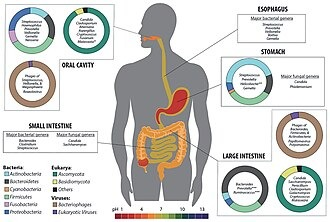
4.What is the gut microbiome?A biome is a distinct ecosystem characterized by its environment and its inhabitants. Your gut — inside your intestines — is in fact a miniature biome, populated by trillions of microscopic organisms. These microorganisms include over a thousand species of bacteria, as well as viruses, fungi and parasites.Gut microbes can affect your nervous system through the gut-brain axis — the network of nerves, neurons and neurotransmitters that runs through your GI tract. Certain bacteria actually produce or stimulate the production of neurotransmitters (like serotonin) that send chemical signals to your brain.Bacterial products may also affect your nervous system. Short-chain fatty acids appear to have positive effects, while bacterial toxins might damage nerves. Researchers continue to investigate how your gut microbiome might be involved in various neurological, behavioral, nerve pain and mood disorders.they contribute to human health and wellness in many ways.

Our Human bodies are perfectly interconnected.

12 Jul

Our Human bodies are perfectly interconnected.

Our bodies are composed of many separate systems – or have been taught in school for generations. The theory that our respiratory system, digestive system, reproductive system, and others each work on their own is still the most popular narrative. Yet in truth, every organ and system in our bodies are interconnected. If you neglect one part, sooner or later the others will feel the effects.Each organ belongs to one of ten human body systems. These body systems are interconnected and dependent upon one another to function. Your heart does not beat unless your brain and nervous system tell it to do so. Your skeletal system relies on the nutrients it gains from your digestive system to build strong, healthy bones. Each body system works with the others

Our organs don’t work in solo, organs also function together in groups, The relationships between them mean our entire human body is interconnected. The interconnectivity between these organs means that when a person experiences disease in one of these areas, it increases the chances of one or all the other systems being affected. This can result in the worsening of the disease overall.

This also means that when improvements are made in one area through lifestyle changes and appropriate care, positive improvements are likely to be seen in other organs and systems.

By taking actions such as healthy eating, exercising more, meditation, medication, and not smoking, it is possible to reduce the risk of further damage and to prevent or delay organs from getting worse.

Scientists categorize groups of organs into different body systems, however, these systems do not work in isolation. A disorder in one system can cause other systems to break down. Although each organ has its specific functions called organ systems. Some examples of organ systems and their functions include the digestive system, the cardiovascular system, and the musculoskeletal system.

Organ systems often work together to do complicated tasks. For example, after a large meal is eaten, several organ systems work together to help the digestive system obtain more blood to perform its functions. The digestive system enlists the aid of the cardiovascular system and the nervous system. Blood vessels of the digestive system widen to transport more blood. Nerve impulses are sent to the brain, notifying it of the increased digestive activity. The digestive system even directly stimulates the heart through nerve impulses and chemicals released into the bloodstream. The heart responds by pumping more blood. The brain responds by perceiving less hunger, more fullness, and less interest in vigorous physical (musculoskeletal system) activity, which preserves more blood to be used by the digestive system instead of by skeletal muscles.

Communication between organs and organ systems is vital. Communication allows the body to adjust the function of each organ according to the needs of the whole body. In the example above, the heart needs to know when the digestive organs need more blood so that it can pump more. When the heart knows that the body is resting, it can pump less. The kidneys must know when the body has too much fluid so that they can produce more urine, and when the body is dehydrated so that they can conserve water.

Homeostasis is the term used to describe how the body maintains its normal composition and functions. Because organ systems communicate with each other, the body can maintain stable amounts of internal fluids and substances. Also, the organs neither underwork nor overwork, and each organ facilitates the functions of every other organ.

Sabrina Libretti; Yana Puckett.

Image

To Thrive or not…

17 Dec