
Tags: Academia.Edu, Happiness, Knowledge, meditation, psychology, reality, Science, Spirituality, Sunyata
An Introduction to my book. I have published seven books on Amazon.
In The Garden of Eden in This Life, (2025) Dr. Rodger R. Ricketts—a clinical psychologist, mindfulness teacher, and lifelong student of the Buddha’s teachings—unveils a profound perspective linking ancient wisdom, modern psychology, and the apophatic (negative) spiritual tradition. Drawing from over forty years of study and practice, he explores how non-dualistic teachings from Buddhism, science, and multiple faith traditions reveal the limits of language, the illusions of separation, and the path back to an integrated state of being.You will journey through concepts like Sunyata (emptiness), the via negativa, and the psychology of transcendence—discovering how humanity’s separation from nature and spirit can be healed through direct experience, compassionate living, and expanded awareness. Open these pages and begin your journey back to the Garden… in this life.
Chapter Fifteen.Of the Book, God is No-thing. The Apophatic Assertion. Copyright Rodger Ricketts Psy.D.,2020. All rights reserved. Protected by international copyright conventions. No part of this chapter may be reproduced in any manner whatsoever, or stored in a retrieval system or transmitted, without express permission of the Author-publisher, except in case of brief quotations with due acknowledgement. Published through CreateSpace Independent Publishing Platform.
Social Consequences of the Dualist/Non-Dualist perspective.
Usually, the social, relationship and environmental consequences of the dualist, rationalist vs non-dualist, transcendental perspective have not been explored in depth. In fact, there is little exploration regarding the direct social consequences of the adoption of either perspective after a focus on language, cognitive modeling, spirituality, and Awakening. Therefore, I want to use the excellent detailed analysis of the modern Jewish philosopher and educator, Martin Buber to show that whichever of the two perspectives (Non-Dualist/Dualist) one uses, there are significant relational consequences. Here is a good place to remind the reader that the Dualist and non-dualist perspectives are not exclusive from one another.
Martin Buber’s (I and Thou) and (I and It)
Martin Buber is best known for his 1923 book, Ich und Du (I and Thou), which distinguishes between “I-Thou”, in which the du or thou, is intended to convey the most intimate and loving relation possible. Thou means the you in a subject-to-subject relationship, while “I-It” is a relationship of subject-to-object modes of existence. ‘I’ is not a solitary concept that stands alone unconnected; ‘I’ is always in relation to ‘It’ or ‘Thou.’ This relation indicates the two basic ways in which we relate to the world. In the I-It relationship, the subjects are independent, isolated, and separate from a world which consists of things. According to Buber, most human beings solely adopt the I-It dualistic perspective over the I-Thou. The ‘I-It’ relation is dominated by categories of dualism, like ‘friend’ and ‘enemy’, and focuses on universal definitions, while in the I- Thou relationship, human beings are aware of each other through a unity of Being.
When that happens, we understand and empathically feel that everything is inter-being, interconnected and all living Beings are a Family of the Universe or divine. The realm of pure experience is not an ontological category, but the ordinary world of phenomena experienced directly, with no intervening conceptualization.
For as the Buddha also taught and is now clear through scientific investigation, humans and the environment are deeply enmeshed and co-dependent on each other. This is one world and every action by all living and non-living forces interact with and alter the previous reality- some more than others. Therefore, once we are inspired and apply the truths that the Buddha and Buber and others discovered and now are explicated in more modern terminology and description, there is a real possibility for a heaven on earth without the distraction of seeking supernatural intervention. The heaven on Earth can briefly be described as a world of sentient beings thriving through wisdom and empathy and compassion.
Alienation
The I-It is a relationship of separateness, detachment and ultimately alienation created by the dualistic subject/object dichotomy. Identifications appear by comparing and setting themselves apart from others. So long as you “have” yourself as an object, your experience of self and others is as of a thing among things. Once a subject, in the subject/object dyad, is analyzed as an object, the subject becomes an object or an It. When both objects and people are analyzed (subject-object relation) and judged by their capacities, they become means to an end. The I is experienced as isolated from the It, resulting in “alienation”.
To view the world as an “objective reality” separated from my consciousness and universal Being is a form of alienation. The state or experience of being alienated includes isolation, estrangement, separation, and severance. Alienation is the state of being as an outsider or the feeling of being isolated, as from others or the original being. This experience is expressed poetically by Simon and Garfunkel; ‘I am a rock, I am an island, I’ve built walls, A fortress deep and mighty, that none may penetrate.’ Alienation is the process whereby people become foreign to Being of which they exist in. This is the dominant alienation in modern society. As Derrida wrote, “Face-to- face relationships, communities of direct caretaking, control, and ownership of one’s own labor power, all these are giving way more and more to relations mediated by cell phone, digicam, digital communications replacing the immediacy of speech.” He describes well the virtual world of I-It.
The principle of alienation is found in all the great religions namely, the idea that people in the past have known the non-dualistic Absolute and lived in serenity and harmony. But with the development and rise of the ‘I’ analytical linguistic world, there was a rupture which left people feeling like strangers to each other and in the world. Also, there has often been the vision that at some time in the future this alienation will be overcome, and humanity will again live in harmony with itself and Nature.
The I–It is the mode of experience in which we engage the world as a detached object. It is based upon the axioms of logical empiricism/positivism: objectivity, determinism, abstractive contemplation, and a utilitarian approach to the other. This is the method of the rational investigation of truths and principles of science and philosophy, through which we come to understand things abstractly and intellectually, eventually for our egocentric use. Buber claimed that modern Western culture believes that this dualistic mode is the fundamental way for human beings to participate with the world. Therefore, other perspectives, which are vital to our authentic and awakened spiritual existence, are dismissed and even vilified.
While I-It is relevant to everyday living, the obstacle is its overwhelming predominance in modern technocratic society, with its basis on the principles of logical empiricism/positivism: objectivity, determinism, abstractive contemplation. The It is a mechanistic model of the universe as a machine, and the rational and empirical is operational in all areas of study with the grand vision of Humans gaining mastery over everything. In the end however, it creates a state or experience of being alienated.
SOCIAL RELATIONSHPS
In social relationships the alienated I-It individual is primarily egotistic and selfish and finds it problematic to empathize and put oneself in another’s place. They find it wearisome to be accessible and receptive because they are eremitic and solitarily orientated. They fear experiencing disappointments and disapprove of acquiescing. Yet, every success cannot satisfy their craving for indisputable success. They rigidly think in or act in an egotistical manner of accepting only what pleases them and tenaciously maintain their likes and dislikes. Their personality stagnates by not maturing and from not expressing their own creative capacities. Therefore, encapsulated, they never come to know the opportunity and satisfaction of interconnections and empathy with the world. Rigidity of the ego ‘shell’ is one of the afflictions of the solitary ‘I’, and integration with the inner refuge of peace, serenity and nothingness is absent. The self therefore remains preoccupied with maintaining, by means of the organization of rigid structures or schemas, its secure position in the historical world. Through their filtering ‘glasses’, a person believes they perceive the world ‘the way it really is’, rationally and logically. If a success is created, the egotistical person attributes it only to their own efforts, which only strengthens and heightens the wall separating them from the realization of their interconnectedness with all. The imagined self, preoccupied in establishing and classifying facts, constantly acts to satisfy its worldly cravings. With these fixed points of view, the world is clearly divided into a dualism of self-world/otherworld, subject/object, etc. While a person needs to be skillful to manage the world well, the predominance of the self-centered perspective, with its claims of supremacy, distorts not only a person’s personal and social status but any possible spiritual connection with existence, in which there is an apperception of oneness and inter-being to be realized with experience, insight and practice.
The egotistic life constantly seeks to thrill itself in the available ways of the sensual materialistic life. The intensity of their cravings varies, but the feedback loop is continuous and based on the subject/object duality. This exaggerated ignorance based on dualism creates foolishness and unhappiness. At root of why many people seek relief in many ways is a clear example of spiritual sickness, and hence suffering, i.e., alienation from life. Egocentric ignorance creates suffering of self and others.
Modern Society
Buber believed that with modern technological society increasingly supporting the I-It dogma, the loving relationship between individuals and nature, between other sentient beings, understanding their identity and the divine in an apophatic sense has become increasing more obscure and incomprehensible. He wanted to revive the link between the individual with the deepest levels of existence. To do that, he considered it necessary to unveil the impediments that hamper a person’s capacity to see and understand the No- thingness. As a result of the modern trend, it continues to become more difficult to develop an appreciation of an immanent, universal being. The problem is rooted in the supposition of the primacy of the dualistic subject-object relation. Buber believed that there had been a dramatic shift from relation to separation, creating a growing crisis of existence in ‘modern’ society. He believed that the relationship between individuals and people and creation continues to become increasingly that of I-It.
ECOLOGY and the I -THOU Relationship
The book, I and Thou is recognized as providing an enlightened perspective on the study of identity and social relations. However, on a deeper level, it was based on his awakening to humanity’s place in the Universe with relation to the Divine and Life. Buber, as all Apophatic teachers, explains humanity’s interdependence and intrinsic reciprocal aspects embedded within all relationships. Buber’s conception of the world is one that is interconnected, dependently co-originated and holistically integrated. He challenges the Cataphatic conventional theological perspective that separates humanity and existence or the divine.
As we have seen, a key premise of Buber and other apotheotic teachers is that there are two basic ways we can understand ourselves in relation to others. First, using Buber’s word of I-It, an individual has a view of an “other,” be it object or person, as a different and quantifiable entity. Whether the subject in question is an inanimate or a living being, the perception has an implied objectification. It is also this that allows the mind to make convenient generalizations. These are necessary operations of our daily existence. Without it, our ability to perform routine functions would not be possible.
The alternative is Buber’s I-Thou or mystical perspective. From this perspective, one acknowledges the transcendence of the fundamental distinguishment between oneself and an “other” and it is replaced by a relational reality. One’s life as a person standing in relation and intricacy to existence, is acknowledged. Buber demonstrates the two ways of thinking: “I consider a tree. I can look on it as a picture: stiff column in a shock of light, or splash of green shot with the delicate blue and silver of the background. I can perceive it as movement: flowing veins on clinging, pressing pith, suck of the roots, breathing of the leaves, ceaseless commerce with earth and air—and the obscure growth itself. I can classify it in a species and study it as a type in its structure and mode of life. I can subdue its actual presence and form so sternly that I recognize it only as an expression of law… I can dissipate it and perpetuate it in number, in pure numerical relation. In all this the tree remains my object, occupies space and time, and has its nature and constitution. It can, however, also come about, if I have both will and grace, that in considering the tree I become bound up in relation to it. The tree is now no longer It… It is not necessary for me to give up any of the ways in which I consider the tree… Rather it is everything, picture and movement, species and type, law, and number, indivisibly united in the event.”
Buber shows that he can choose to see the tree as a measurable and discrete It, or relate to the tree as a Thou, thus acknowledging their boundless ability to affect one another. His awareness of their interconnected and shared immanent relationship confers this possibility. From within this, we can understand how each affects one another.
Another Apophatic teacher, The Buddha, gives primary importance to the spiritual framework of relational interdependence through the principle of dependent origination. This view of the universe and the human beings undergird an imperative for people who realize the interdependent nature of their existence and the interconnection among all things. They develop a strong sense of responsibility for their own behaviors, as well as appreciation and empathy for others. It is from this realization of the true interbeing nature of existence that non harming, compassionate, altruistic action arises. The reciprocation of one’s being with another is the birthplace of care and compassion.
Within the I-It there is separation and alienation while in I-Thou we find relation, edification, and transcendence. Thus, our ability to love and show affection stems from our capacity to awaken. It is this facet of dependent origination that our treatment of the environment is dependent upon how we view ourselves within it. To willfully assume a relation of care, one’s views must be attuned. The Buddha attributes all our resulting harming behaviors and the suffering hence caused, to the human ignorance (avijja), that is, we cannot see the world as it is and see our self as such within that existence. We are ignorant to the cosmic reality that everything in the world is inter-related, interdependent. By not adopting the Buddha’s worldview, we think we are separate from others as an isolated and independent entity. This ignorance is what Buddhism identifies as the very root cause of violence, conflict, alienation, environmental destruction, and war, which prevents human beings to live a thriving and peaceful life.
If we accept the notion of humanity’s reciprocal relationship with the earth and that our relationship is shaped by our vision, then our attitudes towards the environment are made manifest in our treatment of it. As Buber’s account points out so well, a tree can be seen as a simple, inanimate object, bound by nature’s laws, or as a captivating and mysterious being whose experience of life is wholly unknown to our minds. Then we can ask, is a forest solely a resource for the meeting of our needs or is it a habitat in which to live?
We are at the point now to consider the term biocentrism or life-centered (biocentric) approach to nature that encompasses all environmental ethics which “extend the status of moral object from human beings to all living things in nature”. Biocentric ethics, like I-Thou and dependent origination, calls for a rethinking of the relationship between humans, nature and existence. It views that nature does not exist simply to be used or consumed by humans, but that humans are simply one species amongst many, and that because we are part of an ecosystem, any actions which negatively affect the living systems of which we are a part adversely affect us as well, whether or not we maintain a biocentric worldview. Biocentrists, viewing life from can be considered an I-Thou perspective, observe that all species have inherent value, and that humans are not “superior” to other species in a moral or ethical sense.
The four main pillars of a biocentric outlook are:
Albert Schweitzer was another 20th-century thinker who understood that life itself is the decisive factor in determining moral value. Working in very remote areas, Schweitzer experienced a diversity, complexity, and multiplicity of plant and animal life-forms rarely seen within industrialized societies. Schweitzer used the phrase “reverence for life” to convey what he took to be the most appropriate attitude toward all living beings. Life itself, in all its mystery and wonderment, commands respect, reverence, and awe.
To quote Schweitzer, “Ethics are complete, profound, and alive only when addressed to all living beings. Only then we are in spiritual connection with the world … Profound love demands a deep conception and out of this develops reverence for the mystery of life. It brings us close to all beings. To the poorest and smallest, as well as all others. We reject the idea that man is ‘master of other creatures,’ ‘lord’ above all others. We bow to reality. We recognize that all existence is a mystery, like our own existence. The poor fly which we would like to kill with our hand has come into existence like ourselves. It knows anxiety, it knows hope for happiness, it knows the fear of not existing anymore. Has any man so far been able to create a fly? That is why our neighbor is not only man: my neighbor is a creature like myself, subject to the same joys, the same fears, and the idea of reverence for life gives us something more profound and mightier than the idea of humanism. It includes all living beings” (Quoted in The Schweitzer Album, edited by Erica Anderson, 1965, p. 174).
Biocentrism may best be viewed as an attitude with which to approach life and not a codified dogma. By approaching each living being with reverence and humility makes human life more meaningful. Also, biocentric morality and ethics develops virtues and behaviors with which humans interact with empathy and affinity with other living beings.
The Buddha also tells us that the key to a compassionate ethic of Life is once we see the dependent origination in existence, the infinite interconnectedness of all life. We understand that our desire to thrive is the same for all other sentient beings, thereby, recognizing that all beings tremble at violence, that all wish to live and do not want to die. It is this affinity with all who share the gift of life that one naturally empathizes and put themself in the place of all sentient beings. Recognizing this, one will be friendly, kind with others and enhance their ability to thrive.
Most importantly from an ecological Biocentric point of view one comprehends how the biosphere is also totally interconnected and supporting of all life forms. Contrary to the narcissistic assumption that humanity’s interests supersede that of other creatures, it denies human superiority and claims that all living things have inherent value. Biocentrism proposes that the highest moral standing is life itself. All living beings, simply by being alive, have moral standing and deserve moral and ethical consideration. Inherent in this reciprocal dynamic of interrelatedness, there is an awareness and ethic on humanity’s Right relation with itself and the natural world.
Or as Lama Anagarika Govinda expressed it: ‘He who wants to follow the Path of the Buddha must give up all thoughts of ‘I’ and ‘mine’. But this giving up does not make us poorer; it actually makes us richer, because what we renounce and destroy are the walls that keep us imprisoned; and what we gain is that supreme freedom, which is not to be understood simply as a merging into the whole or a feeling of identity with others, but as the experience of an infinite relationship, according to which every individual is essentially connected with all that exists, thus embracing all living beings in his own mind, taking part in their deepest experience, and sharing their sorrow and joy.’
Because of our ignorance of not Awakening to the non-dual nature of existence, humans are unable to properly view the world which has distorted our discernment of its inherent value. For much of humanity, instead of harmonizing our mindsets and hence lifestyles with an equitable and just nature, we create suffering through egotistical gratification of greed, anger and alienation.
Also, as Buber explains, “to step into pure relation is not to disregard everything but to see everything in the ‘Thou’, not to renounce the world but to establish it on its true basis.” Thus, we lift the veil of ignorance and the illusion of separateness and alienation and, instead, we come to see the world as it truly is.
A similar view was proposed by A. Einstein also…“A human being is a part of the whole, called by us the Universe, a part limited in time and space. He experiences himself, his thoughts and feelings as something separated from the rest- a kind of optical delusion of his consciousness. This delusion is a kind of prison for us, restricting us to our personal desires and to affection for a few persons nearest to us. Our task must be to free ourselves from this prison by widening our circles of compassion to embrace all living creatures and the whole of nature in its beauty. Nobody is able to achieve this completely, but the striving for such achievement is in itself a part of the liberation and of a foundation for inner security.” — Albert Einstein, N.Y. Post, November 28, 1972.
Bouma-Prediger, Steven. 2001. For the Beauty of the Earth. Grand Rapids, Michigan: Baker Academic.
Buber, Martin. 1970. I and Thou. Trans. Walter Kaufmann. New York: Charles Scribner’s Sons.
Kohanski, Alexander. 1982. Martin Buber’s Philosophy on Interhuman Relation. Rutherford, Madison, Teaneck: Fairleigh Dickinson University Press & London and Toronto: Associated University Press.
Wikipedia biocentrism ethics
In the previous blog post, I explored how modern life gradually separates us from our original Chi through excessive mental activity, immersion in artificial systems, and disconnection from natural sensation. As symbolic thinking and external pressures dominate our awareness, the mind stretches beyond its natural limits, losing sensitivity to life energy. This disconnection weakens the true self and leads to imbalance, fragility, and inner suffering. Yet within each person remains the potential to restore purity, stillness, and authentic Chi by returning to original awareness, reconnecting with natural sensation, and aligning with timeless Daoist principles. Now, I examine how the ancient practices of Qigong and Tai Chi guide this restoration through stillness, movement, and the gradual purification of mind and life energy.
The cultivation and flow of energy through Qigong breathing techniques and Tai Chi movements reveal a path that is both clear and accessible. As individuals begin to recognize the false self that has often governed much of their existence, they should prepare for unexpected insights. Many people find themselves encumbered by multiple false identities. Rather than becoming discouraged, it is advisable to adopt a strategy of gradual progress—advancing step by step with unwavering faith—steadily uncovering one’s original life energy. This process unfolds layer by layer, requiring persistence and resilience. If one has been taught to believe that miracles occur externally, such a belief stems from a misconception rooted in a desire for effortless gain. It is imperative to cease heeding this false self and reject this erroneous notion immediately. Although the journey toward reclaiming one’s life energy may be challenging, it is ultimately profoundly rewarding.
If one maintains a pure heart and genuine sincerity in their efforts, it is possible to utilize the tools and guidance provided by a master to achieve the goal of discovering one’s true self. The experience of Chi can be regained through consistent practice. Several methods exist to restore the sensation of Chi, including motionless meditation, moving meditation, and receiving Chi energy from a master. According to the sacred teachings of an ancient lineage, a master capable of radiating life energy resembles a powerful iron magnet. Ideally, these practices should be undertaken concurrently. The primary purpose of these meditations is to create calmness and exclude the distractions of the artificial world, thereby enabling concentration and reconnection with internal sensations through stillness, typically in a seated posture, although some practices involve standing.
Despite the diversity in names and styles among various meditation techniques, all are designed to help practitioners eventually perceive their own energy. While many contemporary meditation systems emphasize sensing life energy, only one system currently extends beyond this initial stage by teaching how to direct the flow of Chi. This system contains essential knowledge that aids in purifying and strengthening true energy. It is the original Qigong meditation, deeply rooted in the principles of the Tao. Unlike other forms, the essence of Qigong meditation lies in cultivating the sensation of Chi within a clear mind. Qigong instructs practitioners to intensify this sensation and circulate it throughout the entire body, resulting in Chi that is fully present in every moment.
Through flowing movements, total Chi can be refined to become exceptionally pure and strong. This practice also forms the foundation of what is now known as Tai Chi. Tai Chi remains the only moving meditation practiced today that supports the development of Chi beyond the initial healing stages. Authentic Tai Chi enhances both the quantity and quality of life energy in a manner consistent with ancient Qigong meditation. Numerous styles of Tai Chi exist worldwide. For those whose lifestyle permits and who are resolute in their desire to attain true freedom from the artificial world, halt the depletion of life energy, and reclaim their true selves, it is possible to engage in all three stages of practice simultaneously, as was done in ancient times.
Among all training processes, the most critical step is learning to maintain the cleanliness and purity of one’s life energy. Purifying life energy is the ultimate goal, while maintaining its cleanliness is the means to that end. To keep life energy clean, one must keep the mind clean. If the mind remains unpolluted, unsullied, and undisturbed, it can purify life energy. The mind functions as a filter and must remain in its original, uncontaminated state, free from external influences. It must be brought to its most concentrated state: calm and comfortable, neither forced nor resistant, simply embodying one’s original self. The pursuit of this clean state of mind should not be forced, as the desire to attain it itself contaminates the mind. Ancient temple records recount stories of monks who failed to purify their minds due to excessive effort.
When the mind is free from contamination, distortion, and confusion, it naturally facilitates the purification of life energy. An apt analogy is to consider life energy as water and the mind as its filter. The mind must remain in its original, unaltered state—characterized by freedom, deep concentration, calmness, and comfort, without striving or resistance. Engaging in practices such as two-gong breathing and slow meditation with sincerity and honesty gradually calms and purifies the mind. With a purified mind, one can direct life energy to flow throughout the entire body, and over time, this energy will attain a purity comparable to that of a newborn. This represents a valuable aspiration: to harmonize one’s life energy with the original cosmic energy, known as the Dao.
Upon sensing and communicating with this pure life energy, one may progress further by reconnecting with its source through harmonious contact. This process entails transcending the layers of impurity and negative energy that obscure the original life energy, as well as the pollution of the artificial mind. In a polluted state, life energy cannot resonate at the same frequency as the Dao. It is not that the Dao refuses to communicate or assist; rather, communication is impeded while life energy remains contaminated and vibrates at a low frequency. Many individuals pray to external entities using words; however, such prayers often yield inconsistent outcomes because the original almighty force neither perceives nor communicates through low-level, artificially constructed symbols such as language. Instead, it communicates with those who turn inward and pray through the sensation of their pure life energy.
There exists no higher pursuit or more cherished goal than rediscovering and reclaiming one’s pure life energy. The most effective and singular method to cultivate life energy is through moving meditation that promotes the flow of Chi. Chi grows only when it flows, encompassing increases in strength, range, size, and volume. A greater volume of Chi better supports both body and mind. When the mind attains purity and Chi strengthens, it can be refined into higher forms of energy known as Jing Jing, which can be projected and transmitted beyond the body. Presently, no other meditation practice offers a comparable method to facilitate the flow of life energy as does the original Tai Chi flow meditation. Tai Chi simultaneously strengthens the mind and cultivates life energy, or Chi, and can be practiced anywhere and at any time. Practitioners are advised to wear comfortable clothing and flat, flexible shoes, breathe smoothly, quietly, and naturally, and may synchronize movements with breath without forcibly holding it. The mouth should remain closed with lips and teeth gently together, the tongue resting lightly against the roof of the mouth, and the head held upright as if suspended by a cord from above. Movements should be performed in a relaxed, comfortable manner with minimal muscular tension. With modest effort, the movements can be learned effectively.
At first glance, Tai Chi may appear to consist of slow, graceful movements designed primarily to improve physical balance and flexibility. However, beyond these physical benefits, Tai Chi represents a deeply meditative practice aimed at fostering clarity and inner stillness. The most profound aspects of significant Chi involve an empty mind and the clear release of mental tension. In Tai Chi, stillness does not imply the cessation of physical movement; rather, it entails cultivating a calm and focused mind. The practice promotes the release of distracting thoughts, worries, and mental chatter, thereby enabling full attention to be directed toward the present moment and the fluidity of one’s movements.
This state of stillness is known as Wuji, which translates as “emptiness” or “non-being” and represents the state of primordial, undifferentiated reality before the emergence of Yin and Yang. In Tai Chi, all movements and energy flow from Wuji. It is a state of pure potential wherein the mind is clear, the body relaxed, and awareness anchored in the present moment. By embracing stillness, Tai Chi practitioners access a powerful state of mental clarity that facilitates movement and fosters integration between body and mind.
Across these two blog posts, I traced the arc from loss to restoration: how modern existence subtly exhausts Chi and obscures true nature, and how ancient Taoist practice gently guides the return. Part One revealed how artificial systems, excessive thinking, and sensory overload separate us from original life energy, weakening intuition and inner peace. Part Two illuminated the path of return through sincerity, stillness, and movement, restoring Chi through meditation, Qigong, and Tai Chi. By purifying the mind, circulating life energy, and aligning with the Dao, one gradually reawakens the innate wholeness present in infancy—a pure and serene mind capable of sensing life energy naturally and resting effortlessly in truth. This journey requires patience and devotion, yet it ultimately leads to freedom, clarity, and harmony with the living universe.
Written by Rodger R Ricketts, Psy.D.
As individuals progress through life, they develop the capacity to respond to external stimuli in ways that enhance survival, growth, and reproduction. Learning arises through constant interaction with the environment, enabling humans to retain external information, think reflectively, and make value-based decisions. While personal identity and societal constructs support civilization and survival, they also impose a cost: artificial cognitive activity consumes essential life energy. Decision-making rooted in conceptual values, rather than natural sensation, gradually separates the mind from its inherent life energy. Initially subtle, this divergence may become permanent, leading to persistent depletion of life energy and eventual decline.
In infancy, one remains intimately aware of Chi (life energy), but as adults become absorbed in cognitive processes, they neglect this vital sensation. Excessive mental activity drains Chi, as the mind’s energy is an extension of life energy itself. When life energy is overextended, the connection between mind and Chi weakens; like a rubber band stretched beyond its limit, perception breaks. This loss of authentic internal perception manifests as illness, fragility, and ultimately the deterioration of one’s true nature.
As artificial constructs dominate awareness, individuals may lose their intimate connection with mind and body. Money, language, and symbolic systems—tools created to support society—become mistaken for reality itself. Immersed in this virtual realm, one drifts further away from natural sensation. Childhood’s pure, intuitive engagement with life fades as artificial signals override internal experience. Modern environments bombard the senses with constant stimuli, drowning out natural signals such as sleep, sunlight, contact with the Earth, natural foods, and internal bodily sensation. As these cues diminish, the ability to perceive Chi weakens, and the intuitive connection to life energy declines.
Within Taoist cosmology, the universe alternates between Tao-in-stillness and Tao-in-movement: the unmanifest state of Wuji (primordial emptiness or original stillness) and the manifest state of Tai Chi (cosmic duality and the birth of Yin and Yang), where Yin and Yang operate. Phenomena arise from Wuji and return to it, much like waking life cycles back to the stillness of sleep. Wuji—primordial, undifferentiated, timeless, and absolute—represents pure potential. From this state, Tai Chi emerges, giving rise to Yin and Yang, motion and form. Wu denotes stillness, while Wuji signifies standing in silence and sensing universal energy. In Tai Chi practice, movement and energy flow from this stillness. When the mind becomes clear and the body relaxed, one experiences present awareness and accesses profound mental clarity.
Original life energy contains no duality of good or bad—it is eternal, perfect, and requires no modification. When it manifests as human life energy, it divides into Yin, Yang, and Chi (three aspects of energetic function: receptive, active, and vital force). Human life depends upon the dynamic cycling of Yin and Yang; constant motion seeks to return to the original state of harmony. To mirror the original Chi, one must cultivate clarity, purity, and strength, restoring balance within and harmonizing with the external environment. Without vigilance, temptations and artificial habits lead to deficit, destabilizing Chi and drawing the individual deeper into artificial existence.
Three primary forces disrupt Chi: overuse of the mind, immersion in artificial constructs, and bombardment by negative environmental signals. As Chi becomes a mental signal, it weakens; as artificial ideas dominate, natural sensation fades; and as negative influences intrude, energetic balance destabilizes. In severe cases, the Chi signal may become disabled, resulting in decline. When artificial influences overpower life energy long enough, both mind and body lose the ability to perceive Chi. In this state, one struggles to maintain equilibrium and ultimately deteriorates.
Chi embodies concepts of center, harmony, and infinity. It forms the essence of the true self; diminishing its quality is equivalent to losing life force and authentic integrity. When Chi is strong, one experiences inner completeness, intuitive knowing, and a fearless sense of unity with existence. Conversely, when Chi becomes depleted through artificial living and suppressed emotion, the true self is constrained, leading to fragility, imbalance, and inability to live peacefully. Rebuilding life energy requires the reintegration of mind and Chi, honoring genuine emotion, and restoring internal equilibrium.
Modern society conditions individuals to conform to external expectations, prioritizing artificial norms over inner truth. This form of psychological enslavement suppresses intuition and compels the pursuit of illusory goals—achievement, wealth, security—at the expense of well-being and authentic identity. Perpetual busyness prevents inner stillness and blocks access to the original self, allowing the artificial framework (social expectations, productivity culture, or identity roles) to maintain control.
Liberation begins by reconnecting with life energy. One must discern whether the desire for growth arises from true inner calling or from external validation. A sincere longing to understand suffering, live meaningfully, and liberate the authentic self signals the voice of life energy. Those who recognize this call and possess the courage to follow it must learn to sense and refine Chi. Fortunately, this path is not new; ancient Daoist masters have walked it before and left guidance for those ready to return to their true nature.
This first stage of the journey reveals how modern existence, dominated by artificial constructs, incessant mental activity, and external pressures, gradually separates us from the vital life energy that forms the essence of our true nature. By recognizing the subtle yet profound ways in which the mind becomes overextended, how natural sensations are replaced by symbolic systems (in other words, expectations and conceptual thinking), and how societal demands obscure our inner awareness, we begin to perceive the root of our disconnection. The path back to authenticity arises not through force or intellectual striving, but through gently restoring stillness, clarity, and genuine sensation, allowing Chi to be felt once again in its natural purity. As one reconnects with this original energy, a deeper sense of wholeness, peace, and intuitive understanding gradually awakens, reminding us of the completeness that once existed in infancy and remains within us still. In Part Two, I will explore how ancient Taoist wisdom provides practical tools for this restoration—guiding us through the cultivation of calm awareness, the refinement and circulation of Chi, and the harmonious integration of mind, body, and life energy through practices such as Qigong and Tai Chi. Through steady effort and sincere intention, it becomes possible not only to reclaim the purity of one’s life force, but also to return to a state of balance, presence, and effortless connection with the living universe.
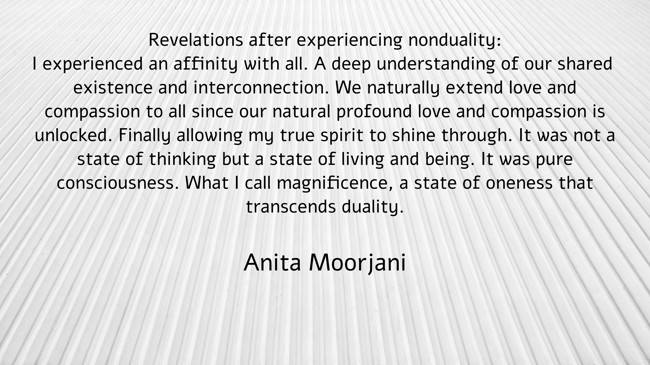
It was not a state of thinking but a state of living and being. It was pure consciousness. What I call a magnificence state of oneness that transcends duality. Getting me in touch with the parts of me that are eternal, infinite, and encompasses the whole. This was awesome; no longer becoming entrenched in beliefs that lock us into a state of duality and puts us in a constant state of judgment. What we endorse is considered good or positive and what we don’t is not, which also puts us in a position of needing to defend our beliefs. When others don’t agree and when we invest too much of our energy in defense, we become reluctant to let go even when ideas no longer serve us. That’s when our beliefs start to own us instead of the other way around. Having pure awareness, on the other hand, just means realizing what exists and what’s possible without judgments. Awareness doesn’t need defending. It expands with growth and can be all-encompassing, bringing us closer to the state of oneness. This is where miracles take place. In contrast, beliefs only allow what we deem credible while keeping us out of everything else.
Non-duality is a state of pure awareness which has a state of complete suspension of all previous held doctrine and dogma. It was when I was willing to let go, I received what I wanted, truly what was mine. Strongly held ideologies actually work against a person. Needing to operate out of concrete beliefs limits my experience because it keeps me within the realm of only what I know and my knowledge is limited and if I restrict myself to only what I am able to conceive, I’m holding back my potential and what I allow into my life. However, if I can accept that my understanding is incomplete and I’m able to become comfortable with uncertainty, this opens me up to the realm of infinite possibilities. After the non-duality, I am able to know and let go. When I suspend my beliefs as well as disbeliefs, I leave myself open to all possibilities. It also means that when I’m able to experience the most internal clarity and synchronicities, my sense is that the very act of needing certainly is a hindrance to experiencing greater levels of awareness. In contrast the process of letting go and releasing all attachment to any belief or outcome is cathartic and healing.
Anita Moorjani– Dying to be Me
Publisher’s review of this book
“God is No-Thing; An Apophatic Assertion” by Rodger R Ricketts is an outstanding work on apophaticism and how it relates to various religions or philosophies around the world and across time. At the heart of the discussion is the apophatic nature of “God,” Buddhism as a philosophy, and the clear benefits of an apophatic approach in life, both for the individual and for society. The author backs up his claims and observations about the apophatic way with references to scientific research as well as quotes from celebrated mystic and religious people from across time and from different backgrounds. In addition to providing a large body of proof for the validity and benefits of an apophatic way of knowing God, this book also provides a helpful guide to meditation itself and how to go about it.
I highly recommend this book to anyone interested in Buddhism, meditation, apophatic philosophy, and working for the betterment of themselves and humanity
Published 2023
“
‘This is what pure experience is: neither the world nor “I” in it other than experience.’ Susan Hamilton
‘The seeing of Truth cannot be dualistic (a ‘thing’ seen). It cannot be seen by a see-er, or via a see-er. There can only be a seeing which itself is Truth.’
Wei Wu Wei
‘The outside world of form-and-name and the inner world of thought and feeling are both no more than the construction of mind, and when the mind ceases, the weaving-out of a world of particulars is stopped. This stopping is called emptiness or no birth, but it is not the wiping out of existence, it is on the contrary viewing it truthfully unhammered by discriminative categories.’
D-T. Suzuki
‘The ‘world’ of experience is not given in experience: it is constructed by thought from the data of sense.’
C.I. Lewis
‘In whatever egotistic terms they think of an object, it becomes that. And therein, verily, lies its falseness, the puerile deceptive phenomenon that it is.’ S N v. 916
‘Bhikkhu, ‘I am’ is a conceiving; ‘I am this’ is a conceiving; ‘I shall be’ is a conceiving; ‘I shall not be’ is a conceiving; I shall be possessed of form’ is a conceiving; ‘I shall be formless’ is a conceiving; ‘I shall be non-percipient’ is a conceiving. Conceiving is a disease, conceiving is a tumour, conceiving is a barb. By overcoming all conceiving, bhikkhu, one is called a sage at peace.’(M.N. 140.31)
 We are all Interconnected even with the Universe