Archive | consciousness RSS feed for this section

Pure and Serene Mind (Part 2): The Path of Chi Restoration Through Qigong & Tai Chi

22 Apr

Written by Rodger R Ricketts

In the previous blog post, I explored how modern life gradually separates us from our original Chi through excessive mental activity, immersion in artificial systems, and disconnection from natural sensation. As symbolic thinking and external pressures dominate our awareness, the mind stretches beyond its natural limits, losing sensitivity to life energy. This disconnection weakens the true self and leads to imbalance, fragility, and inner suffering. Yet within each person remains the potential to restore purity, stillness, and authentic Chi by returning to original awareness, reconnecting with natural sensation, and aligning with timeless Daoist principles. Now, I examine how the ancient practices of Qigong and Tai Chi guide this restoration through stillness, movement, and the gradual purification of mind and life energy.

The cultivation and flow of energy through Qigong breathing techniques and Tai Chi movements reveal a path that is both clear and accessible. As individuals begin to recognize the false self that has often governed much of their existence, they should prepare for unexpected insights. Many people find themselves encumbered by multiple false identities. Rather than becoming discouraged, it is advisable to adopt a strategy of gradual progress—advancing step by step with unwavering faith—steadily uncovering one’s original life energy. This process unfolds layer by layer, requiring persistence and resilience. If one has been taught to believe that miracles occur externally, such a belief stems from a misconception rooted in a desire for effortless gain. It is imperative to cease heeding this false self and reject this erroneous notion immediately. Although the journey toward reclaiming one’s life energy may be challenging, it is ultimately profoundly rewarding.

If one maintains a pure heart and genuine sincerity in their efforts, it is possible to utilize the tools and guidance provided by a master to achieve the goal of discovering one’s true self. The experience of Chi can be regained through consistent practice. Several methods exist to restore the sensation of Chi, including motionless meditation, moving meditation, and receiving Chi energy from a master. According to the sacred teachings of an ancient lineage, a master capable of radiating life energy resembles a powerful iron magnet. Ideally, these practices should be undertaken concurrently. The primary purpose of these meditations is to create calmness and exclude the distractions of the artificial world, thereby enabling concentration and reconnection with internal sensations through stillness, typically in a seated posture, although some practices involve standing.

Despite the diversity in names and styles among various meditation techniques, all are designed to help practitioners eventually perceive their own energy. While many contemporary meditation systems emphasize sensing life energy, only one system currently extends beyond this initial stage by teaching how to direct the flow of Chi. This system contains essential knowledge that aids in purifying and strengthening true energy. It is the original Qigong meditation, deeply rooted in the principles of the Tao. Unlike other forms, the essence of Qigong meditation lies in cultivating the sensation of Chi within a clear mind. Qigong instructs practitioners to intensify this sensation and circulate it throughout the entire body, resulting in Chi that is fully present in every moment.

Through flowing movements, total Chi can be refined to become exceptionally pure and strong. This practice also forms the foundation of what is now known as Tai Chi. Tai Chi remains the only moving meditation practiced today that supports the development of Chi beyond the initial healing stages. Authentic Tai Chi enhances both the quantity and quality of life energy in a manner consistent with ancient Qigong meditation. Numerous styles of Tai Chi exist worldwide. For those whose lifestyle permits and who are resolute in their desire to attain true freedom from the artificial world, halt the depletion of life energy, and reclaim their true selves, it is possible to engage in all three stages of practice simultaneously, as was done in ancient times.

Among all training processes, the most critical step is learning to maintain the cleanliness and purity of one’s life energy. Purifying life energy is the ultimate goal, while maintaining its cleanliness is the means to that end. To keep life energy clean, one must keep the mind clean. If the mind remains unpolluted, unsullied, and undisturbed, it can purify life energy. The mind functions as a filter and must remain in its original, uncontaminated state, free from external influences. It must be brought to its most concentrated state: calm and comfortable, neither forced nor resistant, simply embodying one’s original self. The pursuit of this clean state of mind should not be forced, as the desire to attain it itself contaminates the mind. Ancient temple records recount stories of monks who failed to purify their minds due to excessive effort.

When the mind is free from contamination, distortion, and confusion, it naturally facilitates the purification of life energy. An apt analogy is to consider life energy as water and the mind as its filter. The mind must remain in its original, unaltered state—characterized by freedom, deep concentration, calmness, and comfort, without striving or resistance. Engaging in practices such as two-gong breathing and slow meditation with sincerity and honesty gradually calms and purifies the mind. With a purified mind, one can direct life energy to flow throughout the entire body, and over time, this energy will attain a purity comparable to that of a newborn. This represents a valuable aspiration: to harmonize one’s life energy with the original cosmic energy, known as the Dao.

Upon sensing and communicating with this pure life energy, one may progress further by reconnecting with its source through harmonious contact. This process entails transcending the layers of impurity and negative energy that obscure the original life energy, as well as the pollution of the artificial mind. In a polluted state, life energy cannot resonate at the same frequency as the Dao. It is not that the Dao refuses to communicate or assist; rather, communication is impeded while life energy remains contaminated and vibrates at a low frequency. Many individuals pray to external entities using words; however, such prayers often yield inconsistent outcomes because the original almighty force neither perceives nor communicates through low-level, artificially constructed symbols such as language. Instead, it communicates with those who turn inward and pray through the sensation of their pure life energy.

There exists no higher pursuit or more cherished goal than rediscovering and reclaiming one’s pure life energy. The most effective and singular method to cultivate life energy is through moving meditation that promotes the flow of Chi. Chi grows only when it flows, encompassing increases in strength, range, size, and volume. A greater volume of Chi better supports both body and mind. When the mind attains purity and Chi strengthens, it can be refined into higher forms of energy known as Jing Jing, which can be projected and transmitted beyond the body. Presently, no other meditation practice offers a comparable method to facilitate the flow of life energy as does the original Tai Chi flow meditation. Tai Chi simultaneously strengthens the mind and cultivates life energy, or Chi, and can be practiced anywhere and at any time. Practitioners are advised to wear comfortable clothing and flat, flexible shoes, breathe smoothly, quietly, and naturally, and may synchronize movements with breath without forcibly holding it. The mouth should remain closed with lips and teeth gently together, the tongue resting lightly against the roof of the mouth, and the head held upright as if suspended by a cord from above. Movements should be performed in a relaxed, comfortable manner with minimal muscular tension. With modest effort, the movements can be learned effectively.

At first glance, Tai Chi may appear to consist of slow, graceful movements designed primarily to improve physical balance and flexibility. However, beyond these physical benefits, Tai Chi represents a deeply meditative practice aimed at fostering clarity and inner stillness. The most profound aspects of significant Chi involve an empty mind and the clear release of mental tension. In Tai Chi, stillness does not imply the cessation of physical movement; rather, it entails cultivating a calm and focused mind. The practice promotes the release of distracting thoughts, worries, and mental chatter, thereby enabling full attention to be directed toward the present moment and the fluidity of one’s movements.

This state of stillness is known as Wuji, which translates as “emptiness” or “non-being” and represents the state of primordial, undifferentiated reality before the emergence of Yin and Yang. In Tai Chi, all movements and energy flow from Wuji. It is a state of pure potential wherein the mind is clear, the body relaxed, and awareness anchored in the present moment. By embracing stillness, Tai Chi practitioners access a powerful state of mental clarity that facilitates movement and fosters integration between body and mind.

Across these two blog posts, I traced the arc from loss to restoration: how modern existence subtly exhausts Chi and obscures true nature, and how ancient Taoist practice gently guides the return. Part One revealed how artificial systems, excessive thinking, and sensory overload separate us from original life energy, weakening intuition and inner peace. Part Two illuminated the path of return through sincerity, stillness, and movement, restoring Chi through meditation, Qigong, and Tai Chi. By purifying the mind, circulating life energy, and aligning with the Dao, one gradually reawakens the innate wholeness present in infancy—a pure and serene mind capable of sensing life energy naturally and resting effortlessly in truth. This journey requires patience and devotion, yet it ultimately leads to freedom, clarity, and harmony with the living universe.

We are divine

17 Apr

“We are divine, and we must live not by the
survival of the fittest, but in a way that supports everyone and everything on
this planet” Bruce H. Lipton

The time has come to use our powerful technologies for the good of all,
rather than for the delusional good of the self-proclaimed fittest. The idea of
separation, which finds its expression in the reductionism of classical
physics, must be replaced by the experience of union and inclusion already
evident in the holism of life. “There is not a single isolated fragment in all
of nature, each fragment is part of a harmonious and complete unity” (John
Muir). Only by recognizing this crucial interdependence can humanity go
beyond the repetition of the same dysfunctional patterns that have caused so
much unnecessary suffering to our species and to the ecosystem.
Many sages throughout history have suggested that we are beings of
light that will not die with the death of the body, because we are here to
learn and grow. I think we are here to learn to collectively create new
worlds in which to operate at a much higher level of cooperation, creativity,
and fulfillment than we now can at this early stage of our spiritual
evolution. The possibility of experiencing our true nature is already
supported by the enlightened personal experiences of millions of people
around the globe, and by countless “anecdotal” facts and events that science
hesitates to investigate. If we open ourselves to this potential that is
dormant in us and ask our greater self to show the way, we may soon be
able to experience an unsuspected unity in our lives, the early signs of
humanity’s awakening to its true power and purpose
.

Only when we truly comprehend that we are responsible for our
experiences and that the choice is ours alone, can we begin to truly know
ourselves and the world.
To know ourselves more and more, we need a new empathic science
that can convert scientific knowledge into deep lived knowing and from it
generate new scientific knowledge. Similarly, we need a new rational
spirituality that can convert lived knowing into new scientific knowledge
and from it generate new lived knowing. These two disciplines can then
intertwine in endless and mutual crescendo.
This is the essence of the Creative Principle of One. Within this vision,
empathic science and rational spirituality, integrating and interweaving, will
evermore increase our loving, joyful, and fulfilling union with the Whole.

I think that the positive forces that will create our future will not be the
forces and the laws of matter, but those of conscious cooperation,
comprehension, and love for others that all beings in existence must sooner
or later manifest because these values are the essence of our deepest nature.
I also think that the most effective way to achieve union is through a
process of collective and cooperative creation of a just, empathic, and
loving society through right and courageous actions informed by the heart
and by the intuitive and rational mind. Then our experience and knowing
will grow in our hearts and they will guide our individual actions through
an ever-higher level of consciousness.

copyright: Federico Faggin 2023 Irreducible: Consciousness, Life, Computers and Human Nature

The Unity of All -Non-Dualistic Apophatic Higher States of Consciousness

13 Apr

Non-Dualistic ApophaticHigher States of Consciousness

While Apophatic theology was often in the past regarded as heretical, blasphemy, and unorthodox, we have seen in the previous chapters that now the sciences including physics, cosmology, psychology, biology, ecology, linguistics, as well as meditation, all provide a secure platform for the non-dualistic Apophatic convictions and practice. Apophatic teachings and analysis clearly provide an alternative to the dominant Dualistic Cataphatic dogma. This acceptance and application of the non-dualist perspective is not just an academic survey but a way of living that has crucial truths that benefit the individual, interpersonal, biological, psychological, sociological, spiritual, societal, and ecological levels.

This book is meant to indicate the possibility and rationale that is encompassed in the title of Apophatic. To further explore in-depth the Buddha’s teaching of the Path to Awakening, the reader is referred to my previous books: The Buddha’s Teachings; Seeing Without Illusion, The Buddha’s Radical Psychology: Explorations and The Buddha’s Gift: A Life of Wellbeing and Wisdom.

Now we have the testimony of numerous modern articulate thinkers whose ability to describe their awakening perspectives leads a strong support to past spiritual leaders who, even in the threat of death, spoke their truths out of compassion for others. Remembering the insights of his personal mystical experience, Martin Buber, in his book, The Heart of Mysticism, described his higher states of consciousness: “Now from my own unforgettable experience I know well that there is a state in which the bonds of the personal nature of life seem to have fallen away from us and we experience an undivided unity.”

With this experience of Awakening, Buber understood the world without the alienating and separating dualistic subject/object dichotomy. Like the Buddha, out of compassion for humanity, Buber taught us how to experience and act in a non-alienated way. While Buber always emphasized that he understood relating to the world in an I-It manner, a ‘functional’ relationship between subject and object, is necessary, his primary concern was when a person was unable to respond from I-Thou, thus creating alienation and suffering. The relation between the person and Nothingness is a universal relationship that is found as the foundation for I-Thou, as authentic beings, without objectification. From an apophatic perspective, it is from the background of the I-Thou relation that I-It arises in the foreground.

Virtuous and Kind Behaviors

For this apophatic potential relational world to be realized, virtuous and kind behaviors are encouraged. This promotes sensitivity to the inner and outer world, more serenity, more authenticity, empathy and wisdom with less alienation, rumination, conflict, hatred, and bias.

The ‘I-Thou’ relation participates in the dynamic and living process of Being. That relationship simply Is. Through this relation, we interact with the world in its whole Being. It is not a means to an egocentric objective or goal of use and order but an authentic relationship involving respect and care for the whole being of each subject and existence.

Basic to the Apophatic relation, Lovingkindness or benevolence is a subject-to-subject relationship. Love cannot be an ego-based relation of subject to object but rather a relationship in which all members are subjects and share the immanent unity of Being. According to Buber, the I-Thou relationship is “the existential and ontological reality in which the self comes into being and through which it fulfills and authenticates itself.” This relation is characterized by mutuality and openness, directness, and being in the present.

I-Thou an expression of Inter-being relations

Using Buber’s ‘I-Thou’ as an apophatic example, communication is the fundamental expression of the uniqueness of relation within inter-being. These relational patterns of rapport and affinity are usually found when beings relate with lovingkindness, friendship, openness, and care. I meet you as you are, and you meet me as who I am. In this relationship, I am with you openly in my heart and mind. Living through relationships with this authenticity brings deep satisfaction, happiness and richness in life and opens a greater sense of the original relation with the Being. One easily expresses empathy and compassion, knowing that all are interconnected in unity. Such a perspective makes a different world, a world without violence. As Jesus said, ‘Thou shalt love thy neighbor as thyself.’ The Buddha said as well, “All beings tremble before violence. All fear death. All love life. See yourself in others. Then whom can you hurt? What harm can you do?”

As all Apophatic sages teach, by being ‘empty’ in the moment, here and now, we experience the wonder of existence. As we have seen in other chapters, the ultimate, even the very idea of the ultimate, cannot be known by discursive thinking. In the now, we live our life as it is. Also, through the practice of silent meditation, we focus on our life awareness. With this awareness, we experience our interconnectedness with all things and empathy and compassion for all sentient beings.

Knowing shatters illusions

Knowing begins with the release of illusions, with dis-illusion. Knowing means to penetrate through the fog, to arrive at reality; knowing means to ‘see’ the reality without illusion. Knowing is that the ‘ownership’ of truth is not possible. The Awakened relationship cannot be explained; it simply is. Through this ‘empty’ relation, we interact with the world in this whole Being. It is not a means to some object or goal but an authentic relationship involving respect for the whole being of each subject. Buber considers ‘I-Thou’ communication the fundamental expression of the uniqueness of relation within inter-being. These relational patterns of rapport and affinity are usually found when beings relate with lovingkindness, friendship, openness, and care.

In the I-Thou encounter, we relate to each other as authentic beings, without inquisition, prejudice, enmity, or predisposition. I meet you as you are, and you meet me as who I am. In this relationship, I am with you openly in my heart and mind. However, there are many people who never fully understand this deeper level of relation. This is tragic because living through relationships based on the non-dualistic perspective brings happiness, deep satisfaction and richness in life and opens a greater sense of the original relation with the Absolute.

When an I-Thou encounter occurs, I am meeting the other as thou with openness, directness, and presence by means of real mutual action, meaning and confirmation. As Buber wrote, “This person is other, essentially other than myself… I confirm it; I wish his otherness to exist, because I wish his particular being to exist.” We are interconnected, “not just with people, but animals too, and stones, clouds, trees” (Aitken 1984, p. 10). We are an integral part of everything.

Nothing exists by itself; nothing has a separate existence, an inherent separate self. As human beings we are Being, one with All. The truth is pure interbeing, beyond dualistic thinking of the alienated mind. Thus, one becomes aware of the impermanence and the Emptiness of the ‘IT’ world. Serenity comes with the acceptance of impermanence and interrelatedness. The insights of such Sages as the Buddha, the Hebrew prophets, Jesus, and Master Eckhart show that knowing begins with the awareness of the deceptiveness of our common-sense perceptions and cognitive constructions; our formulations of physical reality do not correspond to what is ‘really real.’ Therefore, most people are half-awake, half dreaming, and are unaware that most of what they hold to be true and self-evident is an ‘magician-like’ illusion produced by the influence of the dualistic alienated world in which they live.

Knowing, then, begins with the transformation of illusions, selfishness, and alienation. Knowing means to penetrate through the fog, to arrive at reality and to ‘see’ the reality without illusion. Knowing is not to own the truth, as possession is not possible, but to Be the truth. The Being mode of knowing allows us, as psychologist Erich Fromm (1992, pp.117-120) also observed, to go beyond ourselves, outside the ego. The Path’s result is kindness to oneself and another, to transcend the barriers that separate us from one another, and living life with recognition of interdependence and impermanence. When communicating at this level, we move beyond biased social roles, identifications, and objectification.

In I-Thou dialogues, we trust and can disclose deep, private aspects of ourselves that enable us to engage in deep and authentic relationships. The rigid, dualistic and egotistically dominated mind remains enmeshed in ignorance, greed, and anger that feeds on itself and, therefore, does not let go and rise above the suffering quagmire in which it remains. This ego rigidity needs an empathetic and compassionate approach to assist it in letting go and coming to know how it is possible to live in a world without the pain and distrust and suffering created through this dualistically based ignorance. And, in fact, the path can be clear and successfully traveled without much difficulty.

What is difficult is allowing oneself to give up the encased hatred, the anger, the greed, the biases of egoism and of selfishness. In the book, Lost Horizon, there is this passage: ‘Look at the world today. Is there anything more pitiful? What madness there is! What blindness! A scurrying mass of bewildered humanity crashing headlong against each other. The time must come when brutality and the lust for power will perish by their own sword. When that day comes, the world must begin to look for a new life.’

The new life away from that is and always has been pointed to by the apophatic teachers in the past and now. The whole movement is toward the development of maturity of perspective and, therefore, action with wisdom about the way we understand and think about existence. Therefore, incorrect ideas and beliefs must be renounced, which will change our human character and end further suffering.

For as the Buddha and other apophatic teachers have consistently taught, what is now clear through scientific investigation, that living beings, the environment and even the universe are deeply enmeshed and co-dependent on each other. This is one world and every action by all living and non-living forces interact with and alter the previous reality- some more than others. Therefore, once we become experienced, inspired, and apply the truths that the Buddha and others have discovered, and now are explicated in more modern terminology and description, there is a real possibility for a Heaven on Earth without the distraction of seeking supernatural intervention.

Heaven on Earth can briefly be described in a biocentric way as a world of humans acting through wisdom and empathy and compassion, The Buddha, one of the greatest Apophatic teachers, said in his last words to the monks, “It may be that after I am gone that some of you will think, ‘now we have no teacher.’ But that is not how you should see it. Let the Dharma and the discipline that I have taught you be your teacher. All individual things pass away. Strive on, untiringly.”

Now, as we have explored in this book the similar meditation instructions and doctrinal perspectives taught by the many Apophatic spiritual teachers, over time and different cultures, we know we can attain Awakening and know Emptiness and give up our suffering and the harmful consequences of dualistic alienation, for a life of wellbeing and happiness. Let us all assert the Apophatic Way and accomplish knowing the ‘unknowable’ – No-thing

Chapter 16 The Unity of All. Of the Book, God is No-thing. The Apophatic Assertion The
Salvation for Humankind – revised -. Copyright Rodger Ricketts Psy.D.,2022. All rights
reserved.

Image

Experiencing Non-Duality: NDE

2 Apr
Image

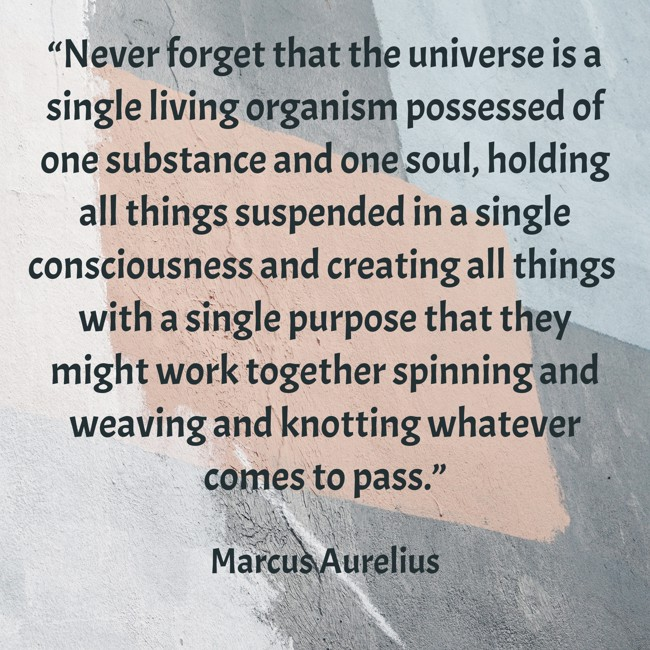
Never Forget That…

1 Apr

The “feeling of being stared at”

7 Mar

“The “feeling of being stared at” is the focus of a subset of distant-mental-interaction studies. This is a particularly interesting belief to investigate because it is related to one of the oldest known superstitions in the Western world, the “evil eye,” and to one of the oldest known blessings in the Eastern world, the darshan, or gaze of an enlightened master. Most ancient peoples feared the evil eye and took measures to deflect the attraction of the eye, often by wearing shiny or attractive amulets around the neck. Today, most fears about the evil eye have subsided, at least among educated peoples. And yet many people still report the “feeling of being stared at” from a distance. Is this visceral feeling what it appears to be—a distant mental influence of the nervous system—or can it be better understood in more prosaic ways? In the laboratory today, the question is studied by separating two people and monitoring the first person’s nervous system (usually electrodermal activity) while the second person stares at the first at random times over a one-way closed-circuit video system. The stared-at person has no idea when the starer is looking at him or her. Figure 9.2. Effect sizes for studies testing the “feeling of being stared at,” where 50 percent is chance expectation. Confidence intervals are 95 percent. Figure 9.2 shows the results for staring studies conducted over eight decades.34 Similar to William Braud’s electrodermal studies but conducted in a context that more closely matched common descriptions of “feeling stared at,” these studies resulted in an overall effect of 63 percent where chance expectation is 50 percent. This is remarkably robust for a phenomenon that—according to conventional scientific models—is not supposed to exist. The combined studies result in odds against chance of 3.8 million to 1. Summary Given the evidence for psi perception and mind-matter interaction effects discussed so far, we could have expected that experiments involving living systems would also be successful. The studies discussed here show that our expectations are confirmed. The implications for distant healing are clear. All the experiments discussed so far have been replicated in the laboratory dozens to hundreds of times. They demonstrate that some of the “psychic” experiences people report probably do involve genuine psi. Now we move outside the laboratory to examine a new type of experiment, one that explores mind-matter interaction effects apparently associated with the collective attention of groups.”
― Dean Radin, The Conscious Universe: The Scientific Truth of Psychic Phenomena

Consciousness across scales and implications for sentient beings

7 Mar

Illustration of the proposed framework and its implications for sentient beings. The universal consciousness field (Φ) exists beyond space–time in an undifferentiated state (⁠⁠. Through differentiation, it gives rise to localized excitations (⁠⁠), which manifest as physical structures or individual consciousness. Following the Big Bang, Φ evolves, generating complex systems capable of awareness—sentient beings with individual consciousness ψ⁠) localized in space–time. Once differentiated, personal thought (⁠τ⁠) shapes individual awareness and perception, producing evolving subjective interpretations of reality ψ over time. This process creates the illusion of separateness, even though all individual consciousness remains intrinsically connected within the universal consciousness field.

Universal consciousness as foundational field: A theoretical bridge between quantum physics and non-dual philosophy 

Maria Strømme Corresponding Author 

Death or Life Transition

23 Feb

Death or Life Transition

An age-old question for human beings is why do we die – sometimes in a senseless, violent manner? Why do good people die young? This is what self-conscious beings ask. After reflecting more on this from a perspective of the teaching of the Buddha and Quantum Information Panpsychism, I thought to put in words some of thoughts on death.

A year ago, I read a short but interesting blog by Joe Goldfarb on his ethical dilemma of killing plants. He wrote, “For one organism to live another must die. There is no escaping this. Having a tiered value status of life, i.e. a mammal has a higher status than a plant, based on assigned arbitrary values is a false perception of reality. I believe in a reality of equality, not inequality, regardless of the form and capabilities of the organism. A bear does not have more value than a flower, for both their names, and bodies are not real. The only thing that is real is their life, of which they both have of equal value. With that said, it is the gift of life, which I acknowledge and respect… Even killing less life, one is still taking life. This is why Veganism has good intentions but is inherently flawed. Because of this moral problem, I have been studying Native American belief systems in hopes of finding a resolution.”

Now, I don’t know if he has resolved this moral problem for himself, but his thoughts point out an important fact: in life, there is death. After hearing the News, there were more seemingly endless situations where the lives of people being at the wrong place, at the wrong time, are ended. It could be a natural disaster or a killing or some other calamity, but the result is the same: death. Their lives are quickly ended. If one removes the usual eulogy of Cataphatic priests, rabbis, ministers, or Imams that God has a purpose that we don’t understand and the person who has died will be in the hands of God (perhaps) – we must admit, we just don’t know exactly why. Death happens.

Thus, death is as natural as living. Under various conditions, life flourishes or perishes. We have seen that stars and planets extinguish only to be reborn, and our own sun and solar system will share a similar fate. Maybe even the universe endures cycles of death and renewal. All materialistic entities are transient and impermanent. As far as we know, there exists only energy/Consciousness.

Is this perspective depressing? Not at all. Embracing the fragility and brevity of life fosters a profound sensitivity and reverence for life, transforming our existence into a precious opportunity. Each fleeting moment propels us forward, creating ripples of effect that extend into the future making us more cautious about our actions being wholesome. When we comprehend that a permanent separate ‘self’ is illusory; an illusion, the prospect of losing it through death is alleviated.

Grief will express itself when one ponders they no longer experiencing life in the human materialistic existence. Yet, if one understands there is no substantial separate I or me, then the idea of losing it through death is not a problem. It is by not comprehending the ground of the fundamental Universal Consciousness, through the mistaken psychological separation caused by the ignorance of the identification in a dualism and a Self, that the fear and angst of death appears. Instead, when one realizes that we are an integral part of Panpsychism, the ALL of Consciousness, the grief of loss disappears.

As Mary Elizabeth Frye  expressed it poetically:

Do not stand at my grave and weepI am not there. I do not sleep.I am a thousand winds that blow.I am the diamond glints on snow.I am the sunlight on ripened grain. I am the gentle autumn rain. When you awaken in the morning’s hush I am the swift uplifting rush Of quiet birds in circled flight. I am the soft stars that shine at night. Do not stand at my grave and cry;I am not there. I did not die.

And my sentiments now about death…

When I die, bury me deep in a place where where my physical elements will support trees growing tall and flowers blossoming. My smile beneath will follow the colors spreading for joy. Mark not my place with statues or stones, find me where life can be found. My body will join the elements and energy of the universe and my consciousness will completely rejoin the Universal Consciousness from which I have always existed and continue on again for eternity in the cycle of life.   

‘Information Links All Things in the Universe’

20 Feb

Information and Inter-Communication

Science has traditionally held that matter and energy are the foundations of physical reality. But an emerging viewpoint posits that a more subtle, but equally fundamental, factor is also important: information. In Science and the Akashic Field, Ervin Laszlo stresses the importance of information for the interdependent functioning of the cosmos: “Information links all things in the universe, atoms as well as galaxies, organisms and minds. This discovery transforms the fragmented world-concept of the mainstream sciences into an integral, holistic worldview.”

In order to account for the presence of a significant number of particles in the universe, and for the ongoing evolution of the existing things, we need to recognize the presence of a factor that is neither matter nor energy. The importance of this factor is now acknowledged not only in the human and the social sciences, but also in the physical and the life sciences. It is information – information as a real and effective factor setting the parameters of the universe at its birth, and thereafter governing the evolution of its basic elements into complex systems. Information is an inherent aspect of both physical and biological nature . . . Information is not a human artefact, not something we produce by writing, calculating, speaking, and messaging. As ancient sages knew, and as scientists are now rediscovering, information is present in the world independent of human volition and action and is a decisive factor in the evolution of the things that furnish the real world. The basis for creating a genuine “theory of everything” is the recognition that “information” is a fundamental factor in nature. (18)

Laszlo provides a useful operational definition of information (or “in-formation”): “Information is the subtle, quasi-instant, non-evanescent and non-energetic connection between things at different locations in space and events at different points in time. Such connections are termed “nonlocal” in the natural sciences and “transpersonal” in consciousness research. In-formation links things (particles, atoms, molecules, organisms, ecologies, solar systems, entire galaxies, as well as the mind and consciousness associated with some of these things), regardless of how far they are from each other and how much time has passed since connections were created between them.”

A number of scientists have suggested that some of the quandaries of current cosmological theories can be resolved through the concept of information. “A common theme among researchers trying to look beyond general relativity and quantum theory to a more unified understanding of nature is that something else lies at the root of all things: information.”

The discoveries of quantum physicists in the early 20th century had tremendous implications for understanding the nature of reality. In The Field, Lynne McTaggart stresses the importance of their findings: “They realized that the very underpinnings of our universe is a heaving sea of energy – one vast quantum field. If this were true, everything would be connected to everything else like some invisible web.”

They also discovered that we were made of the same basic material. On our most fundamental level, living beings, including human beings, were packets of quantum energy constantly exchanging information with this inexhaustible energy sea. Information about all aspects of life, from cellular communication to the vast array of controls of DNA, was relayed through an information exchange on the quantum level. Even our minds operated according to quantum processes. Thinking, feeling – every higher cognitive function – had to do with quantum information pulsing simultaneously through our brain and body. Human perception occurred because of interaction between the subatomic particles of our brains and the quantum energy sea. We literally resonated with our world. In a stroke, they had challenged many of the most basic laws of biology and physics. What they may have uncovered was no less than the key to all information processing and exchange in our world, from the communication between cells to perception of the world at large. More fundamentally, they had provided evidence that all of us connect with each other and the world at the very undercoat of our being. (19)

One of the strangest features of quantum physics is the phenomenon of “nonlocality” or “entanglement.” Physicists discovered that some pairs of sub-atomic particles or atoms are entangled or correlated, and remain instantly connected over time: “Their nonlocality respects neither time nor space: it exists whether the distance that separates the particles and the atoms is measured in millimeters or in light-years, and whether the time that separates them consists of seconds or millions of years.”

As Niels Bohr, a Nobel prize-winning pioneer of quantum physics, discovered, once subatomic particles such as electrons or photons are in contact, they remain forever influenced by each other instantaneously and for no apparent reason, over any time or any distance. When particles are entangled, the actions of one will always influence the other in the same or the opposite direction, no matter how far they are separated. They act like a pair of star-crossed lovers who are forced to separate and live independently forever, but who continue not only to know each other’s moves but also to imitate the other’s every activity for the rest of their days. Albert Einstein had refused to accept nonlocality, disparaging the theory as “spooky action at a distance.” Einstein claimed this type of instantaneous connection couldn’t occur because it would require information traveling faster than the speed of light, which he considered the absolute outer boundary of how quickly one thing can affect something else. Even subatomic particles were not supposed to be able to affect other particles faster than the time it would take the first to travel to the second at the speed of light. (20)

In 1972, physicist John Bell proposed a possible test of the validity of nonlocality – taking measurements on a pair of quantum particles which were initially in contact but later separated. A decade later in Paris, physicist Alain Aspect and his team conducted an actual experiment which confirmed Bell’s theory. In The Holographic Universe, Michael Talbot describes the results: “Aspect’s real-life experiment showed that when two photons were fired off from a single atom, the measurement of one photon affected the position of the second photon. Whatever happened to one was identical to, or the very opposite of, what happened to the other. A comparison of the measurements showed that both were the same. Some invisible wire appeared to be connecting these two quantum particles across space, to make them follow each other forever.”

The phenomenon of nonlocality and the transmission of information across levels of the universe appears in fields as diverse as cosmology, evolutionary biology, ecology and consciousness research:

It is clear that nonlocal coherence has important implications. It signals that there is not only matter and energy in the universe, but also a more subtle yet real element: an element that connects, and which produces the observed quasi-instant forms of coherence. Identifying this connecting element could solve the puzzle at the forefront of scientific research and point the way toward a more fertile paradigm. We can take the first step toward this goal by affirming that information is present, and has a decisive role, in all principal domains of nature. Of course, this information that is present in nature is not the everyday form of information but a special kind: it is “in-formation” – the active, physically effective variety that “forms” the recipient, whether it is a quantum, a galaxy, or a human being. (21)

Although nonlocality or entanglement was first discovered at the quantum level, it is not limited to this domain, and also surfaces at macroscopic scales in the universe, such as electromagnetic and other fields. Ervin Laszlo proposes that the structures and processes of the manifest physical world are determined by interacting waves or patterns of energy and information embedded in the “Akashic field.”

A world where connection, coherence, and coevolution are fundamental features is not a fragmented and fragmentable world, but an integral one. In this world nonlocality is a fundamental factor: things that occur at one place and time also occur at other places and times – in some sense, they occur at all places and times . . . There is an urgent need for a paradigm in which nonlocality is a basic feature – the paradigm of a world that is intrinsically nonlocal. Such a paradigm is now emerging at the leading edge of scientific inquiry. It is based on a new understanding of how parts interact within wholes; ultimately how the parts we know as quanta and the macroscale entities built as coordinated sequences of quanta interact within the larger whole we call “cosmos.” The basic concept that can convey scientific meaning and legitimacy to this understanding is field. Fields are bona fide elements of the physical world, although they are not in themselves observable. They are like fishing nets so fine that their strands cannot be seen. The fields themselves are not visible, but they produce observable effects. Fields connect phenomena. Local fields connect things within a particular region of space and time, but there are also universal fields that connect things throughout space and time. Quanta, and the things constituted of quanta, interact through fields, and they interact universally. (22)

Scientists are becoming aware of the primary role of information in describing the laws and workings of physical reality. “Information really is physical and it literally in-forms our Universe, while at the same time transforming our view of what we actually mean by the term physical.”

The laws of motion and thermodynamics that define how matter and energy move and how they interact are basically laws of information. The concept of information content and flow is starting to be used powerfully to describe physical phenomena at deeper and more all-encompassing levels. The two twentieth century pillars of science, the quantum and relativity theories, are also being re-evaluated as informational theories, a development that is being seen as having the potential to finally bring together these as yet unreconciled perspectives of our Universe. This is just the first step to a much more encompassing perception, one that not only aims to understand the completeness of the physical world but also proposes a cosmology that encompasses all aspects of existence and experience and seeks answers to the deeper question of not only how reality is as it is but also why. (23)

Information exchange seems to occur at all levels of reality. For instance, an electron is much more than a simple structureless point. The active use of information by electrons, and indeed by all sub-atomic particles, indicates that the ability to respond to meaning is an innate characteristic not only of consciousness but of all matter. There is also evidence that at the smallest atomic scale, space-time is pixellated, suggesting that this is the foundational level for information and holographic reality.

The content and flow of information creates patterns and relationships between and within all scales of existence. The events and processes at each level of reality are not random or based on chance – rather, they are dependent on the information they embody. In The Cosmic Hologram, Jude Currivan writes: “Our Universe is fundamentally interconnected as a unified entity that is underpinned and permeated by information. The universal speed limit exhibited by light ensures that information is transferred at a constant and finite limit within space-time, maintaining causality and enabling our universe to experience and evolve.”

Information literally in-forms all that we call physical reality, and from the innate instructions, conditions, ingredients, recipe, and container, of the information that make up the cosmic hologram, enables the outcome of a universe that nurtures the evolution of complexity and ever more self-aware consciousness – makes a universe that is perfect for us. To understand the essential wholeness of reality requires that the principles and laws of physics be restated in informational terms. At every scale from the most minute up to its entirety, the reality of our Universe is indeed being restated in this way, revealing itself as being constituted of holographically expressed information, which is more fundamental than space-time and energy-matter . . . There’s no fundamental difference between quantum and macroscopic scales. They only appear different owing to the difficulty of informationally isolating larger entities from their surroundings. This shows that our Universe is innately coherent and nonlocally unified, where everything is fundamentally interconnected and informational in nature. (24)

The fundamental flow of information is integral to the ordering and evolution of the universe and the development of individual biological entities. Ervin Laszlo: “The network of information applies to all scales, from the genesis and evolution of the universe itself to the development and increase in complexity and ordering of matter – leading all the way to the emergence of the order defining biological organisms and systems expressing self-awareness, by which the universe is ultimately aware of itself.”

Information exchange is the key to understanding the evolution of the universe. The laws and processes of the flow of information provide a deeper understanding of the nature of physical reality as well as integrating quantum theory (which describes universally conserved energy-matter) and relativity theory (universally entropic space-time). “The origin of our universe, in an extraordinarily ordered state, embodied its minimum informational entropy that ever since has increased inexorably, causing the arrow of time to flow and the principle of causality within space-time to be inviolate.” In The Cosmic Hologram, Jude Currivan explores the significance of information in the evolution of the universe:

From its birth, [the universe] encoded the complete information and algorithmic instructions that ensured that all laws of physics pertaining to the behavior of energy-matter and that are described by quantum theory prevail universally and so enable it to exist as a unified entity. Such encoding and coherence also empowered the creation of elementary particles and the fundamental processes and interactions that progressively gave rise to stars, galaxies, and the evolution of ever-greater complexity and diversity. Information expressed as energy-matter, visible and dark, is both conserved and balances exactly to zero throughout its entire lifetime. Such conservation of information expressed as energy-matter on a universal basis is a statement of the first law of information. As such, the first law of information is essentially also the generalized expression of quantum theory . . . The continually increasing entropic flow of information within space-time, rising to a maximum at the end of the lifetime of our Universe, has enabled the development of ever-higher levels of consciousness and self-awareness to be expressed, embodied, and experienced. The nature of time itself can even be considered as being the accumulated flow of informational entropy, ever increasing from past to present to future. Indeed, just as the first law of information is an expression of quantum theory, so the second law of information is that for relativity theory. The first law of information enables our Universe to exist; the second law enables it to evolve. (25)

Rodger R Ricketts

  • Ervin Laszlo Science and the Akashic Field (Rochester, Vermont: Inner Traditions, 2007), p. 13.
  • Lynne McTaggart The Field (New York: Harper Perennial, 2003), pp. xvii-xviii.
  • Michael Talbot The Holographic Universe (New York: Harper Perennial, 2011), pp. xiii-xiv.
  • Ervin Laszlo Science and the Akashic Field (Rochester, Vermont: Inner Traditions, 2007), pp. 60-61.
  • Ervin Laszlo The Self-Actualizing Cosmos Rochester, Vermont: Inner Traditions, 2014), pp. 8-9.
  • Jude Currivan The Cosmic Hologram (Rochester, Vermont: Inner Traditions, 2017), pp. 2-3.
  • Jude Currivan The Cosmic Hologram (Rochester, Vermont: Inner Traditions, 2017), pp. 112-113.
  • Jude Currivan The Cosmic Hologram (Rochester, Vermont: Inner Traditions, 2017), pp. 113-115.

All Is Interrelated

20 Feb

Gurdjieff and ‘Reciprocal Maintenance’

One of the cornerstones of Gurdjieff’s Fourth Way cosmological teachings is the concept of ‘reciprocal maintenance’ or ‘reciprocal feeding.’ In his magnum opus Beelzebub’s Tales to His Grandson, he termed this process as Trogoautoegocrat (“I keep myself by feeding”), and described it as a universal principle which interrelates all levels of the universe and results in the reciprocal maintenance or feeding of “All and Everything.” In Gurdjieff: Making a New World, John G. Bennett succinctly outlines the main features of this cosmic process: “The transformation of energies depends on the relationship of entities, whereby each maintains the existence of others in a kind of universal mutual support system. Each order of beings is endowed with a form of energy that enables it to play its part in the cosmic process.”

Reciprocal maintenance in its special sense connotes that the universe has a built-in structure or pattern whereby every class of existing things produces energies or substances that are required for maintaining the existence of other classes. Gurdjieff uses the terms involution and evolution to describe the process. Involution is the transformation process in which a high level of energy acts on lower energies through an apparatus which provides the necessary environment and conditions. The human body is such an apparatus and so is any other living organism. The earth also provides an environment for high level energy – such as solar radiation – to act upon the more passive elements of the earth’s crust and atmosphere. Involution is entropic, that is to say the overall level of energy is always lowered in all involutionary changes. Evolution is the reverse process. It is the production of high level energy from a lower level source. This also requires an apparatus, but of a different kind, for the ‘up-grading’ of energy is improbable and cannot occur at all unless some high level energy is present. Life is an evolutionary process that goes against the direction of probability. The work by which man is transformed is evolutionary. It goes against the stream of life. (6)

In a talk to his students in 1918, Gurdjieff presented the theoretical basis of the principle of reciprocal maintenance: the transformation of matter and energy as a universal process of descent (involution) and ascent (evolution):

Everything in the world is material and – in accordance with universal law – everything is in motion and is constantly being transformed. The direction of this transformation is from the finest matter to the coarsest, and vice versa. Between these two limits there are many degrees of density of matter. At some points in the development there are, as it were, stops or transmitting stations. These stations are everything that can be called organisms in the broadest sense of the word – the sun, the earth, man and microbe. These stations are commutators which transform matter both in its ascending movement, when it becomes finer, and in its descending movement, toward greater density . . . This transformation of substances in two directions, which is called evolution and involution, proceeds not only along the main line from the absolutely fine to the absolutely coarse and vice versa, but at all intermediate stations, on all levels, it branches aside. A substance needed by some entity may be taken by it and absorbed, thus serving the evolution or involution of that entity. Everything absorbs, that is, eats something else, and also serves as food. This is what reciprocal exchange means. This reciprocal exchange takes place in everything, in both organic and inorganic matter. (7)

According to Gurdjieff, the universe was created as an unending chain of systems bound by universal interdependence. In this cosmic process of ‘exchange of substances’ everything that exists is dependent on and connected to everything else; nothing is separate:

The principle of universal interdependence is certainly not found only in the teaching of Gurdjieff. It appears in many traditional teachings. But his convincing exposition of it is indisputably original. A generalized non-separability characterizes the universe of Gurdjieff. Systems on different scales have their own autonomy, for according to the terminology of Gurdjieff, the Absolute only intervenes directly at the creation of the first cosmos. The other cosmoses formed themselves freely by self-organizing principles – always, however, in submission to the law of three and the law of seven. In this way the diversity of the universe is assured. On the other hand, the interaction of the different cosmoses by means of the universal exchange of energy-substances assures unity in diversity. Life itself appears not as an accident, but as a necessity in this universe of universal interdependence . . . Gurdjieff’s universe is not a static universe, but a universe in perpetual movement and change, not only on the physical plane, but also on the biological and psychic planes. Evolution and involution are always at work in the different worlds. And when we consider the important number of different matters characterized by different degrees of materiality, we can understand the essential role of the universal exchange of substances in evolution and involution. (8)

Gurdjieff emphasized the importance of reciprocal maintenance in the overall organization and functioning of the cosmos. Reciprocal maintenance shows how existing forms interact with other forms in a symbiotic relationship of mutual support. Functionally, higher levels of reality “spiritualize” lower levels of existence by organizing and then transforming them, under the direction of fundamental cosmic laws, into “higher patterns of meaning and value.” John G. Bennett: “Our customary way of thinking and talking about the world is in terms of objects and events, both of which are abstractions. Gurdjieff saw the world as the universal process of the transformation of energies, regulated by two fundamental laws (the law of three and the law of seven) and various ‘second-grade’ laws arising from their interaction. The two basic realities are relations and transformations.”

The world was brought into existence because ‘being’ and ‘time’ are mutually destructive. Everything separate and closed within itself must perish for lack of a principle of renewal. There is partial renewal by borrowing energy from outside, but this is not enough. Full renewal requires full mutuality. It is by Universal giving and receiving of energies that Cosmic Harmony is maintained. This, in turn, requires an organized structure which is given by the interaction of the different classes and levels of reality. (9)

Some contemporary physicists have noted a correspondence between Gurdjieff’s idea of reciprocal maintenance and the ‘bootstrap’ principle of modern physics. The bootstrap concept implies that at every level of nature there is an underlying unity which is maintained by a dynamic intelligence in permanent evolution. Such a universe is capable of self-creation and self-organization, without any other external intervention of other energies and forces. In the words of physicist Paul Davies: “The universe fills itself exclusively from within its own physical nature with all the energy necessary to create animate matter.” Physicist Basarab Nicolescu expresses a similar idea: “It seems evident that self-creation and self-organization only have meaning in a universe which is made up of an infinite chain of systems regulated by universal interdependence. Unity in diversity and diversity through unity are the conditions for selfcreation and self-organization. Otherwise there is nothing but the law of accident that can act.”

The trogoautoegocratic process of Gurdjieff presents a remarkable correspondence to the ‘bootstrap’ principle formulated in physics around 1960 by American physicist Geoffrey Chew. This word “bootstrap” also implies “to pull yourself up by your own bootstraps.” The closest equivalence in the scientific context would be ‘self-consistency.’ In the bootstrap theory, the part appears at the same time as the whole. What is put in question in bootstrap theory is the very notion of a particle’s identity: it substitutes instead the notion of the relationship between “events.” It is the relations between events which are responsible for the appearance of what we call a particle. There is no object in itself possessing its own identity, that we could define in a separate or distinct manner from other particles. A particle is what it is because all other particles exist at the same time: the attributes of a determined physical entity are the results of interactions with all the other particles. According to bootstrap, there really is a “law of reciprocal maintenance” of all quantum particles. Also, as in the trogoautoegocratic process, a system is what it is because all other systems exist at the same time. The role of self-consistency in the construction of reality should be emphasized – a self-consistency which assures the coherence of the All. (10)

Rodger R Ricketts

  • John G. Bennett Gurdjieff: Making a New World (New York: Harper & Row, 1973), pp. 189-190.
  • G.I. Gurdjieff Views from the Real World: Early Talks of Gurdjieff (New York: E.P. Dutton, 1973), pp. 209-210.
  • Basarab Nicolescu “Gurdjieff’s Philosophy of Nature” in Jacob Needleman and George Baker, eds. Gurdjieff: Essays and Reflections on the Man and His Teaching (New York: Continuum, 1996), pp. 48-49.
  • John G. Bennett Gurdjieff: Making a New World (New York: Harper & Row, 1973), p. 206.
  • Basarab Nicolescu “Gurdjieff’s Philosophy of Nature” in Jacob Needleman and George Baker, eds. Gurdjieff: Essays and Reflections on the Man and His Teaching (New York: Continuum, 1996), pp. 49-50.