Tags: All Living Things Together, Friendship, Ian Somerholder, Knowledge, life, Mahatma Gandhi, reality, Science, Spirituality
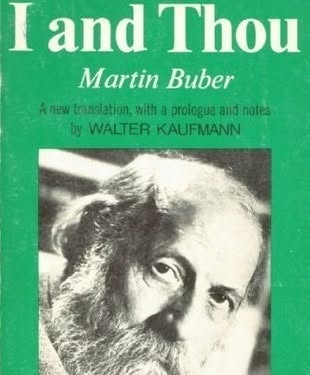
Until we go beyond the superficiality of basic sense perception and investigate and see the complex tapestry of existence, we stay in the it realm as Martin Buber explained in his book, I and Thou. Once we see the strands of our life within the unique fabric of existence with the magnificent, interconnected unity and complexity of life and living things, we are finally able to empathize with the essence of All and enter a thou relationship. Then our relationship with the world, with all living beings, changes fundamentally to seeing the empathetic symbiosis of ourselves with all other living life forms. It is at that point that existential care, affinity, compassion and friendliness appear and are expressed in our interactions and relationships with all the others.
Rodger R Ricketts
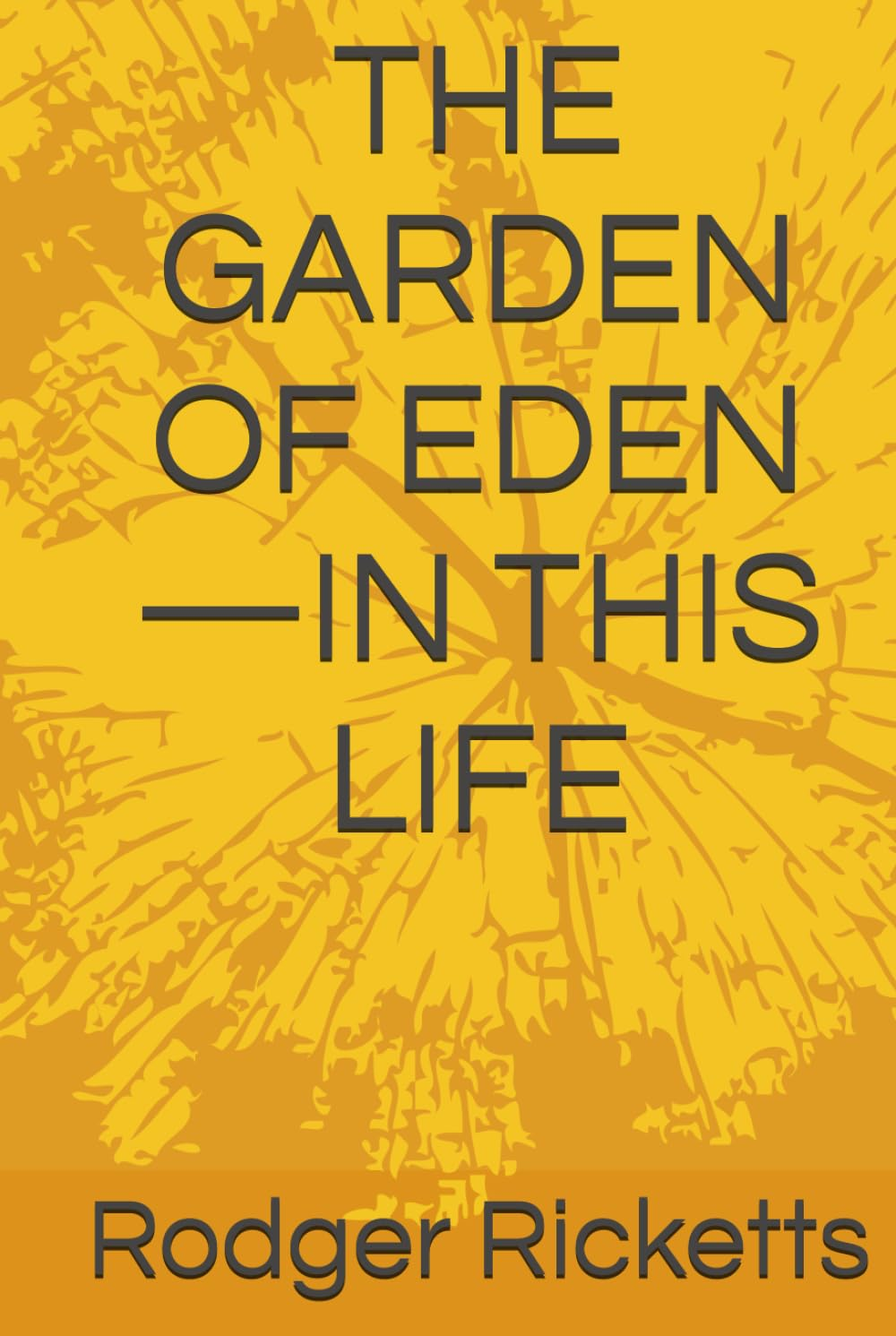
In The Garden of Eden in This Life, (2025) Dr. Rodger R. Ricketts—a clinical psychologist, mindfulness teacher, and lifelong student of the Buddha’s teachings—unveils a profound perspective linking ancient wisdom, modern psychology, and the apophatic (negative) spiritual tradition. Drawing from over forty years of study and practice, he explores how non-dualistic teachings from Buddhism, science, and multiple faith traditions reveal the limits of language, the illusions of separation, and the path back to an integrated state of being.You will journey through concepts like Sunyata (emptiness), the via negativa, and the psychology of transcendence—discovering how humanity’s separation from nature and spirit can be healed through direct experience, compassionate living, and expanded awareness. Open these pages and begin your journey back to the Garden… in this life.
Follow the advice of your heart, because no one will be more faithful to
you than him.
—Book of Sirach, 37.13
I think that the positive forces that will create our future will not be the
forces and the laws of matter, but those of conscious cooperation,
comprehension, and love for others that all beings in existence must sooner
or later manifest because these values are the essence of our deepest nature.
I also think that the most effective way to achieve union is through a
process of collective and cooperative creation of a just, empathic, and
loving society through right and courageous actions informed by the heart
and by the intuitive and rational mind. Then our experience and knowing
will grow in our hearts and they will guide our individual actions through
an ever-higher level of consciousness. Unfortunately, today there is the real
danger of letting ourselves be seduced by the spreading culture of digital
ontology and digital consumerism that replaces true and profound
relationships with virtual and superficial ones, thus halting, if not reversing,
our spiritual development.
Social networks designed to bombard people with suggestive messages,
often personalized to reinforce personal biases or based on false
information or on presumed conspiratorial theories, generate groups that
can become alienated from reality in self-isolating worlds. Nikola Tesla said
that “progress must serve to improve the human race; if not, it is only a
perversion.”
Technology must be used to help us discover our true nature, not to
further imprison us in meaningless virtual worlds designed to enrich the
richest. We have come to the point where we can truly unite as humans no
matter where we were born, or stay divided in warring factions with ever
increasing destructive technology on our side.
Only when we truly comprehend that we are responsible for our
experiences and that the choice is ours alone, can we begin to truly know
ourselves and the world.
To know ourselves more and more, we need a new empathic science
that can convert scientific knowledge into deep lived knowing and from it
generate new scientific knowledge. Similarly, we need a new rational
spirituality that can convert lived knowing into new scientific knowledge
and from it generate new lived knowing. These two disciplines can then
intertwine in endless and mutual crescendo.
This is the essence of the Creative Principle of One. Within this vision,
empathic science and rational spirituality, integrating and interweaving, will
evermore increase our loving, joyful, and fulfilling union with the Whole.
Federico Faggin: Irreducible – consciousness, Life, Computers, and Human Nature 1988 Essentia Publisher
The Lakota phrase Mitákuye Oyás’iŋ describes Reality by addressing it as “All My Relations.” All humans, all animals, all plants, all the waters, the soil, the stones, the mountains, the grasslands, the winds, the clouds and storms, the sun and moon, stars and planets are our relations and are relations to one another. We are connected to each other in multiple and vital ways. When one is in pain, all are harmed. When there is justice for one, there is more justice for all.
It is time for the dominant culture to finally learn that its people cannot harm those it deems lesser than themselves simply because it wants to and can. This is, simply, wrong. It violates the fundamental nature of reality. Actions that violate the fundamental nature of reality build tension into the system that eventually causes a loss of balance and a rebound of consequence to those who broke natural law. This is true whether the ones being unjustly persecuted and abused are human beings whose color or religious beliefs are not those of the dominant culture, or parts of the natural world that those of the dominant culture judge as insentient or even not-living. In all these cases, the dominant culture judges these “others” as unacceptable or lesser than themselves, and therefore undeserving of respect and reciprocity.
Being “woke” is not simply a matter of learning what words to speak. Truly right words can only come from a heart that is open to the living world’s grief, that is willing to be broken by the pain of this grief. Such a heart experiences the pain that all the rest of creation has suffered for generations upon generations, and in doing this it helps to share and bear that burden. Only then, once the true heart has shattered from this pain, can Real Knowledge flow into it. It enters through the spaces between the shattered fragments. This is the pathway to true healing, for that heart and the heart of creation itself.
===Notes about the translation and meaning of Mitákuye Oyás’iŋ:
Although “All Our Relations” is the most common translation of Mitákuye Oyás’iŋ — even Vine Deloria, Jr. defines it as such in his books — the phrase actually bears within it rich layers of additional meaning that cannot be easily translated into English. It’s important to point this out because words and ideas, stories and rituals, are bound together into a single reality that must be respected, not misappropriate. In the video, the late Sicungu Lakota Elder Albert White Hat, a friend who was on Tapestry’s board for many years, explains this matter of language and concept being inextricably interwoven.
The Native relationship to nature is revealed in Native hunting and food-growing practices. It is believed that the animals we hunt, whom we view as our relatives, offer themselves to us as an act of Metta. In return, the hunter must do something for the animal, for instance a deer dance or buffalo dance, to thank the animal and pray for regeneration of the animal’s family. When it comes to the food that we grow, we have dances and seasonal fertility rituals, which are ceremonies that bring us into direct relationship with the spirit of plants and Earth consciousness.
I see the whole Native way as realizing our relationship with everything and ourselves as an integral part of all things, which in turn causes us to treat the Earth and other forms of life with respect, as part of our family. Western civilization is finally recognizing that relationship. Suddenly people are saying that the Earth is alive and talking about Gaia and holistic worldviews and systems theory. Native people are basically saying, “Yes, welcome home.”
The Indian elders say, “We must remember also the four-footed, those who swim and those who fly, those who crawl and those who move very slowly like the stone people, and all the green and growing things.” Within this sacred circle we are one. What we do affects everyone, everything. These great teachings remind us of our responsibility to care for all life. In our pursuit of progress and comfort we have separated ourselves from our place in this great circle. Earth traditions bring us back into harmony and balance within the circle.The Lakota end all prayers with “O Mitakuye Oyasin,” meaning “I do this for all my relations (or all sentient beings).” Dualism happens when egocentricity develops, creating a split with nature, each other and all life. When I was departing for a yearlong retreat in the Tibetan Buddhist tradition, I told the medicine woman Bertha Grove, “I’ll be alone for a long time.” She replied, “You’re not going to be alone. When you go outside and look around, you won’t feel alone at all. You’ll be completely accompanied by the trees, the plants, the birds and the animals.” For many years, I had learned about nonduality and the teachings of integration, but Grove’s way of saying it was like a direct transmission.
Animism flows from the belief that everything is part of an interconnected web of life. It is deeply embedded in many indigenous worldviews and as well as nondual meditation traditions from Tibet, India, China and Egypt. Both animism and nonduality share some profound philosophical and experiential similarities.
While not explicitly labeled as apophatic, many indigenous religions share core principles with apophatic theology, particularly in their emphasis on the mystery of the divine, the limitations of human language, and the importance of direct experience. The apophatic lens can offer a valuable framework for understanding and appreciating the diverse spiritual expressions found in indigenous cultures. The concept of the “Unknown God” in ancient Egyptian religion, and the debate among scholars about whether it was monotheistic, henotheistic, or polytheistic, can be seen as related to apophatic ideas, as it acknowledges a divine reality beyond human comprehension. How it Relates to Indigenous Religions:
While apophatic theology is primarily associated with specific theological traditions like Christian mysticism and negative theology within Hinduism and Islam, its core principles resonate with some aspects of indigenous religions.
Many indigenous traditions rely on oral traditions and stories, which often utilize metaphors and symbolism to convey spiritual truths, rather than relying on propositional statements.
Indigenous spiritual practices often prioritize direct experience and personal connection with the spiritual realm, rather than relying solely on abstract theological doctrines.
Both challenge the rigid subject-object dualism and reductionist materialism that dominate modern thought and instead present an interconnected, holistic and kinship-based worldview and an embodied experience of existence.
I believe our ecological crisis of climate change and biodiversity collapse is ultimately a crisis of consciousness. Our disconnection from nature fuels both ecological collapse and a mental health epidemic. Reclaiming the felt sense of interconnectedness found in animism and nonduality is a powerful antidote to our alienation.
I have found that practicing nondual awareness and spending more time outdoors exploring with mindful awareness practices can dramatically reduce self-reflective overthinking, help to get to the root of today’s existential anxiety epidemic and heal our alienation from nature. Through nondual awareness practices, we can start to feel a deeply rooted sense of aliveness and kinship with all other living beings. In animistic cosmology, we are not separate from nature and we exist within a kinship worldview where we feel fundamentally at home in this world. In animism, there is no strict division between self and nature; rather, existence is participatory. The forest is not just a backdrop for people but a dynamic, intelligent presence.
Posted in Tapestry on June 12, 2020 by Dawn
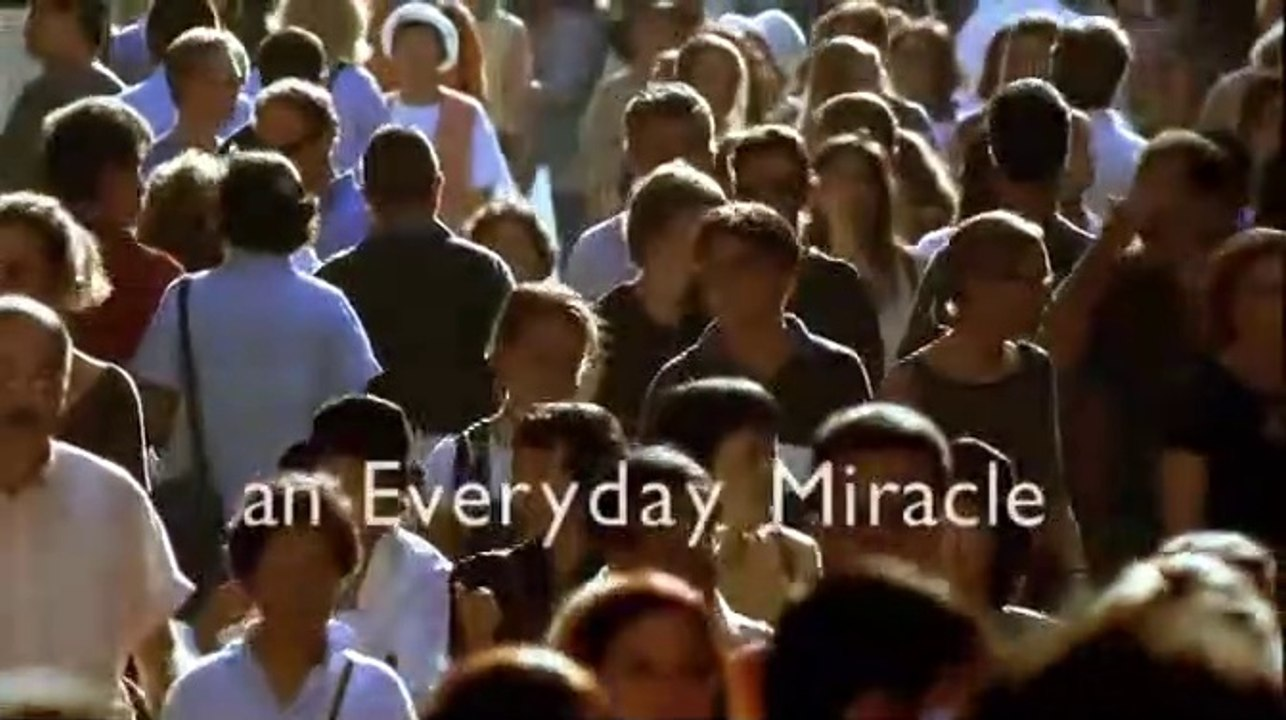
The human body is a miraculous, self-repairing organism.
Let’s look at a few of the many important reasons that science explains. Homeostasis is how your body regulates your internal systems so they function correctly. Your body works best when its internal environment — including things like temperature or oxygen levels — is just right. Balance is key because too much of even the most essential things can be harmful. In fact, you can’t survive without homeostasis and the processes that drive it.
The body features a brain that can store roughly 2.5 million gigabytes of information and a heart that pumps approximately 2,000 gallons of blood daily and beats over 3 billion times in a normal lifetime. Our blood vessels, if laid end-to-end, could circle the Earth four times, while the nose can distinguish over 1 trillion odor mixtures and the eyes can distinguish roughly 10 million different colors. The Microbiome contains about 35 trillion cells, and microorganisms can outnumber these cells to 39 trillion. Every minute, 300 million body cells die, but that’s really just a small fraction of the total cells we have. We produce 300 billion new cells every day and your body is constantly repairing and rebuilding.
Stardust Component: The atoms in your body are billions of years old, forged in exploding stars. Finding and maintaining the balance of homeostasis takes careful planning, that can make a big difference in your quality of life. The human body is indeed an astounding and sophisticated, interconnected and constantly interacting, both internally and externally, organism and we need to honor this gift with care and love.
Science has traditionally held that matter and energy are the foundations of physical reality. But an emerging viewpoint posits that a more subtle, but equally fundamental, factor is also important: information. In Science and the Akashic Field, Ervin Laszlo stresses the importance of information for the interdependent functioning of the cosmos: “Information links all things in the universe, atoms as well as galaxies, organisms and minds. This discovery transforms the fragmented world-concept of the mainstream sciences into an integral, holistic worldview.”
In order to account for the presence of a significant number of particles in the universe, and for the ongoing evolution of the existing things, we need to recognize the presence of a factor that is neither matter nor energy. The importance of this factor is now acknowledged not only in the human and the social sciences, but also in the physical and the life sciences. It is information – information as a real and effective factor setting the parameters of the universe at its birth, and thereafter governing the evolution of its basic elements into complex systems. Information is an inherent aspect of both physical and biological nature . . . Information is not a human artefact, not something we produce by writing, calculating, speaking, and messaging. As ancient sages knew, and as scientists are now rediscovering, information is present in the world independent of human volition and action and is a decisive factor in the evolution of the things that furnish the real world. The basis for creating a genuine “theory of everything” is the recognition that “information” is a fundamental factor in nature. (18)
Laszlo provides a useful operational definition of information (or “in-formation”): “Information is the subtle, quasi-instant, non-evanescent and non-energetic connection between things at different locations in space and events at different points in time. Such connections are termed “nonlocal” in the natural sciences and “transpersonal” in consciousness research. In-formation links things (particles, atoms, molecules, organisms, ecologies, solar systems, entire galaxies, as well as the mind and consciousness associated with some of these things), regardless of how far they are from each other and how much time has passed since connections were created between them.”
A number of scientists have suggested that some of the quandaries of current cosmological theories can be resolved through the concept of information. “A common theme among researchers trying to look beyond general relativity and quantum theory to a more unified understanding of nature is that something else lies at the root of all things: information.”
The discoveries of quantum physicists in the early 20th century had tremendous implications for understanding the nature of reality. In The Field, Lynne McTaggart stresses the importance of their findings: “They realized that the very underpinnings of our universe is a heaving sea of energy – one vast quantum field. If this were true, everything would be connected to everything else like some invisible web.”
They also discovered that we were made of the same basic material. On our most fundamental level, living beings, including human beings, were packets of quantum energy constantly exchanging information with this inexhaustible energy sea. Information about all aspects of life, from cellular communication to the vast array of controls of DNA, was relayed through an information exchange on the quantum level. Even our minds operated according to quantum processes. Thinking, feeling – every higher cognitive function – had to do with quantum information pulsing simultaneously through our brain and body. Human perception occurred because of interaction between the subatomic particles of our brains and the quantum energy sea. We literally resonated with our world. In a stroke, they had challenged many of the most basic laws of biology and physics. What they may have uncovered was no less than the key to all information processing and exchange in our world, from the communication between cells to perception of the world at large. More fundamentally, they had provided evidence that all of us connect with each other and the world at the very undercoat of our being. (19)
One of the strangest features of quantum physics is the phenomenon of “nonlocality” or “entanglement.” Physicists discovered that some pairs of sub-atomic particles or atoms are entangled or correlated, and remain instantly connected over time: “Their nonlocality respects neither time nor space: it exists whether the distance that separates the particles and the atoms is measured in millimeters or in light-years, and whether the time that separates them consists of seconds or millions of years.”
As Niels Bohr, a Nobel prize-winning pioneer of quantum physics, discovered, once subatomic particles such as electrons or photons are in contact, they remain forever influenced by each other instantaneously and for no apparent reason, over any time or any distance. When particles are entangled, the actions of one will always influence the other in the same or the opposite direction, no matter how far they are separated. They act like a pair of star-crossed lovers who are forced to separate and live independently forever, but who continue not only to know each other’s moves but also to imitate the other’s every activity for the rest of their days. Albert Einstein had refused to accept nonlocality, disparaging the theory as “spooky action at a distance.” Einstein claimed this type of instantaneous connection couldn’t occur because it would require information traveling faster than the speed of light, which he considered the absolute outer boundary of how quickly one thing can affect something else. Even subatomic particles were not supposed to be able to affect other particles faster than the time it would take the first to travel to the second at the speed of light. (20)
In 1972, physicist John Bell proposed a possible test of the validity of nonlocality – taking measurements on a pair of quantum particles which were initially in contact but later separated. A decade later in Paris, physicist Alain Aspect and his team conducted an actual experiment which confirmed Bell’s theory. In The Holographic Universe, Michael Talbot describes the results: “Aspect’s real-life experiment showed that when two photons were fired off from a single atom, the measurement of one photon affected the position of the second photon. Whatever happened to one was identical to, or the very opposite of, what happened to the other. A comparison of the measurements showed that both were the same. Some invisible wire appeared to be connecting these two quantum particles across space, to make them follow each other forever.”
The phenomenon of nonlocality and the transmission of information across levels of the universe appears in fields as diverse as cosmology, evolutionary biology, ecology and consciousness research:
It is clear that nonlocal coherence has important implications. It signals that there is not only matter and energy in the universe, but also a more subtle yet real element: an element that connects, and which produces the observed quasi-instant forms of coherence. Identifying this connecting element could solve the puzzle at the forefront of scientific research and point the way toward a more fertile paradigm. We can take the first step toward this goal by affirming that information is present, and has a decisive role, in all principal domains of nature. Of course, this information that is present in nature is not the everyday form of information but a special kind: it is “in-formation” – the active, physically effective variety that “forms” the recipient, whether it is a quantum, a galaxy, or a human being. (21)
Although nonlocality or entanglement was first discovered at the quantum level, it is not limited to this domain, and also surfaces at macroscopic scales in the universe, such as electromagnetic and other fields. Ervin Laszlo proposes that the structures and processes of the manifest physical world are determined by interacting waves or patterns of energy and information embedded in the “Akashic field.”
A world where connection, coherence, and coevolution are fundamental features is not a fragmented and fragmentable world, but an integral one. In this world nonlocality is a fundamental factor: things that occur at one place and time also occur at other places and times – in some sense, they occur at all places and times . . . There is an urgent need for a paradigm in which nonlocality is a basic feature – the paradigm of a world that is intrinsically nonlocal. Such a paradigm is now emerging at the leading edge of scientific inquiry. It is based on a new understanding of how parts interact within wholes; ultimately how the parts we know as quanta and the macroscale entities built as coordinated sequences of quanta interact within the larger whole we call “cosmos.” The basic concept that can convey scientific meaning and legitimacy to this understanding is field. Fields are bona fide elements of the physical world, although they are not in themselves observable. They are like fishing nets so fine that their strands cannot be seen. The fields themselves are not visible, but they produce observable effects. Fields connect phenomena. Local fields connect things within a particular region of space and time, but there are also universal fields that connect things throughout space and time. Quanta, and the things constituted of quanta, interact through fields, and they interact universally. (22)
Scientists are becoming aware of the primary role of information in describing the laws and workings of physical reality. “Information really is physical and it literally in-forms our Universe, while at the same time transforming our view of what we actually mean by the term physical.”
The laws of motion and thermodynamics that define how matter and energy move and how they interact are basically laws of information. The concept of information content and flow is starting to be used powerfully to describe physical phenomena at deeper and more all-encompassing levels. The two twentieth century pillars of science, the quantum and relativity theories, are also being re-evaluated as informational theories, a development that is being seen as having the potential to finally bring together these as yet unreconciled perspectives of our Universe. This is just the first step to a much more encompassing perception, one that not only aims to understand the completeness of the physical world but also proposes a cosmology that encompasses all aspects of existence and experience and seeks answers to the deeper question of not only how reality is as it is but also why. (23)
Information exchange seems to occur at all levels of reality. For instance, an electron is much more than a simple structureless point. The active use of information by electrons, and indeed by all sub-atomic particles, indicates that the ability to respond to meaning is an innate characteristic not only of consciousness but of all matter. There is also evidence that at the smallest atomic scale, space-time is pixellated, suggesting that this is the foundational level for information and holographic reality.
The content and flow of information creates patterns and relationships between and within all scales of existence. The events and processes at each level of reality are not random or based on chance – rather, they are dependent on the information they embody. In The Cosmic Hologram, Jude Currivan writes: “Our Universe is fundamentally interconnected as a unified entity that is underpinned and permeated by information. The universal speed limit exhibited by light ensures that information is transferred at a constant and finite limit within space-time, maintaining causality and enabling our universe to experience and evolve.”
Information literally in-forms all that we call physical reality, and from the innate instructions, conditions, ingredients, recipe, and container, of the information that make up the cosmic hologram, enables the outcome of a universe that nurtures the evolution of complexity and ever more self-aware consciousness – makes a universe that is perfect for us. To understand the essential wholeness of reality requires that the principles and laws of physics be restated in informational terms. At every scale from the most minute up to its entirety, the reality of our Universe is indeed being restated in this way, revealing itself as being constituted of holographically expressed information, which is more fundamental than space-time and energy-matter . . . There’s no fundamental difference between quantum and macroscopic scales. They only appear different owing to the difficulty of informationally isolating larger entities from their surroundings. This shows that our Universe is innately coherent and nonlocally unified, where everything is fundamentally interconnected and informational in nature. (24)
The fundamental flow of information is integral to the ordering and evolution of the universe and the development of individual biological entities. Ervin Laszlo: “The network of information applies to all scales, from the genesis and evolution of the universe itself to the development and increase in complexity and ordering of matter – leading all the way to the emergence of the order defining biological organisms and systems expressing self-awareness, by which the universe is ultimately aware of itself.”
Information exchange is the key to understanding the evolution of the universe. The laws and processes of the flow of information provide a deeper understanding of the nature of physical reality as well as integrating quantum theory (which describes universally conserved energy-matter) and relativity theory (universally entropic space-time). “The origin of our universe, in an extraordinarily ordered state, embodied its minimum informational entropy that ever since has increased inexorably, causing the arrow of time to flow and the principle of causality within space-time to be inviolate.” In The Cosmic Hologram, Jude Currivan explores the significance of information in the evolution of the universe:
From its birth, [the universe] encoded the complete information and algorithmic instructions that ensured that all laws of physics pertaining to the behavior of energy-matter and that are described by quantum theory prevail universally and so enable it to exist as a unified entity. Such encoding and coherence also empowered the creation of elementary particles and the fundamental processes and interactions that progressively gave rise to stars, galaxies, and the evolution of ever-greater complexity and diversity. Information expressed as energy-matter, visible and dark, is both conserved and balances exactly to zero throughout its entire lifetime. Such conservation of information expressed as energy-matter on a universal basis is a statement of the first law of information. As such, the first law of information is essentially also the generalized expression of quantum theory . . . The continually increasing entropic flow of information within space-time, rising to a maximum at the end of the lifetime of our Universe, has enabled the development of ever-higher levels of consciousness and self-awareness to be expressed, embodied, and experienced. The nature of time itself can even be considered as being the accumulated flow of informational entropy, ever increasing from past to present to future. Indeed, just as the first law of information is an expression of quantum theory, so the second law of information is that for relativity theory. The first law of information enables our Universe to exist; the second law enables it to evolve. (25)
Rodger R Ricketts
One of the cornerstones of Gurdjieff’s Fourth Way cosmological teachings is the concept of ‘reciprocal maintenance’ or ‘reciprocal feeding.’ In his magnum opus Beelzebub’s Tales to His Grandson, he termed this process as Trogoautoegocrat (“I keep myself by feeding”), and described it as a universal principle which interrelates all levels of the universe and results in the reciprocal maintenance or feeding of “All and Everything.” In Gurdjieff: Making a New World, John G. Bennett succinctly outlines the main features of this cosmic process: “The transformation of energies depends on the relationship of entities, whereby each maintains the existence of others in a kind of universal mutual support system. Each order of beings is endowed with a form of energy that enables it to play its part in the cosmic process.”
Reciprocal maintenance in its special sense connotes that the universe has a built-in structure or pattern whereby every class of existing things produces energies or substances that are required for maintaining the existence of other classes. Gurdjieff uses the terms involution and evolution to describe the process. Involution is the transformation process in which a high level of energy acts on lower energies through an apparatus which provides the necessary environment and conditions. The human body is such an apparatus and so is any other living organism. The earth also provides an environment for high level energy – such as solar radiation – to act upon the more passive elements of the earth’s crust and atmosphere. Involution is entropic, that is to say the overall level of energy is always lowered in all involutionary changes. Evolution is the reverse process. It is the production of high level energy from a lower level source. This also requires an apparatus, but of a different kind, for the ‘up-grading’ of energy is improbable and cannot occur at all unless some high level energy is present. Life is an evolutionary process that goes against the direction of probability. The work by which man is transformed is evolutionary. It goes against the stream of life. (6)
In a talk to his students in 1918, Gurdjieff presented the theoretical basis of the principle of reciprocal maintenance: the transformation of matter and energy as a universal process of descent (involution) and ascent (evolution):
Everything in the world is material and – in accordance with universal law – everything is in motion and is constantly being transformed. The direction of this transformation is from the finest matter to the coarsest, and vice versa. Between these two limits there are many degrees of density of matter. At some points in the development there are, as it were, stops or transmitting stations. These stations are everything that can be called organisms in the broadest sense of the word – the sun, the earth, man and microbe. These stations are commutators which transform matter both in its ascending movement, when it becomes finer, and in its descending movement, toward greater density . . . This transformation of substances in two directions, which is called evolution and involution, proceeds not only along the main line from the absolutely fine to the absolutely coarse and vice versa, but at all intermediate stations, on all levels, it branches aside. A substance needed by some entity may be taken by it and absorbed, thus serving the evolution or involution of that entity. Everything absorbs, that is, eats something else, and also serves as food. This is what reciprocal exchange means. This reciprocal exchange takes place in everything, in both organic and inorganic matter. (7)
According to Gurdjieff, the universe was created as an unending chain of systems bound by universal interdependence. In this cosmic process of ‘exchange of substances’ everything that exists is dependent on and connected to everything else; nothing is separate:
The principle of universal interdependence is certainly not found only in the teaching of Gurdjieff. It appears in many traditional teachings. But his convincing exposition of it is indisputably original. A generalized non-separability characterizes the universe of Gurdjieff. Systems on different scales have their own autonomy, for according to the terminology of Gurdjieff, the Absolute only intervenes directly at the creation of the first cosmos. The other cosmoses formed themselves freely by self-organizing principles – always, however, in submission to the law of three and the law of seven. In this way the diversity of the universe is assured. On the other hand, the interaction of the different cosmoses by means of the universal exchange of energy-substances assures unity in diversity. Life itself appears not as an accident, but as a necessity in this universe of universal interdependence . . . Gurdjieff’s universe is not a static universe, but a universe in perpetual movement and change, not only on the physical plane, but also on the biological and psychic planes. Evolution and involution are always at work in the different worlds. And when we consider the important number of different matters characterized by different degrees of materiality, we can understand the essential role of the universal exchange of substances in evolution and involution. (8)
Gurdjieff emphasized the importance of reciprocal maintenance in the overall organization and functioning of the cosmos. Reciprocal maintenance shows how existing forms interact with other forms in a symbiotic relationship of mutual support. Functionally, higher levels of reality “spiritualize” lower levels of existence by organizing and then transforming them, under the direction of fundamental cosmic laws, into “higher patterns of meaning and value.” John G. Bennett: “Our customary way of thinking and talking about the world is in terms of objects and events, both of which are abstractions. Gurdjieff saw the world as the universal process of the transformation of energies, regulated by two fundamental laws (the law of three and the law of seven) and various ‘second-grade’ laws arising from their interaction. The two basic realities are relations and transformations.”
The world was brought into existence because ‘being’ and ‘time’ are mutually destructive. Everything separate and closed within itself must perish for lack of a principle of renewal. There is partial renewal by borrowing energy from outside, but this is not enough. Full renewal requires full mutuality. It is by Universal giving and receiving of energies that Cosmic Harmony is maintained. This, in turn, requires an organized structure which is given by the interaction of the different classes and levels of reality. (9)
Some contemporary physicists have noted a correspondence between Gurdjieff’s idea of reciprocal maintenance and the ‘bootstrap’ principle of modern physics. The bootstrap concept implies that at every level of nature there is an underlying unity which is maintained by a dynamic intelligence in permanent evolution. Such a universe is capable of self-creation and self-organization, without any other external intervention of other energies and forces. In the words of physicist Paul Davies: “The universe fills itself exclusively from within its own physical nature with all the energy necessary to create animate matter.” Physicist Basarab Nicolescu expresses a similar idea: “It seems evident that self-creation and self-organization only have meaning in a universe which is made up of an infinite chain of systems regulated by universal interdependence. Unity in diversity and diversity through unity are the conditions for selfcreation and self-organization. Otherwise there is nothing but the law of accident that can act.”
The trogoautoegocratic process of Gurdjieff presents a remarkable correspondence to the ‘bootstrap’ principle formulated in physics around 1960 by American physicist Geoffrey Chew. This word “bootstrap” also implies “to pull yourself up by your own bootstraps.” The closest equivalence in the scientific context would be ‘self-consistency.’ In the bootstrap theory, the part appears at the same time as the whole. What is put in question in bootstrap theory is the very notion of a particle’s identity: it substitutes instead the notion of the relationship between “events.” It is the relations between events which are responsible for the appearance of what we call a particle. There is no object in itself possessing its own identity, that we could define in a separate or distinct manner from other particles. A particle is what it is because all other particles exist at the same time: the attributes of a determined physical entity are the results of interactions with all the other particles. According to bootstrap, there really is a “law of reciprocal maintenance” of all quantum particles. Also, as in the trogoautoegocratic process, a system is what it is because all other systems exist at the same time. The role of self-consistency in the construction of reality should be emphasized – a self-consistency which assures the coherence of the All. (10)
Rodger R Ricketts
Proposed Framework
The Universal consciousness field exists beyond space-time in an undifferentiated state. Through differentiation, it gives rise to localized excitations, which manifest as physical structures or individual consciousness. Following the Big Bang, the universal consciousness field evolves, generating complex systems capable of awareness – sentient beings with individual consciousness localized in space-time. Once differentiated, personal thought shapes individual awareness and perception, producing evolving subjective interpretations of reality over time. This process creates the illusion of separateness, even though all individual consciousness remains intrinsically connected within the universal consciousness field.
Personal thought reinforces the sense of individuality while simultaneously concealing the underlying unity with universal consciousness. An important implication of modeling as a localized excitation of interconnected nature of the field is that dissolution of individuality (e.g., through death) does not imply annihilation but rather reintegration into the universal field. This aligns with perspectives that treat consciousness as a temporary manifestation of a universal substrate.
Maria Stromme, Professor Uppsala University: Consciousness as the foundation – new theory
Until we go beyond the superficiality of basic sense perception and investigate and see the complex tapestry of existence, we stay in the IT realm as Martin Buber explained in his book, I and Thou. Once we see the strands of our life within the unique fabric of existence with the magnificent, interconnected unity and complexity of life and living things, we are finally able to empathize with the essence of All and enter a Thou relationship. Then our relationship with the world, with all living beings, changes fundamentally to seeing the empathetic symbiosis of ourselves with all other living life forms. It is at that point that existential care, affinity, compassion and friendliness appear and are expressed in our interactions and relationships with all the others. Rodger R Ricketts
 We are all Interconnected even with the Universe