Archive | Martin Buber RSS feed for this section

The Unity of All -Non-Dualistic Apophatic Higher States of Consciousness

13 Apr

Non-Dualistic ApophaticHigher States of Consciousness

While Apophatic theology was often in the past regarded as heretical, blasphemy, and unorthodox, we have seen in the previous chapters that now the sciences including physics, cosmology, psychology, biology, ecology, linguistics, as well as meditation, all provide a secure platform for the non-dualistic Apophatic convictions and practice. Apophatic teachings and analysis clearly provide an alternative to the dominant Dualistic Cataphatic dogma. This acceptance and application of the non-dualist perspective is not just an academic survey but a way of living that has crucial truths that benefit the individual, interpersonal, biological, psychological, sociological, spiritual, societal, and ecological levels.

This book is meant to indicate the possibility and rationale that is encompassed in the title of Apophatic. To further explore in-depth the Buddha’s teaching of the Path to Awakening, the reader is referred to my previous books: The Buddha’s Teachings; Seeing Without Illusion, The Buddha’s Radical Psychology: Explorations and The Buddha’s Gift: A Life of Wellbeing and Wisdom.

Now we have the testimony of numerous modern articulate thinkers whose ability to describe their awakening perspectives leads a strong support to past spiritual leaders who, even in the threat of death, spoke their truths out of compassion for others. Remembering the insights of his personal mystical experience, Martin Buber, in his book, The Heart of Mysticism, described his higher states of consciousness: “Now from my own unforgettable experience I know well that there is a state in which the bonds of the personal nature of life seem to have fallen away from us and we experience an undivided unity.”

With this experience of Awakening, Buber understood the world without the alienating and separating dualistic subject/object dichotomy. Like the Buddha, out of compassion for humanity, Buber taught us how to experience and act in a non-alienated way. While Buber always emphasized that he understood relating to the world in an I-It manner, a ‘functional’ relationship between subject and object, is necessary, his primary concern was when a person was unable to respond from I-Thou, thus creating alienation and suffering. The relation between the person and Nothingness is a universal relationship that is found as the foundation for I-Thou, as authentic beings, without objectification. From an apophatic perspective, it is from the background of the I-Thou relation that I-It arises in the foreground.

Virtuous and Kind Behaviors

For this apophatic potential relational world to be realized, virtuous and kind behaviors are encouraged. This promotes sensitivity to the inner and outer world, more serenity, more authenticity, empathy and wisdom with less alienation, rumination, conflict, hatred, and bias.

The ‘I-Thou’ relation participates in the dynamic and living process of Being. That relationship simply Is. Through this relation, we interact with the world in its whole Being. It is not a means to an egocentric objective or goal of use and order but an authentic relationship involving respect and care for the whole being of each subject and existence.

Basic to the Apophatic relation, Lovingkindness or benevolence is a subject-to-subject relationship. Love cannot be an ego-based relation of subject to object but rather a relationship in which all members are subjects and share the immanent unity of Being. According to Buber, the I-Thou relationship is “the existential and ontological reality in which the self comes into being and through which it fulfills and authenticates itself.” This relation is characterized by mutuality and openness, directness, and being in the present.

I-Thou an expression of Inter-being relations

Using Buber’s ‘I-Thou’ as an apophatic example, communication is the fundamental expression of the uniqueness of relation within inter-being. These relational patterns of rapport and affinity are usually found when beings relate with lovingkindness, friendship, openness, and care. I meet you as you are, and you meet me as who I am. In this relationship, I am with you openly in my heart and mind. Living through relationships with this authenticity brings deep satisfaction, happiness and richness in life and opens a greater sense of the original relation with the Being. One easily expresses empathy and compassion, knowing that all are interconnected in unity. Such a perspective makes a different world, a world without violence. As Jesus said, ‘Thou shalt love thy neighbor as thyself.’ The Buddha said as well, “All beings tremble before violence. All fear death. All love life. See yourself in others. Then whom can you hurt? What harm can you do?”

As all Apophatic sages teach, by being ‘empty’ in the moment, here and now, we experience the wonder of existence. As we have seen in other chapters, the ultimate, even the very idea of the ultimate, cannot be known by discursive thinking. In the now, we live our life as it is. Also, through the practice of silent meditation, we focus on our life awareness. With this awareness, we experience our interconnectedness with all things and empathy and compassion for all sentient beings.

Knowing shatters illusions

Knowing begins with the release of illusions, with dis-illusion. Knowing means to penetrate through the fog, to arrive at reality; knowing means to ‘see’ the reality without illusion. Knowing is that the ‘ownership’ of truth is not possible. The Awakened relationship cannot be explained; it simply is. Through this ‘empty’ relation, we interact with the world in this whole Being. It is not a means to some object or goal but an authentic relationship involving respect for the whole being of each subject. Buber considers ‘I-Thou’ communication the fundamental expression of the uniqueness of relation within inter-being. These relational patterns of rapport and affinity are usually found when beings relate with lovingkindness, friendship, openness, and care.

In the I-Thou encounter, we relate to each other as authentic beings, without inquisition, prejudice, enmity, or predisposition. I meet you as you are, and you meet me as who I am. In this relationship, I am with you openly in my heart and mind. However, there are many people who never fully understand this deeper level of relation. This is tragic because living through relationships based on the non-dualistic perspective brings happiness, deep satisfaction and richness in life and opens a greater sense of the original relation with the Absolute.

When an I-Thou encounter occurs, I am meeting the other as thou with openness, directness, and presence by means of real mutual action, meaning and confirmation. As Buber wrote, “This person is other, essentially other than myself… I confirm it; I wish his otherness to exist, because I wish his particular being to exist.” We are interconnected, “not just with people, but animals too, and stones, clouds, trees” (Aitken 1984, p. 10). We are an integral part of everything.

Nothing exists by itself; nothing has a separate existence, an inherent separate self. As human beings we are Being, one with All. The truth is pure interbeing, beyond dualistic thinking of the alienated mind. Thus, one becomes aware of the impermanence and the Emptiness of the ‘IT’ world. Serenity comes with the acceptance of impermanence and interrelatedness. The insights of such Sages as the Buddha, the Hebrew prophets, Jesus, and Master Eckhart show that knowing begins with the awareness of the deceptiveness of our common-sense perceptions and cognitive constructions; our formulations of physical reality do not correspond to what is ‘really real.’ Therefore, most people are half-awake, half dreaming, and are unaware that most of what they hold to be true and self-evident is an ‘magician-like’ illusion produced by the influence of the dualistic alienated world in which they live.

Knowing, then, begins with the transformation of illusions, selfishness, and alienation. Knowing means to penetrate through the fog, to arrive at reality and to ‘see’ the reality without illusion. Knowing is not to own the truth, as possession is not possible, but to Be the truth. The Being mode of knowing allows us, as psychologist Erich Fromm (1992, pp.117-120) also observed, to go beyond ourselves, outside the ego. The Path’s result is kindness to oneself and another, to transcend the barriers that separate us from one another, and living life with recognition of interdependence and impermanence. When communicating at this level, we move beyond biased social roles, identifications, and objectification.

In I-Thou dialogues, we trust and can disclose deep, private aspects of ourselves that enable us to engage in deep and authentic relationships. The rigid, dualistic and egotistically dominated mind remains enmeshed in ignorance, greed, and anger that feeds on itself and, therefore, does not let go and rise above the suffering quagmire in which it remains. This ego rigidity needs an empathetic and compassionate approach to assist it in letting go and coming to know how it is possible to live in a world without the pain and distrust and suffering created through this dualistically based ignorance. And, in fact, the path can be clear and successfully traveled without much difficulty.

What is difficult is allowing oneself to give up the encased hatred, the anger, the greed, the biases of egoism and of selfishness. In the book, Lost Horizon, there is this passage: ‘Look at the world today. Is there anything more pitiful? What madness there is! What blindness! A scurrying mass of bewildered humanity crashing headlong against each other. The time must come when brutality and the lust for power will perish by their own sword. When that day comes, the world must begin to look for a new life.’

The new life away from that is and always has been pointed to by the apophatic teachers in the past and now. The whole movement is toward the development of maturity of perspective and, therefore, action with wisdom about the way we understand and think about existence. Therefore, incorrect ideas and beliefs must be renounced, which will change our human character and end further suffering.

For as the Buddha and other apophatic teachers have consistently taught, what is now clear through scientific investigation, that living beings, the environment and even the universe are deeply enmeshed and co-dependent on each other. This is one world and every action by all living and non-living forces interact with and alter the previous reality- some more than others. Therefore, once we become experienced, inspired, and apply the truths that the Buddha and others have discovered, and now are explicated in more modern terminology and description, there is a real possibility for a Heaven on Earth without the distraction of seeking supernatural intervention.

Heaven on Earth can briefly be described in a biocentric way as a world of humans acting through wisdom and empathy and compassion, The Buddha, one of the greatest Apophatic teachers, said in his last words to the monks, “It may be that after I am gone that some of you will think, ‘now we have no teacher.’ But that is not how you should see it. Let the Dharma and the discipline that I have taught you be your teacher. All individual things pass away. Strive on, untiringly.”

Now, as we have explored in this book the similar meditation instructions and doctrinal perspectives taught by the many Apophatic spiritual teachers, over time and different cultures, we know we can attain Awakening and know Emptiness and give up our suffering and the harmful consequences of dualistic alienation, for a life of wellbeing and happiness. Let us all assert the Apophatic Way and accomplish knowing the ‘unknowable’ – No-thing

Chapter 16 The Unity of All. Of the Book, God is No-thing. The Apophatic Assertion The
Salvation for Humankind – revised -. Copyright Rodger Ricketts Psy.D.,2022. All rights
reserved.

The Fabric of Life

18 Jan

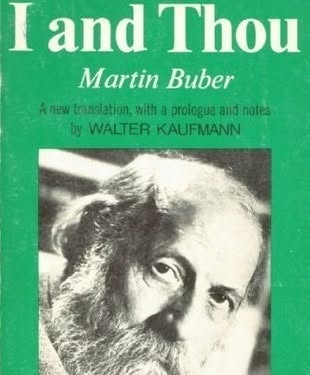
Until we go beyond the superficiality of basic sense perception and investigate and see the complex tapestry of existence, we stay in the IT realm as Martin Buber explained in his book, I and Thou. Once we see the strands of our life within the unique fabric of existence with the magnificent, interconnected unity and complexity of life and living things, we are finally able to empathize with the essence of All and enter a Thou relationship. Then our relationship with the world, with all living beings, changes fundamentally to seeing the empathetic symbiosis of ourselves with all other living life forms. It is at that point that existential care, affinity, compassion and friendliness appear and are expressed in our interactions and relationships with all the others. Rodger R Ricketts

The Garden of Eden in This Life

10 Sep

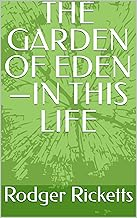
Today is the launch of my new book- The Garden of Eden in This Life. It is available in paperback, hardcover and kindle on Amazon. The following is the book description. With Metta, Rodger Ricketts.

What if the story of the Garden of Eden wasn’t just ancient myth, but a timeless guide to reclaiming our original wholeness? What if the “fall” from innocence was not the end, but an invitation to return—consciously—to a deeper unity with ourselves, each other, and the world?

In The Garden of Eden in This Life, Dr. Rodger R. Ricketts—a clinical psychologist, mindfulness teacher, and lifelong student of the Buddha’s teachings—unveils a profound perspective linking ancient wisdom, modern psychology, and the apophatic (negative) spiritual tradition. Drawing from over forty years of study and practice, he explores how non-dualistic teachings from Buddhism, science, and multiple faith traditions reveal the limits of language, the illusions of separation, and the path back to an integrated state of being.

You will journey through concepts like Sunyata (emptiness), the via negativa, and the psychology of transcendence—discovering how humanity’s separation from nature and spirit can be healed through direct experience, compassionate living, and expanded awareness.

This is more than a philosophical exploration—it’s a practical roadmap for living with clarity, joy, and interconnectedness. Through cross-cultural insights, reflective practices, and meditative approaches, Dr. Ricketts shows how embracing the ineffable mystery of life can dissolve division, foster ecological and social harmony, and restore our inner paradise.

Whether you are a seeker, a meditator, a student of comparative religion, or someone simply longing for a more meaningful existence, The Garden of Eden in This Life will inspire you to see beyond duality and step into a living experience of unity.

If you are ready to move beyond dogma, transcend the limits of language, and reawaken to the timeless ground of being—this book will guide you there.
Open these pages and begin your journey back to the Garden… in this life.

Image

Undivided Unity

15 Aug

Embracing Apophatic Philosophy: A Path Towards Personal and Societal Transformation

25 May

Your submission Embracing Apophatic Philosophy: A Path Towards Personal and Societal Transformation has been accepted

 Contemporary society increasingly has a fragmented view of the world, it sees its diversity but not the unity that underlies it. This fragmentation is at the root of tribal mentality, environmental degradation, polarization, and other problems. Apophatic philosophy provides a much-needed alternative to traditional cultural and religious materialistic viewpoints. Contrary to religions that assign known anthropomorphic characteristics to a power often referred to as “God”, apophaticism teaches that we cannot positively know or assert anything about the nature of “God”. At the heart of the discussion are the key characteristics and enormous benefits of ancient spiritual wisdom; an apophatic, non-dualist approach to life, as well as its links with Buddhist philosophy and economics. It is a wisdom that converges the findings of modern science, with the observations of eminent mystics and religious personages from across time and different backgrounds, as well as my own extensive experience in modern psychology and Buddhist practice. In this book, I establish how a non-dualist approach to life can preciously revolutionize our personal well-being as well as that of society and the relationship with the Earth. 

Embracing Apophatic Philosophy: A Path Towards Beneficial Personal and Societal Transformation

Prevailing materialist assumptions have taught us that we, as individuals, are fundamentally a skin-encapsulated ego or “I” relating to a world with a sense of isolation and disconnection. Societal constructs influenced by such assumptions foster alienation and detachment, perpetuating egocentrism and neglecting the congruity and interdependence of human beings with each other and their environment. To modify resulting harmful economic systems, it is necessary to understand that economic reality is not an autonomous sub-system but a highly interdependent system of value creation. Drawing on the teachings of the Buddha, Martin Buber and others, as well as scientific research, we propose a paradigm shift towards a non-dualistic, biocentric perspective. Martin Buber formulated a model where the depersonalized, autonomous, isolated, and psychologically separated “I-It” stands in contrast to the “I-Thou” relationship. The “I-Thou” perspective promotes a non-dualistic transcendental idealism and teaches that we are interdependent, interbeing, and continually transacting with the environment and other sentient beings. Biocentric ethics, like the “I-Thou” concept, calls for a radical readjustment of the relationship between humans, nature, and all existence. Also, the entrenched individualism of prevailing societal and economic paradigms neglects the intrinsic interconnectedness of all natural entities, hindering sustainable development. Through the framework of non-dualism, biocentrism, and Buddhist economics, we discover why and how we must shift from the present predominant dogma to an alternative social and economic strategy with a view to promoting subjective well-being and societal happiness, creating comprehensive pathways to achieve harmony, eliminate economic deprivation, enable human dignity, and respect Earth’s ecosystems.

 Embracing Apophatic Philosophy: A Path Towards Personal and Societal Transformation

In a contemporary society increasingly dominated by radicalized viewpoints, self-interest, tribal mentality and alienation, apophatic philosophy provides a much-needed alternative to traditional cultural and religious viewpoints. Contrary to religions that assign known and defined characteristics to a power often referred to as “God”, thus presupposing that they can comprehend this entity, apophaticism teaches that we cannot positively know or assert anything about the nature of “God”. At the heart of the discussion are the key characteristics and enormous benefits of an apophatic approach to life, as well as its links with Buddhist philosophy and economics. Backed by scientific research, the observations of eminent mystics and religious personages from across time and different backgrounds, as well as my own extensive experience in traditional psychology and Buddhist practice, I demonstrate how an apophatic approach to life can revolutionize our personal well-being as well as that of society and Earth as a whole. 

Also Throughout the Buddha’s teachings, transformation leading to transcendental enlightenment is an intentional psychological attainment. Enlightenment or awakening is created through the process of planned psychological/emotional change, consistently practiced by motivated learners, moving on from an uninformed way of living (acting, thinking, feeling) to one according to universal principles. This book highlights those insights and the beneficial results.
In the following chapters, the reader will notice that I have emphasized not only the Buddha’s teachings but a wide range of cross-cultural non-dualistic descriptions. I have found that these universal, ancient, as well as modern teachings provide an in-depth analysis of transpersonal training and perspective. While not encyclopedic, the chapters about the non-dualistic writings are not only for intellectual curiosity. They are also a living testament of truths with vital positive consequences for the wellness and well-being of the individual, for society, and for the whole of Gaia. When understood and incorporated into one’s life, this is transformed in a transpersonal way. One frequent consideration necessary when writing this book was what noun should be used when referring to the transcendent and immanent quality that is often referred to as God, Deity, the Divine, Being, etc. In the end, I used the word Transcendent as often as possible as the most neutral yet appropriate noun for this topic.
To conclude, my intent in this book is the analysis and integration of numerous non-dualistic teachings such as the Buddha’s teaching and modern scientific insights. I will explore these perspectives about the mysterious nature of the Transcendent or No-Thing and its relationship with our existence through ancient schools of thought. Also included in this book are varied meditation/prayer practices or structured activities that can lead to personal experiences that provide humanity with what is necessary for living embodied, integrated, and spiritual lives. Even in this age of dualistic and hyper-rational science and technology, non-dualism, which has stood the test of time, is an illuminating explanation of the totality of human experience
.

REVIEW

“Non-Duality: What the World Needs Now” by Rodger R Ricketts is essential reading for anyone concerned about the welfare of humanity and Earth as a whole. It is also an important text for anyone interested in religion, spirituality and Buddhism. In this well-researched book, Ricketts makes a powerful case for an apophatic approach to “God” – in other words, the knowledge that we cannot know anything definite about God as this is beyond human language and comprehension. Ricketts argues convincingly that Buddhism is an apophatic path. He also provides evidence from modern psychology and neuroscience supporting apophatic views of the universe. Finally, and perhaps most importantly, Ricketts points out that it is only through a return to apophaticism and Buddhist economics that we can create a sustainable life for all. This impactful and convincing book should be required reading for all!

Review of “Chapter 14 The Unity of All The God is No-Thing An Apophatic Assertion: An Introduction for Humankind’s Transpersonal Actualization– revised –”

1 May

This is an unsolicited AI review of a chapter from my book cited above that was sent to me in my mailbox. I include it here for your consideration of some interesting points.

Overview

This chapter offers an in-depth exploration of apophatic theology—an approach that emphasizes what cannot be said about the divine—while weaving together both ancient and modern perspectives on mysticism, existential philosophy, and scientific insights. The text positions the apophatic tradition as a valuable, though historically underrepresented, perspective within religious and spiritual discourse. Drawing on references that span neuroscience, quantum physics, and Buddhist teachings, the chapter paints a comprehensive picture of human consciousness as inherently interdependent and open to non-dualistic experience.

Strengths

  1. Interdisciplinary Breadth
    The chapter deftly incorporates insights from neuroscience, psychology, quantum physics, and religious studies. This interdisciplinary approach highlights the convergences of empirical science with apophatic wisdom traditions. By citing modern authors such as Thomas Metzinger, Steven Pinker, and others, the chapter underscores how age-old practices align with contemporary research on consciousness, perception, and cognition.
  2. Clarity in Explaining Apophatic Thought
    Despite the inherently mysterious and paradoxical nature of apophatic spirituality (i.e., knowing God through recognizing the limitations of what can be positively affirmed), the text manages to articulate the main thrust of via negativa in relatively accessible language. Concepts like “I-Thou” relationships, non-duality, and interbeing are introduced in ways that should resonate with readers from various backgrounds.
  3. Use of Concrete Examples and Quotations
    Several key figures—Martin Buber, the Buddha, Jesus, and others—are introduced as exemplars of non-dualistic insight. Quotes from Buber and Buddhist teachings concretize abstract ideas, showing how real people have incorporated “I-Thou” relational practices in daily life. This effectively grounds the sometimes lofty theoretical framework in personal and communal experiences.
  4. Emphasis on Ethical Consequences
    The chapter does not merely focus on the theoretical underpinnings of apophatic spirituality; it also details the moral implications. Themes such as compassion, empathy, and loving-kindness are shown to be organic outgrowths of a more unified awareness. This reaffirms how apophatic insights can have transformative effects on personal conduct and broader social relations.

Points for Consideration

  1. Structuring and Transitional Cues
    While the chapter is rich in content, it sometimes shifts quickly between academic, mystical, and scriptural references. Additional subheadings or transition paragraphs might help ensure a smoother flow, guiding the reader through the various themes such as neuroscience, historical background, apophatic theology, and interpersonal relations.
  2. Integration of Scientific Perspectives
    The chapter draws on a wide range of scientific sources—from neuroscience to quantum theory—to illustrate points about perception and consciousness. Occasional deeper explanation or a clearer bridge between the scientific claims and the apophatic viewpoint would further strengthen the argument. For instance, elaborating on how quantum mechanics influences the concept of non-duality, or how neuroscience specifically supports the idea of “co-creating” reality, could give readers a clearer sense of how the disciplines align.

Notable Contributions

  • Historical Context: The text illuminates how apophatic teachings have often been marginalized in favor of cataphatic approaches, offering a historical perspective on the conflicts that shaped religious traditions.
  • Contemporary Validation: By referencing modern experiments in psychology and linguistics, the chapter gives credibility to the notion that apophatic experiences are not only culturally or historically bound but also supported by scientific frameworks.
  • Comprehensive Reference List: The variety of references—from classical religious texts to works in cognitive science—serves as a useful resource for readers who wish to explore these ideas in greater depth.

Conclusion

Chapter 14 provides a comprehensive and thought-provoking account of how apophatic spirituality, grounded in non-dualistic awareness, transcends traditional theistic frameworks to offer a unifying and compassionate vision of existence. The blend of philosophical argumentation, empirical research, and ethical guidance offers a multi-layered examination of what it means to “know No-Thing.” Overall, the transformative implications for personal and collective well-being are powerfully conveyed, encouraging readers to contemplate and possibly experience directly the non-dual nature of reality.