Chapter Fifteen.Of the Book, God is No-thing. The Apophatic Assertion. Copyright Rodger Ricketts Psy.D.,2020. All rights reserved. Protected by international copyright conventions. No part of this chapter may be reproduced in any manner whatsoever, or stored in a retrieval system or transmitted, without express permission of the Author-publisher, except in case of brief quotations with due acknowledgement. Published through CreateSpace Independent Publishing Platform.
Social Consequences of the Dualist/Non-Dualist perspective.
Usually, the social, relationship and environmental consequences of the dualist, rationalist vs non-dualist, transcendental perspective have not been explored in depth. In fact, there is little exploration regarding the direct social consequences of the adoption of either perspective after a focus on language, cognitive modeling, spirituality, and Awakening. Therefore, I want to use the excellent detailed analysis of the modern Jewish philosopher and educator, Martin Buber to show that whichever of the two perspectives (Non-Dualist/Dualist) one uses, there are significant relational consequences. Here is a good place to remind the reader that the Dualist and non-dualist perspectives are not exclusive from one another.
Martin Buber’s (I and Thou) and (I and It)
Martin Buber is best known for his 1923 book, Ich und Du (I and Thou), which distinguishes between “I-Thou”, in which the du or thou, is intended to convey the most intimate and loving relation possible. Thou means the you in a subject-to-subject relationship, while “I-It” is a relationship of subject-to-object modes of existence. ‘I’ is not a solitary concept that stands alone unconnected; ‘I’ is always in relation to ‘It’ or ‘Thou.’ This relation indicates the two basic ways in which we relate to the world. In the I-It relationship, the subjects are independent, isolated, and separate from a world which consists of things. According to Buber, most human beings solely adopt the I-It dualistic perspective over the I-Thou. The ‘I-It’ relation is dominated by categories of dualism, like ‘friend’ and ‘enemy’, and focuses on universal definitions, while in the I- Thou relationship, human beings are aware of each other through a unity of Being.
When that happens, we understand and empathically feel that everything is inter-being, interconnected and all living Beings are a Family of the Universe or divine. The realm of pure experience is not an ontological category, but the ordinary world of phenomena experienced directly, with no intervening conceptualization.
For as the Buddha also taught and is now clear through scientific investigation, humans and the environment are deeply enmeshed and co-dependent on each other. This is one world and every action by all living and non-living forces interact with and alter the previous reality- some more than others. Therefore, once we are inspired and apply the truths that the Buddha and Buber and others discovered and now are explicated in more modern terminology and description, there is a real possibility for a heaven on earth without the distraction of seeking supernatural intervention. The heaven on Earth can briefly be described as a world of sentient beings thriving through wisdom and empathy and compassion.
Alienation
The I-It is a relationship of separateness, detachment and ultimately alienation created by the dualistic subject/object dichotomy. Identifications appear by comparing and setting themselves apart from others. So long as you “have” yourself as an object, your experience of self and others is as of a thing among things. Once a subject, in the subject/object dyad, is analyzed as an object, the subject becomes an object or an It. When both objects and people are analyzed (subject-object relation) and judged by their capacities, they become means to an end. The I is experienced as isolated from the It, resulting in “alienation”.
To view the world as an “objective reality” separated from my consciousness and universal Being is a form of alienation. The state or experience of being alienated includes isolation, estrangement, separation, and severance. Alienation is the state of being as an outsider or the feeling of being isolated, as from others or the original being. This experience is expressed poetically by Simon and Garfunkel; ‘I am a rock, I am an island, I’ve built walls, A fortress deep and mighty, that none may penetrate.’ Alienation is the process whereby people become foreign to Being of which they exist in. This is the dominant alienation in modern society. As Derrida wrote, “Face-to- face relationships, communities of direct caretaking, control, and ownership of one’s own labor power, all these are giving way more and more to relations mediated by cell phone, digicam, digital communications replacing the immediacy of speech.” He describes well the virtual world of I-It.
The principle of alienation is found in all the great religions namely, the idea that people in the past have known the non-dualistic Absolute and lived in serenity and harmony. But with the development and rise of the ‘I’ analytical linguistic world, there was a rupture which left people feeling like strangers to each other and in the world. Also, there has often been the vision that at some time in the future this alienation will be overcome, and humanity will again live in harmony with itself and Nature.
The I–It is the mode of experience in which we engage the world as a detached object. It is based upon the axioms of logical empiricism/positivism: objectivity, determinism, abstractive contemplation, and a utilitarian approach to the other. This is the method of the rational investigation of truths and principles of science and philosophy, through which we come to understand things abstractly and intellectually, eventually for our egocentric use. Buber claimed that modern Western culture believes that this dualistic mode is the fundamental way for human beings to participate with the world. Therefore, other perspectives, which are vital to our authentic and awakened spiritual existence, are dismissed and even vilified.
While I-It is relevant to everyday living, the obstacle is its overwhelming predominance in modern technocratic society, with its basis on the principles of logical empiricism/positivism: objectivity, determinism, abstractive contemplation. The It is a mechanistic model of the universe as a machine, and the rational and empirical is operational in all areas of study with the grand vision of Humans gaining mastery over everything. In the end however, it creates a state or experience of being alienated.
SOCIAL RELATIONSHPS
In social relationships the alienated I-It individual is primarily egotistic and selfish and finds it problematic to empathize and put oneself in another’s place. They find it wearisome to be accessible and receptive because they are eremitic and solitarily orientated. They fear experiencing disappointments and disapprove of acquiescing. Yet, every success cannot satisfy their craving for indisputable success. They rigidly think in or act in an egotistical manner of accepting only what pleases them and tenaciously maintain their likes and dislikes. Their personality stagnates by not maturing and from not expressing their own creative capacities. Therefore, encapsulated, they never come to know the opportunity and satisfaction of interconnections and empathy with the world. Rigidity of the ego ‘shell’ is one of the afflictions of the solitary ‘I’, and integration with the inner refuge of peace, serenity and nothingness is absent. The self therefore remains preoccupied with maintaining, by means of the organization of rigid structures or schemas, its secure position in the historical world. Through their filtering ‘glasses’, a person believes they perceive the world ‘the way it really is’, rationally and logically. If a success is created, the egotistical person attributes it only to their own efforts, which only strengthens and heightens the wall separating them from the realization of their interconnectedness with all. The imagined self, preoccupied in establishing and classifying facts, constantly acts to satisfy its worldly cravings. With these fixed points of view, the world is clearly divided into a dualism of self-world/otherworld, subject/object, etc. While a person needs to be skillful to manage the world well, the predominance of the self-centered perspective, with its claims of supremacy, distorts not only a person’s personal and social status but any possible spiritual connection with existence, in which there is an apperception of oneness and inter-being to be realized with experience, insight and practice.
The egotistic life constantly seeks to thrill itself in the available ways of the sensual materialistic life. The intensity of their cravings varies, but the feedback loop is continuous and based on the subject/object duality. This exaggerated ignorance based on dualism creates foolishness and unhappiness. At root of why many people seek relief in many ways is a clear example of spiritual sickness, and hence suffering, i.e., alienation from life. Egocentric ignorance creates suffering of self and others.
Modern Society
Buber believed that with modern technological society increasingly supporting the I-It dogma, the loving relationship between individuals and nature, between other sentient beings, understanding their identity and the divine in an apophatic sense has become increasing more obscure and incomprehensible. He wanted to revive the link between the individual with the deepest levels of existence. To do that, he considered it necessary to unveil the impediments that hamper a person’s capacity to see and understand the No- thingness. As a result of the modern trend, it continues to become more difficult to develop an appreciation of an immanent, universal being. The problem is rooted in the supposition of the primacy of the dualistic subject-object relation. Buber believed that there had been a dramatic shift from relation to separation, creating a growing crisis of existence in ‘modern’ society. He believed that the relationship between individuals and people and creation continues to become increasingly that of I-It.
ECOLOGY and the I -THOU Relationship
The book, I and Thou is recognized as providing an enlightened perspective on the study of identity and social relations. However, on a deeper level, it was based on his awakening to humanity’s place in the Universe with relation to the Divine and Life. Buber, as all Apophatic teachers, explains humanity’s interdependence and intrinsic reciprocal aspects embedded within all relationships. Buber’s conception of the world is one that is interconnected, dependently co-originated and holistically integrated. He challenges the Cataphatic conventional theological perspective that separates humanity and existence or the divine.
As we have seen, a key premise of Buber and other apotheotic teachers is that there are two basic ways we can understand ourselves in relation to others. First, using Buber’s word of I-It, an individual has a view of an “other,” be it object or person, as a different and quantifiable entity. Whether the subject in question is an inanimate or a living being, the perception has an implied objectification. It is also this that allows the mind to make convenient generalizations. These are necessary operations of our daily existence. Without it, our ability to perform routine functions would not be possible.
The alternative is Buber’s I-Thou or mystical perspective. From this perspective, one acknowledges the transcendence of the fundamental distinguishment between oneself and an “other” and it is replaced by a relational reality. One’s life as a person standing in relation and intricacy to existence, is acknowledged. Buber demonstrates the two ways of thinking: “I consider a tree. I can look on it as a picture: stiff column in a shock of light, or splash of green shot with the delicate blue and silver of the background. I can perceive it as movement: flowing veins on clinging, pressing pith, suck of the roots, breathing of the leaves, ceaseless commerce with earth and air—and the obscure growth itself. I can classify it in a species and study it as a type in its structure and mode of life. I can subdue its actual presence and form so sternly that I recognize it only as an expression of law… I can dissipate it and perpetuate it in number, in pure numerical relation. In all this the tree remains my object, occupies space and time, and has its nature and constitution. It can, however, also come about, if I have both will and grace, that in considering the tree I become bound up in relation to it. The tree is now no longer It… It is not necessary for me to give up any of the ways in which I consider the tree… Rather it is everything, picture and movement, species and type, law, and number, indivisibly united in the event.”
Buber shows that he can choose to see the tree as a measurable and discrete It, or relate to the tree as a Thou, thus acknowledging their boundless ability to affect one another. His awareness of their interconnected and shared immanent relationship confers this possibility. From within this, we can understand how each affects one another.
Another Apophatic teacher, The Buddha, gives primary importance to the spiritual framework of relational interdependence through the principle of dependent origination. This view of the universe and the human beings undergird an imperative for people who realize the interdependent nature of their existence and the interconnection among all things. They develop a strong sense of responsibility for their own behaviors, as well as appreciation and empathy for others. It is from this realization of the true interbeing nature of existence that non harming, compassionate, altruistic action arises. The reciprocation of one’s being with another is the birthplace of care and compassion.
Within the I-It there is separation and alienation while in I-Thou we find relation, edification, and transcendence. Thus, our ability to love and show affection stems from our capacity to awaken. It is this facet of dependent origination that our treatment of the environment is dependent upon how we view ourselves within it. To willfully assume a relation of care, one’s views must be attuned. The Buddha attributes all our resulting harming behaviors and the suffering hence caused, to the human ignorance (avijja), that is, we cannot see the world as it is and see our self as such within that existence. We are ignorant to the cosmic reality that everything in the world is inter-related, interdependent. By not adopting the Buddha’s worldview, we think we are separate from others as an isolated and independent entity. This ignorance is what Buddhism identifies as the very root cause of violence, conflict, alienation, environmental destruction, and war, which prevents human beings to live a thriving and peaceful life.
If we accept the notion of humanity’s reciprocal relationship with the earth and that our relationship is shaped by our vision, then our attitudes towards the environment are made manifest in our treatment of it. As Buber’s account points out so well, a tree can be seen as a simple, inanimate object, bound by nature’s laws, or as a captivating and mysterious being whose experience of life is wholly unknown to our minds. Then we can ask, is a forest solely a resource for the meeting of our needs or is it a habitat in which to live?
We are at the point now to consider the term biocentrism or life-centered (biocentric) approach to nature that encompasses all environmental ethics which “extend the status of moral object from human beings to all living things in nature”. Biocentric ethics, like I-Thou and dependent origination, calls for a rethinking of the relationship between humans, nature and existence. It views that nature does not exist simply to be used or consumed by humans, but that humans are simply one species amongst many, and that because we are part of an ecosystem, any actions which negatively affect the living systems of which we are a part adversely affect us as well, whether or not we maintain a biocentric worldview. Biocentrists, viewing life from can be considered an I-Thou perspective, observe that all species have inherent value, and that humans are not “superior” to other species in a moral or ethical sense.
The four main pillars of a biocentric outlook are:
- Humans and all other species are members of Earth’s community.
- All species are part of a system of interdependence.
- All living organisms pursue their own “good” in their own ways.
- Human beings are not inherently superior to other living things.
Albert Schweitzer was another 20th-century thinker who understood that life itself is the decisive factor in determining moral value. Working in very remote areas, Schweitzer experienced a diversity, complexity, and multiplicity of plant and animal life-forms rarely seen within industrialized societies. Schweitzer used the phrase “reverence for life” to convey what he took to be the most appropriate attitude toward all living beings. Life itself, in all its mystery and wonderment, commands respect, reverence, and awe.
To quote Schweitzer, “Ethics are complete, profound, and alive only when addressed to all living beings. Only then we are in spiritual connection with the world … Profound love demands a deep conception and out of this develops reverence for the mystery of life. It brings us close to all beings. To the poorest and smallest, as well as all others. We reject the idea that man is ‘master of other creatures,’ ‘lord’ above all others. We bow to reality. We recognize that all existence is a mystery, like our own existence. The poor fly which we would like to kill with our hand has come into existence like ourselves. It knows anxiety, it knows hope for happiness, it knows the fear of not existing anymore. Has any man so far been able to create a fly? That is why our neighbor is not only man: my neighbor is a creature like myself, subject to the same joys, the same fears, and the idea of reverence for life gives us something more profound and mightier than the idea of humanism. It includes all living beings” (Quoted in The Schweitzer Album, edited by Erica Anderson, 1965, p. 174).
Biocentrism may best be viewed as an attitude with which to approach life and not a codified dogma. By approaching each living being with reverence and humility makes human life more meaningful. Also, biocentric morality and ethics develops virtues and behaviors with which humans interact with empathy and affinity with other living beings.
The Buddha also tells us that the key to a compassionate ethic of Life is once we see the dependent origination in existence, the infinite interconnectedness of all life. We understand that our desire to thrive is the same for all other sentient beings, thereby, recognizing that all beings tremble at violence, that all wish to live and do not want to die. It is this affinity with all who share the gift of life that one naturally empathizes and put themself in the place of all sentient beings. Recognizing this, one will be friendly, kind with others and enhance their ability to thrive.
Most importantly from an ecological Biocentric point of view one comprehends how the biosphere is also totally interconnected and supporting of all life forms. Contrary to the narcissistic assumption that humanity’s interests supersede that of other creatures, it denies human superiority and claims that all living things have inherent value. Biocentrism proposes that the highest moral standing is life itself. All living beings, simply by being alive, have moral standing and deserve moral and ethical consideration. Inherent in this reciprocal dynamic of interrelatedness, there is an awareness and ethic on humanity’s Right relation with itself and the natural world.
Or as Lama Anagarika Govinda expressed it: ‘He who wants to follow the Path of the Buddha must give up all thoughts of ‘I’ and ‘mine’. But this giving up does not make us poorer; it actually makes us richer, because what we renounce and destroy are the walls that keep us imprisoned; and what we gain is that supreme freedom, which is not to be understood simply as a merging into the whole or a feeling of identity with others, but as the experience of an infinite relationship, according to which every individual is essentially connected with all that exists, thus embracing all living beings in his own mind, taking part in their deepest experience, and sharing their sorrow and joy.’
Because of our ignorance of not Awakening to the non-dual nature of existence, humans are unable to properly view the world which has distorted our discernment of its inherent value. For much of humanity, instead of harmonizing our mindsets and hence lifestyles with an equitable and just nature, we create suffering through egotistical gratification of greed, anger and alienation.
Also, as Buber explains, “to step into pure relation is not to disregard everything but to see everything in the ‘Thou’, not to renounce the world but to establish it on its true basis.” Thus, we lift the veil of ignorance and the illusion of separateness and alienation and, instead, we come to see the world as it truly is.
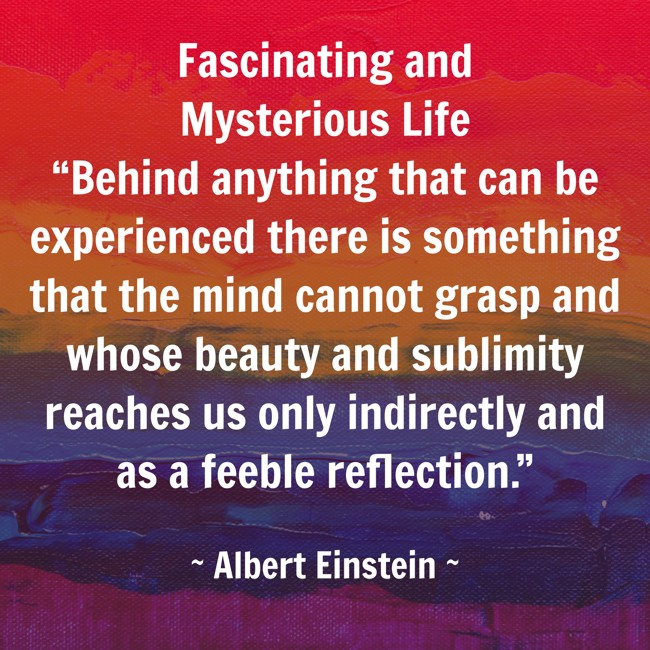
A similar view was proposed by A. Einstein also…“A human being is a part of the whole, called by us the Universe, a part limited in time and space. He experiences himself, his thoughts and feelings as something separated from the rest- a kind of optical delusion of his consciousness. This delusion is a kind of prison for us, restricting us to our personal desires and to affection for a few persons nearest to us. Our task must be to free ourselves from this prison by widening our circles of compassion to embrace all living creatures and the whole of nature in its beauty. Nobody is able to achieve this completely, but the striving for such achievement is in itself a part of the liberation and of a foundation for inner security.” — Albert Einstein, N.Y. Post, November 28, 1972.
Bouma-Prediger, Steven. 2001. For the Beauty of the Earth. Grand Rapids, Michigan: Baker Academic.
Buber, Martin. 1970. I and Thou. Trans. Walter Kaufmann. New York: Charles Scribner’s Sons.
Kohanski, Alexander. 1982. Martin Buber’s Philosophy on Interhuman Relation. Rutherford, Madison, Teaneck: Fairleigh Dickinson University Press & London and Toronto: Associated University Press.
Wikipedia biocentrism ethics


 We are all Interconnected even with the Universe