My new book is about the human species adopting an ancient, truer, sound economic, and more empathic perspective, as the present one continues to be a major disaster and will continue so into the future. For example, let’s look at war. Arguably the most evil and catastrophic human activity ever.
According to a New York Times article: What is a war?
War is defined as an active conflict that has claimed more than 1,000 lives.
Has the world ever been at peace?
Of the past 3,400 years, humans have been entirely at peace for 268 of them or just 8 percent of recorded history.
How many people have died in war?
At least 108 million people were killed in wars in the twentieth century. Estimates for the total number killed in wars throughout all of human history range from 150 million to 1 billion. War has several other effects on the population, including famine, environmental desolation, the killing of plants, and animals, etc. decreasing the birth rate by taking men away from their wives. The reduced birth rate during World War II is estimated to have caused a population deficit of more than 20 million people. Let’s repeat this again, Of the past 3,400 years, humans have been entirely at peace for 268 of them, or just 8 percent of recorded history. We need a new common perspective Badly!!!
Thinking and learning about evolution and cooperation between species is hampered by a number of rationalistic principles. Western rationalism … places a strong emphasis on the individual ego that is in a world full of things with qualities, but also on the view that humans are superior to other living beings (Korthals 2018). The view that man is a symbiotic being contradicts this idea of individuality. Men as symbionts means there is no ‘I’, there is everywhere a (widespread) we-process, composed of different species, namely symbionts of life and death. Because of our inadequate senses, our unilateral communication ability through spoken language, and the growth of our brains, people believe that other beings do not communicate. That is why it took so long to discover communicative and cognitive skills in other species (Meijer and Bovenkerk).
The evolutionary achievements of the brain have simultaneously equipped man with very deficient senses. The brain has shrunk the senses (Wilson, 2014) Language is an extensive network of useful communication with the world for people and therefore the specific possibilities the senses can realize are diminished. With spoken language and a thinking brain, people see themselves as separate beings, separate from plants, animals, and microbes. Man is secluded (alienated) at the top of evolution, or sees himself as a world-shaping against all those other world-blind beings. As a result of this anthropocentrism, man is blind to important, life-feeding interactions and communications between other animals, plants, and dead matter. Due to the great emphasis on language as a superior communication system, other communication systems are not covered. But animals and plants have other, equally effective communication systems that enable co-evolution. Slowly we become a little smarter in research into how living beings live, communicate and, above all, feed themselves and others (De Waal 2016). In Western philosophy, many barriers have been raised against the elaboration of this idea. In particular, the view that man is an exceptional being due to rationality or consciousness makes it difficult to see that animals and plants also think, feel, and communicate in a certain way. This anthropocentrism can still be found in leading philosophers.Anthropocentrism erects a barrier between humans and other living organisms and therefore denies the wide variety of processes of communication, valuing, and solidarity with non-human animals.
Humanity in the Living, the Living in Humans Michiel Korthals
Because of the mutual connections in a locally developed ecosystem, the locally evolved relationships are extremely important. The place is a breeding ground. The mutual symbiotic adjustments of the symbionts in a holobiont are disturbed when even one species is removed.
Ultimately, the entire web of relationships is carried by microbes. For example, in humans, communication between the brain and the stomach is just as fundamental to capabilities and behavior as the brain. These stomach-brain connections apply to all mammals. One of the most famous researchers in this area, Emeran Mayer, writes in The Mind-Gut Connection: How the Hidden Conversation Within Our Bodies Impacts Our Moods, Our Choices, and Our Overall Health (2016), that the gut and the inhabitants of the Gut, the microbes, think for the brain. That is why he calls the bowels the ‘second brain’. The bacteria in the gastrointestinal tract play a central role: the presence of certain types of bacteria and their products have a major influence on the willingness to take risks, on thought processes, and on moods such as apathy and depression. In addition, the digestion of foods is largely provided by intestinal bacteria, as is the stimulation of the immune system. This is why the microbiome is a second brain. Michiel Korthals
“It really boils down to this: that all life is interrelated. We are all caught in an inescapable network of mutuality, tied into a single garment of destiny. Whatever affects one directly, affects all indirectly. We are made to live together because of the interrelated structure of reality.” ~Martin Luther King, Jr.
We know that the Earth is a massive magnet, due to the circling electric currents in its liquid outer core. It is composed of highly conductive molten iron, nickel, and other minerals; the Earth’s rotation acts as a generator spinning the substances, resulting in attractive and repulsive forces.
The Earth’s magnetic field, although invisible to the human eye, can be called a true planetary defense shield that has an invaluable impact on the survival of all life forms. If it did not protect the Earth from the deadly and high-energy cosmic rays that are continually emitted by the sun, the planet’s entire ecosystem would cease to exist.
The effects of magnetism on living organisms are unquestionable. Even though we have not definitely substantiated the effects of magnetism on the human body, we do know that it plays a crucial role in the lives of certain animals. For example, migratory animals capable of navigating to specific destinations are thought to follow compass-like environmental cues such as the stars, the sun, skylight polarization, and magnetism.
Furthermore, field and laboratory experiments have provided evidence that sea turtles use geomagnetic cues to navigate in the open sea. For instance, green sea turtles (Chelonia mydas), known for their ability to find their distant homes, were not able to do so when a strong magnet was attached to their heads.
Similarity, salmon were also recently discovered to use a biomagnetic navigation system to find their way back home across thousands of kilometers of ocean. Because they imprint on the magnetic field unique to their birth streams, the salmon use it as a geographic signature to seek out their original coastal locations upon reaching sexual maturity.
Recently, honeybees have been dying en masse around the world, shocking numerous researchers. The number of domestic honeybee hives in America reportedly decreased by a third over the past several years. The phenomenon is called colony collapse disorder. There are many potential reasons why this could be occurring, including global warming, insecticides and the appearance of new viruses. Electromagnetic radiation that results from the increased use of mobile phones and cell towers is being considered as another possible explanation. According to proponents of this position, electromagnetic radiation interferes with the honeybees’ location-tracking ability.
All life forms have electric impulses and biomagnetism, ranging from weak to strong, inside their systems. These fields can be measured in real time, or estimated at the very least, thanks to the advancing developments of science and technology. Brain World Steve Kim
The human body, and every living organism on this planet, is an electrical body made up of charged particles, it is also subject to the laws of electromagnetism. The body’s bio-electromagnetic fields are very low in intensity (amplitude/power) but can be measured using devices like MEG (magnetoencephalography) and MCG (Magnetocardiography).
The human body generates electricity that flows through it. The human body also has its own magnetic fields. The human heart produces an electric current that runs through the body and to every cell. This electric current in the body generates an electromagnetic field.
Every function of the human body relies on some type of signal transmission – from the immune system to the regeneration of cells, waste removal, healing, nerve function, immune function, to circulation and everything in between. And it all starts on the cellular level. Every cell innately knows its purpose and function and how to do it.
In order for the body to function at all, these signal transmissions must be clear and strong enough so the message gets to where it needs to go and can be understood by the receiving end. If there is any kind of interference in that electrical circuitry the message won’t make it or isn’t strong enough or too strong to affect the intended cellular reaction.
CELLS GENERATE ENERGY
Most of the body’s electromagnetic activity occurs in the cell membrane. One function of the cell membrane is to open and close channels (membrane pumps) through which ions (electrolytes) move in and out of the cell delivering nutrients and removing waste.
Cell matter of every cell in every living body, including animals and plants, is comprised of charged particles and that means that the electric and magnetic fields in the environment influence the movement of chemicals in the body and they influence the interactions and exchanges of these chemical elements and molecules.
THIS WORD REFERS TO ALL THE CHEMICAL ACTIVITIES THAT SUPPORT LIFE IN A CELL, AN ORGAN — AND ALL LIVING THINGS.
The body is a complex, interacting, transforming and very busy place! Metabolism isn’t just for warm-blooded animals like us. Every living organism has metabolism or biochemical processes. Living things must use energy and consume nutrients to carry out the chemical reactions that sustain life. Metabolism is what allows living things to grow, reproduce, move and more. It refers to all the chemical processes going on continuously inside your body that allow life and normal functioning (maintaining normal functioning in the body is called homeostasis). These processes include those that break down nutrients from our food, and those that build and repair our body. Building and repairing the body requires energy that ultimately comes from your food.
Cells are always undergoing metabolism — taking food and turning it into energy, building up new cell parts and breaking them down again. Two main categories of metabolism are: Catabolism, which is the breakdown of molecules to obtain energy and Anabolism, which can be termed as the synthesis of all compounds needed by the cells. Metabolism involves the formation of various types of molecules and many molecules also get broken down.
One of the most defining features of all the living organisms is Metabolism. It is the sum total of all of the chemical reactions which take place in a living cell or organism. Metabolism is exhibited by all organisms which include protozoans, algae, fungi and bacteria. The rate of energy production is called the basal metabolic rate and is affected by factors such as sex, race, exercise, diet, age, and diseases such as sepsis or cancer. A person’s metabolism also goes up and down throughout the day, burning different energy sources at different times. U.S. National Cancer Institute
There are traits that human beings share with all other living things. All living organisms share several key characteristics or functions including: order, sensitivity or response to the environment, reproduction, adaptation, growth and development, regulation, homeostasis, energy processing, and evolution. When viewed together, these characteristics help serve to define life.
ORDER
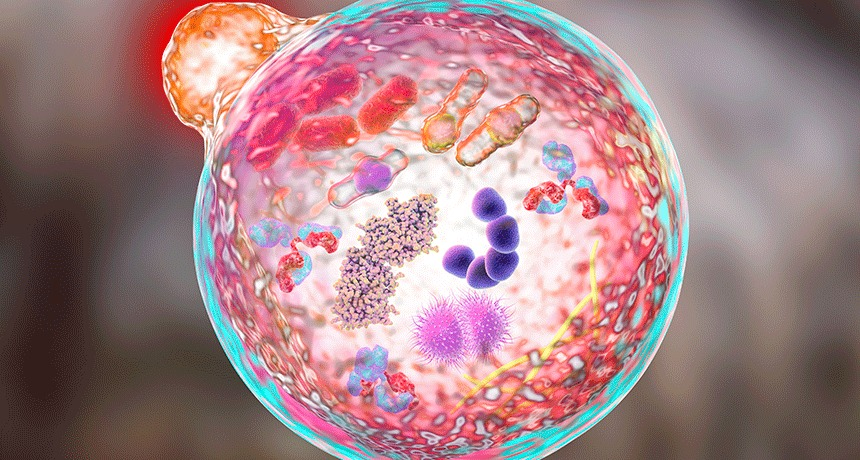
Organisms are highly organized, coordinated structures that consist of one or more cells. Even very simple, single-celled organisms are remarkably complex: inside each cell, atoms make up molecules; these in turn make up cell organelles and other cellular inclusions. In multicellular organisms, similar cells form tissues. Tissues, in turn, collaborate to create organs (body structures with a distinct function). Organs work together to form organ systems.
SENSITIVITY OR RESPONSE TO STIMULI
Organisms respond to diverse stimuli. For example, plants can bend toward a source of light, climb on fences and walls, or respond to touch. Even tiny bacteria can move toward or away from chemicals (a process called chemotaxis) or light (phototaxis). Movement toward a stimulus is considered a positive response, while movement away from a stimulus is considered a negative response.
REPRODUCTION
Single-celled organisms reproduce by first duplicating their DNA, and then dividing it equally as the cell prepares to divide to form two new cells. Multicellular organisms often produce specialized reproductive germline cells that will form new individuals. When reproduction occurs, genes containing DNA are passed along to an organism’s offspring. These genes ensure that the offspring will belong to the same species and will have similar characteristics, such as size and shape.
GROWTH AND DEVELOPMENT
Organisms grow and develop following specific instructions coded for by their genes. These genes provide instructions that will direct cellular growth and development, ensuring that a species’ young will grow up to exhibit many of the same characteristics as its parents.
REGULATION
Even the smallest organisms are complex and require multiple regulatory mechanisms to coordinate internal functions, respond to stimuli, and cope with environmental stresses. Two examples of internal functions regulated in an organism are nutrient transport and blood flow. Organs (groups of tissues working together) perform specific functions, such as carrying oxygen throughout the body, removing wastes, delivering nutrients to every cell, and cooling the body.
HOMEOSTASIS
Living Things Must Maintain Homeostasis. Homeostasis means “steady state”. Homeostasis is the tendency of an organism or cell to maintain a constant internal environment. Living things constantly adjust to internal and external changes. Homeostasis means to maintain dynamic equilibrium in the body. It is dynamic because it is constantly adjusting to the changes that the body’s systems encounter. It is equilibrium because body functions are kept within specific ranges or normal limits.
Thermoregulation
Thermoregulation is a process that allows your body to maintain its core internal temperature. The set point for normal human body temperature is approximately 37°C (98.6°F). Body temperature affects body activities. Body proteins, including enzymes, begin to denature and lose their function with high heat (around 50ºC for mammals). Enzyme activity will decrease by half for every ten-degree centigrade drop in temperature, to the point of freezing, with a few exceptions.
During body temperature regulation, temperature receptors in the skin (sensory receptor) communicate information to the brain (the control center) which signals the blood vessels and sweat glands in the skin (effectors). As the internal and external environment of the body are constantly changing, adjustments must be made continuously to stay at or near a specific value: the set point. (approximately 37°C / 98.6°F)
ENERGY PROCESSING
All organisms use a source of energy for their metabolic activities. Some organisms capture energy from the sun and convert it into chemical energy in food; others use chemical energy in molecules they take in as food.
THE DIVERSITY OF LIFE
There is a tremendous diversity of life on earth. The source of this diversity is evolution, the process of gradual change during which new species arise from older species. Evolutionary biologists study the evolution of living things in everything from the microscopic world to ecosystems.
Human bodies recognize at the molecular level that not all happiness is created equal, responding in ways that can help or hinder physical health, according to new research led by Barbara L. Fredrickson.
“Philosophers have long distinguished two basic forms of well-being: a ‘hedonic’ form representing an individual’s sense pleasurable experiences, and a deeper ‘eudaimonic,’ form that results from striving toward meaning and a noble purpose beyond simple self-gratification,” wrote Fredrickson and her colleagues. Both give us a sense of happiness, but each is experienced very differently in the body’s cells.
Eudaimonic well-being was associated with a significant decrease in the stress-related CTRA gene expression profile. In contrast, hedonic well-being was associated with a significant increase in the CTRA profile. Their genomics-based analyses, the authors reported, reveal the hidden costs of purely hedonic well-being.”At the cellular level, our bodies appear to respond better to a different kind of well-being, one based on a sense of connectedness and purpose.”
Also, ‘Kindfulness’ impacts brain circuits, boosting empathy, compassion, and joy. It also increases vagal tone, which is known to counter stress, reduce inflammation, and even play a protective role in cancer progression.
So kindness is much more than the things that we say or do. These are its social aspects. Kindness is the intention of how we use our minds, in what and who we focus upon. The feelings induced go inward, affecting our mental and physical health.
These findings and others suggest that kindness increases mood, physical health and generosity.





 We are all Interconnected even with the Universe