No creature could possibly sense everything, and no creature needs to. Evolving according to their owner’s needs, the senses sort through an infinity of stimuli, allowing through only what is relevant. To learn about the rest is a choice. The ability to dip into other Umwelten is our greatest sensory skill. A moth will never know what a zebra finch hears in its song, a zebra finch will never feel the electric buzz of a black ghost knifefish, a knifefish will never see through the eyes of a mantis shrimp, a mantis shrimp will never smell the way a dog can, and a dog will never understand what it is like to be a bat. We will never fully do any of these things either, but we are the only animal that can try. Through patient observation, through the technologies at our disposal, through the scientific method, and, above all else, through our curiosity and imagination, we can try to step into perspectives outside our own. This is a profound gift, which comes with a heavy responsibility. As the only species that can come close to understanding other Umwelten, but also the species most responsible for destroying those sensory realms, it falls on us to marshal all of our empathy and ingenuity to protect other creatures, and their unique ways of experiencing our shared world.
Ed Yong
No creature can possibly sense everything
16 DecExcerpt from Chapter 8 – The Garden of Eden- In this Life – Relative Truths
24 SepOther living species such as flowers have striking leaf patterns visible only in
the ultraviolet range of the spectrum, something that can only attract the attention of their pollinators, such as bees. A consequence of perceptual relativity and the observer-dependent universe is the realization that human’s worldview comprehends relatively little of what is available; hence, claimed hu
man knowledge and awareness of the external world and universe should be approached with guidance. In fact, individually, at any one moment, we each know a very small amount of our humanity’s total knowledge and our species knows very little of how the universe really is.
Our sensory apparatus was designed by evolution to help us in our everyday lives, enabling us to survive and thrive in our environment, but it is not designed to help us understand the complexity of the universe. None of us can know any absolute truths; our human minds are by their accustomed finite subject-object relationships in relativity. The best we can do is know many relative truths, some being much better relative truths than others.While relative certainty and wisdom are necessary for us in our everyday lives, ultimately, the fact that no human can know an absolute truth should lead
people to accept that uncertainty is a natural response to this lack of knowledge.
The Garden of Eden in This Life
10 Sep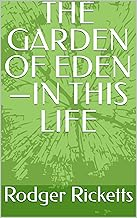
Today is the launch of my new book- The Garden of Eden in This Life. It is available in paperback, hardcover and kindle on Amazon. The following is the book description. With Metta, Rodger Ricketts.
What if the story of the Garden of Eden wasn’t just ancient myth, but a timeless guide to reclaiming our original wholeness? What if the “fall” from innocence was not the end, but an invitation to return—consciously—to a deeper unity with ourselves, each other, and the world?
In The Garden of Eden in This Life, Dr. Rodger R. Ricketts—a clinical psychologist, mindfulness teacher, and lifelong student of the Buddha’s teachings—unveils a profound perspective linking ancient wisdom, modern psychology, and the apophatic (negative) spiritual tradition. Drawing from over forty years of study and practice, he explores how non-dualistic teachings from Buddhism, science, and multiple faith traditions reveal the limits of language, the illusions of separation, and the path back to an integrated state of being.
You will journey through concepts like Sunyata (emptiness), the via negativa, and the psychology of transcendence—discovering how humanity’s separation from nature and spirit can be healed through direct experience, compassionate living, and expanded awareness.
This is more than a philosophical exploration—it’s a practical roadmap for living with clarity, joy, and interconnectedness. Through cross-cultural insights, reflective practices, and meditative approaches, Dr. Ricketts shows how embracing the ineffable mystery of life can dissolve division, foster ecological and social harmony, and restore our inner paradise.
Whether you are a seeker, a meditator, a student of comparative religion, or someone simply longing for a more meaningful existence, The Garden of Eden in This Life will inspire you to see beyond duality and step into a living experience of unity.
If you are ready to move beyond dogma, transcend the limits of language, and reawaken to the timeless ground of being—this book will guide you there.
Open these pages and begin your journey back to the Garden… in this life.


Everything humans see is a simplification.
24 FebEverything humans see is a simplification.
A human sees the world in 3 dimensions. That is a simplification. Humans are fundamentally limited, generalizing creatures living on autopilot. Categorization is the brain’s tool to organize nearly everything we encounter in our daily lives. Grouping information into categories simplifies our complex world and helps us to react quickly and effectively to new experiences. Categorization and classification allow humans to organize things, objects, and ideas that exist around them and simplify their understanding of the world. Categorization is like your brain’s very own personal assistant, grouping similar things together so you can find what you need, when you need it.
Our brain categorizes continuously: not only chairs during childhood, but any information at any given age. What advantage does that give us? Pieter Goltstein says: “Our brain is trying to find a way to simplify and organize our world. Without categorization, we would not be able to interact with our environment as efficiently as we do.” In other words: We would have to learn for every new chair we encounter that we can sit on it. Categorizing sensory input is therefore essential for us, but the underlying processes in the brain are largely unknown.
Social categorization is a fundamental human cognitive process because it allows for the quick simplification of complex social information. Scientists at the Max Planck Institute of Neurobiology have now shown that also mice categorize surprisingly well. The researchers identified neurons encoding learned categories and thereby demonstrated how abstract information is represented at the neuronal level.
While categorization is a natural and necessary mechanism to cope with the complexity of our world, it perilously inhibits our ability to address the most pressing and tangible problems of our time. The psychological force at play here is a need to categorize — to fit things into neatly defined, clearly labeled boxes. In times of increasing complexity, such categorization can be extremely useful, creating order in a world that is fundamentally messy and establishing structures so that we can better organize, analyze, and manage it. Yet also, extremely limiting in understanding the natural deeper complexity of life.

















 We are all Interconnected even with the Universe