Tags: Albert Scheitzer, Knowledge, life, meditation, reality, Reverence for Life
My new book is about the human species adopting an ancient, truer, sound economic, and more empathic perspective, as the present one continues to be a major disaster and will continue so into the future. For example, let’s look at war. Arguably the most evil and catastrophic human activity ever.
According to a New York Times article: What is a war?
War is defined as an active conflict that has claimed more than 1,000 lives.
Has the world ever been at peace?
Of the past 3,400 years, humans have been entirely at peace for 268 of them or just 8 percent of recorded history.
How many people have died in war?
At least 108 million people were killed in wars in the twentieth century. Estimates for the total number killed in wars throughout all of human history range from 150 million to 1 billion. War has several other effects on the population, including famine, environmental desolation, the killing of plants, and animals, etc. decreasing the birth rate by taking men away from their wives. The reduced birth rate during World War II is estimated to have caused a population deficit of more than 20 million people. Let’s repeat this again, Of the past 3,400 years, humans have been entirely at peace for 268 of them, or just 8 percent of recorded history. We need a new common perspective Badly!!!

“It really boils down to this: that all life is interrelated. We are all caught in an inescapable network of mutuality, tied into a single garment of destiny. Whatever affects one directly, affects all indirectly. We are made to live together because of the interrelated structure of reality.” ~Martin Luther King, Jr.

Human bodies recognize at the molecular level that not all happiness is created equal, responding in ways that can help or hinder physical health, according to new research led by Barbara L. Fredrickson.
“Philosophers have long distinguished two basic forms of well-being: a ‘hedonic’ form representing an individual’s sense pleasurable experiences, and a deeper ‘eudaimonic,’ form that results from striving toward meaning and a noble purpose beyond simple self-gratification,” wrote Fredrickson and her colleagues. Both give us a sense of happiness, but each is experienced very differently in the body’s cells.
Eudaimonic well-being was associated with a significant decrease in the stress-related CTRA gene expression profile. In contrast, hedonic well-being was associated with a significant increase in the CTRA profile. Their genomics-based analyses, the authors reported, reveal the hidden costs of purely hedonic well-being.”At the cellular level, our bodies appear to respond better to a different kind of well-being, one based on a sense of connectedness and purpose.”
Also, ‘Kindfulness’ impacts brain circuits, boosting empathy, compassion, and joy. It also increases vagal tone, which is known to counter stress, reduce inflammation, and even play a protective role in cancer progression.
So kindness is much more than the things that we say or do. These are its social aspects. Kindness is the intention of how we use our minds, in what and who we focus upon. The feelings induced go inward, affecting our mental and physical health.
These findings and others suggest that kindness increases mood, physical health and generosity.
National Academy of Sciences

The human body possesses an enormous, astonishing, and persistent capacity to heal itself. Disease generally occurs when we abuse our bodies or deprive them of basic requirements to keep us healthy over extended periods.
Every second our body is not only energizing but also healing. This remarkable and complex process throughout our body never stops as healing is never complete. This healing process is not just for injuries. It also takes care of the normal, everyday wear and tear of modern life. Damaged, destroyed, or dead cells are replaced in great numbers daily including in our mouth, intestines, blood, etc.. Every second that we’re alive, the cells in our bodies are endlessly working to bring us back to a natural state of homeostasis or equilibrium.
Each cell is a dynamic, living unit that is constantly monitoring and adjusting its own processes, ongoingly working to restore itself according to the original DNA code it was created with and to maintain balance within the body. Cells have the ability to heal themselves, as well as make new cells that replace those that have been permanently damaged or destroyed. Even when a large number of cells are destroyed — the surrounding cells replicate to make new cells, thereby quickly replacing the cells that were destroyed.
When a bleeding injury occurs anywhere in our bodies, blood vessels at the site contract and slow the bleeding. Next, blood platelets that come in contact with air, begin forming a blood clot where the injury is located. White blood cells then accumulate on the spot and destroy and digest dead cells by secreting special enzymes stored in small packets in the cells called lysosomes. That way, dead-cell debris is removed and new space is made for new cells to occupy.
Almost simultaneously, the process of new cell formation begins. These new cells originate mostly from the newer layers of cells of a particular tissue, while older cells are pushed to the site of the injury, to gradually fill the space that was made by the injury. This remarkable and complex process automatically stops when the healing is complete.
Leading healthy lifestyles and consuming healthful (as opposed to toxic) diets, will go a very long way in keeping us healthy, whether we are young or older. A recent study by the Centers for Disease Control and Prevention found that as many as two-thirds of all Americans don’t get enough sleep.
Cell recovery takes place when we are in a Parasympathetic Nervous System functioning state or the rest, digest, and recover mode of the Autonomic Nervous System. By staying in a state of constant stress, we stay away from our body’s ability for cell recovery.
The optimal amount of daily sleep for the average person is eight hours, and for a child, 11-12 hours. But the myriad responsibilities that many of us, adults and children alike make it so that many are robbing themselves of one of the most crucial elements of maintaining good physical, as well as mental/emotional health.
The body is endlessly working to repair and regenerate itself. This happens to a great extent when we are sleeping — when our body’s energy is only minimally being used to sustain autonomic nervous system function (that is, involuntary functions such as heartbeat), and most of it can be directed toward restorative and healing processes.
Shorting oneself on sleep is known to weaken the immune system. To get energy the artificial way (say, through caffeine) is to do the body a great disservice, by denying it the amount of rest that will make all its systems, including the immune system and the body’s healing and restorative processes, work at their best.
Another way in which we can greatly improve our body’s powerful self-healing properties is by eating a healthy, nutrient-rich diet.
It is important to minimize our consumption of processed foods, as well as artificial food additives, preservatives, colorants, flavors, etc.
A diet rich in vegetables and fruits, and low in animal fats and hydrogenated oils, is best for all of us. Lean sources of protein such as beans are also great. Nuts and seeds are rich in nutrients and fiber and have beneficial oils.
Organic foods are preferable to non-organic, as they have fewer traces of pesticides and growth hormones. In addition, organic fruits and vegetables have been found to have higher contents of flavonoids, plant compounds with antioxidant properties believed to aid in the prevention of cancer.
Regular exercise, yoga, t’ai chi, etc. strengthens and conditions the body’s cardiovascular network and helps reduce emotional stress. It also promotes better sleep. It can be a fun activity that you enjoy, such as bike-riding, or just a regular walk, or stretching, that will stimulate blood circulation, and help the body oxygenate and purify itself.
Working, worrying, texting, driving, arguing with others, intense exercise—these all shift us OUT of rest and digest into “fight-or-flight” mode.
The body cannot function properly, let alone heal when it is in “fight-or-flight” mode and studies now show that over 85% of us live this way!
Moving into a state of rest and digest is pivotal in ALL healing protocols AND a crucial aspect of being able to choose wellbeing no matter what adversity is going on in life.
All healing occurs in a parasympathetic state; this includes healthy digestion, detoxification, and cellular regeneration.
When we are in a consistent state of “fight-or-flight,” this can lead to:
Balancing our parasympathetic nervous system and sympathetic nervous systems is so essential for cellular healing thereby it also improves our experience of life physically and emotionally in many ways.
Johns Hopkins Medicine
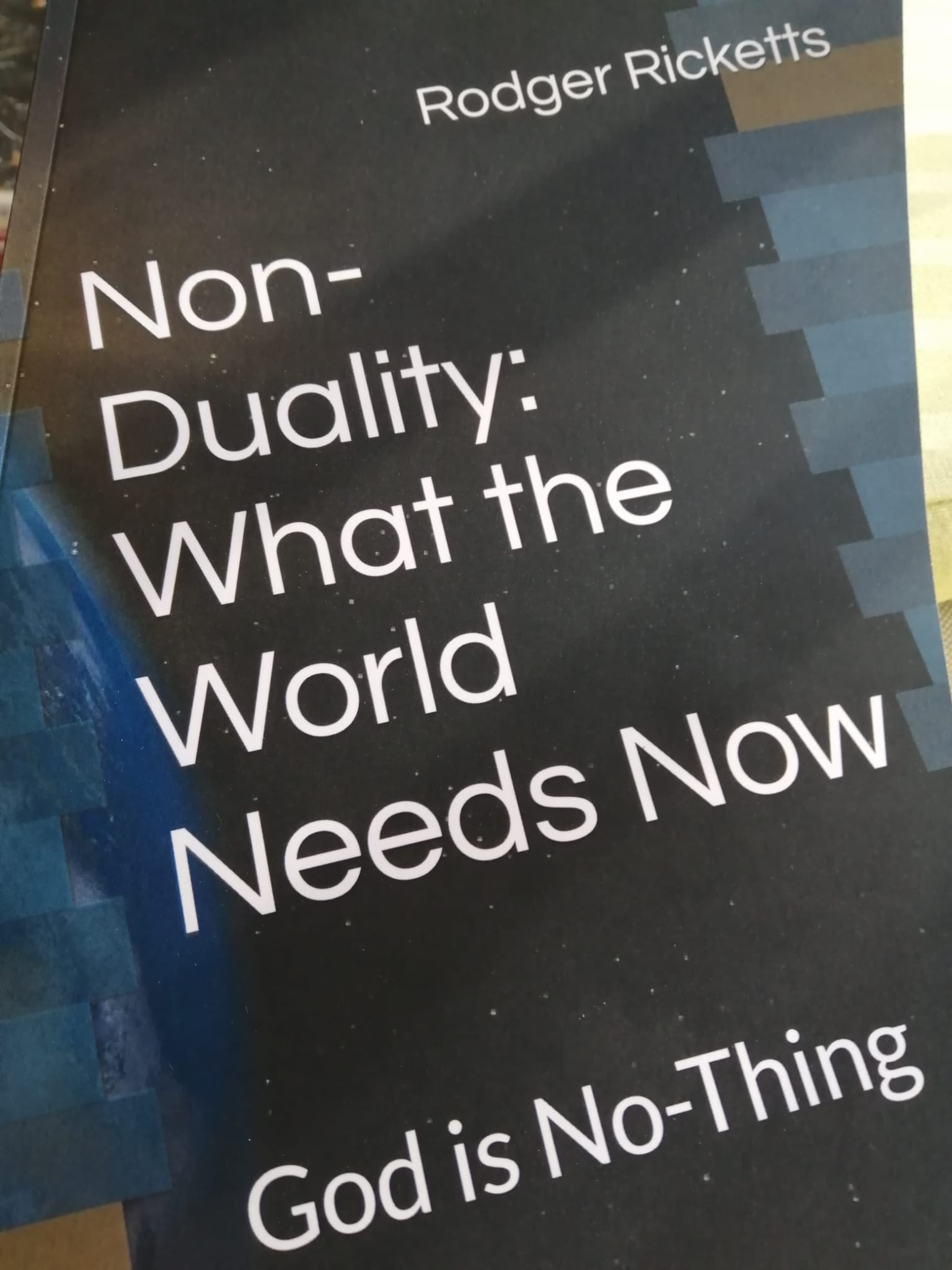
Non-Duality: What the World Needs Now…. God is No-Thing

 We are all Interconnected even with the Universe