Tags: buddha's teachings, Buddhism, Happiness, Knowledge, life, meditation, psychology, reality, suffering
Because of the mutual connections in a locally developed ecosystem, the locally evolved relationships are extremely important. The place is a breeding ground. The mutual symbiotic adjustments of the symbionts in a holobiont are disturbed when even one species is removed.
Ultimately, the entire web of relationships is carried by microbes. For example, in humans, communication between the brain and the stomach is just as fundamental to capabilities and behavior as the brain. These stomach-brain connections apply to all mammals. One of the most famous researchers in this area, Emeran Mayer, writes in The Mind-Gut Connection: How the Hidden Conversation Within Our Bodies Impacts Our Moods, Our Choices, and Our Overall Health (2016), that the gut and the inhabitants of the Gut, the microbes, think for the brain. That is why he calls the bowels the ‘second brain’. The bacteria in the gastrointestinal tract play a central role: the presence of certain types of bacteria and their products have a major influence on the willingness to take risks, on thought processes, and on moods such as apathy and depression. In addition, the digestion of foods is largely provided by intestinal bacteria, as is the stimulation of the immune system. This is why the microbiome is a second brain. Michiel Korthals

ELECTROMAGNETIC FIELDS IN THE HUMAN BODY
The human body, and every living organism on this planet, is an electrical body made up of charged particles, it is also subject to the laws of electromagnetism. The body’s bio-electromagnetic fields are very low in intensity (amplitude/power) but can be measured using devices like MEG (magnetoencephalography) and MCG (Magnetocardiography).
The human body generates electricity that flows through it. The human body also has its own magnetic fields. The human heart produces an electric current that runs through the body and to every cell. This electric current in the body generates an electromagnetic field.
Every function of the human body relies on some type of signal transmission – from the immune system to the regeneration of cells, waste removal, healing, nerve function, immune function, to circulation and everything in between. And it all starts on the cellular level. Every cell innately knows its purpose and function and how to do it.
In order for the body to function at all, these signal transmissions must be clear and strong enough so the message gets to where it needs to go and can be understood by the receiving end. If there is any kind of interference in that electrical circuitry the message won’t make it or isn’t strong enough or too strong to affect the intended cellular reaction.
Most of the body’s electromagnetic activity occurs in the cell membrane. One function of the cell membrane is to open and close channels (membrane pumps) through which ions (electrolytes) move in and out of the cell delivering nutrients and removing waste.
Cell matter of every cell in every living body, including animals and plants, is comprised of charged particles and that means that the electric and magnetic fields in the environment influence the movement of chemicals in the body and they influence the interactions and exchanges of these chemical elements and molecules.
Posted by Dr. Evelin Valdez

The body is a complex, interacting, transforming and very busy place! Metabolism isn’t just for warm-blooded animals like us. Every living organism has metabolism or biochemical processes. Living things must use energy and consume nutrients to carry out the chemical reactions that sustain life. Metabolism is what allows living things to grow, reproduce, move and more. It refers to all the chemical processes going on continuously inside your body that allow life and normal functioning (maintaining normal functioning in the body is called homeostasis). These processes include those that break down nutrients from our food, and those that build and repair our body. Building and repairing the body requires energy that ultimately comes from your food.
Cells are always undergoing metabolism — taking food and turning it into energy, building up new cell parts and breaking them down again. Two main categories of metabolism are: Catabolism, which is the breakdown of molecules to obtain energy and Anabolism, which can be termed as the synthesis of all compounds needed by the cells. Metabolism involves the formation of various types of molecules and many molecules also get broken down.
One of the most defining features of all the living organisms is Metabolism. It is the sum total of all of the chemical reactions which take place in a living cell or organism. Metabolism is exhibited by all organisms which include protozoans, algae, fungi and bacteria. The rate of energy production is called the basal metabolic rate and is affected by factors such as sex, race, exercise, diet, age, and diseases such as sepsis or cancer. A person’s metabolism also goes up and down throughout the day, burning different energy sources at different times. U.S. National Cancer Institute
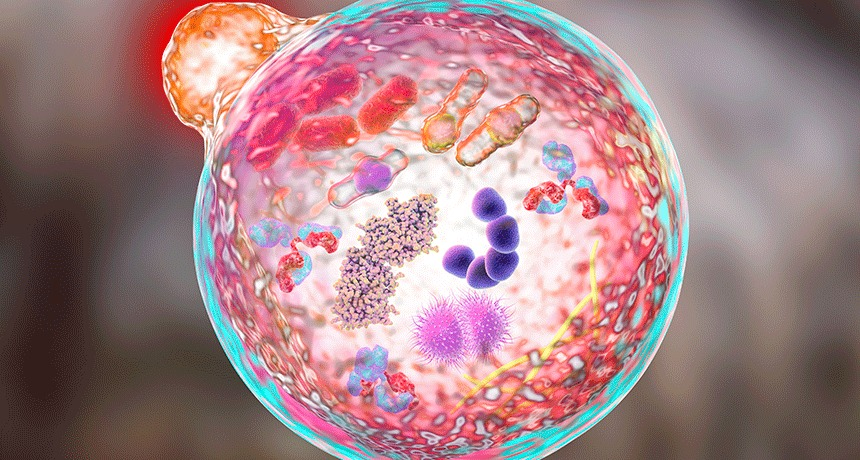
Human bodies recognize at the molecular level that not all happiness is created equal, responding in ways that can help or hinder physical health, according to new research led by Barbara L. Fredrickson.
“Philosophers have long distinguished two basic forms of well-being: a ‘hedonic’ form representing an individual’s sense pleasurable experiences, and a deeper ‘eudaimonic,’ form that results from striving toward meaning and a noble purpose beyond simple self-gratification,” wrote Fredrickson and her colleagues. Both give us a sense of happiness, but each is experienced very differently in the body’s cells.
Eudaimonic well-being was associated with a significant decrease in the stress-related CTRA gene expression profile. In contrast, hedonic well-being was associated with a significant increase in the CTRA profile. Their genomics-based analyses, the authors reported, reveal the hidden costs of purely hedonic well-being.”At the cellular level, our bodies appear to respond better to a different kind of well-being, one based on a sense of connectedness and purpose.”
Also, ‘Kindfulness’ impacts brain circuits, boosting empathy, compassion, and joy. It also increases vagal tone, which is known to counter stress, reduce inflammation, and even play a protective role in cancer progression.
So kindness is much more than the things that we say or do. These are its social aspects. Kindness is the intention of how we use our minds, in what and who we focus upon. The feelings induced go inward, affecting our mental and physical health.
These findings and others suggest that kindness increases mood, physical health and generosity.
National Academy of Sciences




 We are all Interconnected even with the Universe