The human body, and every living organism on this planet, is an electrical body made up of charged particles, it is also subject to the laws of electromagnetism. The body’s bio-electromagnetic fields are very low in intensity (amplitude/power) but can be measured using devices like MEG (magnetoencephalography) and MCG (Magnetocardiography).
The human body generates electricity that flows through it. The human body also has its own magnetic fields. The human heart produces an electric current that runs through the body and to every cell. This electric current in the body generates an electromagnetic field.
Every function of the human body relies on some type of signal transmission – from the immune system to the regeneration of cells, waste removal, healing, nerve function, immune function, to circulation and everything in between. And it all starts on the cellular level. Every cell innately knows its purpose and function and how to do it.
In order for the body to function at all, these signal transmissions must be clear and strong enough so the message gets to where it needs to go and can be understood by the receiving end. If there is any kind of interference in that electrical circuitry the message won’t make it or isn’t strong enough or too strong to affect the intended cellular reaction.
CELLS GENERATE ENERGY
Most of the body’s electromagnetic activity occurs in the cell membrane. One function of the cell membrane is to open and close channels (membrane pumps) through which ions (electrolytes) move in and out of the cell delivering nutrients and removing waste.
Cell matter of every cell in every living body, including animals and plants, is comprised of charged particles and that means that the electric and magnetic fields in the environment influence the movement of chemicals in the body and they influence the interactions and exchanges of these chemical elements and molecules.
Steven Hawking, George Ellis, and Roger Penrose. According to their calculations, time and space had a finite beginning that corresponded to the origin of matter and energy.”3 The singularity didn’t appear in space; rather, space began inside of the singularity. Prior to the singularity, nothing existed, not space, time, matter, or energy – nothing. So where and in what did the singularity appear if not in space? We don’t know. We don’t know where it came from, why it’s here, or even where it is. All we really know is that we are inside of it and at one time it didn’t exist and neither did we. There was no explosion; there was (and continues to be) an expansion. Rather than imagining a balloon popping and releasing its contents, imagine a balloon expanding: an infinitesimally small balloon expanding to the size of our current universe. anonymous
This science certainly confirms the Mystics’ intuition that all is not only interconnected but One.
Change me Divine into one who searches for and sees delight everyday rather than dwelling upon my perceived and often made up troubles, terribleness or thanklessness. All around me are things that can “kill” me with delight and help me to lose myself in wonder. I think of this Spring – am I noticing the buds coming, the growing landscape of increasing green, the new and fresh green of young lives on a tree – a green that shimmers and looks so fresh and new and that only comes each spring? And to just see and feel the grass – the green grass I have been longing to see all winter and here it is sprouting up everywhere becoming lush and thick and I fail to notice? May my prayers be made out of grass – may I see the extraordinary in the ordinary and know it’s all extraordinary – all the wonders, I take for granted that surround me constantly and through which I can see your love pouring forth into the world and into my life. May I instruct myself in joy rather than sorrow. May I simply look, listen and lose myself in wonder, rather than my made up thoughts of misery. May the beauty of the world around me remind me what is true. O Divine, make me mindful as well in order to be well. Mary Oliver
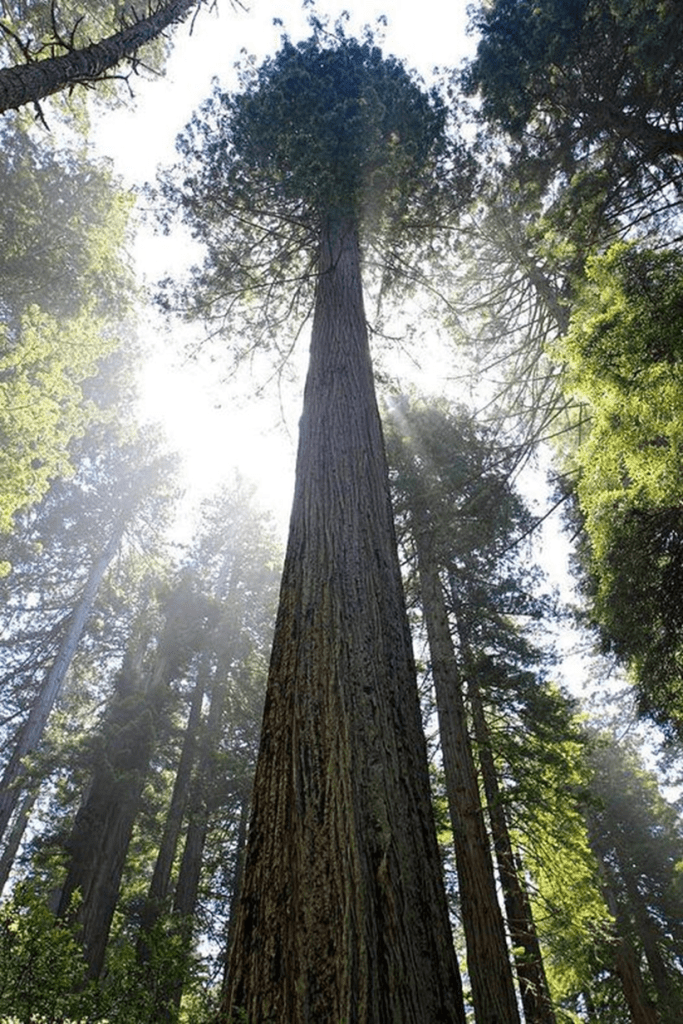
‘The records show that the air and earth potentials fluctuated in phase with the trees’ potentials. Statistical analysis revealed well-known diurnal rhythms in all four records, as well as the lunar cycle and the 11-year cycle of solar activity. These findings leave little doubt that trees, in particular, are sensitive to electric and electromagnetic fields from the earth and outer space, acting as antennae to the universe. Trees connect us to the universe. This may be why a walk in the woods or being near to woods and forests is beneficial to health.’ Harold Saxton Burr





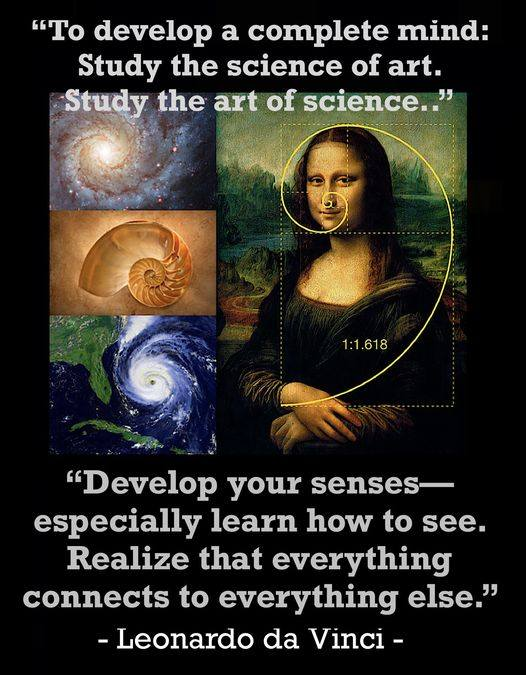

 We are all Interconnected even with the Universe