These experiments confirmed that trees are indeed communicating with each other and sharing nutrients through their roots and that trees have their own sort of nervous system that is capable of facilitating tree communication, memory, and learning. Harvard University by Valentina Lagomarsino
Nonlocality describes the apparent ability of objects to instantaneously know about each other’s state, even when separated by large distances (potentially even billions of light years), almost as if the universe at large instantaneously arranges its particles in anticipation of future events.
Thus, in the quantum world, despite what Einstein had established about the speed of light being the maximum speed for anything in the universe, instantaneous action or transfer of information does appear to be possible. This is in direct contravention of the “principle of locality”, the idea that distant objects cannot have adirect influence on one another and that an object is directly influenced only by its immediate surroundings, an idea on which almost all of physics is predicated.
Nonlocality suggests that the universe is in fact profoundly different from our habitual understanding of it and that the “separate” parts of the universe are actually potentially connected in an intimate and immediate way. An entangled pair of particles can be seen to have complementary properties when measured. Nonlocality occurs due to the phenomenon of entanglement, whereby particles that interact with each other become permanently correlated, or dependent on each other’s states and properties, to the extent that they effectively lose their individuality and in many ways behave as a single entity. The two concepts of nonlocality and entanglement go very much hand in hand, and, peculiar though they may be, they are facts of quantum systems which have been repeatedly demonstrated in laboratory experiments.
For example, if a pair of electrons are created together, one will have a clockwise spin and the other will have an anticlockwise spin (spin is a particular property of particles whose details need not concern us here, the salient point being that there are two possible states and that the total spin of a quantum system must always cancel out to zero). However, under quantum theory, a superposition is also possible, so that the two electrons can be considered to simultaneously have spins of clockwise-anticlockwise and anticlockwise-clockwise respectively. If the pair are then separated by any distance (without observing and thereby decohering them) and then later checked, the second particle can be seen to instantaneously take the opposite spin to the first, so that the pair maintains its zero total spins, no matter how far apart they may be, and in total violation of the speed of light law. https://www.physicsoftheuniverse.com/
All living beings solve problems, plants and animals use their parts to help them survive, grow, and meet their needs. Even amoebas solve their problems with trial and error — grasping out for food in the primordial soup. Humans are the same, we just have more complex problems and ways to learn from trial and error. The grand narrative of evolution is all about problem-solving.
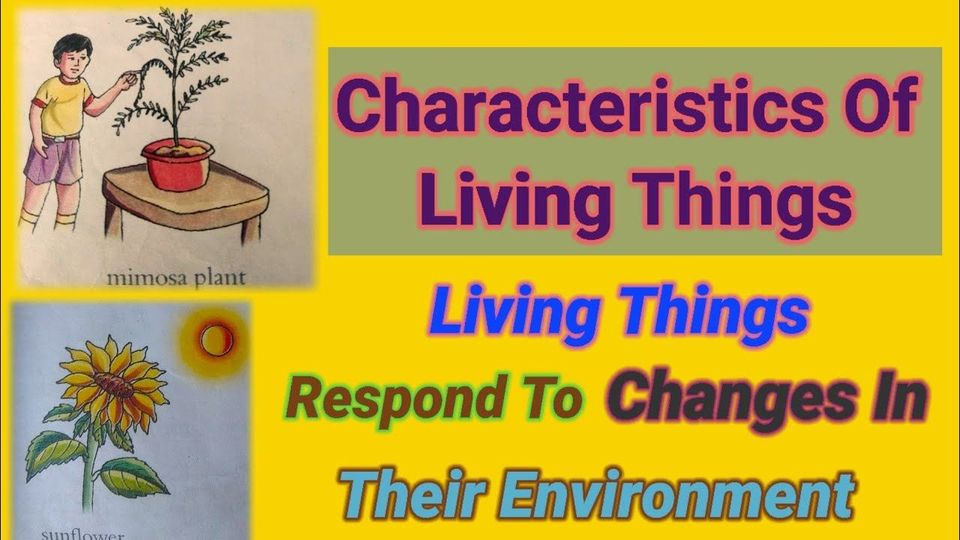
Different animals use their body parts in different ways to see, hear, grasp objects, protect themselves, move from place to place, and seek, find, and take in food, water, and air. In addition, animals have body parts that capture and convey different kinds of information from the environment, enabling them to respond to these inputs in ways that aid in survival. Plants, like animals, have different parts (roots, stems, leaves, flowers, fruits) that each serves specific functions in survival and growth, and plants also respond to external inputs. For each structure, the shape and stability of that structure are related to its function. That All living beings have problem-solving characteristics has a universal spiritual quality.





 We are all Interconnected even with the Universe