Archive | biology RSS feed for this section

The Garden of Eden in This Life

10 Sep

Today is the launch of my new book- The Garden of Eden in This Life. It is available in paperback, hardcover and kindle on Amazon. The following is the book description. With Metta, Rodger Ricketts.

What if the story of the Garden of Eden wasn’t just ancient myth, but a timeless guide to reclaiming our original wholeness? What if the “fall” from innocence was not the end, but an invitation to return—consciously—to a deeper unity with ourselves, each other, and the world?

In The Garden of Eden in This Life, Dr. Rodger R. Ricketts—a clinical psychologist, mindfulness teacher, and lifelong student of the Buddha’s teachings—unveils a profound perspective linking ancient wisdom, modern psychology, and the apophatic (negative) spiritual tradition. Drawing from over forty years of study and practice, he explores how non-dualistic teachings from Buddhism, science, and multiple faith traditions reveal the limits of language, the illusions of separation, and the path back to an integrated state of being.

You will journey through concepts like Sunyata (emptiness), the via negativa, and the psychology of transcendence—discovering how humanity’s separation from nature and spirit can be healed through direct experience, compassionate living, and expanded awareness.

This is more than a philosophical exploration—it’s a practical roadmap for living with clarity, joy, and interconnectedness. Through cross-cultural insights, reflective practices, and meditative approaches, Dr. Ricketts shows how embracing the ineffable mystery of life can dissolve division, foster ecological and social harmony, and restore our inner paradise.

Whether you are a seeker, a meditator, a student of comparative religion, or someone simply longing for a more meaningful existence, The Garden of Eden in This Life will inspire you to see beyond duality and step into a living experience of unity.

If you are ready to move beyond dogma, transcend the limits of language, and reawaken to the timeless ground of being—this book will guide you there.
Open these pages and begin your journey back to the Garden… in this life.

Four Incredibly Significant Communicators/operators within our amazing body functioning simultaneously……

27 Aug

Four Incredibly Significant Communicators/operators within our amazing body functioning simultaneously……

1.The vagus nerve is the longest cranial nerve and a primary component of the parasympathetic nervous system, controlling many involuntary functions, including heart rate, digestion, respiration, and mood. It also plays a crucial role in the gut-brain axis, facilitating communication between the brain and digestive tract. By stimulating the vagus nerve, one can support various aspects of physical and mental health, from reducing inflammation to improving mood.

2.Heart-Brain Communication that communication between the heart and brain actually is a dynamic, ongoing, two-way dialogue, with each organ continuously influencing the other’s function. Research has shown that the heart communicates to the brain in four major ways: neurologically (through the transmission of nerve impulses), biochemically (via hormones and neurotransmitters), biophysically (through pressure waves) and energetically (through electromagnetic field interactions). Communication along all these conduits significantly affects the brain’s activity. Moreover, research shows that messages the heart sends to the brain also can affect performance.

3.Spinal nerves are 31 pairs of mixed nerves that connect the spinal cord to the body, acting as a communication pathway between the central nervous system and the periphery. These nerves transmit sensory information from the body to the spinal cord and brain, and carry motor commands from the brain and spinal cord to muscles and other effector organs. They are also involved in autonomic functions through sympathetic and parasympathetic fibers.

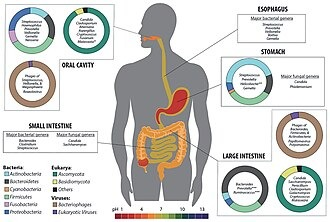
4.What is the gut microbiome?A biome is a distinct ecosystem characterized by its environment and its inhabitants. Your gut — inside your intestines — is in fact a miniature biome, populated by trillions of microscopic organisms. These microorganisms include over a thousand species of bacteria, as well as viruses, fungi and parasites.Gut microbes can affect your nervous system through the gut-brain axis — the network of nerves, neurons and neurotransmitters that runs through your GI tract. Certain bacteria actually produce or stimulate the production of neurotransmitters (like serotonin) that send chemical signals to your brain.Bacterial products may also affect your nervous system. Short-chain fatty acids appear to have positive effects, while bacterial toxins might damage nerves. Researchers continue to investigate how your gut microbiome might be involved in various neurological, behavioral, nerve pain and mood disorders.they contribute to human health and wellness in many ways.

Image

Each Higher Order

21 Aug
Image

Complexity of the Biotic

15 Aug

Our Human bodies are perfectly interconnected.

12 Jul

Our Human bodies are perfectly interconnected.

Our bodies are composed of many separate systems – or have been taught in school for generations. The theory that our respiratory system, digestive system, reproductive system, and others each work on their own is still the most popular narrative. Yet in truth, every organ and system in our bodies are interconnected. If you neglect one part, sooner or later the others will feel the effects.Each organ belongs to one of ten human body systems. These body systems are interconnected and dependent upon one another to function. Your heart does not beat unless your brain and nervous system tell it to do so. Your skeletal system relies on the nutrients it gains from your digestive system to build strong, healthy bones. Each body system works with the others

Our organs don’t work in solo, organs also function together in groups, The relationships between them mean our entire human body is interconnected. The interconnectivity between these organs means that when a person experiences disease in one of these areas, it increases the chances of one or all the other systems being affected. This can result in the worsening of the disease overall.

This also means that when improvements are made in one area through lifestyle changes and appropriate care, positive improvements are likely to be seen in other organs and systems.

By taking actions such as healthy eating, exercising more, meditation, medication, and not smoking, it is possible to reduce the risk of further damage and to prevent or delay organs from getting worse.

Scientists categorize groups of organs into different body systems, however, these systems do not work in isolation. A disorder in one system can cause other systems to break down. Although each organ has its specific functions called organ systems. Some examples of organ systems and their functions include the digestive system, the cardiovascular system, and the musculoskeletal system.

Organ systems often work together to do complicated tasks. For example, after a large meal is eaten, several organ systems work together to help the digestive system obtain more blood to perform its functions. The digestive system enlists the aid of the cardiovascular system and the nervous system. Blood vessels of the digestive system widen to transport more blood. Nerve impulses are sent to the brain, notifying it of the increased digestive activity. The digestive system even directly stimulates the heart through nerve impulses and chemicals released into the bloodstream. The heart responds by pumping more blood. The brain responds by perceiving less hunger, more fullness, and less interest in vigorous physical (musculoskeletal system) activity, which preserves more blood to be used by the digestive system instead of by skeletal muscles.

Communication between organs and organ systems is vital. Communication allows the body to adjust the function of each organ according to the needs of the whole body. In the example above, the heart needs to know when the digestive organs need more blood so that it can pump more. When the heart knows that the body is resting, it can pump less. The kidneys must know when the body has too much fluid so that they can produce more urine, and when the body is dehydrated so that they can conserve water.

Homeostasis is the term used to describe how the body maintains its normal composition and functions. Because organ systems communicate with each other, the body can maintain stable amounts of internal fluids and substances. Also, the organs neither underwork nor overwork, and each organ facilitates the functions of every other organ.

Sabrina Libretti; Yana Puckett.

Image

Dignity of Life

8 Apr
Image

The Life Force

7 Apr
Image

Life is indeterminate and Fragile…

17 Mar

Image

The Organism…

17 Mar
Image

When I die…

16 Mar