Four Incredibly Significant Communicators/operators within our amazing body functioning simultaneously……
27 AugFour Incredibly Significant Communicators/operators within our amazing body functioning simultaneously……
1.The vagus nerve is the longest cranial nerve and a primary component of the parasympathetic nervous system, controlling many involuntary functions, including heart rate, digestion, respiration, and mood. It also plays a crucial role in the gut-brain axis, facilitating communication between the brain and digestive tract. By stimulating the vagus nerve, one can support various aspects of physical and mental health, from reducing inflammation to improving mood.
2.Heart-Brain Communication that communication between the heart and brain actually is a dynamic, ongoing, two-way dialogue, with each organ continuously influencing the other’s function. Research has shown that the heart communicates to the brain in four major ways: neurologically (through the transmission of nerve impulses), biochemically (via hormones and neurotransmitters), biophysically (through pressure waves) and energetically (through electromagnetic field interactions). Communication along all these conduits significantly affects the brain’s activity. Moreover, research shows that messages the heart sends to the brain also can affect performance.
3.Spinal nerves are 31 pairs of mixed nerves that connect the spinal cord to the body, acting as a communication pathway between the central nervous system and the periphery. These nerves transmit sensory information from the body to the spinal cord and brain, and carry motor commands from the brain and spinal cord to muscles and other effector organs. They are also involved in autonomic functions through sympathetic and parasympathetic fibers.
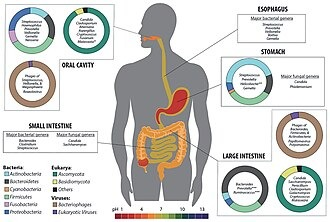
4.What is the gut microbiome?A biome is a distinct ecosystem characterized by its environment and its inhabitants. Your gut — inside your intestines — is in fact a miniature biome, populated by trillions of microscopic organisms. These microorganisms include over a thousand species of bacteria, as well as viruses, fungi and parasites.Gut microbes can affect your nervous system through the gut-brain axis — the network of nerves, neurons and neurotransmitters that runs through your GI tract. Certain bacteria actually produce or stimulate the production of neurotransmitters (like serotonin) that send chemical signals to your brain.Bacterial products may also affect your nervous system. Short-chain fatty acids appear to have positive effects, while bacterial toxins might damage nerves. Researchers continue to investigate how your gut microbiome might be involved in various neurological, behavioral, nerve pain and mood disorders.they contribute to human health and wellness in many ways.


Our Human bodies are perfectly interconnected.
12 JulOur Human bodies are perfectly interconnected.
Our bodies are composed of many separate systems – or have been taught in school for generations. The theory that our respiratory system, digestive system, reproductive system, and others each work on their own is still the most popular narrative. Yet in truth, every organ and system in our bodies are interconnected. If you neglect one part, sooner or later the others will feel the effects.Each organ belongs to one of ten human body systems. These body systems are interconnected and dependent upon one another to function. Your heart does not beat unless your brain and nervous system tell it to do so. Your skeletal system relies on the nutrients it gains from your digestive system to build strong, healthy bones. Each body system works with the others
Our organs don’t work in solo, organs also function together in groups, The relationships between them mean our entire human body is interconnected. The interconnectivity between these organs means that when a person experiences disease in one of these areas, it increases the chances of one or all the other systems being affected. This can result in the worsening of the disease overall.
This also means that when improvements are made in one area through lifestyle changes and appropriate care, positive improvements are likely to be seen in other organs and systems.
By taking actions such as healthy eating, exercising more, meditation, medication, and not smoking, it is possible to reduce the risk of further damage and to prevent or delay organs from getting worse.
Scientists categorize groups of organs into different body systems, however, these systems do not work in isolation. A disorder in one system can cause other systems to break down. Although each organ has its specific functions called organ systems. Some examples of organ systems and their functions include the digestive system, the cardiovascular system, and the musculoskeletal system.
Organ systems often work together to do complicated tasks. For example, after a large meal is eaten, several organ systems work together to help the digestive system obtain more blood to perform its functions. The digestive system enlists the aid of the cardiovascular system and the nervous system. Blood vessels of the digestive system widen to transport more blood. Nerve impulses are sent to the brain, notifying it of the increased digestive activity. The digestive system even directly stimulates the heart through nerve impulses and chemicals released into the bloodstream. The heart responds by pumping more blood. The brain responds by perceiving less hunger, more fullness, and less interest in vigorous physical (musculoskeletal system) activity, which preserves more blood to be used by the digestive system instead of by skeletal muscles.
Communication between organs and organ systems is vital. Communication allows the body to adjust the function of each organ according to the needs of the whole body. In the example above, the heart needs to know when the digestive organs need more blood so that it can pump more. When the heart knows that the body is resting, it can pump less. The kidneys must know when the body has too much fluid so that they can produce more urine, and when the body is dehydrated so that they can conserve water.
Homeostasis is the term used to describe how the body maintains its normal composition and functions. Because organ systems communicate with each other, the body can maintain stable amounts of internal fluids and substances. Also, the organs neither underwork nor overwork, and each organ facilitates the functions of every other organ.
Sabrina Libretti; Yana Puckett.
Astronomer says We Are All Made of Stardust
23 FebAll humans, plants, animals and the Earth itself are built from the ashes left behind after the death of stars. We are fashioned from the nuclear waste that remains after massive stellar explosions. You Are Made of Stardust
“Every atom we are made of has an origin that can be traced back to before the solar system was formed,” Prof Sir Martin Rees said to a full house at the Royal Irish Academy in Dublin. “We are literally the ashes of dead stars or the nuclear waste left behind.” “The thing we learn from astronomy is we shouldn’t think of a culmination,” he said. “The universe may have an infinite life ahead of it.”
Though the billions of people on Earth may come from different areas, we share a common heritage: we are all made of stardust! From the carbon in our DNA to the calcium in our bones, nearly all of the elements in our bodies were forged in the fiery hearts and death throes of stars. The building blocks for humans, and even our planet, wouldn’t exist if it weren’t for stars. If we could rewind the universe back almost to the very beginning, we would just see a sea of hydrogen, helium, and a tiny bit of lithium.
Prof Sir Martin Rees also suggested that, although very small compared to the rest of the universe, the Earth may be very important in cosmological terms as the place where sentient life originated before being dispersed to other planets.

The Age of the universe
23 FebThe Age of the universe is estimated at 26.7 billion years. According to the study’s author, Rajendra Gupta, a physics professor at the University of Ottawa, their newly-devised model indicates that the universe is 26.7 billion years old, older than the previous estimate of 13.7 billion years.
And yet, In a few billion years, our sun will become a red giant so large that it will engulf our planet. But the Earth will become uninhabitable much sooner than that. After about a billion years the sun will become hot enough to boil our oceans.
The sun is currently classified as a “main sequence” star. This means that it is in the most stable part of its life, converting the hydrogen present in its core into helium. For a star the size of ours, this phase lasts a little over 8 billion years. Our solar system is just over 4.5 billion years old, so the sun is slightly more than halfway through its stable lifetime.
And life on earth has of course a much briefer existence…It is standard for every organism to burn out. The lifespan of a living organism is considered the period between its birth and death. While a few die just under 24 hours, some can outlive many generations. The biological ageing of animals involves the decline of a diverse range of bodily functions. Lifespan is marked by several conditions – one of the most prominent ones being heredity. While the upper age limit of an animal can be affected by its environmental conditions, species cannot age beyond a specific age, even under the most permissible conditions.
For example,
- There are almost 8 billion (8*109) people with an average lifespan of 70 years.
- There are about 130 billion (130*109) mammals in the world, with average lifespans from ~5 days (rodents) to ~200 years (whales).
- There’s about 3 trillion (3*1012) trees in the world with lifespans from 50 years to several thousand years.
- There are an estimated 10 quintillion (10*1018) insects in the world, with most lifespans shorter than a year.
- There are an estimated five million trillion trillion (5*1030) bacteria in the world, with an average lifespan of less than a day.
We can look at these numbers based on their orders of magnitude alone, since the numbers are so large. Since there are overwhelmingly more bacteria on the planet than any other type of organism, the global lifespan average will get skewed towards the average lifespan of a bacteria, which is short.
So two things should be borne in mind. First, that all the cycles of creation since the beginning of time exhibit the same recurring pattern, so that it can make no difference whether you watch the identical spectacle for a hundred years, or for two hundred, or forever. Secondly, when the longest-and the shortest-lived of us come to die, their loss is precisely equal. For the sole thing of which any man can be deprived is the present; since this is all he owns, and nobody can lose what is not his. Marcus Aurelius

Body Functions & Life Process
5 FebBody Functions & Life Process and all of these processes are interrelated and affect each other.
All living organisms have certain characteristics that distinguish them from non-living forms. The basic processes of life include organization, metabolism, responsiveness, movements, and reproduction. In humans, who represent the most complex form of life, there are additional requirements such as growth, differentiation, respiration, digestion, and excretion. All of these processes are interrelated. No part of the body, from the smallest cell to a complete body system, works in isolation. All function together, in fine-tuned balance, for the well-being of the individual and to maintain life. Health depends on the body’s maintaining or restoring homeostasis, a state of relative constancy, of its internal environment. However, the ten life processes described above are not enough to ensure the survival of the individual. In addition to these processes, life also depends on certain physical factors from the environment. These include water, oxygen, nutrients, heat, energy, and pressure. Disease represents a disruption of the balance in these processes.
U. S. National Institutes of Health, National Cancer Institute.