Archive | equanimity RSS feed for this section

“Honorable Harvest”: Lessons From an Indigenous Tradition of Giving Thanks

18 Jul

The Honorable Harvest is a covenant of reciprocity between humans and the living world.

 The protocols offer inspiration for how we might walk gently on the Earth while at the same time satisfying human needs. It is a practice with great relevance for our time; it is both ancient and urgent. The guidelines for the Honorable Harvest were taught to me by generous teachers, while respectfully picking medicines or berries but it applies to every exchange between people and the earth, to everything we consume. · In taking from the Earth we are taught to never take the first… Never taking the first, means you’ll never take the last. · And then, we ask permission. If you’re going to take a life, you have to be personally accountable. I know, in some places if you talked to a plant they’d call you crazy. But in a worldview that regards them as people, we just call it respect. 7 · If you’re going to ask permission, you have to listen for the answer. · If you are granted permission, then take only what you need and no more. · The Honorable Harvest counsels also that we take in such a way that does the least harm as possible. · Use everything that you take…it is disrespectful of the life that is given to waste it. We have forgotten this-the easiest way to have what you need is to not waste what you have. · Be grateful. Gratitude is powerful, much more than a simple thank you. Gratitude reminds us that our very existence relies on the gifts of others. And gratitude is humbling. It reminds us that we are just one member of the democracy of species. It reminds us that the earth does not belong to us. · The next tenet of the Honorable Harvest is to share with others-human and non. The Earth has shared generously with us, so we model that behavior in return. · Reciprocate the gift …. In return for the gifts of the Earth, we are called to give our own in return. · And finally, to take only that which is given to us.

Flow and Mindfulness

3 Jun

FLOW AND MINDFULNESS

I recently rediscovered the concept of “flow” that Mihaly Csikszentmihalyi introduced as a psychological concept in 1990 with his book Flow: The Psychology of Optimal Experience. I was struck by its application within positive psychology. Positive psychology focuses on behaviors that foster a flourishing, meaningful, and worthwhile life, aiming to discover methods for personal enhancement. The flow state, also termed “optimal experience,” is characterized by a harmony between mind and body, resulting in complete engagement and enjoyment in the activity. Csikszentmihalyi described this experience as one where,

…the ego falls away. Time flies. Every action, movement, and thought follows inevitably from the previous one, like playing jazz. Your whole being is involved, and you’re using your skills to the utmost.

He identified key characteristics of flow, such as the merging of action and awareness, a loss of self-consciousness, and a distorted sense of time.

Interestingly, there are notable parallels between Csikszentmihalyi’s concept of flow and the Buddhist principle of mindfulness. I have been studying and teaching mindfulness for twenty years due to my interest in Buddhist teachings and their applications to mental health issues. Mindfulness, as defined by Kabat-Zinn (2012), involves wakefulness – a state of awareness in every waking moment – that enhances well-being, contentment, and absorption in the present moment, leading to a similar “losing track of time” as described in Csikszentmihalyi’s flow.  It is intriguing to realize that my explorations and teaching of mindfulness included the concept of flow without my fully recognizing their interconnectedness.

There are important similarities between the practices of flow and mindfulness, and this paper will focus on several of these parallels. With mindfulness, we are consciously at one with the action. In the context of mindfulness, wakefulness can best be described as a state of focused awareness in every waking moment (Kabat-Zinn, 2012). Wakefulness enhances our subjective well-being and heightens our contentment with our inner self and the world. Finally, we “lose track of time” as we remain absorbed in the ever-present moment.

An illustration of the application of flow in mindfulness is when we remain in the nonjudgmental “now” and discover the sense of wholeness. Concepts like “in the moment,” “in the present,” and “centered” are all attempts to describe the mindfulness experience. By applying mindfulness to our everyday work, interpersonal interactions, leisure, hobbies, dance, yoga, walking, eating, and other pursuits, we transform our lives into constantly innovative and creative experiences. When completing a task, the mindfulness/flow experience fosters an impromptu, connected, creative, cheerful, and pleasant sensation. We experience an open state, where the interior and exterior are completely interconnected. We lose “ourselves” to discover who we really are.

We can experience oneness in any circumstance throughout our lives. By cultivating the mental culture of mindfulness, we refine the discipline to transcend the experience of duality. We enter a state of openness – of absolute connectedness between the inside and the outside. We surrender our carping, judging thoughts to flow. Our way of thinking typically categorizes everything into strict, binary categories of good and bad, right and wrong, either/or. In my book The Buddha’s Teachings: Seeing Without Illusion, A Contemporary Cognitive Science Perspective (available on Amazon), I describe, in contemporary language, how the Buddha taught this nondualism. Even though the process of thinking is not only acceptable but vital, we tend to make the mistake of assuming that our ideas, classifications, and beliefs are the only true reality or benchmark. An old saying comes to mind: “The mind is a great servant but a terrible master.”

Through the practice of mindfulness and the experience of living in a state of flow, we come to understand that wisdom, compassion, and happiness are attained when we relinquish our subject/object illusion. Life transforms into a less stressful, more creative, and enjoyable experience, allowing us to live a positive existence characterized by respect and care for both ourselves and others. The interconnectedness of life – the intrinsic connection between all living and non-living entities – becomes increasingly apparent, as does the preciousness of life itself. Integrating the flow and mindfulness experiences into our lives can have many positive effects that are just waiting to make a difference for us.

Would it not be prudent for our educational institutions, businesses, and governments to incorporate teachings on flow and mindfulness into their curricula? Such an initiative could positively alter our worldview, culture, and our relationships with both ourselves and one another. I believe that the incorporation of flow and mindfulness into our daily lives could yield countless positive effects that are poised to create meaningful change.

Rodger R Ricketts, Psy.D.

Embracing Apophatic Philosophy: A Path Towards Personal and Societal Transformation

25 May

Your submission Embracing Apophatic Philosophy: A Path Towards Personal and Societal Transformation has been accepted

 Contemporary society increasingly has a fragmented view of the world, it sees its diversity but not the unity that underlies it. This fragmentation is at the root of tribal mentality, environmental degradation, polarization, and other problems. Apophatic philosophy provides a much-needed alternative to traditional cultural and religious materialistic viewpoints. Contrary to religions that assign known anthropomorphic characteristics to a power often referred to as “God”, apophaticism teaches that we cannot positively know or assert anything about the nature of “God”. At the heart of the discussion are the key characteristics and enormous benefits of ancient spiritual wisdom; an apophatic, non-dualist approach to life, as well as its links with Buddhist philosophy and economics. It is a wisdom that converges the findings of modern science, with the observations of eminent mystics and religious personages from across time and different backgrounds, as well as my own extensive experience in modern psychology and Buddhist practice. In this book, I establish how a non-dualist approach to life can preciously revolutionize our personal well-being as well as that of society and the relationship with the Earth. 

Embracing Apophatic Philosophy: A Path Towards Beneficial Personal and Societal Transformation

Prevailing materialist assumptions have taught us that we, as individuals, are fundamentally a skin-encapsulated ego or “I” relating to a world with a sense of isolation and disconnection. Societal constructs influenced by such assumptions foster alienation and detachment, perpetuating egocentrism and neglecting the congruity and interdependence of human beings with each other and their environment. To modify resulting harmful economic systems, it is necessary to understand that economic reality is not an autonomous sub-system but a highly interdependent system of value creation. Drawing on the teachings of the Buddha, Martin Buber and others, as well as scientific research, we propose a paradigm shift towards a non-dualistic, biocentric perspective. Martin Buber formulated a model where the depersonalized, autonomous, isolated, and psychologically separated “I-It” stands in contrast to the “I-Thou” relationship. The “I-Thou” perspective promotes a non-dualistic transcendental idealism and teaches that we are interdependent, interbeing, and continually transacting with the environment and other sentient beings. Biocentric ethics, like the “I-Thou” concept, calls for a radical readjustment of the relationship between humans, nature, and all existence. Also, the entrenched individualism of prevailing societal and economic paradigms neglects the intrinsic interconnectedness of all natural entities, hindering sustainable development. Through the framework of non-dualism, biocentrism, and Buddhist economics, we discover why and how we must shift from the present predominant dogma to an alternative social and economic strategy with a view to promoting subjective well-being and societal happiness, creating comprehensive pathways to achieve harmony, eliminate economic deprivation, enable human dignity, and respect Earth’s ecosystems.

 Embracing Apophatic Philosophy: A Path Towards Personal and Societal Transformation

In a contemporary society increasingly dominated by radicalized viewpoints, self-interest, tribal mentality and alienation, apophatic philosophy provides a much-needed alternative to traditional cultural and religious viewpoints. Contrary to religions that assign known and defined characteristics to a power often referred to as “God”, thus presupposing that they can comprehend this entity, apophaticism teaches that we cannot positively know or assert anything about the nature of “God”. At the heart of the discussion are the key characteristics and enormous benefits of an apophatic approach to life, as well as its links with Buddhist philosophy and economics. Backed by scientific research, the observations of eminent mystics and religious personages from across time and different backgrounds, as well as my own extensive experience in traditional psychology and Buddhist practice, I demonstrate how an apophatic approach to life can revolutionize our personal well-being as well as that of society and Earth as a whole. 

Also Throughout the Buddha’s teachings, transformation leading to transcendental enlightenment is an intentional psychological attainment. Enlightenment or awakening is created through the process of planned psychological/emotional change, consistently practiced by motivated learners, moving on from an uninformed way of living (acting, thinking, feeling) to one according to universal principles. This book highlights those insights and the beneficial results.
In the following chapters, the reader will notice that I have emphasized not only the Buddha’s teachings but a wide range of cross-cultural non-dualistic descriptions. I have found that these universal, ancient, as well as modern teachings provide an in-depth analysis of transpersonal training and perspective. While not encyclopedic, the chapters about the non-dualistic writings are not only for intellectual curiosity. They are also a living testament of truths with vital positive consequences for the wellness and well-being of the individual, for society, and for the whole of Gaia. When understood and incorporated into one’s life, this is transformed in a transpersonal way. One frequent consideration necessary when writing this book was what noun should be used when referring to the transcendent and immanent quality that is often referred to as God, Deity, the Divine, Being, etc. In the end, I used the word Transcendent as often as possible as the most neutral yet appropriate noun for this topic.
To conclude, my intent in this book is the analysis and integration of numerous non-dualistic teachings such as the Buddha’s teaching and modern scientific insights. I will explore these perspectives about the mysterious nature of the Transcendent or No-Thing and its relationship with our existence through ancient schools of thought. Also included in this book are varied meditation/prayer practices or structured activities that can lead to personal experiences that provide humanity with what is necessary for living embodied, integrated, and spiritual lives. Even in this age of dualistic and hyper-rational science and technology, non-dualism, which has stood the test of time, is an illuminating explanation of the totality of human experience
.

REVIEW

“Non-Duality: What the World Needs Now” by Rodger R Ricketts is essential reading for anyone concerned about the welfare of humanity and Earth as a whole. It is also an important text for anyone interested in religion, spirituality and Buddhism. In this well-researched book, Ricketts makes a powerful case for an apophatic approach to “God” – in other words, the knowledge that we cannot know anything definite about God as this is beyond human language and comprehension. Ricketts argues convincingly that Buddhism is an apophatic path. He also provides evidence from modern psychology and neuroscience supporting apophatic views of the universe. Finally, and perhaps most importantly, Ricketts points out that it is only through a return to apophaticism and Buddhist economics that we can create a sustainable life for all. This impactful and convincing book should be required reading for all!

Image

Humans are a small part of existence

22 May
Image

A Cosmic Ecology

26 Mar
Image

Affirmation of Life

15 Mar
Image

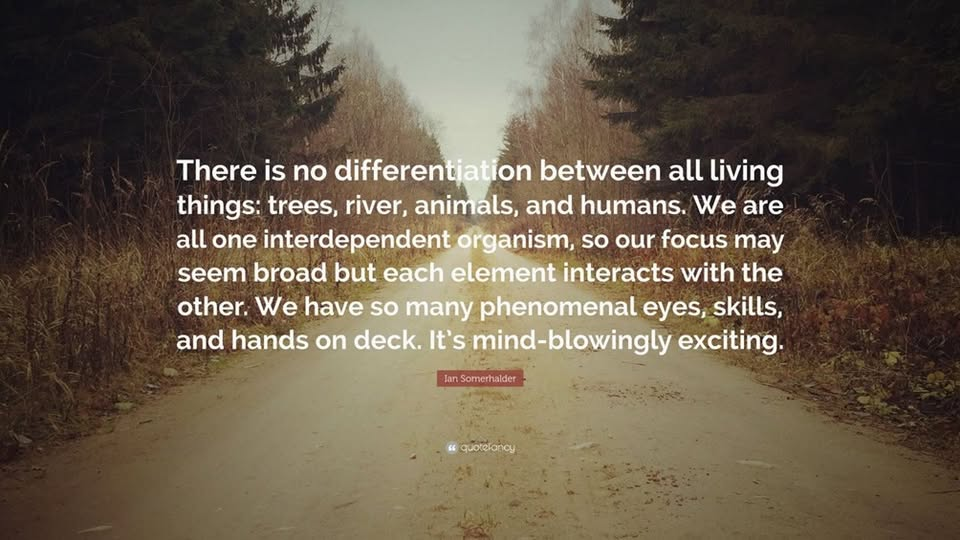
All Living Things: One Interdependent Organism

23 Feb
Image

Forms Change but Essence Remains…

6 Feb
Image

The Grace that lives within All

25 Jan
Image

Children of the Universe

25 Jan