According to NASA, ‘Is there life beyond Earth? So far, the silence is deafening.’ And yet!!!!!!!! How easily some dismiss the preciousness of Life by destroying and harming it continuously with such greed and fervor. Instead, as Nobel Prize recipient A. Schweitzer said…’ Ethics is nothing other than Reverence for Life. Reverence for Life affords me my fundamental principle of morality, namely, that good consists in maintaining, assisting and enhancing life, and to destroy, to harm or to hinder life is evil.’
My new book is about the human species adopting an ancient, truer, sound economic, and more empathic perspective, as the present one continues to be a major disaster and will continue so into the future. For example, let’s look at war. Arguably the most evil and catastrophic human activity ever.
According to a New York Times article: What is a war?
War is defined as an active conflict that has claimed more than 1,000 lives.
Has the world ever been at peace?
Of the past 3,400 years, humans have been entirely at peace for 268 of them or just 8 percent of recorded history.
How many people have died in war?
At least 108 million people were killed in wars in the twentieth century. Estimates for the total number killed in wars throughout all of human history range from 150 million to 1 billion. War has several other effects on the population, including famine, environmental desolation, the killing of plants, and animals, etc. decreasing the birth rate by taking men away from their wives. The reduced birth rate during World War II is estimated to have caused a population deficit of more than 20 million people. Let’s repeat this again, Of the past 3,400 years, humans have been entirely at peace for 268 of them, or just 8 percent of recorded history. We need a new common perspective Badly!!!
Human bodies recognize at the molecular level that not all happiness is created equal, responding in ways that can help or hinder physical health, according to new research led by Barbara L. Fredrickson.
“Philosophers have long distinguished two basic forms of well-being: a ‘hedonic’ form representing an individual’s sense pleasurable experiences, and a deeper ‘eudaimonic,’ form that results from striving toward meaning and a noble purpose beyond simple self-gratification,” wrote Fredrickson and her colleagues. Both give us a sense of happiness, but each is experienced very differently in the body’s cells.
Eudaimonic well-being was associated with a significant decrease in the stress-related CTRA gene expression profile. In contrast, hedonic well-being was associated with a significant increase in the CTRA profile. Their genomics-based analyses, the authors reported, reveal the hidden costs of purely hedonic well-being.”At the cellular level, our bodies appear to respond better to a different kind of well-being, one based on a sense of connectedness and purpose.”
Also, ‘Kindfulness’ impacts brain circuits, boosting empathy, compassion, and joy. It also increases vagal tone, which is known to counter stress, reduce inflammation, and even play a protective role in cancer progression.
So kindness is much more than the things that we say or do. These are its social aspects. Kindness is the intention of how we use our minds, in what and who we focus upon. The feelings induced go inward, affecting our mental and physical health.
These findings and others suggest that kindness increases mood, physical health and generosity.
Unwholesomeness, (akuśala) is mentally toxic, morally harmful, and produces distressing actions; is created by the erroneous view of the Self. Unwholesome consciousness (akusalacitta) is consciousness accompanied by one or more of three unwholesome roots—greed, hatred, and delusion. Greed has the characteristic of always desiring more and the dissatisfaction of never having enough; Hatred has the characteristic of revulsion, contempt, anger, and disgust; and Delusion has the characteristic of an unyielding abnormal belief. The resulting five principal kleshas, or poisons to these are attachment, aversion, ignorance, pride, and jealousy. These unwholesome processes not only describe what we perceive but also determine our responses.
People continuously generate an interior narrative about their identity, their ‘self’, to which they are deeply attached. The construction and defense of this self-image is an ongoing activity of the basic drive the Buddha named “thirst” (tṛṣṇā). With the accompanying distortions, egoistic yearning and defilements are created. The delusion manifested is of the self-image as a stable, objectively valid reality, rather than as a temporary, conditioned mental construction. Once this belief is established and maintained, there is no need for any further justification to establish the intrinsically toxic nature of the unwholesomeness or (akuśala). They are mental qualities that are an illusion (false belief) to have.
They are called defilements since they are, by their nature, to-be-abandoned to end the toxicity they create. They are aggressive and defensive projections of the imagined needs of the constructed self: They are egotistical cravings (“want, desire”), self-protecting fears (“aversion, repulsion”), and avoidance of unpleasant realities that appear to threaten the integrity of the self-image (“delusion”).
In fact, once the delusion of the Self is realized, the orientation of the person is the opposite. What was once formulated negatively, the three wholesome roots now signify positive traits: Non-greed — unselfishness, liberality, generosity; thoughts and actions of caring and sharing; renunciation, dispassion. Non-hatred — loving-kindness, compassion, sympathy, friendliness, forgiveness, forbearance, impartiality, equanimity. Non-delusion — wisdom, insight, knowledge, understanding, intelligence, sagacity, discrimination.



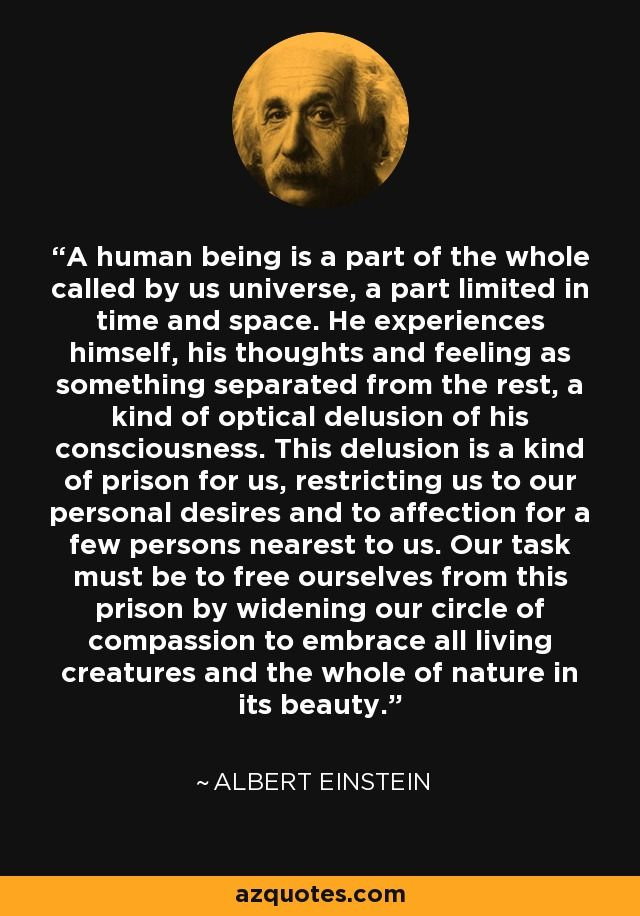
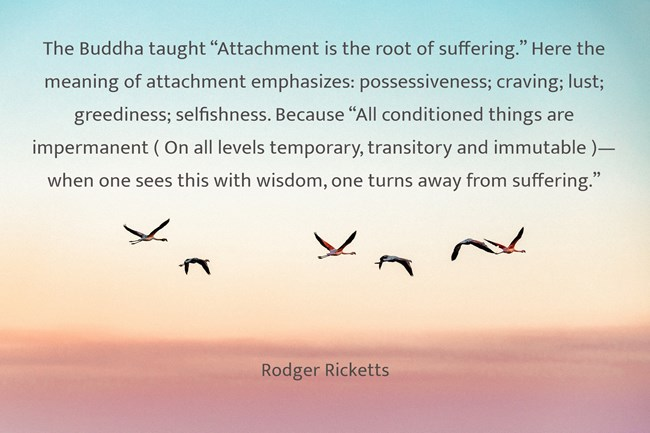




 We are all Interconnected even with the Universe