Archive | Psychology RSS feed for this section

Irreducible

8 Jan

Union Is in the Heart

Follow the advice of your heart, because no one will be more faithful to you than him. —Book of Sirach, 37.13

 I think that the positive forces that will create our future will not be the forces and the laws of matter, but those of conscious cooperation, comprehension, and love for others that all beings in existence must sooner or later manifest because these values are the essence of our deepest nature.

I also think that the most effective way to achieve union is through a process of collective and cooperative creation of a just, empathic, and loving society through right and courageous actions informed by the heart and by the intuitive and rational mind. Then our experience and knowing will grow in our hearts and they will guide our individual actions through an ever-higher level of consciousness.

Unfortunately, today there is the real danger of letting ourselves be seduced by the spreading culture of digital ontology and digital consumerism that replaces true and profound relationships with virtual and superficial ones, thus halting, if not reversing, our spiritual development.

Social networks designed to bombard people with suggestive messages, often personalized to reinforce personal biases or based on false information or on presumed conspiratorial theories, generate groups that can become alienated from reality in self-isolating worlds. Nikola Tesla said that “progress must serve to improve the human race; if not, it is only a perversion.”

Technology must be used to help us discover our true nature, not to further imprison us in meaningless virtual worlds designed to enrich the richest. We have come to the point where we can truly unite as humans no matter where we were born, or stay divided in warring factions with ever increasing destructive technology on our side. Only when we truly comprehend that we are responsible for our experiences and that the choice is ours alone, can we begin to truly know ourselves and the world.

To know ourselves more and more, we need a new empathic science that can convert scientific knowledge into deep lived knowing and from it generate new scientific knowledge. Similarly, we need a new rational spirituality that can convert lived knowing into new scientific knowledge and from it generate new lived knowing. These two disciplines can then intertwine in endless and mutual crescendo.

This is the essence of the Creative Principle of One. Within this vision, empathic science and rational spirituality, integrating and interweaving, will evermore increase our loving, joyful, and fulfilling union with the Whole.

Federico Faggin
The cosmic roots of human nature and our culturally conditioned self‑image

8 Jan

Conclusions: regaining our healthy, complete and harmonious self
Part of human nature is given by Nature; another part comes from society. The
ground of our personality is given by Nature, the construction built upon it is given
by culture. The basic directivity of human nature is towards uplifting life in the
comprehensive and profound context of the Living Universe. Our genuine human
abilities can develop and flourish only in a society establishing their favourable conditions. Our full human potential can be nurtured only in a culture which is in harmony to the cosmic roots of our ontological Self.
In order to live fully with the cosmic roots of our Selves and live the life we are
born into, we need to mobilize all our energies and abilities at all times. Recognising
the cosmic roots of our Self, and appreciating the comprehensive, ontologically
complete and healthy worldview it is possible to win over alienation and regain our
healthy, complete and harmonious Self. We can regain our genuine human nature
implanted into us by the Living Universe.

Attila Grandpierre

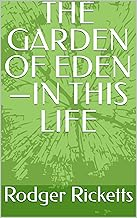
The Garden of Eden in This Life

10 Sep

Today is the launch of my new book- The Garden of Eden in This Life. It is available in paperback, hardcover and kindle on Amazon. The following is the book description. With Metta, Rodger Ricketts.

What if the story of the Garden of Eden wasn’t just ancient myth, but a timeless guide to reclaiming our original wholeness? What if the “fall” from innocence was not the end, but an invitation to return—consciously—to a deeper unity with ourselves, each other, and the world?

In The Garden of Eden in This Life, Dr. Rodger R. Ricketts—a clinical psychologist, mindfulness teacher, and lifelong student of the Buddha’s teachings—unveils a profound perspective linking ancient wisdom, modern psychology, and the apophatic (negative) spiritual tradition. Drawing from over forty years of study and practice, he explores how non-dualistic teachings from Buddhism, science, and multiple faith traditions reveal the limits of language, the illusions of separation, and the path back to an integrated state of being.

You will journey through concepts like Sunyata (emptiness), the via negativa, and the psychology of transcendence—discovering how humanity’s separation from nature and spirit can be healed through direct experience, compassionate living, and expanded awareness.

This is more than a philosophical exploration—it’s a practical roadmap for living with clarity, joy, and interconnectedness. Through cross-cultural insights, reflective practices, and meditative approaches, Dr. Ricketts shows how embracing the ineffable mystery of life can dissolve division, foster ecological and social harmony, and restore our inner paradise.

Whether you are a seeker, a meditator, a student of comparative religion, or someone simply longing for a more meaningful existence, The Garden of Eden in This Life will inspire you to see beyond duality and step into a living experience of unity.

If you are ready to move beyond dogma, transcend the limits of language, and reawaken to the timeless ground of being—this book will guide you there.
Open these pages and begin your journey back to the Garden… in this life.

Image

Love, Kindness and Compassion

17 Mar
Image

EGO…

15 Mar

Everything humans see is a simplification.

24 Feb

Everything humans see is a simplification.

A human sees the world in 3 dimensions. That is a simplification. Humans are fundamentally limited, generalizing creatures living on autopilot. Categorization is the brain’s tool to organize nearly everything we encounter in our daily lives. Grouping information into categories simplifies our complex world and helps us to react quickly and effectively to new experiences. Categorization and classification allow humans to organize things, objects, and ideas that exist around them and simplify their understanding of the world. Categorization is like your brain’s very own personal assistant, grouping similar things together so you can find what you need, when you need it.

Our brain categorizes continuously: not only chairs during childhood, but any information at any given age. What advantage does that give us? Pieter Goltstein says: “Our brain is trying to find a way to simplify and organize our world. Without categorization, we would not be able to interact with our environment as efficiently as we do.” In other words: We would have to learn for every new chair we encounter that we can sit on it. Categorizing sensory input is therefore essential for us, but the underlying processes in the brain are largely unknown.

Social categorization is a fundamental human cognitive process because it allows for the quick simplification of complex social information. Scientists at the Max Planck Institute of Neurobiology have now shown that also mice categorize surprisingly well. The researchers identified neurons encoding learned categories and thereby demonstrated how abstract information is represented at the neuronal level.

While categorization is a natural and necessary mechanism to cope with the complexity of our world, it perilously inhibits our ability to address the most pressing and tangible problems of our time. The psychological force at play here is a need to categorize — to fit things into neatly defined, clearly labeled boxes. In times of increasing complexity, such categorization can be extremely useful, creating order in a world that is fundamentally messy and establishing structures so that we can better organize, analyze, and manage it. Yet also, extremely limiting in understanding the natural deeper complexity of life.

Image

The War to End All Wars

9 Aug
Image

Psychological Becomes Transcendent

28 Jul
Image

Apophatic Wisdom

24 Jul
Image

The Inner Evolution of Humankind- the psychological development and fulfillment of the individual in this life.

15 Jul