In Chapter 13 Social Consequences of the Dualist/Non-Dualist Perspective – The God is No-Thing An Apophatic Assertion: An Introduction for Humankind’s Transpersonal Actualization– revised Modern Society- Economics: An Overview. Copyright Rodger Ricketts Psy.D.,2023. All rights reserved. Protected by international copyright conventions. No part of this chapter may be reproduced in any manner whatsoever, or stored in a retrieval system or transmitted, without express permission of the Author publisher, except in the case of brief quotations with due acknowledgment.
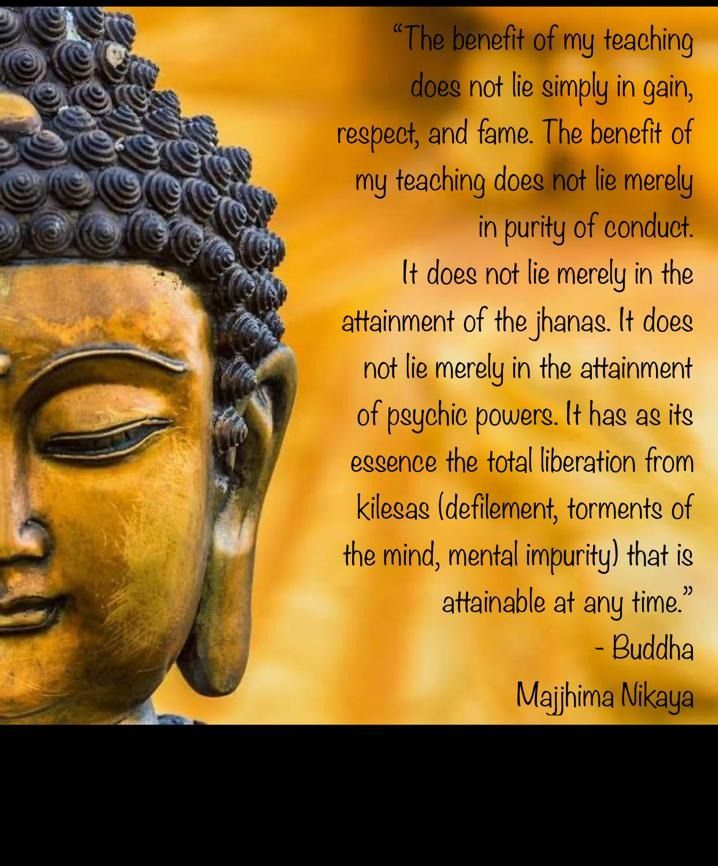
Modern Society Economics The prevailing economic paradigm misapprehends reality because it is entrenched in an inherently individualistic dualistic worldview, which overlooks the ultimate interdependence of all natural entities (Magnuson 2022, pp.77-80). For instance, the emphasis on material production and consumption as an end in itself, is not sustainable. This materialistic ideology creates not only human suffering but also an inevitable degradation of Earth’s ecosystems, exemplified by the present ecological crisis. To modify these harmful economic systems, it is necessary to understand that economic reality is not an autonomous sub-system of social action, but a highly interdependent system of value creation. The necessary paradigm shift for our economic models requires a process of restructuring economic institutions and policy frameworks with the adoption of the wisdom that aligns them with sustainable and moderate economic outcomes. Such a synergistic perspective will create a broader economic paradigm that empowers humans to thrive and will allow all life forms to flourish. The paradigm advocated here to allow this is Transcendental/Buddhist economics. Transcendental/Buddhist economics, as proposed by Professor Clair Brown (2015), is based upon a set of assumptions: interdependency between economic agents as well as between people and earth; awareness of the need for enlightened self-interest originating in human interconnectedness and altruistic motivation; genuine concern for the wellbeing of all stakeholders; and caring sustainable attitudes toward the environment. With these assumptions, Buddhist economics can acquire prosperity, sustainability, and contentment for all participants. Buddhist/transcendent economics is based on the knowledge of non-duality and the codependent interconnectedness or interbeing of everything. Therefore, transcendental, and systems, ecological economists share the insight that economics must embody normative values that prioritize the common good over solely self-interested aspirations (Farley & Kish, 2021). There is a standard of responsibly promoting the well-being of society and the environment rather than maximizing specific company/shareholder profits. In so doing, it offers constructive suggestions on how to secure a socially just and sustainable transition. Transcendental economics emphasizes humanity’s intrinsic motivation towards empathic and compassionate acts and that this process is manifest in sustainable systems. As we have already seen in previous chapters, the various apophatic spiritual traditions share similar sentiments on sustainability by acknowledging the intrinsic and spiritual quality of existence. These similar insights harmonize spiritual and material aspects of progress. Apophatic psychology and Buddhist economics emphasize that the gratification of selfish desires is both ultimately unsatisfying and detrimental to global prosperity. E.C.H. Ng (2020, p. 190) posits, ‘A sustainable transformation to Buddhist Economics is possible by transforming our understanding of the notion of ‘I’ through a six ‘I’s strategy: from individual to integral; from independence to interdependence; from ignorance to insight’. Buddhism stresses the interconnectedness of things, of which economics is only one dimension. Rather than based on capital accumulation, happiness is related to the wholeness of life and the quest for meaningful work. This approach reflects a holistic socioecological comprehension of the human condition, stimulating a deep transformation of social structures. The emphasis is away from egocentrism and greed and enables individuals to attain insight and wisdom culminating in a state of lovingkindness and compassion. This is pivotal to shaping attitudes informed by the awareness of an interaction between human well-being and environmental protection (Cooper & James, 2005; Keown, 2007; Terrone, 2014). This intrinsic motivation for sustainability is imbued by interdependent personhood and an inherent concern for the well-being of nature and future beings (Becker & Hamblin, 2021). Economics is understood as a cognitive field that embodies fundamental social, moral, and environmental values in a way that produces economic agents that are more responsible and holistically accountable for their choices. In Buddhist transpersonal ethics, win-win, relational interactions prevail over their instrumental, zero-sum game counterparts typical of highly globalized economies (Ng 2020). According to Zsolnai (2007), Buddhist economics comprises an alternative strategy applied to an economic setting with a view of promoting comprehensive subjective well-being and societal happiness. In this respect, identifying the common threads of Buddhist economics and other apophatic discourses will substantially expand our modern perspective on sustainable management practices. Buddhist economics evolves pathways to achieve harmony, eliminate economic deprivation, enable human dignity, and protect Earth’s ecosystems (Brown 2022a, p.67). Transcendental economics shows how our way of life can be meaningful and worthy especially when we transform our lifestyle to have empathy for all people and the planet. Using our knowledge, experience, and talents, and within our cultural community, each person becomes involved with creating new ways of living on our planet that are sustainable over time. The Buddha taught that the ignorance that creates suffering stems from people’s mental states, and that feelings of discontent and alienation accompany never-ending cravings. As Buddhist monk Thich Nhat Hanh wrote, ‘Happiness does not come from consumption of things.’ Although we are often told that national happiness increases as the average per capita income increases, this is not generally observed in developed countries. This is known as the Easterlin Paradox – over the long run, as average per capita income grows, average national happiness tends to remain the same once basic needs are met (Easterlin et al. 2010). Instead, psychological studies have found that being kind to oneself and others makes people happier (Otake et al. 2006). Once people experience genuine moments of compassion, there is a positive feedback loop: with an intention of again doing a kind deed, one becomes happier, which makes it more likely to do another kind act. The positive psychology of kindness makes a person happier and healthier, and much more likely to repeat more acts of kindness (Dixon 2011). Transcendental economics distinguishes between outer (material) wealth and inner (spiritual) wealth. While it does not object to material wealth, it teaches that craving or attachment to material possessions or wealth creates discontent and suffering. Researchers speculate that a clear link between minimalism and psychological well-being has to do with the fact that minimalists are better able to control their desires to consume. Minimalism also encourages people to focus on inner psychological needs — such as autonomy, competence, contentment, and relatedness which have been shown to promote psychological growth. Researcher Aimee Chabot explains, ‘But as their practice evolves, their motivations for pursuing minimalism often expand to include more outwardly focused sources of motivation, such as environmental or ethical concerns’. Also, academic Teresa Belton argues that the factors driving human well-being leave a very small environmental footprint. She states, ‘What generates and sustains well-being are all sorts of what I call ‘non-material assets. Good relationships, contact with the natural world. Being creative, having a sense of belonging and community and purpose and meaning, being actively engaged in life and things like that, don’t involve any material consumption or very little.’
However, modern advertising usually focuses upon the importance of the product even though it is not actually needed; and claims that personal importance or status increases with the product, resulting in cravings for and purchase of the product. Advertising always depicts whatever is being sold in a positive light, creating misrepresentations and unrealistic expectations, all for the benefit of the seller. Overall, social media also promotes and encourages overconsumption and using money and material objects to feel good. Also, frequent repetition of verbal adverts makes a person likely to memorize the desired dialogues and lyrics. This results in people tending to believe the advert and want whatever is being sold. All this behavioral reinforcement creates a constant craving and discontent, leading to the purchase of products that have also depleted resources of the Earth’s limited supply base. Research led by Joshua Hook of the University of North Texas supports the adage that ‘money can’t buy happiness,’ The researchers state that, ‘Overall, the vast majority of studies found a positive relationship between voluntary simplicity and well-being‘. Their research has found that as an alternative to the high-consumption lifestyle often found in Western cultures, voluntary simplicity (minimalism) involves a lifestyle that is focused on reducing consumption and excess in one’s life so that individuals can focus on prioritizing their values. ‘I think this research counteracts the general tendency in our society to go after more,’ says Hook. ‘It’s one of the biggest lies we can buy into that we just need more money, more material possessions, and more [blank] to be happy.’ This finding was consistent across both quantitative and qualitative research designs. Researcher Aimee Chabot states, ‘Typically, people adopt minimalism in the interest of their own psychological wellbeing — to reduce stress and cultivate mental clarity.’ In Buddhism/transcendental psychology, inner wealth is intrinsic and includes our capacity to appreciate experiences and relationships as life unfolds around us. Inner wealth includes our mindful use of resources to thrive in life and to help others, and true inner wealth—love, compassion, and wisdom—is always available and inexhaustible. The cultivation of inner wealth in apophatic spirituality is part of one’s daily practice of happiness and kindness on the path to Awakening. From this perspective, a well-functioning economy supports people’s development of their full potential, including their spiritual life and their contribution to the community. In realizing one’s interconnection with all life, one gladly gives up the egocentric incessant demands and instead reaches out to others with compassion and focus of gratitude. In realizing one’s interconnection with all life, one does no purposeful harm to others or to the environment, knowing that any harm done subtracts from economic performance. Living interdependently with nature, one enjoys and cares for nature, and realizes the beauty in life. Buddhist economics suggests that we should directly evaluate and compare the well-being of people through their quality of life. In this approach, people require the basic goods and services considered essential by their communities, and their quality of life is based upon their capabilities to achieve meaningful and thriving lives, including nurturing the knowledge of the imminence of all life. In Buddhist economics, income is only one element in measuring a person’s quality of life, and economic performance does not depend only on how fast average national income is growing. Buddhist economics evaluates economic performance holistically by measuring how well people live (prosperity), how fairly resources are distributed (justice), and how well the ecosystems are functioning (sustainability). People’s quality of life includes their health, education and livelihood, their ability to buy basic goods and services, their relationships with family and friends, and the availability of public services, including childcare, transportation, and safety along with coherent political participation. An adequate income is a necessary part of the equation, but it does not guarantee well-being and happiness, as demonstrated by the Easterlin paradox. Buddha’s teachings explain how to end our suffering by becoming Awakened to non-dualistic truth and that ignorance and greed and ego-centric illusions result in suffering and alienated lives. Buddhist economics suggests that we should directly evaluate and compare the well-being of people through their quality of life, which follows the capabilities approach of Amartya Sen (1999). In this approach, people require the basic goods and services considered essential by their communities, and their quality of life is based upon their capabilities to achieve meaningful lives, including nurturing the human spirit. Insights of transcendental or non-dualistic based economics present a radical challenge to today’s globalized economy which is based on dualistic economic principles. Economics and society must understand, comprehend, and do things differently to create meaningful lives in a sustainable world. Contemporary materialistic and individualistic economies based on increasing average per capita income should be transformed into more holistic and enlightened economies focused on providing shared prosperity and reduced anguish in a sustainable world. Business has a role to play in creating jobs with living wages and hours, enabling people to live a balanced life with meaningful experiences. Businesses must also respect ecological planetary boundaries and produce green products and services that people need to live sustainably and comfortably. Individuals play a crucial role in creating an awakened economy by changing their lifestyles to become sustainable, less wasteful, and simpler, including not driving gas-powered vehicles, eating less meat, and stopping food waste. They must live and work in more efficient buildings that use little heat and electricity. In such a society, people would focus more on caring for each other and caring for nature, and, thus, people would become happier as they realize their true interconnected and compassionate nature. Worldwide countries already measure economic performance with a holistic metric that evaluates quality of life, allowing political leaders and others to know if the economy is on the right path, and how the quality of life might be improved. We have the technology and the policies to restructure our economies to share prosperity and be sustainable, yet moving forward to a transcendental style economy requires a strong commitment by people and their countries. As R Buckminster Fuller, (1981), said, ‘Neither the great political or financial powers of the world nor the population in general realize that the engineering-chemical-electronic revolution now makes it possible to produce many more technical devices with ever less material. We can now take care of everybody at a higher standard of living than anybody has ever known. It does not have to be “you or me,” so selfishness is unnecessary, and war is obsolete. This has never been done before. Only twelve years ago technology reached the point where this could be done. Since then, it has made it ever so much easier to do.’ The careful application of transcendental/Buddhist economics can facilitate a life of sustainability, peace, interbeing, empathy and compassion. Sen, Amartya (1999) Development as Freedom. New York: Alfred A. Knopf Brown, C. (2022a). “Buddhist Economics: Creating a Sustainable and Compassionate Economy.” In: R.D. Sherma and P. Bilimoria (eds.), Religion and Sustainability: Interreligious Resources, Interdisciplinary Responses (pp.61-68). Springer. 61-68. Chabot, Aimee (2020). The Pursuit of Health, Wealth, and Well-being Through Minimalist Consumption. Dissertation, Duke University. Joshua N. Hook, Adam S. Hodge, Hansong Zhang, Daryl R. Van Tongeren & Don E. Davis (2023). “Minimalism, Voluntary Simplicity, and Well-Being: A Systematic Review of the Empirical Literature.” The Journal of Positive Psychology 18:1, 130-41. Schedneck, B. (2019). “An Entangled Relationship: A Lived Religion Approach to Theravāda Buddhism and Economics.” Journal of Global Buddhism 20, 31-48. Schumacher, E.F. (1973). Small is Beautiful: Economics as if People Mattered. Harper & Raw
As we have explored meditation instructions and doctrinal perspectives as taught by the many apophatic spiritual teachers over time and across different cultures, we now know that we can attain awakening and know No-Thing. We can give up our suffering and the harmful consequences of dualistic alienation for a life of well-being, contentment, wisdom, and compassion. We now know that via negativa is, in fact, a positive path of spirituality and of experiencing the Transcendent that results in a firm understanding of the interconnectedness, interbeing, and continual transformation of all existence. Let us all assert the apophatic way and accomplish knowing the “unknowable”—the No-Thing. God is No-Thing An Apophatic Assertion: An Introduction for Humankind’s Transpersonal Actualization– revised -. Copyright Rodger Ricketts Psy.D.,2023