The Age of the universe is estimated at 26.7 billion years. According to the study’s author, Rajendra Gupta, a physics professor at the University of Ottawa, their newly-devised model indicates that the universe is 26.7 billion years old, older than the previous estimate of 13.7 billion years.
And yet,In a few billion years, our sun will become a red giant so large that it will engulf our planet. But the Earth will become uninhabitable much sooner than that. After about a billion years the sun will become hot enough to boil our oceans.
The sun is currently classified as a “main sequence” star. This means that it is in the most stable part of its life, converting the hydrogen present in its core into helium. For a star the size of ours, this phase lasts a little over 8 billion years. Our solar system is just over 4.5 billion years old, so the sun is slightly more than halfway through its stable lifetime.
And life on earth has of course a much briefer existence…It is standard for every organism to burn out. The lifespan of a living organism is considered the period between its birth and death. While a few die just under 24 hours, some can outlive many generations. The biological ageing of animals involves the decline of a diverse range of bodily functions. Lifespan is marked by several conditions – one of the most prominent ones being heredity. While the upper age limit of an animal can be affected by its environmental conditions, species cannot age beyond a specific age, even under the most permissible conditions.
For example,
There are almost 8 billion (8*109) people with an average lifespan of 70 years.
There are about 130 billion (130*109) mammals in the world, with average lifespans from ~5 days (rodents) to ~200 years (whales).
There’s about 3 trillion (3*1012) trees in the world with lifespans from 50 years to several thousand years.
There are an estimated 10 quintillion (10*1018) insects in the world, with most lifespans shorter than a year.
There are an estimated five million trillion trillion (5*1030) bacteria in the world, with an average lifespan of less than a day.
We can look at these numbers based on their orders of magnitude alone, since the numbers are so large. Since there are overwhelmingly more bacteria on the planet than any other type of organism, the global lifespan average will get skewed towards the average lifespan of a bacteria, which is short.
So two things should be borne in mind. First, that all the cycles of creation since the beginning of time exhibit the same recurring pattern, so that it can make no difference whether you watch the identical spectacle for a hundred years, or for two hundred, or forever. Secondly, when the longest-and the shortest-lived of us come to die, their loss is precisely equal. For the sole thing of which any man can be deprived is the present; since this is all he owns, and nobody can lose what is not his. Marcus Aurelius
95% is the percentage of matter and energy in the Universe that is currently unobservable.
Matter and energy are the two basic components of the entire Universe. An enormous challenge for scientists is that most of the matter in the Universe is invisible and the source of most of the energy is not understood.
Modern calculations say dark matter comprises about 26% of the Universe. We don’t yet know what it is, but we are searching for answers.
We have known that the Universe is expanding since the early 20th century. But recent observations of distant supernovae and other observations show that the Universe is not only expanding, but the expansion is accelerating. This astonishing discovery came as a complete surprise because the expansion of the Universe should slow down with time because of the gravitational attraction between galaxies and clusters of galaxies. The unseen repellant force required to explain this observation has been labelled “dark energy,” and current models say it makes up about 69% of the Universe. That leaves only 5% of the Universe that is visible to us.
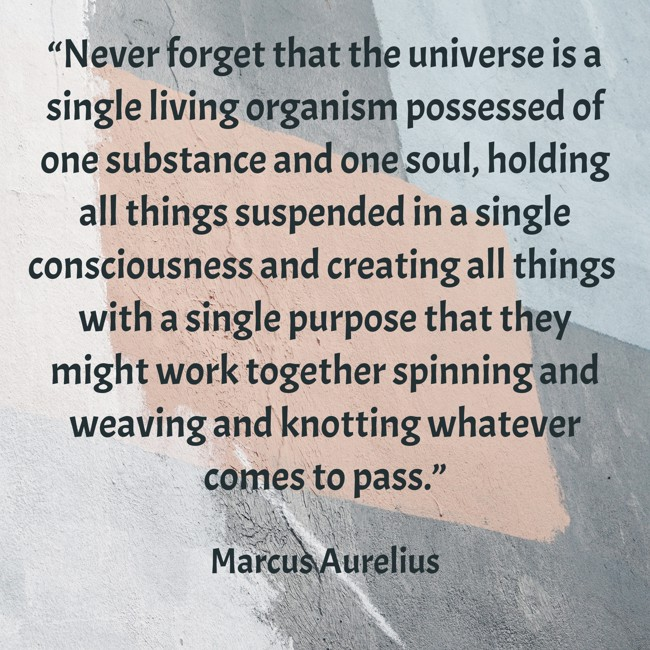
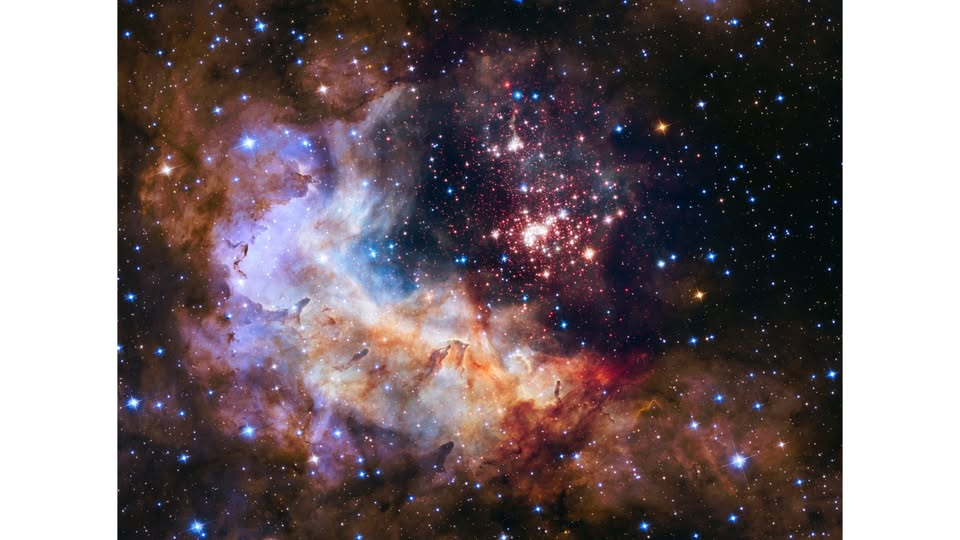


 We are all Interconnected even with the Universe