Tags: buddha's teachings, Buddhism, Happiness, Knowledge, life, meditation, psychology, reality, suffering
My new book is about the human species adopting an ancient, truer, sound economic, and more empathic perspective, as the present one continues to be a major disaster and will continue so into the future. For example, let’s look at war which right now is demonstrating again its evil ugliness of human duality obsessions.. Arguably the most evil and catastrophic human activity ever.
According to a New York Times article: What is a war?
War is defined as an active conflict that has claimed more than 1,000 lives.
Has the world ever been at peace?
Of the past 3,400 years, humans have been entirely at peace for 268 of them or just 8 percent of recorded history.
How many people have died in war?
At least 108 million people were killed in wars in the twentieth century. Estimates for the total number killed in wars throughout all of human history range from 150 million to 1 billion. War has several other effects on the population, including famine, environmental desolation, the killing of plants, and animals, etc. decreasing the birth rate by taking men away from their wives. The reduced birth rate during World War II is estimated to have caused a population deficit of more than 20 million people. Let’s repeat this again, Of the past 3,400 years, humans have been entirely at peace for 268 of them, or just 8 percent of recorded history.
We need a new common perspective Badly not only for war but the intelligent perspective of integrating all into the One- Non Dualism…!!!

All living things are interconnected.
All living things have DNA. And whether it comes from you, a pea plant, or your pet rat, it’s all the same molecule. It’s the order of the letters in the code that makes each organism different.
Plants, like all other known living organisms, pass on their traits using DNA. Plants however are unique from other living organisms in the fact that they have chloroplasts. Like mitochondria, chloroplasts have their own DNA.
We all came from a common ancestor. In other words, we all started out with the same DNA way back when. The different animals we see today are due to lots of small changes that have happened in living things since then.
Many small DNA changes are kept when they help the animal live better in its environment. Eventually, there are enough changes that it is a whole new animal.
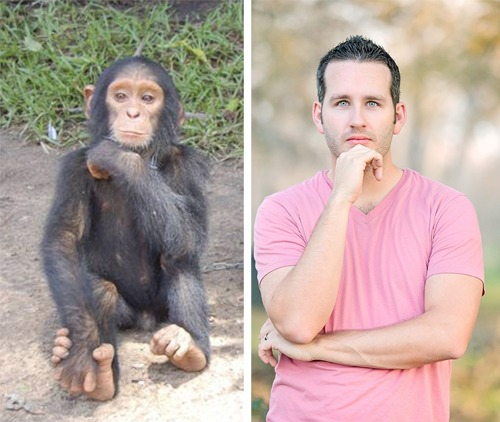
Your DNA is 99% identical to a chimpanzee’s. And it’s 95% identical to a monkey’s. And why you are about 79% identical to a mouse and even 36% identical to a little fruit fly!
In fact, you even do some things a bacterium does. You have a membrane enclosing your cells. And you both have to use oxygen and sugar to make energy. So your DNA is 7% identical to that bacterium!
But if we all started out with the same DNA, how did we end up with any differences at all? The short answer is evolution.
All living things have lots in common with each other.
DNA has the instructions for making a creature. This DNA is split up into many different sections called genes.
Each gene has a specific job. One gene might have the instructions for making something that carries oxygen in our blood. Another might have the instructions that give a person brown eyes.
No matter how different all living things may look, we all have things in common. Monkeys, people, lizards, frogs, etc. all need to breathe, see, move around, etc.
These common activities are the result of common genes. So creatures that have to do similar things will often share similar DNA.
The stringy stuff in the test tube is DNA. But you can’t tell which one of these organisms it came from just by looking at it. That’s because DNA looks exactly the same in every organism on Earth.
All humans have the same genes arranged in the same order. And more than 99.9% of our DNA sequence is the same. But the few differences between us (all 1.4 million of them!) are enough to make each one of us unique. On average, a human gene will have 1-3 bases that differ from person to person. These differences can change the shape and function of a protein, or they can change how much protein is made, when it’s made, or where it’s made.
College of Education. © University of Hawai‘i.

Thinking and learning about evolution and cooperation between species is hampered
by a number of rationalistic principles. Western rationalism … places a strong emphasis on the individual ego that is in a world full of things with qualities, but also on the view that humans are superior to other living beings (Korthals 2018). The view that man is a symbiotic being contradicts this idea of individuality. Men as symbionts means there is no ‘I’, there is everywhere a (widespread) we-process, composed of different species, namely symbionts of life and death.
Because of our inadequate senses, our unilateral communication ability through
spoken language, and the growth of our brains, people believe that other beings
do not communicate. That is why it took so long to discover communicative and
cognitive skills in other species (Meijer and Bovenkerk).
The evolutionary achievements of the brain have simultaneously equipped man with very
deficient senses. The brain has shrunk the senses (Wilson, 2014) Language is an
extensive network of useful communication with the world for people and therefore
the specific possibilities the senses can realize are diminished. With spoken language
and a thinking brain, people see themselves as separate beings, separate from plants,
animals, and microbes. Man is secluded (alienated) at the top of evolution, or sees himself as a
world-shaping against all those other world-blind beings.
As a result of this anthropocentrism, man is blind to important, life-feeding interactions and communications between other animals, plants, and dead matter. Due to
the great emphasis on language as a superior communication system, other communication systems are not covered. But animals and plants have other, equally effective
communication systems that enable co-evolution. Slowly we become a little smarter
in research into how living beings live, communicate and, above all, feed themselves
and others (De Waal 2016).
In Western philosophy, many barriers have been raised against the elaboration of
this idea. In particular, the view that man is an exceptional being due to rationality
or consciousness makes it difficult to see that animals and plants also think, feel, and
communicate in a certain way. This anthropocentrism can still be found in leading philosophers. Anthropocentrism erects a barrier between humans and other living organisms and
therefore denies the wide variety of processes of communication, valuing, and solidarity with non-human animals.
Humanity in the Living, the Living
in Humans
Michiel Korthals

Because of the mutual connections in a locally developed ecosystem, the locally evolved relationships are extremely important. The place is a breeding ground. The mutual symbiotic adjustments of the symbionts in a holobiont are disturbed when even one species is removed.
Ultimately, the entire web of relationships is carried by microbes. For example, in humans, communication between the brain and the stomach is just as fundamental to capabilities and behavior as the brain. These stomach-brain connections apply to all mammals. One of the most famous researchers in this area, Emeran Mayer, writes in The Mind-Gut Connection: How the Hidden Conversation Within Our Bodies Impacts Our Moods, Our Choices, and Our Overall Health (2016), that the gut and the inhabitants of the Gut, the microbes, think for the brain. That is why he calls the bowels the ‘second brain’. The bacteria in the gastrointestinal tract play a central role: the presence of certain types of bacteria and their products have a major influence on the willingness to take risks, on thought processes, and on moods such as apathy and depression. In addition, the digestion of foods is largely provided by intestinal bacteria, as is the stimulation of the immune system. This is why the microbiome is a second brain. Michiel Korthals

“It really boils down to this: that all life is interrelated. We are all caught in an inescapable network of mutuality, tied into a single garment of destiny. Whatever affects one directly, affects all indirectly. We are made to live together because of the interrelated structure of reality.” ~Martin Luther King, Jr.

There are traits that human beings share with all other living things. All living organisms share several key characteristics or functions including: order, sensitivity or response to the environment, reproduction, adaptation, growth and development, regulation, homeostasis, energy processing, and evolution. When viewed together, these characteristics help serve to define life.
Organisms are highly organized, coordinated structures that consist of one or more cells. Even very simple, single-celled organisms are remarkably complex: inside each cell, atoms make up molecules; these in turn make up cell organelles and other cellular inclusions. In multicellular organisms, similar cells form tissues. Tissues, in turn, collaborate to create organs (body structures with a distinct function). Organs work together to form organ systems.
Organisms respond to diverse stimuli. For example, plants can bend toward a source of light, climb on fences and walls, or respond to touch. Even tiny bacteria can move toward or away from chemicals (a process called chemotaxis) or light (phototaxis). Movement toward a stimulus is considered a positive response, while movement away from a stimulus is considered a negative response.
Single-celled organisms reproduce by first duplicating their DNA, and then dividing it equally as the cell prepares to divide to form two new cells. Multicellular organisms often produce specialized reproductive germline cells that will form new individuals. When reproduction occurs, genes containing DNA are passed along to an organism’s offspring. These genes ensure that the offspring will belong to the same species and will have similar characteristics, such as size and shape.
Organisms grow and develop following specific instructions coded for by their genes. These genes provide instructions that will direct cellular growth and development, ensuring that a species’ young will grow up to exhibit many of the same characteristics as its parents.
Even the smallest organisms are complex and require multiple regulatory mechanisms to coordinate internal functions, respond to stimuli, and cope with environmental stresses. Two examples of internal functions regulated in an organism are nutrient transport and blood flow. Organs (groups of tissues working together) perform specific functions, such as carrying oxygen throughout the body, removing wastes, delivering nutrients to every cell, and cooling the body.
Living Things Must Maintain Homeostasis. Homeostasis means “steady state”. Homeostasis is the tendency of an organism or cell to maintain a constant internal environment. Living things constantly adjust to internal and external changes. Homeostasis means to maintain dynamic equilibrium in the body. It is dynamic because it is constantly adjusting to the changes that the body’s systems encounter. It is equilibrium because body functions are kept within specific ranges or normal limits.
Thermoregulation
Thermoregulation is a process that allows your body to maintain its core internal temperature. The set point for normal human body temperature is approximately 37°C (98.6°F). Body temperature affects body activities. Body proteins, including enzymes, begin to denature and lose their function with high heat (around 50ºC for mammals). Enzyme activity will decrease by half for every ten-degree centigrade drop in temperature, to the point of freezing, with a few exceptions.
During body temperature regulation, temperature receptors in the skin (sensory receptor) communicate information to the brain (the control center) which signals the blood vessels and sweat glands in the skin (effectors). As the internal and external environment of the body are constantly changing, adjustments must be made continuously to stay at or near a specific value: the set point. (approximately 37°C / 98.6°F)
All organisms use a source of energy for their metabolic activities. Some organisms capture energy from the sun and convert it into chemical energy in food; others use chemical energy in molecules they take in as food.
There is a tremendous diversity of life on earth. The source of this diversity is evolution, the process of gradual change during which new species arise from older species. Evolutionary biologists study the evolution of living things in everything from the microscopic world to ecosystems.
the UC Davis Library,

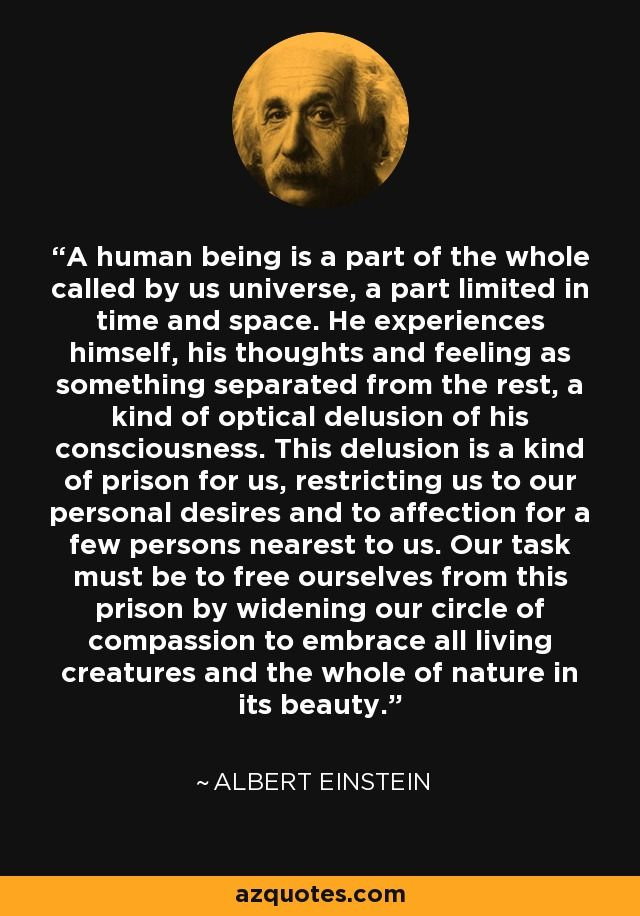
 We are all Interconnected even with the Universe