Non-duality is the recognition that at the core of existence lies a fundamental wholeness, ultimately arising from a single, unified source. It is understanding that everything is interconnected and inseparable, and that perceived dualities—such as self and other, or subject and object—are ultimately illusions. Awakening to non-duality offers profound benefits for our well-being, relationships, and understanding of life. Interestingly, recent advances in various branches of science are beginning to echo these insights.
1. Unity with All Beings – Everything is interconnected and constantly interacting. We are all connected on a deep level and when we see beyond the surface-level distinctions, we embrace the oneness of everything. When we realize our affinity with All that share this gift of Life, we experience a profound sense of unity and wholeness and have a deep sense of compassion and empathy towards all living beings.
2. Living in the Present Moment – Non-duality helps us release attachment to the past and anxieties about the future, allowing us to remain serenely fully in the present. Free from judgment or rigid interpretation, we experience life with greater clarity and peace.
3. Transcendence of Duality – By realizing non-duality, we move beyond the limitations of binary thinking—such as mind vs. body or self vs. other. While categorization is useful for practical navigation, it can also be a source of suffering. Non-dual awareness fosters a broader, more flexible perspective, freeing us from illusions of separation and the biases they create.
4. Enhancing Psychological Well-Being – Non-dual awareness has profound psychological and emotional benefits, not just for individuals but for society and the planet. Also, when we no longer see self as a separate entity, the fear of death diminishes; it is understood not as annihilation but as a transformation within the continuum of existence.
5. Embracing the Mystery of Existence – Non-duality invites us to appreciate life’s mysteries and accept the unknown. Rather than resisting uncertainty, we learn to welcome the vast possibilities and complexities of existence.
6. A Path of Awakening – Non-dualism spans ancient traditions and modern teachings, offering a structured path for personal and transpersonal growth. True awakening involves a transformative shift from conditioned ways of thinking, feeling, and acting toward a life aligned with universal principles.
“ ‘This is what pure experience is: neither the world nor “I” in it other than experience.’ Susan Hamilton
‘The seeing of Truth cannot be dualistic (a ‘thing’ seen). It cannot be seen by a see-er, or via a see-er. There can only be a seeing which itself is Truth.’ Wei Wu Wei
‘The outside world of form-and-name and the inner world of thought and feeling are both no more than the construction of mind, and when the mind ceases, the weaving-out of a world of particulars is stopped. This stopping is called emptiness or no birth, but it is not the wiping out of existence, it is on the contrary viewing it truthfully unhammered by discriminative categories.’ D-T. Suzuki
‘The ‘world’ of experience is not given in experience: it is constructed by thought from the data of sense.’ C.I. Lewis
‘In whatever egotistic terms they think of an object, it becomes that. And therein, verily, lies its falseness, the puerile deceptive phenomenon that it is.’ S N v. 916
‘Bhikkhu, ‘I am’ is a conceiving; ‘I am this’ is a conceiving; ‘I shall be’ is a conceiving; ‘I shall not be’ is a conceiving; I shall be possessed of form’ is a conceiving; ‘I shall be formless’ is a conceiving; ‘I shall be non-percipient’ is a conceiving. Conceiving is a disease, conceiving is a tumour, conceiving is a barb. By overcoming all conceiving, bhikkhu, one is called a sage at peace.’(M.N. 140.31)
This is more than a philosophical exploration—it’s a practical roadmap for living with clarity, joy, and interconnectedness. Through cross-cultural insights, reflective practices, and meditative approaches, Dr. Ricketts shows how embracing the ineffable mystery of life can dissolve division, foster ecological and social harmony, and restore our inner paradise.
Whether you are a seeker, a meditator, a student of comparative religion, or someone simply longing for a more meaningful existence, The Garden of Eden in This Life will inspire you to see beyond duality and step into a living experience of unity.
If you are ready to move beyond dogma, transcend the limits of language, and reawaken to the timeless ground of being—this book will guide you there.
Follow the advice of your heart, because no one will be more faithful to you than him. —Book of Sirach, 37.13
I think that the positive forces that will create our future will not be the forces and the laws of matter, but those of conscious cooperation, comprehension, and love for others that all beings in existence must sooner or later manifest because these values are the essence of our deepest nature.
I also think that the most effective way to achieve union is through a process of collective and cooperative creation of a just, empathic, and loving society through right and courageous actions informed by the heart and by the intuitive and rational mind. Then our experience and knowing will grow in our hearts and they will guide our individual actions through an ever-higher level of consciousness.
Unfortunately, today there is the real danger of letting ourselves be seduced by the spreading culture of digital ontology and digital consumerism that replaces true and profound relationships with virtual and superficial ones, thus halting, if not reversing, our spiritual development.
Social networks designed to bombard people with suggestive messages, often personalized to reinforce personal biases or based on false information or on presumed conspiratorial theories, generate groups that can become alienated from reality in self-isolating worlds. Nikola Tesla said that “progress must serve to improve the human race; if not, it is only a perversion.”
Technology must be used to help us discover our true nature, not to further imprison us in meaningless virtual worlds designed to enrich the richest. We have come to the point where we can truly unite as humans no matter where we were born, or stay divided in warring factions with ever increasing destructive technology on our side. Only when we truly comprehend that we are responsible for our experiences and that the choice is ours alone, can we begin to truly know ourselves and the world.
To know ourselves more and more, we need a new empathic science that can convert scientific knowledge into deep lived knowing and from it generate new scientific knowledge. Similarly, we need a new rational spirituality that can convert lived knowing into new scientific knowledge and from it generate new lived knowing. These two disciplines can then intertwine in endless and mutual crescendo.
This is the essence of the Creative Principle of One. Within this vision, empathic science and rational spirituality, integrating and interweaving, will evermore increase our loving, joyful, and fulfilling union with the Whole.
God is “incomprehensible and immeasurable, beyond the grasp of the human mind.” “Human minds cannot behold God as He is in Himself” Origen of Alexandria
“He is celebrated by all beings according to the analogy that all things bear to him as their Cause. But the most divine knowledge of God, that in which he is known through unknowing, according to the union that transcends the mind, happens when the mind, turning away from all things, including itself, is united with the dazzling rays, and there and then illuminated in the unsearchable depth of wisdom” “The most Godlike knowledge of God is that which is known by unknowing.” Pseudo Dionysius
theology does “not start by making the assumption of defining God; as St John Damascene remarks, In God we cannot say what he is” “What God actually is always remains hidden from us. And this is the highest knowledge one can have of God in this life, that we know Him to be above every thought that we are able to think of Him” Thomas Aquinas
“Entering the darkness that surpasses understanding, we shall find ourselves brought, not just to brevity of speech, but to perfect silence and unknowing.” philosopher-monk
“what He is by His essence and nature, this is altogether beyond our comprehension and knowledge” John of Damascus
“He who thinks that God is not comprehended, by him God is comprehended; but he who thinks that God is comprehended knows him not,God is unknown to those who know him and is known to those who do not know him at all.” Kena Upanishads
“The essence of your knowledge of Him, O my brother, is your firm admission that you are completely ignorant of His true essence” Baya ibn Pakudah
“In the contemplation of His essence, our comprehension and knowledge prove insufficient; in the examination of His works, how they necessarily result from His will, our knowledge proved to be ignorance, and in the endeavour to extol Him in words, all our efforts in speech are mere weakness and failure” Maimonides
“From the sayings of some early kabbalists, it is apparent that they are careful not even to ascribe personality to God. Since He is beyond everything—beyond even imagination, thought, or will—nothing can be said of him that is within the grasp of our thought” Gershom Scholem
God is “above and beyond all categories of human thought and imagination, for He is beyond all that they describe of Him” (Q. 6:100b, cited in Nasr 1987:314). He is One Who“cannot be comprehended by vision” (Q. 6:101); “Vision comprehendeth Him not,but He comprehendeth [all] vision.” He is One Incomparable: “There is naught like unto Him” (Q.42:11; cf. 16:60; 32:27). He is supremely “All-High, Transcendent or Exalted” (al-`alíy Q. 4:34; 22:62; 31:30). Qur‘án
‘The Divine Essence (al-dhát al-iláhiyya) cannot be understood by the rational faculty”. “The Divine Essence is transcendent above the cosmos, independent of the worlds” Ibn `Arabá
“none knows Allah with a real knowledge but He Himself; for every known falls necessarily under the sway and within the province of the Knower” Abu Hámid al-Ghazali
“Regard thou the one true God (ḥaqq) as One Who is apart from, and immeasurably exalted above, all created things. The whole universe reflects His glory, while He is Himself independent of, and transcendeth His creatures. This is the true meaning of Divine Unity(tawḥíd)” Baha’
“Immeasurably exalted is His Essence above the descriptions of His creatures… The birds of men’s hearts, however high they soar, can never hope to attain the heights of His unknowable Essence… Far be it from His glory that human pen or tongue should hint at His mystery, or that human heart conceive His Essence” Bahá’u’lláh
“The Formless Way: We look at it and do not see it; it is invisible. We listen to it and do not hear it; it is inaudible. We touch it and do not feel it; it is intangible. These three elude our inquiries and merge into one.” “The unity is said to be the mystery. Mystery of mysteries, the door to all wonders.”Laozi
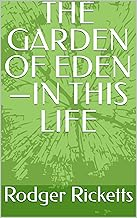
Today is the launch of my new book- The Garden of Eden in This Life. It is available in paperback, hardcover and kindle on Amazon. The following is the book description. With Metta, Rodger Ricketts.
What if the story of the Garden of Eden wasn’t just ancient myth, but a timeless guide to reclaiming our original wholeness? What if the “fall” from innocence was not the end, but an invitation to return—consciously—to a deeper unity with ourselves, each other, and the world?
In The Garden of Eden in This Life, Dr. Rodger R. Ricketts—a clinical psychologist, mindfulness teacher, and lifelong student of the Buddha’s teachings—unveils a profound perspective linking ancient wisdom, modern psychology, and the apophatic (negative) spiritual tradition. Drawing from over forty years of study and practice, he explores how non-dualistic teachings from Buddhism, science, and multiple faith traditions reveal the limits of language, the illusions of separation, and the path back to an integrated state of being.
You will journey through concepts like Sunyata (emptiness), the via negativa, and the psychology of transcendence—discovering how humanity’s separation from nature and spirit can be healed through direct experience, compassionate living, and expanded awareness.
This is more than a philosophical exploration—it’s a practical roadmap for living with clarity, joy, and interconnectedness. Through cross-cultural insights, reflective practices, and meditative approaches, Dr. Ricketts shows how embracing the ineffable mystery of life can dissolve division, foster ecological and social harmony, and restore our inner paradise.
Whether you are a seeker, a meditator, a student of comparative religion, or someone simply longing for a more meaningful existence, The Garden of Eden in This Life will inspire you to see beyond duality and step into a living experience of unity.
If you are ready to move beyond dogma, transcend the limits of language, and reawaken to the timeless ground of being—this book will guide you there. Open these pages and begin your journey back to the Garden… in this life.



 We are all Interconnected even with the Universe