I saw this statement: All Humans can become a Buddha. If the definition of to become is, ‘to come into existence’ my personal understanding is different as written below.
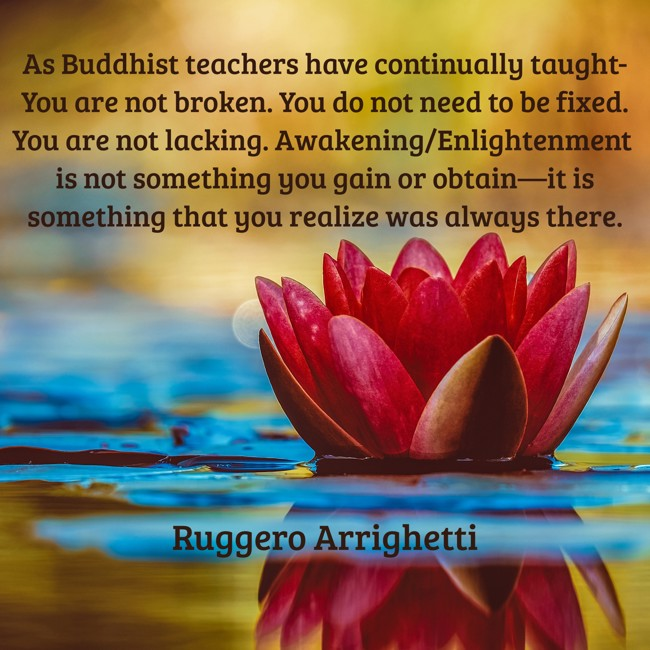
Or every human being have a Buddha-nature and by following the Eightfold Path they can realize it fully. For example, if you have a gift that is well wrapped in coverings, once you unwrap the gift completely, you finally realize what the gift is, which, in fact, is the same as when it was wrapped. It is the same about the Buddha. We are all intrinsically a Buddha, it is just that we have veils that hide our realization of that. The veils are lifted with the Path of ethical conduct (Sila), mental discipline (Samadhi) and wisdom (Panna). One doesn’t ‘gain’ Buddhahood but instead removes the veils or obstructions that prevent one from knowing that their nature is already Awakened.
The human body is a miraculous, self-repairing organism.
Let’s look at a few of the many important reasons that science explains. Homeostasis is how your body regulates your internal systems so they function correctly. Your body works best when its internal environment — including things like temperature or oxygen levels — is just right. Balance is key because too much of even the most essential things can be harmful. In fact, you can’t survive without homeostasis and the processes that drive it.
The body features a brain that can store roughly 2.5 million gigabytes of information and a heart that pumps approximately 2,000 gallons of blood daily and beats over 3 billion times in a normal lifetime. Our blood vessels, if laid end-to-end, could circle the Earth four times, while the nose can distinguish over 1 trillion odor mixtures and the eyes can distinguish roughly 10 million different colors. The Microbiome contains about 35 trillion cells, and microorganisms can outnumber these cells to 39 trillion. Every minute, 300 million body cells die, but that’s really just a small fraction of the total cells we have. We produce 300 billion new cells every day and your body is constantly repairing and rebuilding.
Stardust Component: The atoms in your body are billions of years old, forged in exploding stars. Finding and maintaining the balance of homeostasis takes careful planning, that can make a big difference in your quality of life. The human body is indeed an astounding and sophisticated, interconnected and constantly interacting, both internally and externally, organism and we need to honor this gift with care and love.
A famous quote regarding this concept is by Chief Seattle: “Humankind has not woven the web of life. We are but one thread within it. Whatever we do to the web, we do to ourselves. All things are bound together. All things connect”. This emphasizes human interdependence with nature and responsibility for the ecosystem.
Here are more quotes highlighting that we are part of the web of life:
“Whatever we do to the web, we do to ourselves. All things are bound together. All things connect.” — Chief Seattle Xavier University.
“We do not weave the web of life, we are merely a strand in it.” — Chief Seattle.
“We shall walk together on this path of life, for all things are a part of the universe, and are connected with each other to form one whole unity.” — Maria Montessori Medium.
“Nothing exists in the universe that is separate from anything else. Everything is intrinsically connected, irrevocably interdependent…” — Neale D. Walsch Medium.
“The whole idea of compassion is based on a keen awareness of the interdependence of all these living beings…” — Thomas Merton Visible Network Labs.
“I am a part of all that I have met.” — Lord Tennyson Visible Network Labs.
“We are connected to all life on Earth. We are all part of something larger.
The Doctrine of Karma or Kamma is not a mystical force and does not entail fatalism. Instead, it is a natural phenomenon, like gravity. Our thoughts create consequences inside our mind which we then act on. The doctrine refers to our intentional mental actions- our volitions. What we are now is determined by our thoughts and actions in the past and what we do next, in the future, is determined by our thoughts and actions in the present. Therefore, our kamma has the potential to continuously change depending on the development of our thoughts and actions.
The Buddha was very clear in teaching the Noble Eightfold Path that we can transform the quality of our mind and action for the better and ultimately achieve Enlightenment. So, Karma does not mean that we have a fixed destiny across lifetimes that we must passively accept or that bad or good things happen only because of our past actions.
A useful approach to understanding the interrelationship of all things is the framework known as systems theory, sometimes called “general systems theory.” The systems view of life studies the world in terms of patterns and relationships. A system is defined as an integrated whole whose properties cannot be reduced to those of its parts. Psychologist Lawrence LeShan: “Primarily, objects and events are part of a pattern which itself is part of a larger pattern, and so on until all is included in the grand plan and pattern of the universe. Individual objects and events exist, but their individuality is distinctly secondary to their being part of the unity of the pattern.”
Fritjof Capra:
Natural systems are wholes whose specific structures arise from the interactions and interdependence of their parts. Systemic properties are destroyed when a system is dissected, either physically or theoretically, into isolated elements. Although we can discern individual parts in any system, the nature of the whole is always different from the mere sum of its parts. Systems are intrinsically dynamic. Their forms are not rigid structures but are flexible yet stable manifestations of underlying processes . . . Living systems tend to form multi-leveled structures of systems within systems. For example, the human body contains organ systems composed of several organs, each organ being made up of tissues, and each tissue made up of cells. All these are living organisms or living systems which consist of smaller parts and, at the same time, act as parts of larger wholes. Living systems, then, exhibit a stratified order, and there are interconnections and interdependencies between all systems levels, each level interacting and communicating with its total environment. (14)
The natural world offers many examples of the collective action of individual members of a species creating larger, more complex systems embodying a group mind or intelligence.
Patterns of such collective coordination can be seen in highly integrated insect communities: “Extreme examples are the social insects – bees, wasps, ants, termites, and others – that form colonies whose members are so interdependent and in such close contact that the whole system resembles a large multi-creatured organism. Bees and ants are unable to survive in isolation, but in great numbers they act almost like the cells of a complex organism with a collective intelligence and capabilities for adaptation far superior to those of its individual members.”
Examples of systems abound in nature. Every organism – from the smallest bacterium through the wide range of plants and animals to humans – is an integrated whole and thus a living system. Cells are living systems, and so are the various tissues and organs of the body, the human brain being the most complex example. But systems are not confined to individual organisms and their parts. The same aspects of wholeness are exhibited by social systems – such as an anthill, a beehive, or a human family – and by ecosystems that consist of a variety of organisms and inanimate matter in mutual interaction. What is preserved in a wilderness area is not individual trees or organisms but the complex web of relationships between them. (15)
Systems theorists have identified some of the principal laws of nature exhibited by systems:
Coherence: Complex systems are organized in such a way that each of its parts is linked with every other part. Coherence can exist both within the components of a given system (internal viability) and between other systems (external adaptation).
Interaction: New forms and functions emerge as diverse elements interact. Interaction creates interconnection, which produces coherence. “The hallmark of a system of such coherence is that its parts are correlated in such a way that what happens to one part also happens to the other parts – hence it happens to the system as a whole.”
Complementarity: Polarity is a basic characteristic of living systems. Opposites balance each other in a state of equilibrium (e.g., yin/yang).
Recursion: The parts and elements of the whole have similar patterns which repeat each other at successively deeper levels. “Coherent systems are inevitably complex. A higher form of organization in a complex system does not just repeat the structure on the lower levels, but adds novelty, while repeating key patterns that remain invariant.”
Instability: There are limits to the growth of a coherent system – beyond a critical point, systems become unstable and break down into their individual components.
Evolution: The evolution of natural systems is towards higher levels of coherence and complexity. “There is a progression from level to level of structure and complexity in nature: from the atomic to the molecular, from the molecular to the multimolecular, from the multimolecular to the cellular and multicellular, and from there to the ecological and bio-spherical.”
Through the action of the above, and other related laws, complexity emerges in the universe as evolution creates more and more complex and coherent atomic, molecular, biological and psychosocial structures and systems.
The self-organization of systems is a recurring feature at all levels of the universe: “The recursive system of self-organization, where every layer curves back on itself to monitor another layer, pervades physics and biology. Self-organization is embedded in the fabric of the cosmos, acting like an invisible, offstage choreographer to drive evolution.” In You Are the Universe, Deepak Chopra and Menas Kafatos discuss this important concept:
In a self-organizing system, each new layer of creation must regulate the prior layer. So, the generation of every layer in the universe, from particle to star to galaxy to black hole, cannot be considered random, given that it was created from a pre-existing layer that in turn was regulating the layer that produced it. The same holds true throughout nature, including the workings of the human body. Cells form tissues, which in turn form organs, the organs form systems, and finally, the entire body has been created. Each layer emerges from the same DNA, but they stack up, as it were, until the pinnacle of achievement, the human brain, crowns it all . . . Whether we are speaking of genes and the brain or solar systems and galaxies, self-organization is present. Existence requires balance, which demands feedback. By monitoring itself, a system can correct imbalances automatically. Every new bit of the universe, however minuscule, must create a feedback loop with what gave rise to it. Otherwise it wouldn’t be connected to the whole. (16)
The building blocks of most systems are based on the principle of hierarchy, which determines the levels of organization and the nature and structure of the interconnections. Each living component possesses its own self-organization and a limited degree of autonomy within the larger system. These systems exist in a hierarchy in which higher levels subsume and regulate lower levels. “Every system does its job, being more or less responsible for its own survival and reproduction (within its niche in the whole organism), at the same time being controlled by one or more superordinate regulatory systems.” Many systems, both natural and manmade, are organized in a hierarchical structure:
Nature appears to be structured as levels of organization or complexity. Elementary particles give rise to atoms, atomic structures form molecules, which in turn form macromolecules such as proteins and DNA, which are the basis for living organelles and cells, which congregate and cooperate to form the profusion of living organisms populating the planet. Evolution, as a progressive complexification of matter and psycho-biotic systems, is ostensibly a dynamic process of ever-increasing levels of complexity and organization. In the sense of nested systems within systems, hierarchy is an accurate and appropriate description of nature . . . If we picture nature’s nested systems as circles within circles within circles, where the boundaries of all the circles are permeable, then hierarchy permits the flow of information and energy both up and down, and laterally, between systems at all levels. Hierarchy involves the communication of information and energy through “upward causation,” from lower-level (meaning less complex) systems to higher level (meaning more complex and organized) systems, and “downward causation,” from higher-level systems to their component parts; as well as horizontal causation (laterally between systems on the same level). In this systems view of hierarchy, power resides in the cooperative relationships between the various systems and their parts. (17)
In summary, the systems view of the universe is essentially holistic and integrative; it looks at the world in terms of interrelatedness and interdependency, linking all levels of existence in a unified whole. “Living systems are organized in such a way that they form multi-leveled structures, each level consisting of subsections which are wholes in regard to their parts, and parts with respect to the larger wholes. All entities – from molecules to human beings – can be regarded as wholes in the sense of being integrated structures, and also as parts of larger wholes at higher levels of complexity.”
Rodger R Ricketts
Fritjof Capra “The New Vision of Reality: Towards a Synthesis of Eastern Wisdom and Western Science” in Stanislav Grof, ed. Ancient Wisdom and Modern Science (Albany: State University of New York, 1984), pp. 139-140.
Fritjof Capra The Turning Point (New York: Simon and Schuster, 1982), pp. 266-267.
Deepak Chopra and Menas Kafatos You Are the Universe (New York: Harmony Books, 2017), pp. 71-72.
Ervin Laszlo Science and the Reenchantment of the Cosmos (Rochester, Vermont: Inner Traditions, 2006), pp. 118-119.
One of the cornerstones of Gurdjieff’s Fourth Way cosmological teachings is the concept of ‘reciprocal maintenance’ or ‘reciprocal feeding.’ In his magnum opus Beelzebub’s Tales to His Grandson, he termed this process as Trogoautoegocrat (“I keep myself by feeding”), and described it as a universal principle which interrelates all levels of the universe and results in the reciprocal maintenance or feeding of “All and Everything.” In Gurdjieff: Making a New World, John G. Bennett succinctly outlines the main features of this cosmic process: “The transformation of energies depends on the relationship of entities, whereby each maintains the existence of others in a kind of universal mutual support system. Each order of beings is endowed with a form of energy that enables it to play its part in the cosmic process.”
Reciprocal maintenance in its special sense connotes that the universe has a built-in structure or pattern whereby every class of existing things produces energies or substances that are required for maintaining the existence of other classes. Gurdjieff uses the terms involution and evolution to describe the process. Involution is the transformation process in which a high level of energy acts on lower energies through an apparatus which provides the necessary environment and conditions. The human body is such an apparatus and so is any other living organism. The earth also provides an environment for high level energy – such as solar radiation – to act upon the more passive elements of the earth’s crust and atmosphere. Involution is entropic, that is to say the overall level of energy is always lowered in all involutionary changes. Evolution is the reverse process. It is the production of high level energy from a lower level source. This also requires an apparatus, but of a different kind, for the ‘up-grading’ of energy is improbable and cannot occur at all unless some high level energy is present. Life is an evolutionary process that goes against the direction of probability. The work by which man is transformed is evolutionary. It goes against the stream of life. (6)
In a talk to his students in 1918, Gurdjieff presented the theoretical basis of the principle of reciprocal maintenance: the transformation of matter and energy as a universal process of descent (involution) and ascent (evolution):
Everything in the world is material and – in accordance with universal law – everything is in motion and is constantly being transformed. The direction of this transformation is from the finest matter to the coarsest, and vice versa. Between these two limits there are many degrees of density of matter. At some points in the development there are, as it were, stops or transmitting stations. These stations are everything that can be called organisms in the broadest sense of the word – the sun, the earth, man and microbe. These stations are commutators which transform matter both in its ascending movement, when it becomes finer, and in its descending movement, toward greater density . . . This transformation of substances in two directions, which is called evolution and involution, proceeds not only along the main line from the absolutely fine to the absolutely coarse and vice versa, but at all intermediate stations, on all levels, it branches aside. A substance needed by some entity may be taken by it and absorbed, thus serving the evolution or involution of that entity. Everything absorbs, that is, eats something else, and also serves as food. This is what reciprocal exchange means. This reciprocal exchange takes place in everything, in both organic and inorganic matter. (7)
According to Gurdjieff, the universe was created as an unending chain of systems bound by universal interdependence. In this cosmic process of ‘exchange of substances’ everything that exists is dependent on and connected to everything else; nothing is separate:
The principle of universal interdependence is certainly not found only in the teaching of Gurdjieff. It appears in many traditional teachings. But his convincing exposition of it is indisputably original. A generalized non-separability characterizes the universe of Gurdjieff. Systems on different scales have their own autonomy, for according to the terminology of Gurdjieff, the Absolute only intervenes directly at the creation of the first cosmos. The other cosmoses formed themselves freely by self-organizing principles – always, however, in submission to the law of three and the law of seven. In this way the diversity of the universe is assured. On the other hand, the interaction of the different cosmoses by means of the universal exchange of energy-substances assures unity in diversity. Life itself appears not as an accident, but as a necessity in this universe of universal interdependence . . . Gurdjieff’s universe is not a static universe, but a universe in perpetual movement and change, not only on the physical plane, but also on the biological and psychic planes. Evolution and involution are always at work in the different worlds. And when we consider the important number of different matters characterized by different degrees of materiality, we can understand the essential role of the universal exchange of substances in evolution and involution. (8)
Gurdjieff emphasized the importance of reciprocal maintenance in the overall organization and functioning of the cosmos. Reciprocal maintenance shows how existing forms interact with other forms in a symbiotic relationship of mutual support. Functionally, higher levels of reality “spiritualize” lower levels of existence by organizing and then transforming them, under the direction of fundamental cosmic laws, into “higher patterns of meaning and value.” John G. Bennett: “Our customary way of thinking and talking about the world is in terms of objects and events, both of which are abstractions. Gurdjieff saw the world as the universal process of the transformation of energies, regulated by two fundamental laws (the law of three and the law of seven) and various ‘second-grade’ laws arising from their interaction. The two basic realities are relations and transformations.”
The world was brought into existence because ‘being’ and ‘time’ are mutually destructive. Everything separate and closed within itself must perish for lack of a principle of renewal. There is partial renewal by borrowing energy from outside, but this is not enough. Full renewal requires full mutuality. It is by Universal giving and receiving of energies that Cosmic Harmony is maintained. This, in turn, requires an organized structure which is given by the interaction of the different classes and levels of reality. (9)
Some contemporary physicists have noted a correspondence between Gurdjieff’s idea of reciprocal maintenance and the ‘bootstrap’ principle of modern physics. The bootstrap concept implies that at every level of nature there is an underlying unity which is maintained by a dynamic intelligence in permanent evolution. Such a universe is capable of self-creation and self-organization, without any other external intervention of other energies and forces. In the words of physicist Paul Davies: “The universe fills itself exclusively from within its own physical nature with all the energy necessary to create animate matter.” Physicist Basarab Nicolescu expresses a similar idea: “It seems evident that self-creation and self-organization only have meaning in a universe which is made up of an infinite chain of systems regulated by universal interdependence. Unity in diversity and diversity through unity are the conditions for selfcreation and self-organization. Otherwise there is nothing but the law of accident that can act.”
The trogoautoegocratic process of Gurdjieff presents a remarkable correspondence to the ‘bootstrap’ principle formulated in physics around 1960 by American physicist Geoffrey Chew. This word “bootstrap” also implies “to pull yourself up by your own bootstraps.” The closest equivalence in the scientific context would be ‘self-consistency.’ In the bootstrap theory, the part appears at the same time as the whole. What is put in question in bootstrap theory is the very notion of a particle’s identity: it substitutes instead the notion of the relationship between “events.” It is the relations between events which are responsible for the appearance of what we call a particle. There is no object in itself possessing its own identity, that we could define in a separate or distinct manner from other particles. A particle is what it is because all other particles exist at the same time: the attributes of a determined physical entity are the results of interactions with all the other particles. According to bootstrap, there really is a “law of reciprocal maintenance” of all quantum particles. Also, as in the trogoautoegocratic process, a system is what it is because all other systems exist at the same time. The role of self-consistency in the construction of reality should be emphasized – a self-consistency which assures the coherence of the All. (10)
Rodger R Ricketts
John G. Bennett Gurdjieff: Making a New World (New York: Harper & Row, 1973), pp. 189-190.
G.I. Gurdjieff Views from the Real World: Early Talks of Gurdjieff (New York: E.P. Dutton, 1973), pp. 209-210.
Basarab Nicolescu “Gurdjieff’s Philosophy of Nature” in Jacob Needleman and George Baker, eds. Gurdjieff: Essays and Reflections on the Man and His Teaching (New York: Continuum, 1996), pp. 48-49.
John G. Bennett Gurdjieff: Making a New World (New York: Harper & Row, 1973), p. 206.
Basarab Nicolescu “Gurdjieff’s Philosophy of Nature” in Jacob Needleman and George Baker, eds. Gurdjieff: Essays and Reflections on the Man and His Teaching (New York: Continuum, 1996), pp. 49-50.
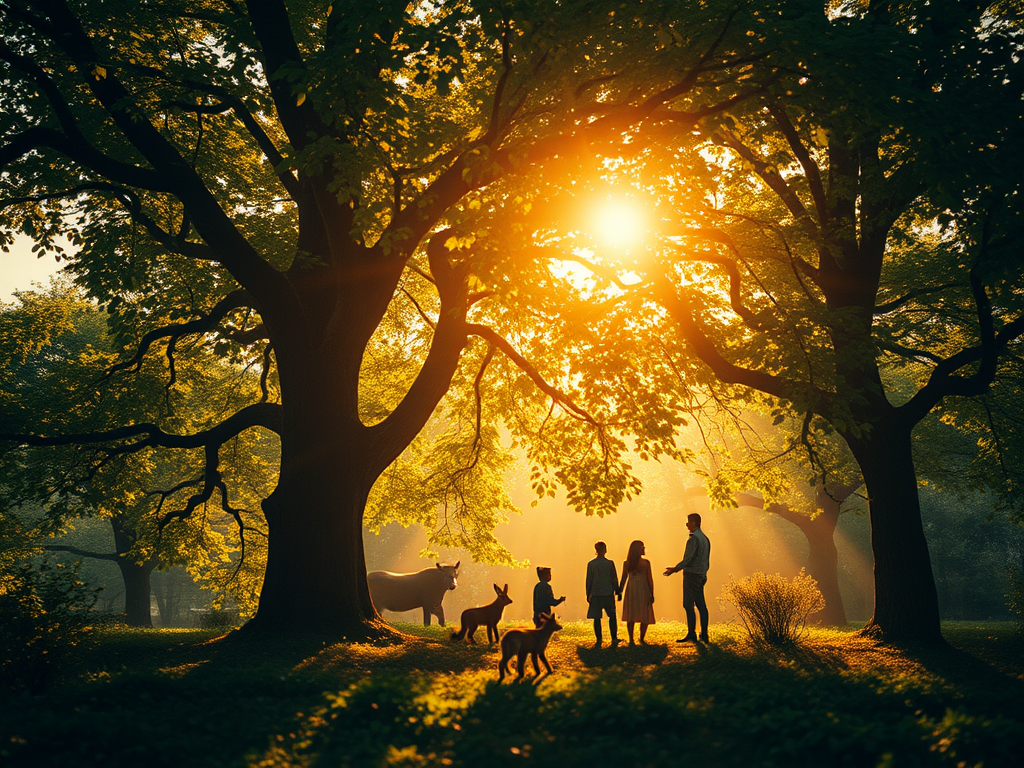
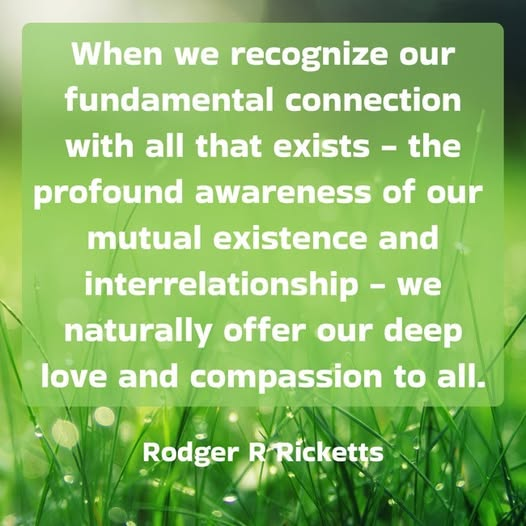
 We are all Interconnected even with the Universe