“The “feeling of being stared at” is the focus of a subset of distant-mental-interaction studies. This is a particularly interesting belief to investigate because it is related to one of the oldest known superstitions in the Western world, the “evil eye,” and to one of the oldest known blessings in the Eastern world, the darshan, or gaze of an enlightened master. Most ancient peoples feared the evil eye and took measures to deflect the attraction of the eye, often by wearing shiny or attractive amulets around the neck. Today, most fears about the evil eye have subsided, at least among educated peoples. And yet many people still report the “feeling of being stared at” from a distance. Is this visceral feeling what it appears to be—a distant mental influence of the nervous system—or can it be better understood in more prosaic ways? In the laboratory today, the question is studied by separating two people and monitoring the first person’s nervous system (usually electrodermal activity) while the second person stares at the first at random times over a one-way closed-circuit video system. The stared-at person has no idea when the starer is looking at him or her. Figure 9.2. Effect sizes for studies testing the “feeling of being stared at,” where 50 percent is chance expectation. Confidence intervals are 95 percent. Figure 9.2 shows the results for staring studies conducted over eight decades.34 Similar to William Braud’s electrodermal studies but conducted in a context that more closely matched common descriptions of “feeling stared at,” these studies resulted in an overall effect of 63 percent where chance expectation is 50 percent. This is remarkably robust for a phenomenon that—according to conventional scientific models—is not supposed to exist. The combined studies result in odds against chance of 3.8 million to 1. Summary Given the evidence for psi perception and mind-matter interaction effects discussed so far, we could have expected that experiments involving living systems would also be successful. The studies discussed here show that our expectations are confirmed. The implications for distant healing are clear. All the experiments discussed so far have been replicated in the laboratory dozens to hundreds of times. They demonstrate that some of the “psychic” experiences people report probably do involve genuine psi. Now we move outside the laboratory to examine a new type of experiment, one that explores mind-matter interaction effects apparently associated with the collective attention of groups.”
― Dean Radin, The Conscious Universe: The Scientific Truth of Psychic Phenomena
The “feeling of being stared at”
7 MarFour Incredibly Significant Communicators/operators within our amazing body functioning simultaneously……
27 AugFour Incredibly Significant Communicators/operators within our amazing body functioning simultaneously……
1.The vagus nerve is the longest cranial nerve and a primary component of the parasympathetic nervous system, controlling many involuntary functions, including heart rate, digestion, respiration, and mood. It also plays a crucial role in the gut-brain axis, facilitating communication between the brain and digestive tract. By stimulating the vagus nerve, one can support various aspects of physical and mental health, from reducing inflammation to improving mood.
2.Heart-Brain Communication that communication between the heart and brain actually is a dynamic, ongoing, two-way dialogue, with each organ continuously influencing the other’s function. Research has shown that the heart communicates to the brain in four major ways: neurologically (through the transmission of nerve impulses), biochemically (via hormones and neurotransmitters), biophysically (through pressure waves) and energetically (through electromagnetic field interactions). Communication along all these conduits significantly affects the brain’s activity. Moreover, research shows that messages the heart sends to the brain also can affect performance.
3.Spinal nerves are 31 pairs of mixed nerves that connect the spinal cord to the body, acting as a communication pathway between the central nervous system and the periphery. These nerves transmit sensory information from the body to the spinal cord and brain, and carry motor commands from the brain and spinal cord to muscles and other effector organs. They are also involved in autonomic functions through sympathetic and parasympathetic fibers.
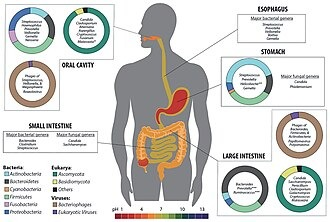
4.What is the gut microbiome?A biome is a distinct ecosystem characterized by its environment and its inhabitants. Your gut — inside your intestines — is in fact a miniature biome, populated by trillions of microscopic organisms. These microorganisms include over a thousand species of bacteria, as well as viruses, fungi and parasites.Gut microbes can affect your nervous system through the gut-brain axis — the network of nerves, neurons and neurotransmitters that runs through your GI tract. Certain bacteria actually produce or stimulate the production of neurotransmitters (like serotonin) that send chemical signals to your brain.Bacterial products may also affect your nervous system. Short-chain fatty acids appear to have positive effects, while bacterial toxins might damage nerves. Researchers continue to investigate how your gut microbiome might be involved in various neurological, behavioral, nerve pain and mood disorders.they contribute to human health and wellness in many ways.



Our Human bodies are perfectly interconnected.
12 JulOur Human bodies are perfectly interconnected.
Our bodies are composed of many separate systems – or have been taught in school for generations. The theory that our respiratory system, digestive system, reproductive system, and others each work on their own is still the most popular narrative. Yet in truth, every organ and system in our bodies are interconnected. If you neglect one part, sooner or later the others will feel the effects.Each organ belongs to one of ten human body systems. These body systems are interconnected and dependent upon one another to function. Your heart does not beat unless your brain and nervous system tell it to do so. Your skeletal system relies on the nutrients it gains from your digestive system to build strong, healthy bones. Each body system works with the others
Our organs don’t work in solo, organs also function together in groups, The relationships between them mean our entire human body is interconnected. The interconnectivity between these organs means that when a person experiences disease in one of these areas, it increases the chances of one or all the other systems being affected. This can result in the worsening of the disease overall.
This also means that when improvements are made in one area through lifestyle changes and appropriate care, positive improvements are likely to be seen in other organs and systems.
By taking actions such as healthy eating, exercising more, meditation, medication, and not smoking, it is possible to reduce the risk of further damage and to prevent or delay organs from getting worse.
Scientists categorize groups of organs into different body systems, however, these systems do not work in isolation. A disorder in one system can cause other systems to break down. Although each organ has its specific functions called organ systems. Some examples of organ systems and their functions include the digestive system, the cardiovascular system, and the musculoskeletal system.
Organ systems often work together to do complicated tasks. For example, after a large meal is eaten, several organ systems work together to help the digestive system obtain more blood to perform its functions. The digestive system enlists the aid of the cardiovascular system and the nervous system. Blood vessels of the digestive system widen to transport more blood. Nerve impulses are sent to the brain, notifying it of the increased digestive activity. The digestive system even directly stimulates the heart through nerve impulses and chemicals released into the bloodstream. The heart responds by pumping more blood. The brain responds by perceiving less hunger, more fullness, and less interest in vigorous physical (musculoskeletal system) activity, which preserves more blood to be used by the digestive system instead of by skeletal muscles.
Communication between organs and organ systems is vital. Communication allows the body to adjust the function of each organ according to the needs of the whole body. In the example above, the heart needs to know when the digestive organs need more blood so that it can pump more. When the heart knows that the body is resting, it can pump less. The kidneys must know when the body has too much fluid so that they can produce more urine, and when the body is dehydrated so that they can conserve water.
Homeostasis is the term used to describe how the body maintains its normal composition and functions. Because organ systems communicate with each other, the body can maintain stable amounts of internal fluids and substances. Also, the organs neither underwork nor overwork, and each organ facilitates the functions of every other organ.
Sabrina Libretti; Yana Puckett.

 We are all Interconnected even with the Universe