Archive | complexity RSS feed for this section

‘Information Links All Things in the Universe’

20 Feb

Information and Inter-Communication

Science has traditionally held that matter and energy are the foundations of physical reality. But an emerging viewpoint posits that a more subtle, but equally fundamental, factor is also important: information. In Science and the Akashic Field, Ervin Laszlo stresses the importance of information for the interdependent functioning of the cosmos: “Information links all things in the universe, atoms as well as galaxies, organisms and minds. This discovery transforms the fragmented world-concept of the mainstream sciences into an integral, holistic worldview.”

In order to account for the presence of a significant number of particles in the universe, and for the ongoing evolution of the existing things, we need to recognize the presence of a factor that is neither matter nor energy. The importance of this factor is now acknowledged not only in the human and the social sciences, but also in the physical and the life sciences. It is information – information as a real and effective factor setting the parameters of the universe at its birth, and thereafter governing the evolution of its basic elements into complex systems. Information is an inherent aspect of both physical and biological nature . . . Information is not a human artefact, not something we produce by writing, calculating, speaking, and messaging. As ancient sages knew, and as scientists are now rediscovering, information is present in the world independent of human volition and action and is a decisive factor in the evolution of the things that furnish the real world. The basis for creating a genuine “theory of everything” is the recognition that “information” is a fundamental factor in nature. (18)

Laszlo provides a useful operational definition of information (or “in-formation”): “Information is the subtle, quasi-instant, non-evanescent and non-energetic connection between things at different locations in space and events at different points in time. Such connections are termed “nonlocal” in the natural sciences and “transpersonal” in consciousness research. In-formation links things (particles, atoms, molecules, organisms, ecologies, solar systems, entire galaxies, as well as the mind and consciousness associated with some of these things), regardless of how far they are from each other and how much time has passed since connections were created between them.”

A number of scientists have suggested that some of the quandaries of current cosmological theories can be resolved through the concept of information. “A common theme among researchers trying to look beyond general relativity and quantum theory to a more unified understanding of nature is that something else lies at the root of all things: information.”

The discoveries of quantum physicists in the early 20th century had tremendous implications for understanding the nature of reality. In The Field, Lynne McTaggart stresses the importance of their findings: “They realized that the very underpinnings of our universe is a heaving sea of energy – one vast quantum field. If this were true, everything would be connected to everything else like some invisible web.”

They also discovered that we were made of the same basic material. On our most fundamental level, living beings, including human beings, were packets of quantum energy constantly exchanging information with this inexhaustible energy sea. Information about all aspects of life, from cellular communication to the vast array of controls of DNA, was relayed through an information exchange on the quantum level. Even our minds operated according to quantum processes. Thinking, feeling – every higher cognitive function – had to do with quantum information pulsing simultaneously through our brain and body. Human perception occurred because of interaction between the subatomic particles of our brains and the quantum energy sea. We literally resonated with our world. In a stroke, they had challenged many of the most basic laws of biology and physics. What they may have uncovered was no less than the key to all information processing and exchange in our world, from the communication between cells to perception of the world at large. More fundamentally, they had provided evidence that all of us connect with each other and the world at the very undercoat of our being. (19)

One of the strangest features of quantum physics is the phenomenon of “nonlocality” or “entanglement.” Physicists discovered that some pairs of sub-atomic particles or atoms are entangled or correlated, and remain instantly connected over time: “Their nonlocality respects neither time nor space: it exists whether the distance that separates the particles and the atoms is measured in millimeters or in light-years, and whether the time that separates them consists of seconds or millions of years.”

As Niels Bohr, a Nobel prize-winning pioneer of quantum physics, discovered, once subatomic particles such as electrons or photons are in contact, they remain forever influenced by each other instantaneously and for no apparent reason, over any time or any distance. When particles are entangled, the actions of one will always influence the other in the same or the opposite direction, no matter how far they are separated. They act like a pair of star-crossed lovers who are forced to separate and live independently forever, but who continue not only to know each other’s moves but also to imitate the other’s every activity for the rest of their days. Albert Einstein had refused to accept nonlocality, disparaging the theory as “spooky action at a distance.” Einstein claimed this type of instantaneous connection couldn’t occur because it would require information traveling faster than the speed of light, which he considered the absolute outer boundary of how quickly one thing can affect something else. Even subatomic particles were not supposed to be able to affect other particles faster than the time it would take the first to travel to the second at the speed of light. (20)

In 1972, physicist John Bell proposed a possible test of the validity of nonlocality – taking measurements on a pair of quantum particles which were initially in contact but later separated. A decade later in Paris, physicist Alain Aspect and his team conducted an actual experiment which confirmed Bell’s theory. In The Holographic Universe, Michael Talbot describes the results: “Aspect’s real-life experiment showed that when two photons were fired off from a single atom, the measurement of one photon affected the position of the second photon. Whatever happened to one was identical to, or the very opposite of, what happened to the other. A comparison of the measurements showed that both were the same. Some invisible wire appeared to be connecting these two quantum particles across space, to make them follow each other forever.”

The phenomenon of nonlocality and the transmission of information across levels of the universe appears in fields as diverse as cosmology, evolutionary biology, ecology and consciousness research:

It is clear that nonlocal coherence has important implications. It signals that there is not only matter and energy in the universe, but also a more subtle yet real element: an element that connects, and which produces the observed quasi-instant forms of coherence. Identifying this connecting element could solve the puzzle at the forefront of scientific research and point the way toward a more fertile paradigm. We can take the first step toward this goal by affirming that information is present, and has a decisive role, in all principal domains of nature. Of course, this information that is present in nature is not the everyday form of information but a special kind: it is “in-formation” – the active, physically effective variety that “forms” the recipient, whether it is a quantum, a galaxy, or a human being. (21)

Although nonlocality or entanglement was first discovered at the quantum level, it is not limited to this domain, and also surfaces at macroscopic scales in the universe, such as electromagnetic and other fields. Ervin Laszlo proposes that the structures and processes of the manifest physical world are determined by interacting waves or patterns of energy and information embedded in the “Akashic field.”

A world where connection, coherence, and coevolution are fundamental features is not a fragmented and fragmentable world, but an integral one. In this world nonlocality is a fundamental factor: things that occur at one place and time also occur at other places and times – in some sense, they occur at all places and times . . . There is an urgent need for a paradigm in which nonlocality is a basic feature – the paradigm of a world that is intrinsically nonlocal. Such a paradigm is now emerging at the leading edge of scientific inquiry. It is based on a new understanding of how parts interact within wholes; ultimately how the parts we know as quanta and the macroscale entities built as coordinated sequences of quanta interact within the larger whole we call “cosmos.” The basic concept that can convey scientific meaning and legitimacy to this understanding is field. Fields are bona fide elements of the physical world, although they are not in themselves observable. They are like fishing nets so fine that their strands cannot be seen. The fields themselves are not visible, but they produce observable effects. Fields connect phenomena. Local fields connect things within a particular region of space and time, but there are also universal fields that connect things throughout space and time. Quanta, and the things constituted of quanta, interact through fields, and they interact universally. (22)

Scientists are becoming aware of the primary role of information in describing the laws and workings of physical reality. “Information really is physical and it literally in-forms our Universe, while at the same time transforming our view of what we actually mean by the term physical.”

The laws of motion and thermodynamics that define how matter and energy move and how they interact are basically laws of information. The concept of information content and flow is starting to be used powerfully to describe physical phenomena at deeper and more all-encompassing levels. The two twentieth century pillars of science, the quantum and relativity theories, are also being re-evaluated as informational theories, a development that is being seen as having the potential to finally bring together these as yet unreconciled perspectives of our Universe. This is just the first step to a much more encompassing perception, one that not only aims to understand the completeness of the physical world but also proposes a cosmology that encompasses all aspects of existence and experience and seeks answers to the deeper question of not only how reality is as it is but also why. (23)

Information exchange seems to occur at all levels of reality. For instance, an electron is much more than a simple structureless point. The active use of information by electrons, and indeed by all sub-atomic particles, indicates that the ability to respond to meaning is an innate characteristic not only of consciousness but of all matter. There is also evidence that at the smallest atomic scale, space-time is pixellated, suggesting that this is the foundational level for information and holographic reality.

The content and flow of information creates patterns and relationships between and within all scales of existence. The events and processes at each level of reality are not random or based on chance – rather, they are dependent on the information they embody. In The Cosmic Hologram, Jude Currivan writes: “Our Universe is fundamentally interconnected as a unified entity that is underpinned and permeated by information. The universal speed limit exhibited by light ensures that information is transferred at a constant and finite limit within space-time, maintaining causality and enabling our universe to experience and evolve.”

Information literally in-forms all that we call physical reality, and from the innate instructions, conditions, ingredients, recipe, and container, of the information that make up the cosmic hologram, enables the outcome of a universe that nurtures the evolution of complexity and ever more self-aware consciousness – makes a universe that is perfect for us. To understand the essential wholeness of reality requires that the principles and laws of physics be restated in informational terms. At every scale from the most minute up to its entirety, the reality of our Universe is indeed being restated in this way, revealing itself as being constituted of holographically expressed information, which is more fundamental than space-time and energy-matter . . . There’s no fundamental difference between quantum and macroscopic scales. They only appear different owing to the difficulty of informationally isolating larger entities from their surroundings. This shows that our Universe is innately coherent and nonlocally unified, where everything is fundamentally interconnected and informational in nature. (24)

The fundamental flow of information is integral to the ordering and evolution of the universe and the development of individual biological entities. Ervin Laszlo: “The network of information applies to all scales, from the genesis and evolution of the universe itself to the development and increase in complexity and ordering of matter – leading all the way to the emergence of the order defining biological organisms and systems expressing self-awareness, by which the universe is ultimately aware of itself.”

Information exchange is the key to understanding the evolution of the universe. The laws and processes of the flow of information provide a deeper understanding of the nature of physical reality as well as integrating quantum theory (which describes universally conserved energy-matter) and relativity theory (universally entropic space-time). “The origin of our universe, in an extraordinarily ordered state, embodied its minimum informational entropy that ever since has increased inexorably, causing the arrow of time to flow and the principle of causality within space-time to be inviolate.” In The Cosmic Hologram, Jude Currivan explores the significance of information in the evolution of the universe:

From its birth, [the universe] encoded the complete information and algorithmic instructions that ensured that all laws of physics pertaining to the behavior of energy-matter and that are described by quantum theory prevail universally and so enable it to exist as a unified entity. Such encoding and coherence also empowered the creation of elementary particles and the fundamental processes and interactions that progressively gave rise to stars, galaxies, and the evolution of ever-greater complexity and diversity. Information expressed as energy-matter, visible and dark, is both conserved and balances exactly to zero throughout its entire lifetime. Such conservation of information expressed as energy-matter on a universal basis is a statement of the first law of information. As such, the first law of information is essentially also the generalized expression of quantum theory . . . The continually increasing entropic flow of information within space-time, rising to a maximum at the end of the lifetime of our Universe, has enabled the development of ever-higher levels of consciousness and self-awareness to be expressed, embodied, and experienced. The nature of time itself can even be considered as being the accumulated flow of informational entropy, ever increasing from past to present to future. Indeed, just as the first law of information is an expression of quantum theory, so the second law of information is that for relativity theory. The first law of information enables our Universe to exist; the second law enables it to evolve. (25)

Rodger R Ricketts

  • Ervin Laszlo Science and the Akashic Field (Rochester, Vermont: Inner Traditions, 2007), p. 13.
  • Lynne McTaggart The Field (New York: Harper Perennial, 2003), pp. xvii-xviii.
  • Michael Talbot The Holographic Universe (New York: Harper Perennial, 2011), pp. xiii-xiv.
  • Ervin Laszlo Science and the Akashic Field (Rochester, Vermont: Inner Traditions, 2007), pp. 60-61.
  • Ervin Laszlo The Self-Actualizing Cosmos Rochester, Vermont: Inner Traditions, 2014), pp. 8-9.
  • Jude Currivan The Cosmic Hologram (Rochester, Vermont: Inner Traditions, 2017), pp. 2-3.
  • Jude Currivan The Cosmic Hologram (Rochester, Vermont: Inner Traditions, 2017), pp. 112-113.
  • Jude Currivan The Cosmic Hologram (Rochester, Vermont: Inner Traditions, 2017), pp. 113-115.

All Is Interrelated

20 Feb

Gurdjieff and ‘Reciprocal Maintenance’

One of the cornerstones of Gurdjieff’s Fourth Way cosmological teachings is the concept of ‘reciprocal maintenance’ or ‘reciprocal feeding.’ In his magnum opus Beelzebub’s Tales to His Grandson, he termed this process as Trogoautoegocrat (“I keep myself by feeding”), and described it as a universal principle which interrelates all levels of the universe and results in the reciprocal maintenance or feeding of “All and Everything.” In Gurdjieff: Making a New World, John G. Bennett succinctly outlines the main features of this cosmic process: “The transformation of energies depends on the relationship of entities, whereby each maintains the existence of others in a kind of universal mutual support system. Each order of beings is endowed with a form of energy that enables it to play its part in the cosmic process.”

Reciprocal maintenance in its special sense connotes that the universe has a built-in structure or pattern whereby every class of existing things produces energies or substances that are required for maintaining the existence of other classes. Gurdjieff uses the terms involution and evolution to describe the process. Involution is the transformation process in which a high level of energy acts on lower energies through an apparatus which provides the necessary environment and conditions. The human body is such an apparatus and so is any other living organism. The earth also provides an environment for high level energy – such as solar radiation – to act upon the more passive elements of the earth’s crust and atmosphere. Involution is entropic, that is to say the overall level of energy is always lowered in all involutionary changes. Evolution is the reverse process. It is the production of high level energy from a lower level source. This also requires an apparatus, but of a different kind, for the ‘up-grading’ of energy is improbable and cannot occur at all unless some high level energy is present. Life is an evolutionary process that goes against the direction of probability. The work by which man is transformed is evolutionary. It goes against the stream of life. (6)

In a talk to his students in 1918, Gurdjieff presented the theoretical basis of the principle of reciprocal maintenance: the transformation of matter and energy as a universal process of descent (involution) and ascent (evolution):

Everything in the world is material and – in accordance with universal law – everything is in motion and is constantly being transformed. The direction of this transformation is from the finest matter to the coarsest, and vice versa. Between these two limits there are many degrees of density of matter. At some points in the development there are, as it were, stops or transmitting stations. These stations are everything that can be called organisms in the broadest sense of the word – the sun, the earth, man and microbe. These stations are commutators which transform matter both in its ascending movement, when it becomes finer, and in its descending movement, toward greater density . . . This transformation of substances in two directions, which is called evolution and involution, proceeds not only along the main line from the absolutely fine to the absolutely coarse and vice versa, but at all intermediate stations, on all levels, it branches aside. A substance needed by some entity may be taken by it and absorbed, thus serving the evolution or involution of that entity. Everything absorbs, that is, eats something else, and also serves as food. This is what reciprocal exchange means. This reciprocal exchange takes place in everything, in both organic and inorganic matter. (7)

According to Gurdjieff, the universe was created as an unending chain of systems bound by universal interdependence. In this cosmic process of ‘exchange of substances’ everything that exists is dependent on and connected to everything else; nothing is separate:

The principle of universal interdependence is certainly not found only in the teaching of Gurdjieff. It appears in many traditional teachings. But his convincing exposition of it is indisputably original. A generalized non-separability characterizes the universe of Gurdjieff. Systems on different scales have their own autonomy, for according to the terminology of Gurdjieff, the Absolute only intervenes directly at the creation of the first cosmos. The other cosmoses formed themselves freely by self-organizing principles – always, however, in submission to the law of three and the law of seven. In this way the diversity of the universe is assured. On the other hand, the interaction of the different cosmoses by means of the universal exchange of energy-substances assures unity in diversity. Life itself appears not as an accident, but as a necessity in this universe of universal interdependence . . . Gurdjieff’s universe is not a static universe, but a universe in perpetual movement and change, not only on the physical plane, but also on the biological and psychic planes. Evolution and involution are always at work in the different worlds. And when we consider the important number of different matters characterized by different degrees of materiality, we can understand the essential role of the universal exchange of substances in evolution and involution. (8)

Gurdjieff emphasized the importance of reciprocal maintenance in the overall organization and functioning of the cosmos. Reciprocal maintenance shows how existing forms interact with other forms in a symbiotic relationship of mutual support. Functionally, higher levels of reality “spiritualize” lower levels of existence by organizing and then transforming them, under the direction of fundamental cosmic laws, into “higher patterns of meaning and value.” John G. Bennett: “Our customary way of thinking and talking about the world is in terms of objects and events, both of which are abstractions. Gurdjieff saw the world as the universal process of the transformation of energies, regulated by two fundamental laws (the law of three and the law of seven) and various ‘second-grade’ laws arising from their interaction. The two basic realities are relations and transformations.”

The world was brought into existence because ‘being’ and ‘time’ are mutually destructive. Everything separate and closed within itself must perish for lack of a principle of renewal. There is partial renewal by borrowing energy from outside, but this is not enough. Full renewal requires full mutuality. It is by Universal giving and receiving of energies that Cosmic Harmony is maintained. This, in turn, requires an organized structure which is given by the interaction of the different classes and levels of reality. (9)

Some contemporary physicists have noted a correspondence between Gurdjieff’s idea of reciprocal maintenance and the ‘bootstrap’ principle of modern physics. The bootstrap concept implies that at every level of nature there is an underlying unity which is maintained by a dynamic intelligence in permanent evolution. Such a universe is capable of self-creation and self-organization, without any other external intervention of other energies and forces. In the words of physicist Paul Davies: “The universe fills itself exclusively from within its own physical nature with all the energy necessary to create animate matter.” Physicist Basarab Nicolescu expresses a similar idea: “It seems evident that self-creation and self-organization only have meaning in a universe which is made up of an infinite chain of systems regulated by universal interdependence. Unity in diversity and diversity through unity are the conditions for selfcreation and self-organization. Otherwise there is nothing but the law of accident that can act.”

The trogoautoegocratic process of Gurdjieff presents a remarkable correspondence to the ‘bootstrap’ principle formulated in physics around 1960 by American physicist Geoffrey Chew. This word “bootstrap” also implies “to pull yourself up by your own bootstraps.” The closest equivalence in the scientific context would be ‘self-consistency.’ In the bootstrap theory, the part appears at the same time as the whole. What is put in question in bootstrap theory is the very notion of a particle’s identity: it substitutes instead the notion of the relationship between “events.” It is the relations between events which are responsible for the appearance of what we call a particle. There is no object in itself possessing its own identity, that we could define in a separate or distinct manner from other particles. A particle is what it is because all other particles exist at the same time: the attributes of a determined physical entity are the results of interactions with all the other particles. According to bootstrap, there really is a “law of reciprocal maintenance” of all quantum particles. Also, as in the trogoautoegocratic process, a system is what it is because all other systems exist at the same time. The role of self-consistency in the construction of reality should be emphasized – a self-consistency which assures the coherence of the All. (10)

Rodger R Ricketts

  • John G. Bennett Gurdjieff: Making a New World (New York: Harper & Row, 1973), pp. 189-190.
  • G.I. Gurdjieff Views from the Real World: Early Talks of Gurdjieff (New York: E.P. Dutton, 1973), pp. 209-210.
  • Basarab Nicolescu “Gurdjieff’s Philosophy of Nature” in Jacob Needleman and George Baker, eds. Gurdjieff: Essays and Reflections on the Man and His Teaching (New York: Continuum, 1996), pp. 48-49.
  • John G. Bennett Gurdjieff: Making a New World (New York: Harper & Row, 1973), p. 206.
  • Basarab Nicolescu “Gurdjieff’s Philosophy of Nature” in Jacob Needleman and George Baker, eds. Gurdjieff: Essays and Reflections on the Man and His Teaching (New York: Continuum, 1996), pp. 49-50.

Universal Consciousness Field

19 Jan

Proposed Framework

The Universal consciousness field exists beyond space-time in an undifferentiated state. Through differentiation, it gives rise to localized excitations, which manifest as physical structures or individual consciousness. Following the Big Bang, the universal consciousness field evolves, generating complex systems capable of awareness – sentient beings with individual consciousness localized in space-time. Once differentiated, personal thought shapes individual awareness and perception, producing evolving subjective interpretations of reality over time. This process creates the illusion of separateness, even though all individual consciousness remains intrinsically connected within the universal consciousness field.

Personal thought reinforces the sense of individuality while simultaneously concealing the underlying unity with universal consciousness. An important implication of modeling as a localized excitation of interconnected nature of the field is that dissolution of individuality (e.g., through death) does not imply annihilation but rather reintegration into the universal field. This aligns with perspectives that treat consciousness as a temporary manifestation of a universal substrate.

Maria Stromme, Professor Uppsala University: Consciousness as the foundation – new theory

The Fabric of Life

18 Jan

Until we go beyond the superficiality of basic sense perception and investigate and see the complex tapestry of existence, we stay in the IT realm as Martin Buber explained in his book, I and Thou. Once we see the strands of our life within the unique fabric of existence with the magnificent, interconnected unity and complexity of life and living things, we are finally able to empathize with the essence of All and enter a Thou relationship. Then our relationship with the world, with all living beings, changes fundamentally to seeing the empathetic symbiosis of ourselves with all other living life forms. It is at that point that existential care, affinity, compassion and friendliness appear and are expressed in our interactions and relationships with all the others. Rodger R Ricketts

A New World View Is Necessary for Sustainability

2 Oct

by Rodger R Ricketts

When humanity moves past the anthropocentric viewpoint (the idea that “humans are the center of the universe”) existence on Earth will flourish. According to that naive perspective, the value of other living and non-living components of existence is solely determined by how they affect or benefit humans. By learning to value the diversity and interdependence of all life, this oversimplified viewpoint is replaced by a wise spiritual non-dualistic relationship. Humanity can then secure the foundation for a long-term existence in conditions conducive and beneficial to human habitation.

When we attempt to explore the nature of life, we must rise above our ignorant deep-rooted beliefs. The historically dominant way of conceiving life, namely, anthropocentrism is based on ill-founded preconceptions and lead to a range of negative consequences, such as: Environmental destruction and species extinction and human alienation from nature and loss of human well-being.

Such an anthropocentric relationship with nature has predominated since the beginning of the modern era. The dominant worldview of modern thinking is characterized by an objectification of nature, which, by discerning its laws, has made possible the mastery over nature and provision of goods which was previously inconceivable and unparalleled. While mechanistic explanation is an important part of understanding life, it is a just part of the whole story.

The all-consuming self dominates society today in the United States and other modern nations. It has been developed by conscious efforts of businessmen and politicians. For example, in the 1920’s, Wall Street banker Paul Mazura, who invented the public relations profession, said there must be a shift in America from a need to a desires culture. That people must be conditioned to desire to want and buy new things even before the old have entirely been consumed. Human’s desires must overshadow it’s needs. Consumerism is a socio-cultural and economic phenomenon that is typical of industrialized societies. It is characterized by the continuous making and acquisition of goods.

Artificial intelligence (AI) has recently advanced at a rapid pace, and while there are useful and appropriate applications of AI, modern culture has overlooked our tacit, embodied, living intelligence or wisdom of how we should live in favor of overemphasizing algorithms and other mathematical abstractions. As a result, our ability to understand the world has significantly decreased.

Many people in today’s consumerism-driven society develop an ego or consumer self and lead inauthentic lives. Consumers continue to live their lives under the whims of corporations. Furthermore, rather than learning about the spiritual traditions of cultures, the world’s future generations will be exposed to a materialistic dualistic curriculum, which will make them nihilistic (thinking that life has no purpose and rejecting all moral and spiritual values as well as in political and social institutions).

In the Western World, people often focus on their ego instead of being their true selves. But studies in psychology and spiritual teachings show that being overly focused on the ego is a false belief. Our true selves connect us to nature, but this connection gets hidden by illusions of identity, making us confused about who we really are. This confusion can take away our inspiration and sense of connection, which leads to a lack of original thoughts and happiness. Instead, we end up living in a way that is influenced by companies. Future generations will become even more focused on material things and lose touch with the spiritual traditions of their cultures. As author David Korten says, “We can thrive by pursuing life, or we can fail by chasing money. The choice is ours.”

To be happy and embodied we must learn to let go of our illusion of ourselves. In the end, all the massive efforts invested into social manipulation of humanity can be rejected. All of us, from the spiritual worldview, can discover that we are identical with our cosmic roots and of nature. Humanity is living in a living universe. When we understand that our life instinct is the uplifting creative principle of the universe and become conscious to make our worldview complete and balance, the course of our life can change abandoning alienation. Life organizes itself in systems, in networks, and these living networks are inherently regenerative, creative and intelligent. We have the potential of human creativity that reaches the natural level of happiness by adopting a worldview that emphasizes how to live a happy, meaningful and fulfilling life with the importance of family, human relations, nature and respecting all life. The trajectory of our lives can shift away from alienation when we realize that our life instinct is the universe’s uplifting creative principle and become conscious to make our worldview complete and balanced.

With the non-dualistic view our decision-making ability comes in line with the principle of the life principle that urges us to continuously maintain the fullest physical, psychological, emotional, spiritual and rational quality of life. The Life principle is the rule for a profoundly happy and meaningful individual life. As members of the terrestrial community, it is in our nature to do our best for the betterment of life on all levels.

Life is essentially a vital activity, a ceaseless action for fulfilling life’s norms given by the principle of life. The most fundamental fact of our everyday life, mental causality, the ability to act of our own volition and to direct our thinking and acting purposefully, is forced to be denied by the consistent physical view. It binds us in our deepest identity with each other and with Nature. The full appreciation of our deepest, Nature- given identity, that is, of our living nature implies a full appreciation of all forms of life. The principle of life has a cosmic scope. It offers a cosmic principle to guide human behavior. It allows a new, exact scientific understanding of the life instinct. By virtue of our deepest identity, we, as all living beings, tend to act in accordance with the life instinct; however, there can be and there are exceptions, especially in the world of man alienated from himself and from Nature. This alienation is closely linked to the greatest problem of our time, long-term unsustainability (Grandpierre 2022b).

In this respect, the cosmic life instinct can be seen as the source of our natural inclination to live up to our deepest selves and act for the well-being of our individual, communal and social life. A healthy, fulfilling and well-grounded way of life requires a deep understanding of the life principle, its cosmic context and depth, shifting our worldview from a matter-centered to a life-centered approach. Regenerating and preserving the health, well-being and integrity of the natural environment requires acting in accordance with its working principle: the life principle. The most decisive step of sustainability lies in the ranking of our fundamental values according to the primary value of life meant in its individual, communal, social and ecological context. What we really want is not extremely high material wealth but a life rich in fulfilling emotional, intellectual and physical activities. Our deepest identity is rooted in the life principle and our decision-making realizing it. A prerequisite for sustainability is to learn to respect life in its individual, communal, social and cosmic context in a balanced manner. Cosmic life is one; planetary, social, communal, family, individual and cellular life should be harmonious.

In the quest for the ideal of ‘Life for All in Fullness’, it is crucial that technical viability and economic feasibility are not the sole factors in the progress of science. The emphasis should also be placed on improving the living conditions for both people and all life forms, thus preserving the ‘integrity’ of the life principle. On a spiritual level, humans possess a deep connection with all other beings, being ’embedded’ within the fabric of creation, which demands that they honor their fellow creatures. Humans have the ability to recognize and appreciate the inherent will to live that exists in every life form, including plants.

The principle of ‘Life for All in Fullness’, is essential so that technical feasibility and economic practicality are not the only considerations in scientific advancement. Instead, the focus must also encompass the enhancement of living conditions for both humanity and all forms of life, thereby safeguarding the ‘integrity’ of the life principle. Davies concludes that the question “what is life?” will finally be answered by “a fundamentally new kind of organizing principle” Spiritually, humans share a profound connection with all other creatures, being ’embedded’ within creation which necessitates that they respect their fellow beings. Humans can recognize and value the independent will to live inherently found in every form of life, including plants.

This perspective necessitates a transformed understanding of the ecology of earth, leading to altered approaches and actions towards it. The concept of auto telicity, characterized by reverence or respect, applies not only to humans but to all living entities, recognizing the intrinsic value of animals, plants, and even inanimate nature. Therefore, fellow beings should not be regarded—as has often been the case in modern tradition—as mere objects; rather, they ought to be seen as subjects deserving of esteem and protection, with the aim of preserving biodiversity, since humans remain dependent on its ‘community’ with the other beings of nature.

A new understanding of the earth’s ecology is required by this viewpoint, which will result in different methods and behaviors toward it. All living things are subject to the idea of autotelicity, which is defined by the joy and meaning that comes from doing the activity itself, not from an external reward or outcome. It acknowledges the inherent worth of plants, animals, and even inanimate objects. In order to preserve biodiversity, fellow beings should not be viewed as mere objects, as has frequently been the case in modern tradition. Instead, they should be viewed as subjects worthy of respect and protection, as humans continue to rely on their “community” with other natural beings.

Humanity can only fully benefit from material advancements and effectively manage the associated risks if it undergoes a profound transformation in values, mindset, and practices. Merely engaging in ecological initiatives is insufficient; genuine sustainability requires a fundamental shift in our hearts and minds. The prevailing view that nature exists solely for human exploitation and technological control is a core principle driving current industrial progress, which is accelerating at an alarming rate. The challenge lies not just in individual moral failings like greed, but in the broader systemic pressures of modern economies that prioritize capital growth and often pursue limitless expansion.

Most people are pushed in a materialistic way of life and have a worldview which creates a sense of alienation. Our image of ourselves is based on our image of humankind which is based largely on our worldview, therefore, we need to build a worldview on a solid, correct foundation. Nowadays we live in a situation in which we have to change the foundation of our view of reality we have to admit that this is not an everyday situation but one that requires the unusual effort to attain. Now we all have a seemingly solid understanding of reality and it seems all the more solid because most people have the same conviction and it is also reinforced by the dominant physical, materialistic worldview. Moreover, the dominant materialistic view is deeply rooted- centuries old. However, humankind is based on living fundamentally in nature, the nature given by the life instinct that sets the goals, while nature provides the means to achieve them, thus providing a sound basis for a healthy culture.

The fundamental constitutes of nature – life is first and foremost a ceaseless action but also a myriad of possibilities for action that allows it to elevate itself by unfolding and fulfilling its highest potential. Modern society has been unable to take into account this part of reality without which life would not exist and would not be possible -namely the instinct for life. It is therefore immensely important that it becomes understood both scientifically and philosophically that life is more than only about survival. Instead, the life principle tells us that life is to be directed towards a high quality of life. Life is primarily directed towards feeling ourselves well, high above the level of mere survival and this ensures the prospects to feel ourselves well or better. Our feelings are essential to our quality of life. We conceive our quality of life by our natural instinctive feelings. Above all life is about feeling good individually and more importantly in our relationship with our families, our social communities, and nature.

The life principle is the principle of beneficial feelings, the dignity of life is for every living being. As a natural given right to feel itself well, to feel good in the present and good or better in the future. To be respected fully to the greatest extent. This life principle that is the treasure of the universe, the source of all value is present within us. It is the treasure of our life and we are naturally inclined to pay attention, nourish and care for this cosmic treasure in all its manifestations. We are most fundamentally and most personally interwoven with each other and with other living beings through the life principle. That is why if we appreciate the life instincts, we will appreciate the same life instinct in all manifestations. This recognition is the basis and essence of an environmental philosophy that values living communities. In fact, without biological laws, life necessarily would become an appendage of matter. It would lose it’s dignity and intrinsic nature if we have to recognize the reality of the life principle.

Life has an autonomous reality having its own characteristics, following its own values, and its own possibilities are different than those of a materialistic society. For science, this is a fact that has its own independent principle – the life principle. This worldview assumes that cosmic life is eternal. The materialistic view cannot come into existence by itself only. Fundamental reality acts within us from the aspect of our self, defined as our decision making center. It is the life instinct. The life principle is both imminent and transcendent since we have an access to the life instinct internally and that is transcendent since it goes beyond the observable universe. The life instincts of living organisms and of the living universe are identical. The casual order of life, the first cause acts as the cosmic level. In this case an eternal energy, that we cannot name, is a first cause and time in a logical sense since the living universe is primal being itself. We can, in the logical sense, regard this as the First Division, that the world of reason is the first step. The realization of Anthropocene, the current geological age, is viewed as the period during which human activity became the dominant influence on climate and the environment and it is no longer possible – as in previous eras – to distinguish sharply between cultural and natural phenomena. Some geologists argue that the Anthropocene began with the Industrial Revolution.

To ensure a sustainable future, humanity must move beyond an anthropocentric, dualistic viewpoint and awaken to non-dualism with which one recognizes the intrinsic value of all forms of life. This shift, that reveals a respectful relationship with the Giai, is essential for securing a viable environment for future generations.

Physician and Nobel Prize winner Albert Schweitzer advocated the necessity of mindfully offering to every living being a reverence for life. This ethic makes no distinction between more valuable and less valuable, higher and lower life. Through the ethics of reverence for life we enter into a spiritual relation with this world. Good is understood as the means to preserve and promote life, raising life to develop to its highest value. Evil, then, means harming or destroying life, making it incapable of developing. This is a basic principle necessary for ethical thinking for any form of enhancement of specific life forms.

Excerpt from Chapter 8 – The Garden of Eden- In this Life – Relative Truths

24 Sep

Other living species such as flowers have striking leaf patterns visible only in
the ultraviolet range of the spectrum, something that can only attract the attention of their pollinators, such as bees. A consequence of perceptual relativity and the observer-dependent universe is the realization that human’s worldview comprehends relatively little of what is available; hence, claimed hu
man knowledge and awareness of the external world and universe should be approached with guidance. In fact, individually, at any one moment, we each know a very small amount of our humanity’s total knowledge and our species knows very little of how the universe really is.
Our sensory apparatus was designed by evolution to help us in our everyday lives, enabling us to survive and thrive in our environment, but it is not designed to help us understand the complexity of the universe. None of us can know any absolute truths; our human minds are by their accustomed finite subject-object relationships in relativity. The best we can do is know many relative truths, some being much better relative truths than others.While relative certainty and wisdom are necessary for us in our everyday lives, ultimately, the fact that no human can know an absolute truth should lead
people to accept that uncertainty is a natural response to this lack of knowledge.

Image

We are Literally Stardust

15 Sep

The Garden of Eden in This Life

10 Sep

Today is the launch of my new book- The Garden of Eden in This Life. It is available in paperback, hardcover and kindle on Amazon. The following is the book description. With Metta, Rodger Ricketts.

What if the story of the Garden of Eden wasn’t just ancient myth, but a timeless guide to reclaiming our original wholeness? What if the “fall” from innocence was not the end, but an invitation to return—consciously—to a deeper unity with ourselves, each other, and the world?

In The Garden of Eden in This Life, Dr. Rodger R. Ricketts—a clinical psychologist, mindfulness teacher, and lifelong student of the Buddha’s teachings—unveils a profound perspective linking ancient wisdom, modern psychology, and the apophatic (negative) spiritual tradition. Drawing from over forty years of study and practice, he explores how non-dualistic teachings from Buddhism, science, and multiple faith traditions reveal the limits of language, the illusions of separation, and the path back to an integrated state of being.

You will journey through concepts like Sunyata (emptiness), the via negativa, and the psychology of transcendence—discovering how humanity’s separation from nature and spirit can be healed through direct experience, compassionate living, and expanded awareness.

This is more than a philosophical exploration—it’s a practical roadmap for living with clarity, joy, and interconnectedness. Through cross-cultural insights, reflective practices, and meditative approaches, Dr. Ricketts shows how embracing the ineffable mystery of life can dissolve division, foster ecological and social harmony, and restore our inner paradise.

Whether you are a seeker, a meditator, a student of comparative religion, or someone simply longing for a more meaningful existence, The Garden of Eden in This Life will inspire you to see beyond duality and step into a living experience of unity.

If you are ready to move beyond dogma, transcend the limits of language, and reawaken to the timeless ground of being—this book will guide you there.
Open these pages and begin your journey back to the Garden… in this life.

Four Incredibly Significant Communicators/operators within our amazing body functioning simultaneously……

27 Aug

Four Incredibly Significant Communicators/operators within our amazing body functioning simultaneously……

1.The vagus nerve is the longest cranial nerve and a primary component of the parasympathetic nervous system, controlling many involuntary functions, including heart rate, digestion, respiration, and mood. It also plays a crucial role in the gut-brain axis, facilitating communication between the brain and digestive tract. By stimulating the vagus nerve, one can support various aspects of physical and mental health, from reducing inflammation to improving mood.

2.Heart-Brain Communication that communication between the heart and brain actually is a dynamic, ongoing, two-way dialogue, with each organ continuously influencing the other’s function. Research has shown that the heart communicates to the brain in four major ways: neurologically (through the transmission of nerve impulses), biochemically (via hormones and neurotransmitters), biophysically (through pressure waves) and energetically (through electromagnetic field interactions). Communication along all these conduits significantly affects the brain’s activity. Moreover, research shows that messages the heart sends to the brain also can affect performance.

3.Spinal nerves are 31 pairs of mixed nerves that connect the spinal cord to the body, acting as a communication pathway between the central nervous system and the periphery. These nerves transmit sensory information from the body to the spinal cord and brain, and carry motor commands from the brain and spinal cord to muscles and other effector organs. They are also involved in autonomic functions through sympathetic and parasympathetic fibers.

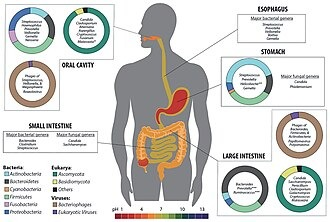
4.What is the gut microbiome?A biome is a distinct ecosystem characterized by its environment and its inhabitants. Your gut — inside your intestines — is in fact a miniature biome, populated by trillions of microscopic organisms. These microorganisms include over a thousand species of bacteria, as well as viruses, fungi and parasites.Gut microbes can affect your nervous system through the gut-brain axis — the network of nerves, neurons and neurotransmitters that runs through your GI tract. Certain bacteria actually produce or stimulate the production of neurotransmitters (like serotonin) that send chemical signals to your brain.Bacterial products may also affect your nervous system. Short-chain fatty acids appear to have positive effects, while bacterial toxins might damage nerves. Researchers continue to investigate how your gut microbiome might be involved in various neurological, behavioral, nerve pain and mood disorders.they contribute to human health and wellness in many ways.

Image

Gratitude

19 Aug