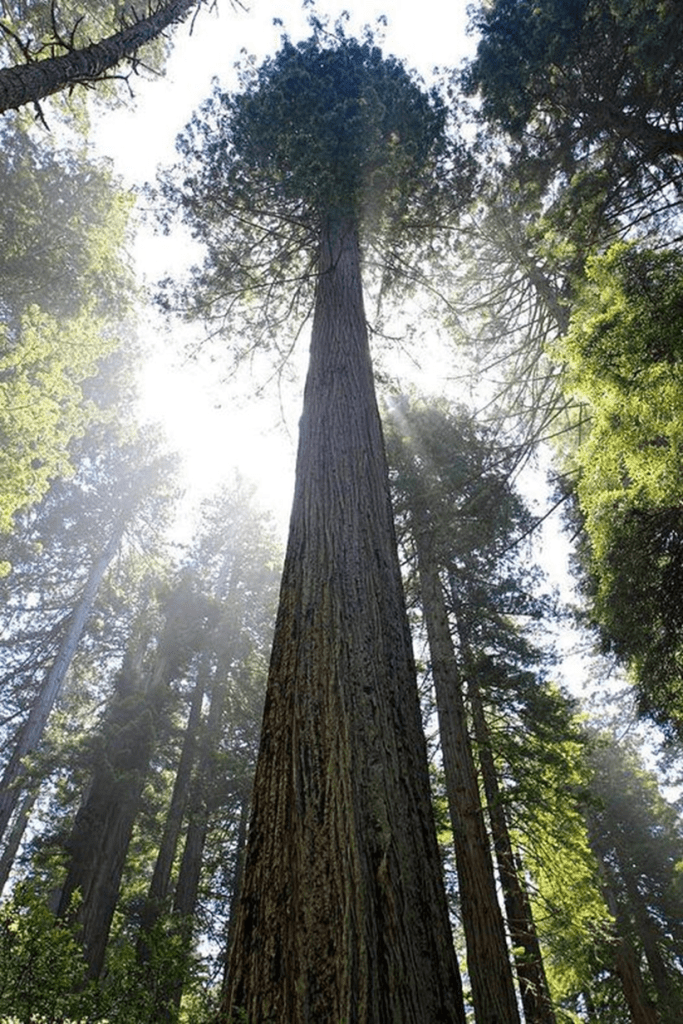
‘The records show that the air and earth potentials fluctuated in phase with the trees’ potentials. Statistical analysis revealed well-known diurnal rhythms in all four records, as well as the lunar cycle and the 11-year cycle of solar activity. These findings leave little doubt that trees, in particular, are sensitive to electric and electromagnetic fields from the earth and outer space, acting as antennae to the universe. Trees connect us to the universe. This may be why a walk in the woods or being near to woods and forests is beneficial to health.’ Harold Saxton Burr
Mitakuye Oyasin refers not just to the interconnectedness of all that exists – plant, animal, mineral – but also includes elements such as rain, wind, and lightning. Honoring all phenomena in this way allows us to appreciate not just the sky, nature, and living beings, but the rhythms and cycles of the natural world. We can tap into the Lakota Sioux concept of “Mitakuye Oyasin,” or “all my relations,” and appreciate the fact that everything is connected to everything else, making all that is truly one family. From the origins of the universe to the evolution of life on earth, we can celebrate our shared origins.”
While Apophatic theology was often in the past regarded as heretical, blasphemy, and unorthodox, we have seen in the previous chapters that now the sciences including physics, cosmology, psychology, biology, ecology, linguistics, as well as meditation, all provide a secure platform for the non-dualistic Apophatic convictions and practice. Apophatic teachings and analysis clearly provide an alternative to the dominant Dualistic Cataphatic dogma. This acceptance and application of the non-dualist perspective is not just an academic survey but a way of living that has crucial truths that benefit the individual, interpersonal, biological, psychological, sociological, spiritual, societal, and ecological levels.
“Everything should be as simple as it can be but not simpler!” ~ Albert Einstein
The Biological Origin of “Self”
In my book, The Buddha’s Teachings: Seeing Without Illusion, I explore the Buddha’s concept of Anatta, or no-self. I show that the Buddha described the concept of self as a relative, linguistic, social construct dependent on culture and time. Experiencing this insight of ‘no-self’ helps us to comprehend and dissolve away the attachment and clinging to self-identification that causes suffering until ultimately all traces of self-identification are gone and all that’s left is freedom. However, the nature of self is one of the most enduring assumptions of humankind, and if asked how one knows they have a self, often the reply is, “I can make decisions, I can choose; therefore, I know there is an ‘I’ who is the chooser behind my choices.” This blog explores the question, “How real is the conscious self as the cognitive executive in charge?”
The newest research in neuroscience and biology indicates that besides some significant cognitive embellishments on the original phenomena, selectivity and choice is a function based on an organism’s biological and evolutionary need to minimize and sort out all possible “blooming, buzzing confusion” (William James) that would occur without the body’s filtering system. In his book, Quantum Reality, Physicist Wolfram Schommers quotes physician Hoimar von Ditfurth, who stated: “No doubt, the rule ‘As little outside world as possible, only as much as is absolutely necessary is apparent in evolution. It is valid for all descendants of the primeval cell and therefore for ourselves. Without a doubt, the horizon of the properties of the tangible environment has been extended more and more in the course of time. But in principle, only those qualities of the outside world are accessible to our perception apparatus which, in the meantime, we need as living organisms in our stage of development. Also, our brain has evolved not as an organ to understand the world but an organ to survive.”
In fact, every second, we are inundated with information from the many stimuli around and in us. In order to keep the brain from becoming overwhelmed by the steady stream of data competing for attention, brain cells work together to sort and prioritize information. Our sense organs and our brain operate as an intricate kind of filter which limits and directs the mind’s focus, so that under normal conditions, attention is concentrated on just those objects or situations or sensations that are of importance to the organism. This ability to pay attention to relevant information while ignoring distractions is a core brain function.
Without the ability to focus and filter out “noise” we could not effectively function. As reported in Science Digest, in a study appearing in the journal Nature, researchers from Dartmouth’s Geisel School of Medicine and the University of California Davis studied communications between synaptically connected neurons under conditions where subjects shifted their attention toward or away from visual stimuli that activated the recorded neurons. The results point to a novel mechanism by which attention shapes perception by selectively altering presynaptic weights to highlight sensory features among all the noisy sensory input. “While our findings are consistent with other reported changes in neuronal firing rates with attention, they go far beyond such descriptions, revealing never-before tested mechanisms at the synaptic level,” said study co-author Farran Briggs Ph.D., assistant professor of Physiology and Neurobiology at the Geisel School of Medicine. “Many processes in the brain occur automatically and without involvement of our consciousness. This prevents our mind from being overloaded by simple routine tasks. But when it comes to decisions, we tend to assume they are made by our conscious mind. This is questioned by our current findings.” The researchers found that it was possible to predict from brain signals which options participants would take up to seven seconds before they consciously made their decision. The fact that decisions could be predicted so long before they were made goes against our usual intuitive sense that we always make our decisions with conscious deliberation, and that this deliberation process is a foundation of our self.
How does our brain achieve this ability to choose and focus attention? The answer is believed to be connected with what is called “efficient selection”, which is likened to a filter; routing important sensory information to higher-order perceptual areas of the brain while suppressing disruptions from irrelevant information. Reporting their research in Neuron, Justin Gardner and colleagues at the RIKEN BSI, found that sensory signals were efficiently selected. They said that stimuli that are particularly disruptive to our ability to focus and that evoke high neural activity, are preferentially passed on to perceptual areas of the brain because stimuli with high contrast that evoke large sensory responses, such as flashing lights or loud noises, can easily disrupt our ability to focus.
Expanding on the description of the neurobiological- cognitive system in his paper, The self: social construct or neurobiological system?, Philipp Rau wrote:
‘We can rightfully reject the social theory of selfhood with its claim that the self is only a social post-lingual emergent. Rather, the self is at root a neurobiological-cognitive system that, long before socialization, allows the individual to be conscious of itself in the world. But having rejected a social account of how the self emerges does not compel us to deny that the self, once emerged, can be shaped by sociocultural factors. The processes contributing to the self are distributed across a number of neuroanatomical structures. It is only their synchronous neural activity that generates a self. The core self of the neuro-cognitive theory only arises when the organism becomes conscious of itself interacting with the world. Thus, the self emerges precisely when the internal–external boundary is straddled. The phenomenal content of the neuro-cognitive self, however, corresponds to what Cartesian intuition would have us conceive of as an ontologically independent self. There is no such self-independent of the brain and body, of course, but the self-representational processes described by the neuro-cognitive theory, in creating a conscious self-model, produce in us the illusion that there might be (cf. Metzinger, 2003, chs. 1, 6, 8).
What Descartes in his Meditations believed to have isolated as “a res cogitans” (a thinking thing), is the content of the core self, the product of a neurobiologically driven cognitive system.’
Biochemist Mae-Wan Ho goes one step further by saying that this system is a function not only of the brain, but of how the organism functions as a coherent whole; what she calls “the quantum coherence of the organism”. In an article on the ISIS website titled, Quantum Coherence and Conscious Experience, she wrote, “I propose that quantum coherence is the basis of living organization and can also account for key features of conscious experience – the ‘unity of intentionality, our inner identity of the singular ‘I’, the simultaneous binding and segmentation of features in the perceptive act, the distributed, holographic nature of memory, and the distinctive quality of each experienced occasion.”
In her book, The Rainbow and the Worm, she explains that:
“The liquid crystalline water matrix pervades the entire organism from the extracellular connective tissues to the interior of every single cell and is the carrier of electric and electromagnetic signals. Special membrane proteins have water-filled channels that cross the cell membrane, acting as ‘proton wires’ to transport protons in and out of the cell. This is a special instance of the proton jump conduction that’s much faster than ordinary electric currents through wires, and it could be happening all over the body. The same liquid crystalline matrix transmits the heart’s large pulsating electromagnetic field throughout the body, including the brain, which paces and intercommunicates with the myriad local rhythms. Within the cell, it transmits the much higher frequency electromagnetic waves emitted by molecules that depend on specific frequencies to recognize one another and coordinate their actions even at a distance. So we see that the body is a quantum coherent organism which creates and recreate herself from moment to moment.”
Mae -Wan Ho likes to call this process “Quantum jazz”, which is the music of the organism dancing life into being. She goes on to write that:
“Quantum jazz is played out by the whole organism, in every nerve and sinew, every muscle, every single cell, molecule, atom, and elementary particle, a light and sound display that spans seventy octaves in all the colors of the rainbow. There is no conductor or choreographer. Quantum jazz is written while it is being performed; each gesture, each phrase is new, shaped by what has gone before, though not quite. The organism never ceases to experience her environment, taking it in (entangling it) for future reference, modifying her liquid crystalline matrix and neural circuits, recoding and rewriting her genes. Quantum coherence is the ‘I’ in everyone that gives unity to conscious experience.”
As we can see from these examples of a new understanding about the significance of biological regulation and coherence of the organism, the previously intuitive construct of the “Cartesian Theater” in the brain, wherein the self sits as a spectator on the world and self acts as the CEO executive of all decision making, is exposed as an illusion. Clearly, the biologically based core functions of organization, selectivity, and coherence are necessary for organism survival. The abstracted cognitive embellishments serve as relative, convenient designations or identifications, which constructs a virtual presence of the ‘self’ illusion, and is based in ignorance, and through steadfast identification creates craving and suffering. Only now are we able to empirically support the Buddha’s insights of ‘anatta or no-self’ which he gained through the introspective practice of bhavana, or meditation.
Ecosystems consist of living organisms interacting with the non-living elements in their environment, such as soil, atmosphere, water, and heat and sunlight, in ways that are essential for their survival. We all know that trees produce the oxygen we breathe, but most of us do not know that our oceans are at least as important for producing healthy air. Another example is that over 500 plant species rely on bats to pollinate their flowers, including species of mango, banana, and cocoa. Like birds, some bats play a critical role in spreading the seeds of trees and other plants and also help to reduce the number of mosquitos.
Alexander Von Humboldt, the 18th-century scientist and explorer, world-famous in his time, was the first to explain the fundamental functions of the forest for the ecosystem and climate, claiming that the world is a single interconnected organism. This is the concept of nature as we know it today. According to Von Humboldt, everything, to the smallest creature, has its role and together makes the whole, in which humankind is just one small part (Andrea Wulf, 2015).
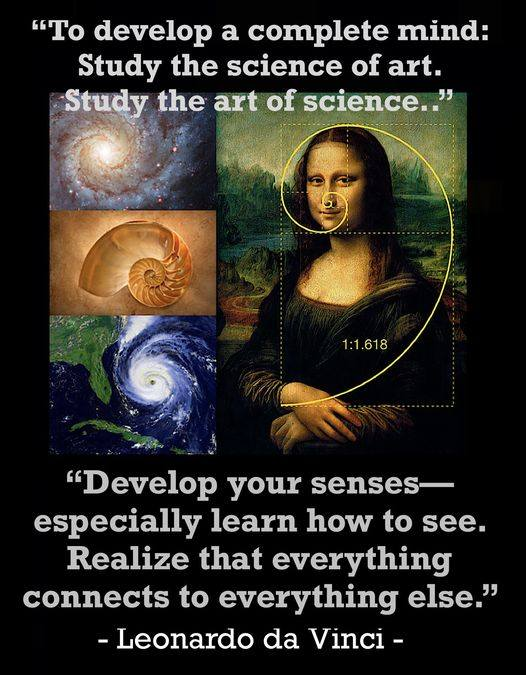
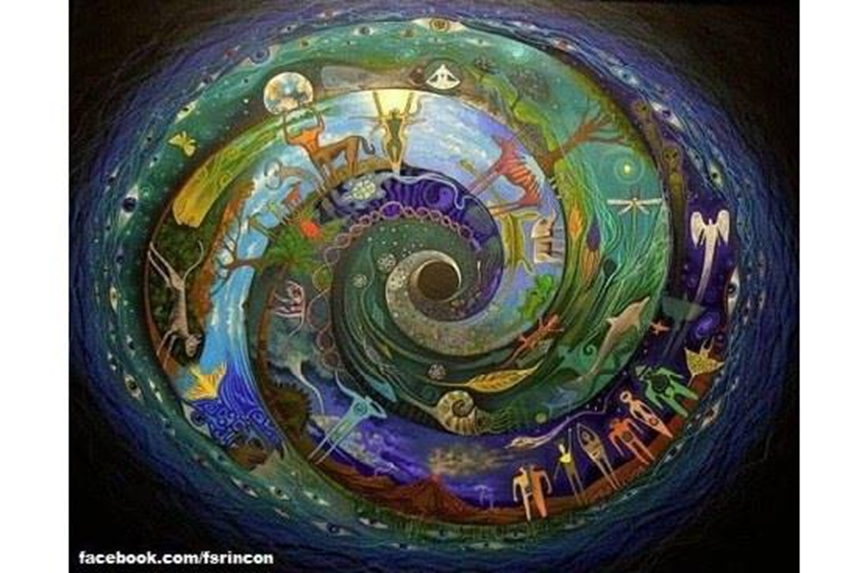




 We are all Interconnected even with the Universe