“The “feeling of being stared at” is the focus of a subset of distant-mental-interaction studies. This is a particularly interesting belief to investigate because it is related to one of the oldest known superstitions in the Western world, the “evil eye,” and to one of the oldest known blessings in the Eastern world, the darshan, or gaze of an enlightened master. Most ancient peoples feared the evil eye and took measures to deflect the attraction of the eye, often by wearing shiny or attractive amulets around the neck. Today, most fears about the evil eye have subsided, at least among educated peoples. And yet many people still report the “feeling of being stared at” from a distance. Is this visceral feeling what it appears to be—a distant mental influence of the nervous system—or can it be better understood in more prosaic ways? In the laboratory today, the question is studied by separating two people and monitoring the first person’s nervous system (usually electrodermal activity) while the second person stares at the first at random times over a one-way closed-circuit video system. The stared-at person has no idea when the starer is looking at him or her. Figure 9.2. Effect sizes for studies testing the “feeling of being stared at,” where 50 percent is chance expectation. Confidence intervals are 95 percent. Figure 9.2 shows the results for staring studies conducted over eight decades.34 Similar to William Braud’s electrodermal studies but conducted in a context that more closely matched common descriptions of “feeling stared at,” these studies resulted in an overall effect of 63 percent where chance expectation is 50 percent. This is remarkably robust for a phenomenon that—according to conventional scientific models—is not supposed to exist. The combined studies result in odds against chance of 3.8 million to 1. Summary Given the evidence for psi perception and mind-matter interaction effects discussed so far, we could have expected that experiments involving living systems would also be successful. The studies discussed here show that our expectations are confirmed. The implications for distant healing are clear. All the experiments discussed so far have been replicated in the laboratory dozens to hundreds of times. They demonstrate that some of the “psychic” experiences people report probably do involve genuine psi. Now we move outside the laboratory to examine a new type of experiment, one that explores mind-matter interaction effects apparently associated with the collective attention of groups.”
― Dean Radin, The Conscious Universe: The Scientific Truth of Psychic Phenomena
The “feeling of being stared at”
7 MarEverything is interconnected – Quotes
15 Feb♦♦♦
It really boils down to this: that all life is interrelated. We are all caught in an inescapable network of mutuality, tied together into a single garment of destiny. Whatever affects one directly, affects all indirectly. We are made to live together because of the interrelated structure of reality . . . Before you finish eating breakfast in the morning, you’ve depended on more than half the world. This is the way our universe is structured; this is its interrelated quality. We aren’t going to have peace on Earth until we recognize the basic fact of the interrelated structure of all reality.
– Dr. Martin Luther King, Jr. Christmas 1967
∞Peace comes within the souls of men when they realize their oneness with the universe, when they realize it is everywhere, it is within each one of us. – Black Elk.
∞All things are connected
like the blood that unites us.
We did not weave the web of life,
We are merely a strand in it.
Whatever we do to the web, we do to ourselves.
– Chief Seattle
∞We are awesome beyond all imagining, because we are part of everything that has been, is now and ever will be. – Maggie Hamilton
∞But I’ll tell you what hermits realize. If you go off into a far, far forest and get very quiet, you’ll come to understand that you’re connected with everything. – Alan Watts
∞A hundred times a day I remind myself that my inner and outer life depends on the labours of other men, living and dead, and that I must exert myself in order to give in the measure as I have received and am still receiving.
– Albert Einstein
∞We do not realize often enough that we are dependent on one another; at the simplest material level, we are all interdependent for our daily needs, and in this way we owe a debt to all beings. – Kalu Rinpoche
∞It is important to understand how much your own happiness is linked to that of others. There is no individual happiness totally independent of others. – The 14th Dalai Lama
∞This is the highest praise, to say you have ubuntu. This is a person who recognises that he exists only because others exist; a person is a person through other persons. When we say you have ubuntu, we mean that you are gentle, you are compassionate, you are hospitable, you want to share, and you care about the welfare of other. This is because my humanity is caught up with your humanity.
– Bishop Tutu.
∞We must understand each other and work in harmony with one another, because it is our responsibility to develop in human beings their natural disposition for peace.
– The 14th Dalai Lama
∞I look at every human being from a more positive angle; I try to look for their positive aspects. This attitude immediately creates a feeling of affinity, a kind of connectedness. – The 14th Dalai Lama
∞According to Buddhism, the life of all beings –human, animal, or otherwise –is precious, and all have the same right to happiness. It is certain that birds, wild animals – all the creatures inhabiting our planet –are our companions. They are a part of our world, we share it with them. – The 14th Dalai Lama
∞The friend who is a helpmate,
the friend in happiness and woe,
the friend who gives good counsel, the friend who sympathizes too –
these four as friends the wise behold
and cherish them devotedly
as does a mother her own child.
– Buddha
∞Those who bring sunshine into the lives of others, cannot keep it from themselves.
– James M. Barrie
∞A human being is part of the whole called by us ‘universe’, a part limited in time and space. We experience ourselves, our thoughts and feelings as something separate from the rest. A kind of optical delusion of consciousness. This delusion is a kind of prison for us, restricting us to our personal desires and to affection for a few persons nearest to us. Our task must be to free ourselves from the prison by widening our circle of compassion to embrace all living creatures and the whole of nature in its beauty. The true value of a human being is determined by the measure and the sense in which they have obtained liberation from the self [ego]. We shall require a substantially new manner of thinking if humanity is to survive. ― Albert Einstein
∞An individual has not started living until he can rise above the narrow confines of his individualistic concerns to the broader concerns of all humanity.
― Martin Luther King, Jr.
∞Interdependence is and ought to be as much the ideal of man as self-sufficiency. Man is a social being. ― Mahatma Gandhi
∞The good man is the friend of all living things. ― Mahatma Gandhi
∞Friendship is based on the oldest and most intrinsic human awareness that there is more to life than just ourselves. ― Christopher Hansard
∞There is no true joy in a life lived closed up in the little shell of the self. When you take one step to reach out to people, when you meet with others and share their thoughts and sufferings, infinite compassion and wisdom well up within your heart. Your life is transformed. – Daisaku Ikeda
∞True spirituality is to be aware that if we are interdependent with everything and everyone else, even our smallest, least significant thoughts, words and actions has real consequences throughout the universe.
– Sogyal Rinpoche
∞We are her to awaken from the illusion of our separateness.
–Thich Nhat Hahn
Oneness isn’t a mystical achievement
1 FebOneness isn’t a mystical achievement or something you arrive at after years of effort; it’s simply what is already happening.
The effort usually comes from trying to feel connected, when in fact nothing was ever disconnected to begin with.
We are not in the universe like an object placed inside a container; we are something the universe is doing here and now just as a wave is something the ocean does.
Our thoughts, our breath, our body, and our relationships are not private events occurring in isolation, but expressions of the same ongoing process that moves clouds, grows trees, and turns seasons.
When this is seen, and not believed as an idea, but noticed as an experience, the sense of isolation softens.
Life stops feeling like a personal struggle to justify your place in the world and begins to feel more like participation in a larger movement, a dance you were never outside of, only momentarily imagining you were.
When we reflect on the idea of oneness, that we aren’t separate objects in a world of other objects but part of a single unfolding process, it can help us understand why events in one place ripple outward and affect people elsewhere.
The suffering and struggle communities face in any place around the world are not isolated ‘situations happening over there.’ They are part of a larger human system, shaped by shared histories, politics, economics, and our collective choices about how we govern, how we care for one another, and how we respond.
Seeing through the lens of interconnectedness, we notice that these aren’t isolated headlines: they are expressions of how we still grapple with systems that separate people into categories of ‘us’ versus ‘them.’
Oneness doesn’t mean ignoring real differences or injustices; it means recognizing that every human being’s pain and joy matters, and that the well-being of one community inevitably affects the well-being of others.
When one group is harmed or denied dignity, the reverberations are felt far beyond that community, shaping how all of us see justice, compassion, and our shared humanity.
We are not separate, what happens to one place touches the whole and indifference is not neutral.
To see our interconnectedness is to be quietly, insistently called into responsibility.
Connection is not a feeling we wait for; for it is something we practice through attention, through refusal, to care.
To resist, in this sense, is not only to oppose violence and injustice where we see it, but to interrupt the habits that allow harm to be normalized, distant, or forgotten. It is to listen, to speak, to show up, to protect one’s other dignity in ways small and structural,
Resistance rooted in oneness does not harden the heart, it sharpens it. It says: your suffering is not outside my concern; your freedom is bound up with mine. And so we act. Not because we are heroes or saviors but because separation was never real to begin with.
To connect us is to refuse the lie that some lies are disposable. To resist is to insist, again and again, on a world organized around love and care rather than domination, relationship rather than erasure.
This is not abstract philosophy it is lived practice. And it begins wherever we are.
If we take interconnectedness seriously, then awareness alone is not enough,
Seeing what is happening calls us into action. This means refusing silence when harm is justified or ignored. It means learning, naming what we see, and standing publicly against policies and systems that dehumanize, whether through state violence, displacement, occupation, or enforced poverty.
Action looks like showing up for communities under attack, amplifying voices that are being erased, demanding accountability from those in power, and materially supporting people on the front lines through mutual aid, organizing and sustained pressure.
To connect is to commit. To resist is to act in ways that make separation harder to maintain.
We choose where to spend our money, how we use our platforms, which stories we repeat, and which injustices we refuse to normalize.
We build networks of care, protect one another, and insist again and again that no one is disposable.
This is how oneness becomes practice, not theory: through collective action that interrupts harm and moves us toward a world organized around dignity, justice, and shared responsibility.
Wherever you are, whoever you are, all of us stand eye to eye, stand in love and solidarity with you.
Liberation to all,
Aya Gozawi Faour, Co-Founder, Olive Odyssey
Irreducible
8 JanUnion Is in the Heart
Follow the advice of your heart, because no one will be more faithful to you than him. —Book of Sirach, 37.13
I think that the positive forces that will create our future will not be the forces and the laws of matter, but those of conscious cooperation, comprehension, and love for others that all beings in existence must sooner or later manifest because these values are the essence of our deepest nature.
I also think that the most effective way to achieve union is through a process of collective and cooperative creation of a just, empathic, and loving society through right and courageous actions informed by the heart and by the intuitive and rational mind. Then our experience and knowing will grow in our hearts and they will guide our individual actions through an ever-higher level of consciousness.
Unfortunately, today there is the real danger of letting ourselves be seduced by the spreading culture of digital ontology and digital consumerism that replaces true and profound relationships with virtual and superficial ones, thus halting, if not reversing, our spiritual development.
Social networks designed to bombard people with suggestive messages, often personalized to reinforce personal biases or based on false information or on presumed conspiratorial theories, generate groups that can become alienated from reality in self-isolating worlds. Nikola Tesla said that “progress must serve to improve the human race; if not, it is only a perversion.”
Technology must be used to help us discover our true nature, not to further imprison us in meaningless virtual worlds designed to enrich the richest. We have come to the point where we can truly unite as humans no matter where we were born, or stay divided in warring factions with ever increasing destructive technology on our side. Only when we truly comprehend that we are responsible for our experiences and that the choice is ours alone, can we begin to truly know ourselves and the world.
To know ourselves more and more, we need a new empathic science that can convert scientific knowledge into deep lived knowing and from it generate new scientific knowledge. Similarly, we need a new rational spirituality that can convert lived knowing into new scientific knowledge and from it generate new lived knowing. These two disciplines can then intertwine in endless and mutual crescendo.
This is the essence of the Creative Principle of One. Within this vision, empathic science and rational spirituality, integrating and interweaving, will evermore increase our loving, joyful, and fulfilling union with the Whole.
Federico Faggin
This universal force is LOVE.
3 JanDear Lieserl, Your father Albert Einstein
In the late 1980s, Lieserl, the daughter of the famous genius, donated 1,400 letters, written by Einstein, to the Hebrew University. This is one of them, for Lieserl Einstein.
I ask you to guard the letters as long as necessary, years, decades, until society is advanced enough to accept what I will explain below.There is an extremely powerful force that, so far, science has not found a formal explanation to. It is a force that includes and governs all others, and is even behind any phenomenon operating in the universe and has not yet been identified by us.
This universal force is LOVE.
When scientists looked for a unified theory of the universe they forgot the most powerful unseen force. Love is Light, that enlightens those who give and receive it. Love is gravity, because it makes some people feel attracted to others. Love is power, because it multiplies the best we have, and allows humanity not to be extinguished in their blind selfishness. Love unfolds and reveals. For love we live and die. Love is Divine and Divine is Love.This force explains everything and gives meaning to life. This is the variable that we have ignored for too long, maybe because we are afraid of love because it is the only energy in the universe that man has not learned to drive at will. To give visibility to love, I made a simple substitution in my most famous equation.If instead of E = mc2, we accept that the energy to heal the world can be obtained through love multiplied by the speed of light squared, we arrive at the conclusion that love is the most powerful force there is, because it has no limits.
After the failure of humanity in the use and control of the other forces of the universe that have turned against us, it is urgent that we nourish ourselves with another kind of energy…If we want our species to survive, if we are to find meaning in life, if we want to save the world and every sentient being that inhabits it, love is the one and only answer. Perhaps we are not yet ready to make a bomb of love, a device powerful enough to entirely destroy the hate, selfishness and greed that devastate the planet. However, each individual carries within them a small but powerful generator of love whose energy is waiting to be released.When we learn to give and receive this universal energy, dear Lieserl, we will have affirmed that love conquers all, is able to transcend everything and anything, because love is the quintessence of life.
I deeply regret not having been able to express what is in my heart, which has quietly beaten for you all my life. Maybe it’s too late to apologize, but as time is relative, I need to tell you that I love you and thanks to you I have reached the ultimate answer! “.
Your father Albert Einstein’
Four Incredibly Significant Communicators/operators within our amazing body functioning simultaneously……
27 AugFour Incredibly Significant Communicators/operators within our amazing body functioning simultaneously……
1.The vagus nerve is the longest cranial nerve and a primary component of the parasympathetic nervous system, controlling many involuntary functions, including heart rate, digestion, respiration, and mood. It also plays a crucial role in the gut-brain axis, facilitating communication between the brain and digestive tract. By stimulating the vagus nerve, one can support various aspects of physical and mental health, from reducing inflammation to improving mood.
2.Heart-Brain Communication that communication between the heart and brain actually is a dynamic, ongoing, two-way dialogue, with each organ continuously influencing the other’s function. Research has shown that the heart communicates to the brain in four major ways: neurologically (through the transmission of nerve impulses), biochemically (via hormones and neurotransmitters), biophysically (through pressure waves) and energetically (through electromagnetic field interactions). Communication along all these conduits significantly affects the brain’s activity. Moreover, research shows that messages the heart sends to the brain also can affect performance.
3.Spinal nerves are 31 pairs of mixed nerves that connect the spinal cord to the body, acting as a communication pathway between the central nervous system and the periphery. These nerves transmit sensory information from the body to the spinal cord and brain, and carry motor commands from the brain and spinal cord to muscles and other effector organs. They are also involved in autonomic functions through sympathetic and parasympathetic fibers.
4.What is the gut microbiome?A biome is a distinct ecosystem characterized by its environment and its inhabitants. Your gut — inside your intestines — is in fact a miniature biome, populated by trillions of microscopic organisms. These microorganisms include over a thousand species of bacteria, as well as viruses, fungi and parasites.Gut microbes can affect your nervous system through the gut-brain axis — the network of nerves, neurons and neurotransmitters that runs through your GI tract. Certain bacteria actually produce or stimulate the production of neurotransmitters (like serotonin) that send chemical signals to your brain.Bacterial products may also affect your nervous system. Short-chain fatty acids appear to have positive effects, while bacterial toxins might damage nerves. Researchers continue to investigate how your gut microbiome might be involved in various neurological, behavioral, nerve pain and mood disorders.they contribute to human health and wellness in many ways.


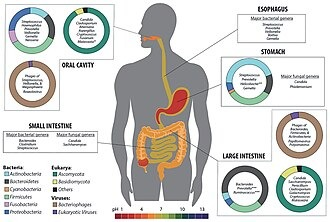

Our Human bodies are perfectly interconnected.
12 JulOur Human bodies are perfectly interconnected.
Our bodies are composed of many separate systems – or have been taught in school for generations. The theory that our respiratory system, digestive system, reproductive system, and others each work on their own is still the most popular narrative. Yet in truth, every organ and system in our bodies are interconnected. If you neglect one part, sooner or later the others will feel the effects.Each organ belongs to one of ten human body systems. These body systems are interconnected and dependent upon one another to function. Your heart does not beat unless your brain and nervous system tell it to do so. Your skeletal system relies on the nutrients it gains from your digestive system to build strong, healthy bones. Each body system works with the others
Our organs don’t work in solo, organs also function together in groups, The relationships between them mean our entire human body is interconnected. The interconnectivity between these organs means that when a person experiences disease in one of these areas, it increases the chances of one or all the other systems being affected. This can result in the worsening of the disease overall.
This also means that when improvements are made in one area through lifestyle changes and appropriate care, positive improvements are likely to be seen in other organs and systems.
By taking actions such as healthy eating, exercising more, meditation, medication, and not smoking, it is possible to reduce the risk of further damage and to prevent or delay organs from getting worse.
Scientists categorize groups of organs into different body systems, however, these systems do not work in isolation. A disorder in one system can cause other systems to break down. Although each organ has its specific functions called organ systems. Some examples of organ systems and their functions include the digestive system, the cardiovascular system, and the musculoskeletal system.
Organ systems often work together to do complicated tasks. For example, after a large meal is eaten, several organ systems work together to help the digestive system obtain more blood to perform its functions. The digestive system enlists the aid of the cardiovascular system and the nervous system. Blood vessels of the digestive system widen to transport more blood. Nerve impulses are sent to the brain, notifying it of the increased digestive activity. The digestive system even directly stimulates the heart through nerve impulses and chemicals released into the bloodstream. The heart responds by pumping more blood. The brain responds by perceiving less hunger, more fullness, and less interest in vigorous physical (musculoskeletal system) activity, which preserves more blood to be used by the digestive system instead of by skeletal muscles.
Communication between organs and organ systems is vital. Communication allows the body to adjust the function of each organ according to the needs of the whole body. In the example above, the heart needs to know when the digestive organs need more blood so that it can pump more. When the heart knows that the body is resting, it can pump less. The kidneys must know when the body has too much fluid so that they can produce more urine, and when the body is dehydrated so that they can conserve water.
Homeostasis is the term used to describe how the body maintains its normal composition and functions. Because organ systems communicate with each other, the body can maintain stable amounts of internal fluids and substances. Also, the organs neither underwork nor overwork, and each organ facilitates the functions of every other organ.
Sabrina Libretti; Yana Puckett.
Flow and Mindfulness
3 JunFLOW AND MINDFULNESS
I recently rediscovered the concept of “flow” that Mihaly Csikszentmihalyi introduced as a psychological concept in 1990 with his book Flow: The Psychology of Optimal Experience. I was struck by its application within positive psychology. Positive psychology focuses on behaviors that foster a flourishing, meaningful, and worthwhile life, aiming to discover methods for personal enhancement. The flow state, also termed “optimal experience,” is characterized by a harmony between mind and body, resulting in complete engagement and enjoyment in the activity. Csikszentmihalyi described this experience as one where,
…the ego falls away. Time flies. Every action, movement, and thought follows inevitably from the previous one, like playing jazz. Your whole being is involved, and you’re using your skills to the utmost.
He identified key characteristics of flow, such as the merging of action and awareness, a loss of self-consciousness, and a distorted sense of time.
Interestingly, there are notable parallels between Csikszentmihalyi’s concept of flow and the Buddhist principle of mindfulness. I have been studying and teaching mindfulness for twenty years due to my interest in Buddhist teachings and their applications to mental health issues. Mindfulness, as defined by Kabat-Zinn (2012), involves wakefulness – a state of awareness in every waking moment – that enhances well-being, contentment, and absorption in the present moment, leading to a similar “losing track of time” as described in Csikszentmihalyi’s flow. It is intriguing to realize that my explorations and teaching of mindfulness included the concept of flow without my fully recognizing their interconnectedness.
There are important similarities between the practices of flow and mindfulness, and this paper will focus on several of these parallels. With mindfulness, we are consciously at one with the action. In the context of mindfulness, wakefulness can best be described as a state of focused awareness in every waking moment (Kabat-Zinn, 2012). Wakefulness enhances our subjective well-being and heightens our contentment with our inner self and the world. Finally, we “lose track of time” as we remain absorbed in the ever-present moment.
An illustration of the application of flow in mindfulness is when we remain in the nonjudgmental “now” and discover the sense of wholeness. Concepts like “in the moment,” “in the present,” and “centered” are all attempts to describe the mindfulness experience. By applying mindfulness to our everyday work, interpersonal interactions, leisure, hobbies, dance, yoga, walking, eating, and other pursuits, we transform our lives into constantly innovative and creative experiences. When completing a task, the mindfulness/flow experience fosters an impromptu, connected, creative, cheerful, and pleasant sensation. We experience an open state, where the interior and exterior are completely interconnected. We lose “ourselves” to discover who we really are.
We can experience oneness in any circumstance throughout our lives. By cultivating the mental culture of mindfulness, we refine the discipline to transcend the experience of duality. We enter a state of openness – of absolute connectedness between the inside and the outside. We surrender our carping, judging thoughts to flow. Our way of thinking typically categorizes everything into strict, binary categories of good and bad, right and wrong, either/or. In my book The Buddha’s Teachings: Seeing Without Illusion, A Contemporary Cognitive Science Perspective (available on Amazon), I describe, in contemporary language, how the Buddha taught this nondualism. Even though the process of thinking is not only acceptable but vital, we tend to make the mistake of assuming that our ideas, classifications, and beliefs are the only true reality or benchmark. An old saying comes to mind: “The mind is a great servant but a terrible master.”
Through the practice of mindfulness and the experience of living in a state of flow, we come to understand that wisdom, compassion, and happiness are attained when we relinquish our subject/object illusion. Life transforms into a less stressful, more creative, and enjoyable experience, allowing us to live a positive existence characterized by respect and care for both ourselves and others. The interconnectedness of life – the intrinsic connection between all living and non-living entities – becomes increasingly apparent, as does the preciousness of life itself. Integrating the flow and mindfulness experiences into our lives can have many positive effects that are just waiting to make a difference for us.
Would it not be prudent for our educational institutions, businesses, and governments to incorporate teachings on flow and mindfulness into their curricula? Such an initiative could positively alter our worldview, culture, and our relationships with both ourselves and one another. I believe that the incorporation of flow and mindfulness into our daily lives could yield countless positive effects that are poised to create meaningful change.
Rodger R Ricketts, Psy.D.
 We are all Interconnected even with the Universe