The human body is a miraculous, self-repairing organism.
Let’s look at a few of the many important reasons that science explains. Homeostasis is how your body regulates your internal systems so they function correctly. Your body works best when its internal environment — including things like temperature or oxygen levels — is just right. Balance is key because too much of even the most essential things can be harmful. In fact, you can’t survive without homeostasis and the processes that drive it.
The body features a brain that can store roughly 2.5 million gigabytes of information and a heart that pumps approximately 2,000 gallons of blood daily and beats over 3 billion times in a normal lifetime. Our blood vessels, if laid end-to-end, could circle the Earth four times, while the nose can distinguish over 1 trillion odor mixtures and the eyes can distinguish roughly 10 million different colors. The Microbiome contains about 35 trillion cells, and microorganisms can outnumber these cells to 39 trillion. Every minute, 300 million body cells die, but that’s really just a small fraction of the total cells we have. We produce 300 billion new cells every day and your body is constantly repairing and rebuilding.
Stardust Component: The atoms in your body are billions of years old, forged in exploding stars. Finding and maintaining the balance of homeostasis takes careful planning, that can make a big difference in your quality of life. The human body is indeed an astounding and sophisticated, interconnected and constantly interacting, both internally and externally, organism and we need to honor this gift with care and love.
A famous quote regarding this concept is by Chief Seattle: “Humankind has not woven the web of life. We are but one thread within it. Whatever we do to the web, we do to ourselves. All things are bound together. All things connect”. This emphasizes human interdependence with nature and responsibility for the ecosystem.
Here are more quotes highlighting that we are part of the web of life:
“Whatever we do to the web, we do to ourselves. All things are bound together. All things connect.” — Chief Seattle Xavier University.
“We do not weave the web of life, we are merely a strand in it.” — Chief Seattle.
“We shall walk together on this path of life, for all things are a part of the universe, and are connected with each other to form one whole unity.” — Maria Montessori Medium.
“Nothing exists in the universe that is separate from anything else. Everything is intrinsically connected, irrevocably interdependent…” — Neale D. Walsch Medium.
“The whole idea of compassion is based on a keen awareness of the interdependence of all these living beings…” — Thomas Merton Visible Network Labs.
“I am a part of all that I have met.” — Lord Tennyson Visible Network Labs.
“We are connected to all life on Earth. We are all part of something larger.
We gaze outwardly to the stars and inwardly to the atom, still seeking to measure it all in three-dimensions, which is in direct contrast to what we know the nature of the multi-dimensional Universe to be. This desire to measure and see everything in terms of our three-dimensional world allows a sleight of hand that reduces or collapses, or squashes, what is unified vibration or waves into what it is not – i.e., a particle that behaves as an individual solid, separate from the vast interconnectedness of vibration. And these particles are the building blocks of what we call matter, which we have observed to be separate from each other.
This is not true of course, but simply an illusion, as we know atoms are 99.99…% space, and space is filled with vibration. Even if it has become densified it is still just vibration and still very much connected to all other vibration, whether we like it or not.
We have this perception or need to unify, to come together, however in truth we are already all unified as one, and in this oneness we cannot help but be connected to everything else – such are the mechanics of vibration in space, our universe. Connecting to our oneness comes from a surrender to our multi-dimensional state, as it has been there all along. Whenever we try to unify ourselves, or anything in life, we are actually coming from a point of separateness, and we only ever achieve separateness from this.
In our desire to make sense of the world we seek to create and recreate everything to fit into the image of the material world that we uphold to be. We create the illusion that the world is made up of particles, and we use this to reinforce the notion of the individual. Therefore, it can be said quite clearly that there is no such thing as the individual, and therefore there is no such thing as the ‘I think’. By identifying purely as physical beings, have we disconnected from that which we truly are?
If we are only open to the physical reality with our separate identities, our gaze comes from that individuality and seeks separateness.
Quantum Mechanics simply describes the truth of our Universe.
If we say that it is only describing the atomic-world, are we denying the fact that all our chemistry is bound by the laws of quantum mechanics? This includes all biology, our bodies, the planet and all the stars. QM is not merely a theory, it is the basis of every aspect of life right down to the most practical, it is in fact a very practical science. Without these laws of quantum-physics we would not have mobile phones, GPS, laser, LED screens, MRI scanners, all our computer technology and communication media.
How did our modern-day science become separated into a myriad of very separate parts, often ignoring each other and the truths presented by one another? Quantum Mechanics naturally is central to all of science for it offers absolute truth to how all matter and energy in all sciences relate and interact. Yet the vast majority within the so-called ‘science’ field know very little of Quantum Mechanics. The very foundation of modern ‘evidence-based-science’ is flawed when a basic understanding of Quantum Mechanics is applied, for the ‘evidence’ is always affected by the observer.
We are actually living as a reduced or collapsed version of what we are, gazing with eyes that are blinkered from the truth: we are not individuals as such but rather inextricably connected to everyone and everything – just as every particle in the universe is connected to every other particle.
If we choose to see and recognise individuality we are creating and recreating that illusion, a corruption of the truth, simply a lie. The truth is that our Universe, as the name implies, is one song, or one unified vibration where nothing happens by itself. There is no such thing as individualisation – we cannot be separate from anything, everything is everything, the one is the all, a great oneness.
Our responsibility as scientists, as we all are, is to open our being to our world of space, a space filled with vibration constantly communicating with itself. And to know: I am that I am.
On Human Nature vs. Machines: “Man is not a machine; he is a spiritual being, expressing a depth of consciousness and emotion that transcends mere mechanical function.”
On the Danger of Misconception: “The idea that classical computers can become smarter than human beings is a dangerous fantasy. It is dangerous because if we accept this notion, we will inherently limit ourselves to expressing only a very small fraction of who we are, reducing the rich tapestry of human experience to mere computations.”
On Consciousness and Quantum Systems: “We are not even close to computers in terms of understanding the complexities of consciousness. While comparisons are often drawn, the reality is that the brain functions on an entirely different level. We are quantum systems, embodying a depth and intricacy that far surpasses that of artificial constructs.“
On Free Will: “Humanity stands at a significant crossroads. Either it chooses to return to the belief that it holds a fundamentally different nature than machines, or it risks being reduced to a mere machine among machines, losing the essence of what it means to be human.”
On Meaning and Understanding: “A computer ‘knows without knowing that it knows,’ highlighting a crucial distinction. It processes symbols without genuine understanding; there is no witness, no pause for reflection, and no self that engages in true comprehension of its actions or outputs.”
On the Limitations of AI: “AI cannot truly be empathic. The notion of ’empathic robots’ being developed to care for the elderly is overly simplistic and naive. Such claims fail to recognize the profound human capacity for empathy, which cannot be replicated through programmed responses or algorithms.”
I became aware that we’re all connected. This was not only every person and living creature, but the interwoven unification felt as though it were expanding outward to include everything in the universe- every human, animal, plant, insect, mountain, sea, inanimate object, and the cosmos. I realized that the entire universe is alive and infused with consciousness, encompassing all of life and nature. Everything belongs to an infinite Whole. I was intricately, inseparably immersed with all of life. We’re all facets of that unity- we’re all One, and each of us has an effect on the collective Whole.
Follow the advice of your heart, because no one will be more faithful to you than him. —Book of Sirach, 37.13
I think that the positive forces that will create our future will not be the forces and the laws of matter, but those of conscious cooperation, comprehension, and love for others that all beings in existence must sooner or later manifest because these values are the essence of our deepest nature.
I also think that the most effective way to achieve union is through a process of collective and cooperative creation of a just, empathic, and loving society through right and courageous actions informed by the heart and by the intuitive and rational mind. Then our experience and knowing will grow in our hearts and they will guide our individual actions through an ever-higher level of consciousness.
Unfortunately, today there is the real danger of letting ourselves be seduced by the spreading culture of digital ontology and digital consumerism that replaces true and profound relationships with virtual and superficial ones, thus halting, if not reversing, our spiritual development.
Social networks designed to bombard people with suggestive messages, often personalized to reinforce personal biases or based on false information or on presumed conspiratorial theories, generate groups that can become alienated from reality in self-isolating worlds. Nikola Tesla said that “progress must serve to improve the human race; if not, it is only a perversion.”
Technology must be used to help us discover our true nature, not to further imprison us in meaningless virtual worlds designed to enrich the richest. We have come to the point where we can truly unite as humans no matter where we were born, or stay divided in warring factions with ever increasing destructive technology on our side. Only when we truly comprehend that we are responsible for our experiences and that the choice is ours alone, can we begin to truly know ourselves and the world.
To know ourselves more and more, we need a new empathic science that can convert scientific knowledge into deep lived knowing and from it generate new scientific knowledge. Similarly, we need a new rational spirituality that can convert lived knowing into new scientific knowledge and from it generate new lived knowing. These two disciplines can then intertwine in endless and mutual crescendo.
This is the essence of the Creative Principle of One. Within this vision, empathic science and rational spirituality, integrating and interweaving, will evermore increase our loving, joyful, and fulfilling union with the Whole.
“So my biggest message is to live your life as an exercise in creativity, as if every discovery, every artistic exploration, matters in the cosmic tapestry of life—because it does. Follow your heart as you exuberantly combine the riot of colors the universe lays before you to make your life into your own masterpiece. You may be surprised by your creation. As when we listen to or play beautiful music, our goal is not to get to the end of the piece. The point is to enjoy the melodious, joyous journey the music takes us on, including the very first note and every single one that comes after it.” ― Anita Moorjani,What If This Is Heaven?: How Our Cultural Myths Prevent Us from Experiencing Heaven on Earth
The majority of individuals remain unaware that an alternative mode of living exists. They fail to recognize that contemporary society has compelled us to make a detrimental choice: by embracing an artificial environment, we ultimately diminish our capacity to connect with the vital energy of life. Many do not perceive this as a loss, as they are unfamiliar with this innate ability or the boundless potential and exceptional well-being it can provide. Regrettably, artificial stimuli now surpass natural positive signals. For example, a restful night’s sleep offers us positive natural stimuli that nurture our life energy. Similarly, for example, contact with the Earth, exposure to sunlight, consumption of natural foods, and the internal sensations of the body all convey positive signals that help sustain the connection with life energy. Unfortunately, these positive signals are increasingly overwhelmed by artificial and negative stimuli, resulting in a diminished natural sensation and disconnection from energy.
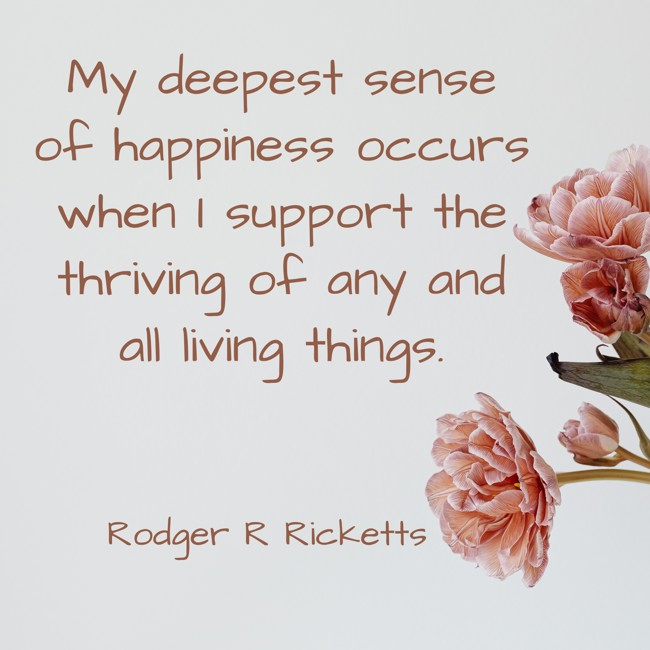
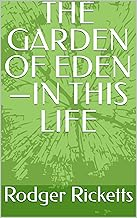
Today is the launch of my new book- The Garden of Eden in This Life. It is available in paperback, hardcover and kindle on Amazon. The following is the book description. With Metta, Rodger Ricketts.
What if the story of the Garden of Eden wasn’t just ancient myth, but a timeless guide to reclaiming our original wholeness? What if the “fall” from innocence was not the end, but an invitation to return—consciously—to a deeper unity with ourselves, each other, and the world?
In The Garden of Eden in This Life, Dr. Rodger R. Ricketts—a clinical psychologist, mindfulness teacher, and lifelong student of the Buddha’s teachings—unveils a profound perspective linking ancient wisdom, modern psychology, and the apophatic (negative) spiritual tradition. Drawing from over forty years of study and practice, he explores how non-dualistic teachings from Buddhism, science, and multiple faith traditions reveal the limits of language, the illusions of separation, and the path back to an integrated state of being.
You will journey through concepts like Sunyata (emptiness), the via negativa, and the psychology of transcendence—discovering how humanity’s separation from nature and spirit can be healed through direct experience, compassionate living, and expanded awareness.
This is more than a philosophical exploration—it’s a practical roadmap for living with clarity, joy, and interconnectedness. Through cross-cultural insights, reflective practices, and meditative approaches, Dr. Ricketts shows how embracing the ineffable mystery of life can dissolve division, foster ecological and social harmony, and restore our inner paradise.
Whether you are a seeker, a meditator, a student of comparative religion, or someone simply longing for a more meaningful existence, The Garden of Eden in This Life will inspire you to see beyond duality and step into a living experience of unity.
If you are ready to move beyond dogma, transcend the limits of language, and reawaken to the timeless ground of being—this book will guide you there. Open these pages and begin your journey back to the Garden… in this life.



 We are all Interconnected even with the Universe