“So my biggest message is to live your life as an exercise in creativity, as if every discovery, every artistic exploration, matters in the cosmic tapestry of life—because it does. Follow your heart as you exuberantly combine the riot of colors the universe lays before you to make your life into your own masterpiece. You may be surprised by your creation. As when we listen to or play beautiful music, our goal is not to get to the end of the piece. The point is to enjoy the melodious, joyous journey the music takes us on, including the very first note and every single one that comes after it.” ― Anita Moorjani,What If This Is Heaven?: How Our Cultural Myths Prevent Us from Experiencing Heaven on Earth
The majority of individuals remain unaware that an alternative mode of living exists. They fail to recognize that contemporary society has compelled us to make a detrimental choice: by embracing an artificial environment, we ultimately diminish our capacity to connect with the vital energy of life. Many do not perceive this as a loss, as they are unfamiliar with this innate ability or the boundless potential and exceptional well-being it can provide. Regrettably, artificial stimuli now surpass natural positive signals. For example, a restful night’s sleep offers us positive natural stimuli that nurture our life energy. Similarly, for example, contact with the Earth, exposure to sunlight, consumption of natural foods, and the internal sensations of the body all convey positive signals that help sustain the connection with life energy. Unfortunately, these positive signals are increasingly overwhelmed by artificial and negative stimuli, resulting in a diminished natural sensation and disconnection from energy.
Today is the launch of my new book- The Garden of Eden in This Life. It is available in paperback, hardcover and kindle on Amazon. The following is the book description. With Metta, Rodger Ricketts.
What if the story of the Garden of Eden wasn’t just ancient myth, but a timeless guide to reclaiming our original wholeness? What if the “fall” from innocence was not the end, but an invitation to return—consciously—to a deeper unity with ourselves, each other, and the world?
In The Garden of Eden in This Life, Dr. Rodger R. Ricketts—a clinical psychologist, mindfulness teacher, and lifelong student of the Buddha’s teachings—unveils a profound perspective linking ancient wisdom, modern psychology, and the apophatic (negative) spiritual tradition. Drawing from over forty years of study and practice, he explores how non-dualistic teachings from Buddhism, science, and multiple faith traditions reveal the limits of language, the illusions of separation, and the path back to an integrated state of being.
You will journey through concepts like Sunyata (emptiness), the via negativa, and the psychology of transcendence—discovering how humanity’s separation from nature and spirit can be healed through direct experience, compassionate living, and expanded awareness.
This is more than a philosophical exploration—it’s a practical roadmap for living with clarity, joy, and interconnectedness. Through cross-cultural insights, reflective practices, and meditative approaches, Dr. Ricketts shows how embracing the ineffable mystery of life can dissolve division, foster ecological and social harmony, and restore our inner paradise.
Whether you are a seeker, a meditator, a student of comparative religion, or someone simply longing for a more meaningful existence, The Garden of Eden in This Life will inspire you to see beyond duality and step into a living experience of unity.
If you are ready to move beyond dogma, transcend the limits of language, and reawaken to the timeless ground of being—this book will guide you there. Open these pages and begin your journey back to the Garden… in this life.
Four Incredibly Significant Communicators/operators within our amazing body functioning simultaneously……
1.The vagus nerveis the longest cranial nerve and a primary component of the parasympathetic nervous system, controlling many involuntary functions, including heart rate, digestion, respiration, and mood. It also plays a crucial role in the gut-brain axis, facilitating communication between the brain and digestive tract. By stimulating the vagus nerve, one can support various aspects of physical and mental health, from reducing inflammation to improving mood.
2.Heart-Brain Communicationthat communication between the heart and brain actually is a dynamic, ongoing, two-way dialogue, with each organ continuously influencing the other’s function. Research has shown that the heart communicates to the brain in four major ways: neurologically (through the transmission of nerve impulses), biochemically (via hormones and neurotransmitters), biophysically (through pressure waves) and energetically (through electromagnetic field interactions). Communication along all these conduits significantly affects the brain’s activity. Moreover, research shows that messages the heart sends to the brain also can affect performance.
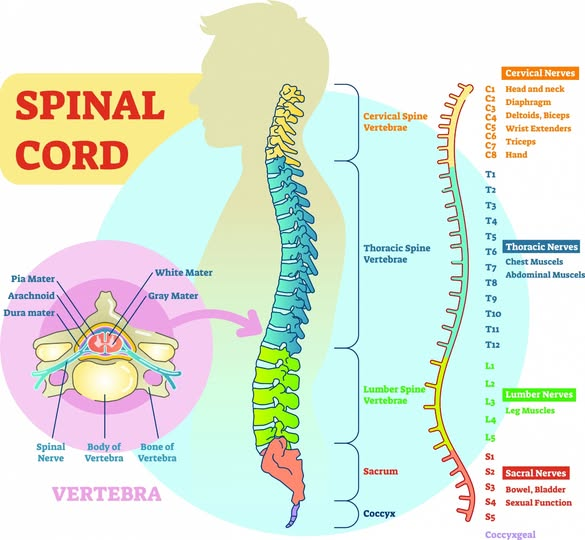
3.Spinal nerves are 31 pairs of mixed nerves that connect the spinal cord to the body, acting as a communication pathway between the central nervous system and the periphery. These nerves transmit sensory information from the body to the spinal cord and brain, and carry motor commands from the brain and spinal cord to muscles and other effector organs. They are also involved in autonomic functions through sympathetic and parasympathetic fibers.
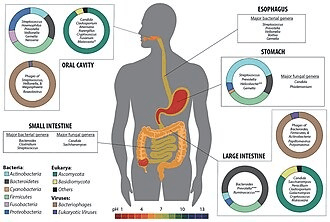
4.What is the gut microbiome?A biome is a distinct ecosystem characterized by its environment and its inhabitants. Your gut — inside your intestines — is in fact a miniature biome, populated by trillions of microscopic organisms. These microorganisms include over a thousand species of bacteria, as well as viruses, fungi and parasites.Gut microbes can affect your nervous system through the gut-brain axis — the network of nerves, neurons and neurotransmitters that runs through your GI tract. Certain bacteria actually produce or stimulate the production of neurotransmitters (like serotonin) that send chemical signals to your brain.Bacterial products may also affect your nervous system. Short-chain fatty acids appear to have positive effects, while bacterial toxins might damage nerves. Researchers continue to investigate how your gut microbiome might be involved in various neurological, behavioral, nerve pain and mood disorders.they contribute to human health and wellness in many ways.
The Honorable Harvest is a covenant of reciprocity between humans and the living world.
The protocols offer inspiration for how we might walk gently on the Earth while at the same time satisfying human needs. It is a practice with great relevance for our time; it is both ancient and urgent. The guidelines for the Honorable Harvest were taught to me by generous teachers, while respectfully picking medicines or berries but it applies to every exchange between people and the earth, to everything we consume. · In taking from the Earth we are taught to never take the first… Never taking the first, means you’ll never take the last. · And then, we ask permission. If you’re going to take a life, you have to be personally accountable. I know, in some places if you talked to a plant they’d call you crazy. But in a worldview that regards them as people, we just call it respect. 7 · If you’re going to ask permission, you have to listen for the answer. · If you are granted permission, then take only what you need and no more. · The Honorable Harvest counsels also that we take in such a way that does the least harm as possible. · Use everything that you take…it is disrespectful of the life that is given to waste it. We have forgotten this-the easiest way to have what you need is to not waste what you have. · Be grateful. Gratitude is powerful, much more than a simple thank you. Gratitude reminds us that our very existence relies on the gifts of others. And gratitude is humbling. It reminds us that we are just one member of the democracy of species. It reminds us that the earth does not belong to us. · The next tenet of the Honorable Harvest is to share with others-human and non. The Earth has shared generously with us, so we model that behavior in return. · Reciprocate the gift …. In return for the gifts of the Earth, we are called to give our own in return. · And finally, to take only that which is given to us.







 We are all Interconnected even with the Universe