Archive | Neuroscience RSS feed for this section

Enough is Enough- The cause of Social Suffering is not a Mystery

26 Jul

Enough is Enough- The cause of Suffering is not a Social Mystery

Author Rodger R Ricketts, Psy.D.

Copyright Rodger Ricketts Psy.D.,2025. All rights reserved. Protected by international copyright conventions. Reproduction is availble in case of brief quotations with due acknowledgement.

Decapitations, mass killings, enslavement, enforced starvation, abductions, sexual assaults, and the persistent plight of poverty and conflict are tragedies that have plagued humanity throughout history. Now, with the advent of modern mass communication, these heinous acts are revealed in their complete brutality as never before, making it impossible for anyone to ignore how critical the state of human suffering can be. This heightened awareness now provides a powerful motivation to put an end to such suffering.

Although the abuse of war and the inhuman attitude exhibited by people to fellow living beings is not new, the causes of such actions are revealing themselves more clearly. With the use of teachings offered by the Buddha we are now better able to remedy this and eventually stamp out these negative urges. The teachings of the Buddha, which are over 2,500 years, are increasingly applicable in the modern times, especially with the help of contemporary scientific discoveries. Through these teachings, a highly detailed model has been laid down which incorporates the use of moral and psychological understandings giving a clear and rational way to stop the suffering of ourselves, other people and living beings because of our ignorant and harmful intentions/actions.

This is a moment of excitement in humanity as we have a clear platform to develop a civilization with a harmonious relationship with the earth and its inhabitants. As opposed to the promises made in the past by different religious and philosophical movements, that favored one group and disadvantaged another, the vision advanced by the teachings of the Buddha and supported by modern science is not that at all. The new vision eliminates fixed identities and addresses the causes of conflict. What Buddha offers is a nonviolent, radical, yet functional way out of all that: a peaceful way out that can reduce and eventually remove the sufferings that has haunted humanity since its dawn. That misery contains a lot of distress that is caused by the ignorance of existence in human lives which creates a separation with reality. It is an important realization to help us cure the pain we both inflict and endure. This view can be summed up by a quote from the well-known physicist Albert Einstein: The religion of the future will be a cosmic religion. It should transcend a personal God and avoid dogmas and theology. Covering both the natural and the spiritual, it should be based on a religious sense arising from the experience of all things, natural and spiritual, as a meaningful unity. Buddhism answers this description.

It’s worth noting that not all people who suffer from violence experience it directly. This also impacts on the perpetrators of such acts. According to the Buddha, a person who chooses to commit violence out of anger, greed, ignorance, and selfishness has a deluded mindset. This is what lies behind the destructive behavior we witness in the world today and in the past. When this kind of mindset ignorance disappears, violence, greed, hostility, and selfishness will also disappear. The greatest benefit of the Buddha’s teachings is that when we learn and apply them in our lives, we will achieve happiness, compassion, dignity, and wisdom.

The time has come when the world needs to understand these doctrines, (not mystical, not esoteric doctrines), but Truths which are guidelines about human suffering and their solution, in a practical and factual manner. The Buddha never engaged in Esotericism, nor did he offer a metaphysical explanation of the suffering. Rather, by observing himself and others, he concluded that ignorance, a misperception of reality, was the true source of suffering. By eliminating this misunderstanding through Awakening, people can relieve themselves and others from suffering. The result of Awakening is peace, happiness and compassion with oneself and all living beings. We must recognize that we are all interconnected and interrelated.

The teachings of Buddha present to us an immense opportunity of overcoming our ignorance and living compatibly with a harmonious life. We are ready now to have a Renaissance- a new Renaissance that would incorporate contemporary insights including of psychology, ecology, neurology, biology, physics, etc. that would hold up the Four Noble Truths of the Buddha. This is the opportunity to make a remarkably positive future for humanity, it is the time to motivate a reformation, resulting in everyone being content and wise and suffering will no longer darken the face of this planet.

Image

Know Things as they Really Are?

18 Mar
Image

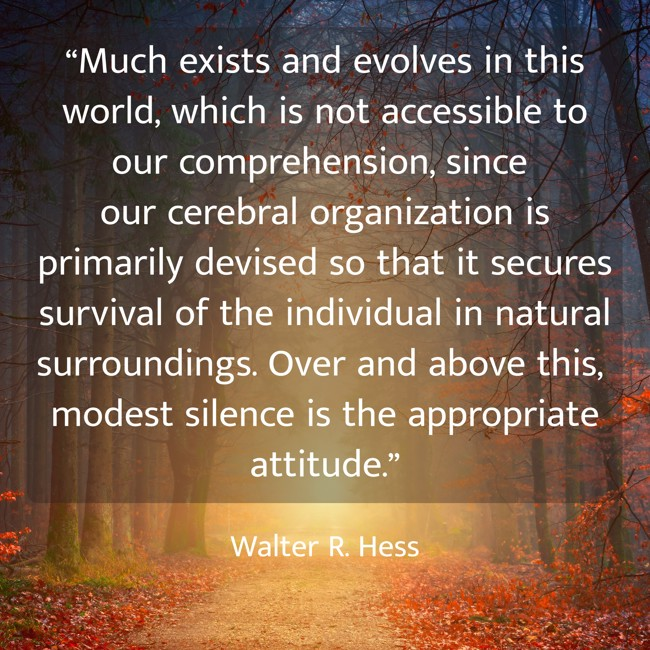
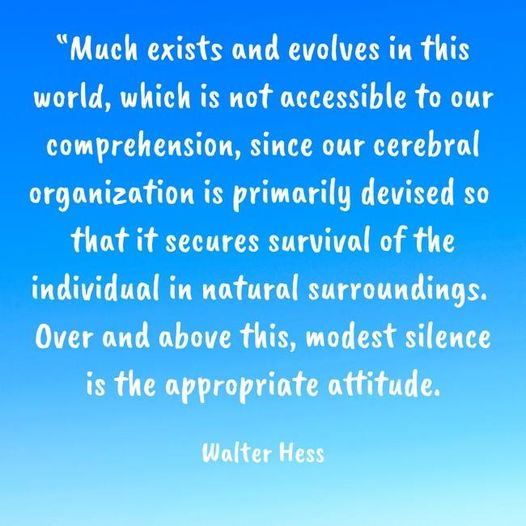
Modest Silence…

18 Mar
Image

EGO…

15 Mar

The Importance of Experiencing Non-Duality

3 Mar

Non-Duality – literally means “not two,” that two things we have understood as separate from one another are in fact not separate at all. At the core of existence, non-duality is a fundamental wholeness that arises from a single, unified source that transcends seeming divisions. Everything is interconnected and inseparable, making dualities—an erroneous perception of difference and separation—illusory. Awakening to non-duality offers profound benefits for personal well-being, fosters harmonious social relationships, and provides a deeper understanding of existence.

       1.      Unity with All Beings- Everything is interconnected with concurrent, dynamic interactions. Moving beyond superficial perception, we realize our shared essence with all life. Recognizing our deep affinity with life fosters unity, compassion, and empathy toward all living beings.

        2.     Living in the Present Moment- Non-duality allows us to remain fully present, helping us detach from past regrets and future anxieties. We cultivate inner serenity, empathy and clarity by embracing each moment without judgment or interpretation.      

        3.     Transcendence of Duality. The illusion of duality is the mistaken perception that separates experience into distinct entities. When one realizes the unified nature of existence, this illusion vanishes. Non-dual awareness moves us beyond the limitations of binary thinking and frees us from splitting and rigid categorization, such as mind and body or self and other. These distinctions can lead to suffering; emotional dysregulation, and behavioural issues like aggression, causing psychological pain and instability. Non-dual awareness promotes a broader openness, freeing us from the illusions of separation and their biases.

        4.     Psychological Well-Being – Non-dual awareness has profound psychological and emotional benefits, for individuals, society and the planet. When we see ourselves as part of a larger whole, the fear of death begins to fade. Instead of viewing death as an end, we can see it as a transformation within the ongoing life cycle making us more psychologically flexible.

       5.      Embracing the Mystery of Existence – Non-duality invites us to acknowledge the mystery of living and embrace uncertainty. We realize that we cannot know Reality because everything is always changing, and our senses know a fraction of existence. which opens the mystery of living. We aren’t just observers of existence but also an integral part of it. Rather than seeking absolute dominance, we honor and respect the vast reactive complexities that lie beyond our understanding.

        6.     Non-duality Throughout History. Non-dualism is revealed in universal, ancient, and recent scientific discoveries that all echo similar perspectives which provide an in-depth format for a transpersonal perspective and training. Awakening to Sunyata or “emptiness” is achieved with the help of planned psychological and emotional transformation, that is consistently practiced by motivated students who seek to move from a reactive way of life, in acting, thinking, and feeling, to align themselves with awareness to the universal principles of interconnectedness and impermanence. “The cosmos is within us. We are made of star-stuff. We are a way for the universe to know itself.” – Carl Sagan

            Rodger R Ricketts

Everything humans see is a simplification.

24 Feb

Everything humans see is a simplification.

A human sees the world in 3 dimensions. That is a simplification. Humans are fundamentally limited, generalizing creatures living on autopilot. Categorization is the brain’s tool to organize nearly everything we encounter in our daily lives. Grouping information into categories simplifies our complex world and helps us to react quickly and effectively to new experiences. Categorization and classification allow humans to organize things, objects, and ideas that exist around them and simplify their understanding of the world. Categorization is like your brain’s very own personal assistant, grouping similar things together so you can find what you need, when you need it.

Our brain categorizes continuously: not only chairs during childhood, but any information at any given age. What advantage does that give us? Pieter Goltstein says: “Our brain is trying to find a way to simplify and organize our world. Without categorization, we would not be able to interact with our environment as efficiently as we do.” In other words: We would have to learn for every new chair we encounter that we can sit on it. Categorizing sensory input is therefore essential for us, but the underlying processes in the brain are largely unknown.

Social categorization is a fundamental human cognitive process because it allows for the quick simplification of complex social information. Scientists at the Max Planck Institute of Neurobiology have now shown that also mice categorize surprisingly well. The researchers identified neurons encoding learned categories and thereby demonstrated how abstract information is represented at the neuronal level.

While categorization is a natural and necessary mechanism to cope with the complexity of our world, it perilously inhibits our ability to address the most pressing and tangible problems of our time. The psychological force at play here is a need to categorize — to fit things into neatly defined, clearly labeled boxes. In times of increasing complexity, such categorization can be extremely useful, creating order in a world that is fundamentally messy and establishing structures so that we can better organize, analyze, and manage it. Yet also, extremely limiting in understanding the natural deeper complexity of life.

Hishiryo

6 Feb

Hishiryo: Consciousness during zazen, which does not behave like the intellect. During zazen, thoughts appear and disappear naturally. If we let this process happen freely, without giving form to thought, without wanting to flee from them, the intellect becomes peaceful by itself and hishiryo consciousness appears, beyond thinking and non-thinking; it is absolute consciousness. It is body-mind thinking in unity with the whole universe. Hishiryo is inexpressible; it cannot be explained, but we can experience it in zazen, naturally and unconsciously.

Image

Complex Interrelationship Between our Minds and Bodies.

30 Dec
Image

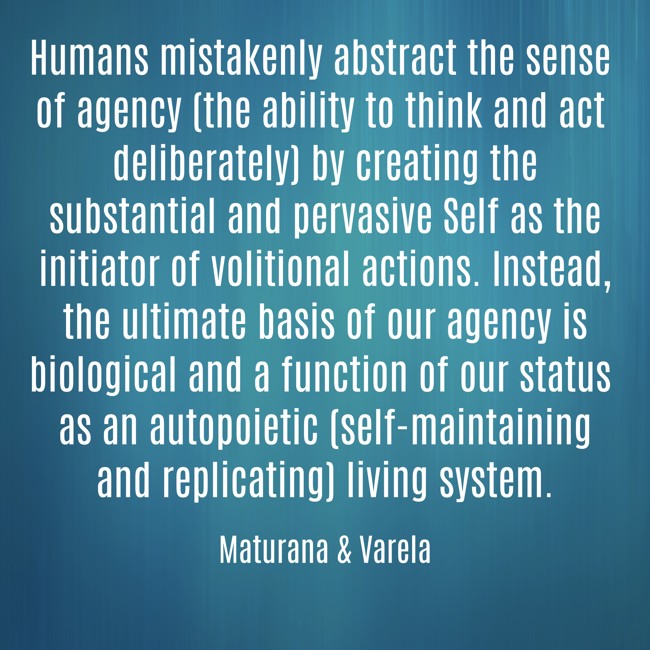
Agency- Autopoietic Living System

26 Dec

Image

Modest Silence is the Appropriate Attitude

22 Nov